
Reviewed · BOGOTÁ TOURS
Historical tour Bogota
Bogotá’s past comes into focus on foot, one plaza at a time. This three-hour walk links the colonial streets of La Candelaria with stories of Indigenous Bogotá, El Dorado, independence, the Bogotazo, Colombia’s long violence, and the city’s artists and writers.
I like the route’s broad range, from chicha and market snacks at La Concordia to Botero, Gabriel García Márquez, and the informal emerald trade. I also like that guides such as Paula, Ricardo, Jennifer, Diane, Carlos, and Rodrigo use photos, questions, and practical advice rather than delivering a dry list of dates.
The main consideration is pace. You cover eight stops in roughly three hours, and the walk continues in bad weather, so bring an umbrella and wear shoes suited to uneven city streets.
Key points at a glance
- Eight central Bogotá stops: The route connects Bolívar Square, Teatro Colón, Chorro de Quevedo, La Concordia, the Eje Ambiental, and Rosario Square.
- History with modern context: Expect El Dorado, colonization, independence, the Bogotazo, political violence, education, art, food, and daily life in Bogotá.
- A real market pause: La Concordia gives you the chance to try chicha, order a Colombian juice, or browse for a souvenir.
- Strong guide element: Paula is noted for history, politics, and literature, while Ricardo, Jennifer, Diane, Carlos, and Rodrigo have also led well-received outings.
- Useful first-day orientation: The final stop includes suggestions for restaurants, museums, coffee, money exchange, and getting to Monserrate.
- Small enough to stay manageable: The maximum group size is 30, though that is still large enough to affect how easily you hear the guide.
Why this Bogotá history walk works
I see this tour as an introduction to Bogotá rather than a specialist museum visit. You move through the center while the guide explains how different layers of the city fit together: Indigenous roots, Spanish rule, independence, modern politics, art, food, and the habits of people who live here now.
That range is the route’s best feature. Many city walks focus only on handsome buildings and colonial dates. This one also tackles the harder subjects, including the Bogotazo and the violence that followed in Colombia. Those stories give you a more honest sense of why the capital looks and feels as it does.
The route is also useful at the start of a stay. You receive suggestions about restaurants, museums, coffee, money exchange, and Monserrate before the walk ends. One guide used photos to explain historical material, and another asked questions to keep the group involved. Those touches matter when you are still trying to get your bearings.
The experience costs $19.77 per person, with group discounts listed. It is called a free tour in the description, but a price is shown, so check the final booking terms carefully. One participant chose to pay 50,000 Colombian pesos after a three-hour outing, which suggests that pricing or tipping practice may vary by booking arrangement. The useful comparison is simple: for about three hours with a guide and no separate admission fees, the price can be good value if you want historical context and orientation in one sitting.
A few more Bogota day trips to weigh up
- Shared Tour of Bogota’s Historic Downtown (La Candelaria)
★ 4.7 · 100 reviews - 7-hour City Tour of Historic Bogotá with Monserrate
★ 4.7 · 47 reviews - From bogota: Salt Cathedral tour a Cultural Heritage Tour
★ 4.5 · 23 reviews
Starting at Bolívar Square
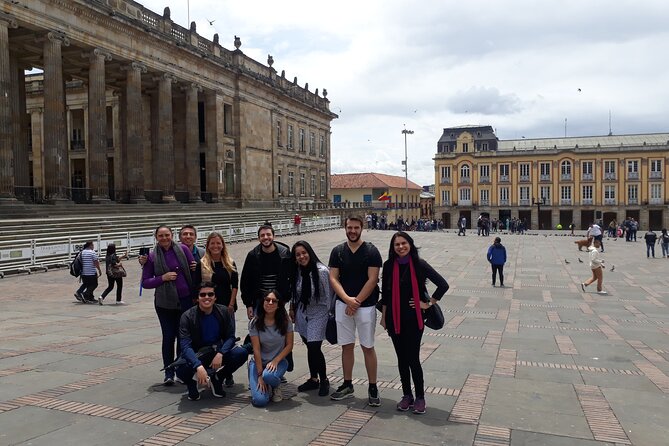
The walk begins at Cra. 7 #11-10 in La Candelaria and opens with about 30 minutes at Plaza de Bolívar, Bogotá’s main civic square. This is the right place to begin because the guide can point out the buildings that shape national life and explain how the capital developed.
You will hear about Bogotá’s earliest beginnings and the Indigenous people who lived in the area before Spanish colonization. The legend of El Dorado also enters here, giving you the famous story behind the colonial search for gold and power.
The square is more than a photo stop. It helps you see Bogotá as Colombia’s political center, not just a collection of old streets. Take in the surrounding architecture while the guide explains why the buildings matter. Since admission is free, the value comes from interpretation rather than entering a paid attraction.
The 30-minute pause is the longest single stop, which gives the opening some breathing room. Still, a group of up to 30 people can spread out, so stay close enough to hear and do not wait until the guide has moved on before taking photos.
Teatro Colón and the Bolívar connection
Next comes Teatro Colón, with about 15 minutes to admire one of Colombia’s important cultural buildings. The stop also connects to Simón Bolívar, including the place where he lived.
This section works best as a short architectural and historical bridge. You are not being promised a full theater performance or an extended interior visit. Instead, you get a chance to look closely, hear why the building matters, and connect Colombia’s independence story with the city around you.
The short timing keeps the walk moving, but it also means you should listen first and photograph second. If you are especially interested in Bogotá’s theaters or Bolívar, treat this as an introduction and ask the guide for practical suggestions at the end.
Botero, museums, and the cultural block
At the Museos del Banco de la República, the group discusses the cultural block around La Candelaria from outside. The stop lasts about 15 minutes and includes the life and work of Fernando Botero.
This is a smart way to add art without turning the tour into a museum admission visit. You learn where Bogotá’s cultural institutions sit and why this part of the old center matters. Botero’s work also gives the guide a way to discuss Colombian identity through a figure known far beyond the country.
The limitation is clear: you are learning about the museum area, not taking a full guided museum visit. If Botero is a main reason you came to Bogotá, you will need a separate museum visit. The walking tour helps you decide which cultural sites deserve more of your time.
Same city, a completely different kind of day:
- Bogota: Bicycle City Tour
★ 4.9 · 2,156 reviews - Zipaquirá: Salt Cathedral Group Tour with Pickup
★ 4.8 · 1,606 reviews - Bogotá: Guided La Candelaria Walking Tour
★ 4.8 · 1,229 reviews - Bogotá: Private City Tour, Monserrate, Emerald and Botero
★ 4.9 · 798 reviews
Chorro de Quevedo and the story of chicha
Plaza del Chorro de Quevedo is one of the route’s most engaging stops. The guide presents it as Bogotá’s foundation square and explains why chicha, a traditional fermented drink, was once prohibited.
That story brings together Indigenous customs, colonial control, and modern Bogotá. You are not simply hearing that chicha exists. You are learning how a local drink became tied to questions of culture, authority, and public life.
The stop lasts about 20 minutes. It is enough time to understand the story and take in the small square, but do not expect an extended tasting here. The actual chance to drink chicha comes at the next market stop.
La Concordia Market for chicha and juice
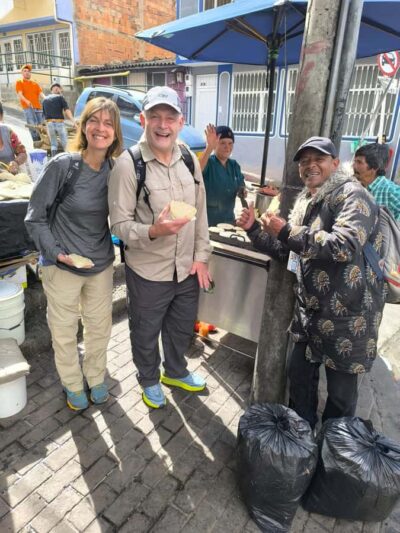
At Plaza de Mercado La Concordia, the tour moves from explanation to everyday food culture. You can buy traditional chicha, choose a typical Colombian juice, or pick up a souvenir.
I like this part because it gives you a choice. You can taste something strongly tied to Bogotá, keep things simple with juice, or browse without buying. Snacks, drinks, meals, and personal purchases are not included, so bring money if you want to sample something.
The market also breaks up the historical material. After several stops focused on buildings and political events, you get a chance to see how food and informal commerce fit into city life. Keep the visit practical: the scheduled time is about 20 minutes, so this is a quick taste of the market rather than a long food tour.
The Eje Ambiental and a view toward Monserrate
The walk continues along the Eje Ambiental, where you can see Monserrate and learn how to reach the hill. This is especially useful if you plan to visit Monserrate later but have not yet worked out the route.
The guide also points out a square where Gabriel García Márquez held social meetings. That detail adds a literary thread to the day and links Bogotá’s public spaces with one of Colombia’s best-known writers.
This 15-minute stop is short, but it broadens the tour beyond colonial history. You get city orientation, a view toward one of Bogotá’s major hills, and a connection to literature. The practical advice may be more valuable than the photo opportunity, particularly if this is your first day in the capital.
Gaitán, the Bogotazo, and Colombia’s violence
The stop at the Jorge Eliécer Gaitán Monument is the most politically serious part of the route. The guide explains who Gaitán was, why he mattered, and how the Bogotazo relates to violence in Colombia.
This is important historical ground, and I appreciate that the tour does not avoid it. The Bogotazo was a major turning point in Bogotá’s modern story, and understanding it helps explain the country’s later political and social conflicts.
The stop lasts about 20 minutes. That is enough for a clear introduction, though not enough for every detail of Colombia’s violence. Guides have been praised for explaining politics in an accessible way, and Paula in particular is noted for combining history, politics, and literature. Still, ask questions if you want more context, and remember that this is an overview rather than an academic lecture.
Rosario Square and Bogotá’s emerald trade
The final stop is Plazoleta del Rosario, where the focus turns to Colombia’s emerald market. The guide explains how the stones are sold informally, and you may see this trade taking place around the square.
This is a memorable finish because it deals with an economic activity you are unlikely to understand from a postcard view of Bogotá. The subject is presented as part of the city’s street life, not as a formal jewelry-shopping stop. If you are interested in buying an emerald, take the guide’s explanation as background rather than a guarantee of quality or a recommendation to purchase.
The tour ends at Rosario Square, at Av. Jimenez de Quesada #6-71. Before you leave, the guide offers recommendations for restaurants and other places to visit. This is the moment to ask about museums, coffee, money exchange, or any neighborhood you plan to see next.
Guide quality and group size
The experience depends heavily on the individual guide, and the named guides associated with the route include Paula, Ricardo, Jennifer, Diane, Carlos, and Rodrigo. The strongest descriptions point to clear explanations, good historical command, friendly interaction, punctuality, and useful local suggestions.
Paula is especially associated with Colombia’s history and politics, as well as literature and Gabriel García Márquez. Ricardo has been described as attentive and clear, while Jennifer has used pictures to make historical material easier to follow. Diane is praised for covering La Candelaria thoroughly, and Carlos for making the area accessible to a family group.
The maximum is 30 people. That is not a tiny walking tour, so expect the feel of a public group outing rather than a private lesson. The upside is a lower price and a social atmosphere. The downside is that questions can take longer, and you may need to stand near the guide in noisy streets.
The walk requires a moderate level of physical fitness. The supplied details do not give a total distance or a full accessibility assessment, so ask before booking if you have mobility concerns. Service animals are allowed, and the meeting area is near public transportation.
Weather, timing, and what to bring
The tour runs for about three hours and is not canceled for bad weather. Bring an umbrella, even if the morning looks clear, and wear comfortable shoes for a walk through central Bogotá.
There are no admission fees listed for the stops, but food, drinks, and purchases are extra. Carry enough for a chicha or juice at La Concordia if you want to take part, but do not feel obliged to buy anything.
I would schedule this walk early in your Bogotá stay. You can use the restaurant, museum, coffee, money exchange, and Monserrate advice for the rest of your visit. It also gives you a clearer map of La Candelaria before returning on your own.
Confirmation arrives when you book. The activity allows free cancellation up to 24 hours before the start time, while cancellations or changes made later are not refunded or accepted.
Who should book this tour?
I would choose this walk if you want a first look at Bogotá’s historic center and prefer connected stories over isolated sightseeing stops. It suits solo visitors, couples, families, and anyone with limited time who wants history, politics, art, food, and practical city advice in one outing.
It is also a good fit if you are curious about Colombia beyond the usual colonial architecture. The route discusses Indigenous Bogotá, El Dorado, chicha, Botero, García Márquez, Gaitán, the Bogotazo, and emeralds. That is a wide sweep for three hours.
I would hesitate if you want long museum visits, a slow photography walk, or a private guide who can shape every minute around your interests. The pace is fairly full, and the maximum group size is 30. You should also be ready for serious political history, not just cheerful sightseeing.
At $19.77 per person, the tour offers solid value for a guided introduction, provided the booking price and any expected payment are clear to you. Book it early in your stay, bring rain protection, stay close to the guide, and save time afterward for the museum or market that catches your interest.
FAQ
How long does the Bogotá historical tour last?
The tour lasts approximately three hours.
Where does the tour begin?
It begins at Cra. 7 #11-10 in La Candelaria, Bogotá.
Where does the tour end?
The tour ends at Rosario Square, at Av. Jimenez de Quesada #6-71 in La Candelaria.
What is included in the tour?
A tourist guide and a walking tour of areas of interest in central Bogotá are included.
Are food and drinks included?
No. Snacks, drinks, meals, and personal purchases are not included. At La Concordia Market, you can buy chicha, a Colombian juice, or a souvenir.
What happens if it rains?
The tour is not canceled because of bad weather. You are advised to bring an umbrella.
Just added around Bogota
- Fun Graffiti Workshop: The Art of Aerosol and Color★ 5.0 · 3 reviews
- Zipaquirá: Private Salt Cathedral Mine and Walking Tour★ 4.8 · 3 reviews
- Walking tour José Celestino Mutis Botanical Garden 3 hrs★ 5.0 · 3 reviews
- Bogota: East Hills Mountain Hike★ 4.2 · 3 reviews
- Bogota: Explore the forest and bird watching at Chicaque Natural Park★ 5.0 · 3 reviews
- Bogota: Downtown City and Monserrate Hill Private Tour★ 3.7 · 3 reviews
- From Bogota: White Water Rafting Experience★ 4.4 · 3 reviews
- From Bogota: Excursion to Jaime Duque Park★ 5.0 · 3 reviews
Bogotá Tours, compared.
Zipaquirá: Salt Cathedral Group Tour with Pickup
Read our review →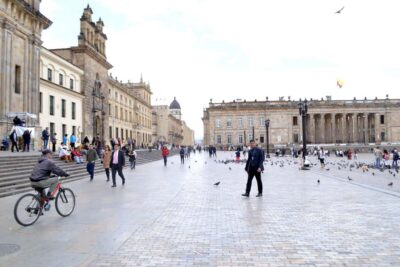
Bogotá´s Barrios: El Paraíso Favela Tour with Cable Car
Read our review →
Bogota: Guatavita and Salt Cathedral Daily Group Tour
Read our review →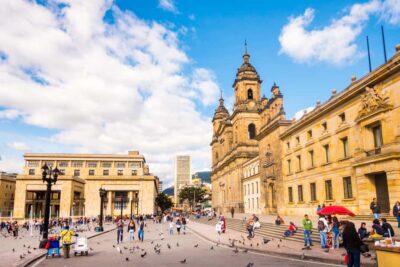
Bogotá City Tour with Monserrate, Gold and Botero Museums
Read our review →
Bogota: Zipaquirá Salt Cathedral and Lake Guatavita Day Tour
Read our review →
Browse the lists this tour appears in