
Reviewed · BOGOTÁ TOURS
7-hour City Tour of Historic Bogotá with Monserrate
Bogotá comes into focus quickly on this seven-hour private tour, which pairs the mountain view from Monserrate with the old streets, museums, churches, and public squares of La Candelaria. I like the smart combination of big sights and small tastes: Colombian fruit, unusual juice, and coffee prepared by a professional barista. I also like that guides such as Juan Carlos, Carlos, and Lifred are praised for answering questions and adjusting the pace.
The main drawback is the packed schedule. You cover a lot of ground, but lunch is not included, water is your responsibility, and steep streets plus high altitude can make the day tiring. Museum closures also matter: the Botero Museum is closed Tuesdays, and the Gold Museum is closed Mondays.
Key Points at a Glance
- Monserrate at 3,150 meters: Ride the cable car or funicular for wide views across Bogotá and visit the hilltop sanctuary.
- La Candelaria’s compact historic core: See Chorro de Quevedo, Bolívar Square, churches, theaters, libraries, and cultural centers in one walking route.
- Two distinct museum choices: The Botero Museum brings art, while the Gold Museum explains Colombia’s pre-Hispanic cultures through thousands of objects.
- Food and coffee add local flavor: Taste Colombian fruits, endemic produce, juice, and coffee with a professional barista.
- Private transport saves time: Pickup and return at your Bogotá accommodation keep you from piecing together several separate rides.
- English or Spanish guidance: A certified guide provides history and context throughout the day, with the private format allowing some adjustment to your interests.
Why This Bogotá Tour Works in Seven Hours
If you have only one day in Bogotá, this tour gives you a useful first look without forcing you to arrange each part yourself. The route links the eastern hills with the historic center, so you see the city from above before walking through the streets where much of its political, religious, and cultural story is laid out.
The private format matters here. A guide can respond to your questions, explain local customs, and adjust for the needs of your group. Juan Carlos is repeatedly singled out for his clear explanations and easy manner, while Carlos has been praised for his stories about the city and the mountain formations. Lifred is noted for fluent English and for shaping the tour around personal interests.
You are not simply transferred from one photo stop to another. The day includes formal sights, street scenes, food, art, and conversation. That variety is useful because Bogotá can feel hard to read at first. The altitude, large scale, and mix of old and modern districts make an informed guide especially helpful.
Still, seven hours is not a long time for this much content. You should expect an overview rather than long, unhurried museum visits. If you want to study every gallery or spend a long time buying souvenirs, you may need another day.
More Monserrate visits:
- Bogotá: Private City Tour, Monserrate, Emerald and Botero
★ 4.9 · 798 reviews - Bogotá City Tour with Monserrate, Gold and Botero Museums
★ 4.9 · 584 reviews - Bogota: Monserrate Entry Ticket
★ 4.4 · 233 reviews
Monserrate: Bogotá from 3,150 Meters
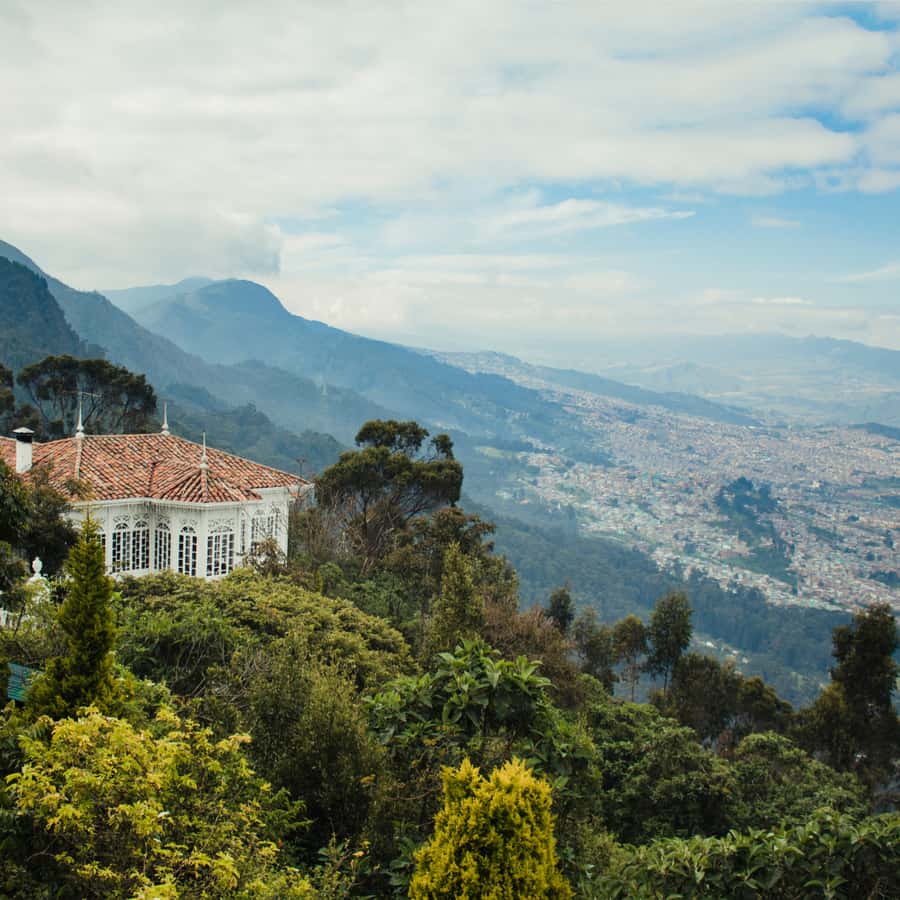
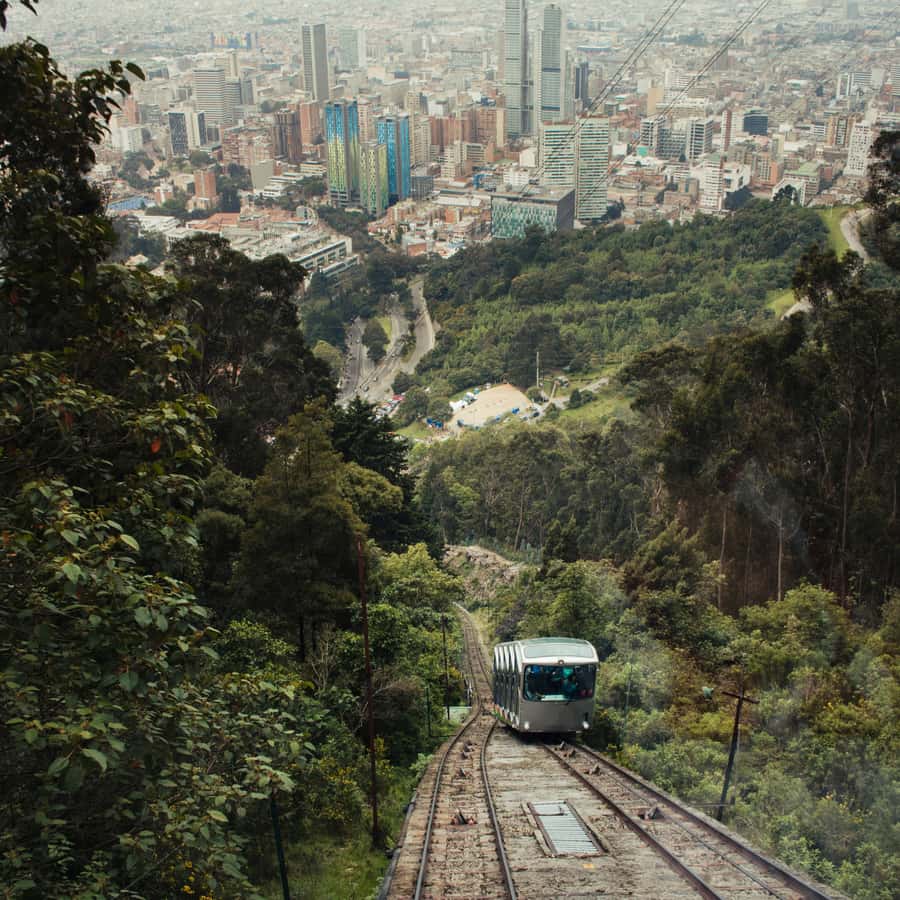
Monserrate is the tour’s high point in every sense. The summit reaches 3,150 meters above sea level, giving you a broad view over Bogotá and the surrounding eastern hills. The city stretches out below, and the height helps you understand its enormous scale better than a street-level walk can.
Your ticket to Cerro Monserrate is included. You can choose between the cable car and the funicular for the ascent and descent. The cable car gives you an aerial ride and changing views as you rise, while the funicular takes you through the mountain in a different way. The exact option may depend on the operation of the site at the time of your visit.
At the top, you can visit the Sanctuary of the Lord of Monserrate. It is both a religious destination and a historic pilgrimage site, so the stop is not only about taking pictures. Your guide can connect the sanctuary to the wider religious and cultural story of Bogotá.
Take the altitude seriously. The tour is specifically not suitable for people with altitude sickness, and the height may affect how quickly you walk or how long you want to linger. Bring comfortable clothing, sunscreen, and drinks, and give yourself permission to take the mountain portion at an easy pace.
Weather can also change the quality of the view. The panorama is the attraction, but mountain conditions may limit visibility. Even on a clear day, the visit is better with realistic expectations: you are getting a high viewpoint and a sanctuary visit, not a guaranteed perfect photograph.
Walking Through La Candelaria
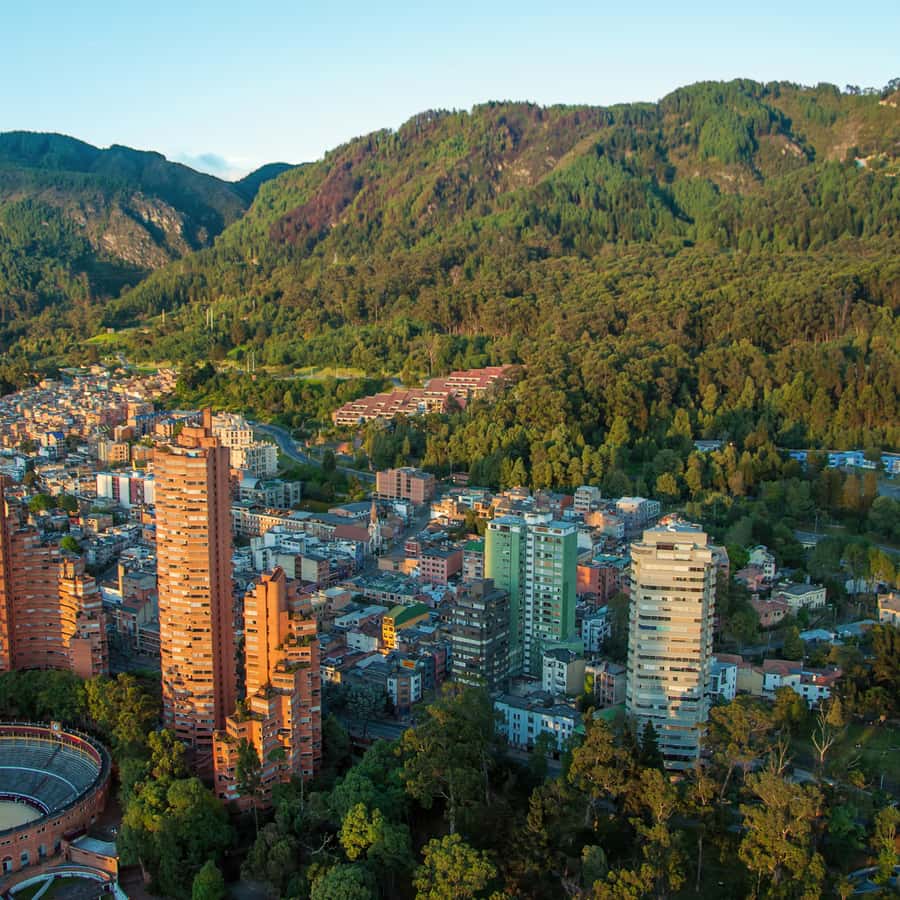
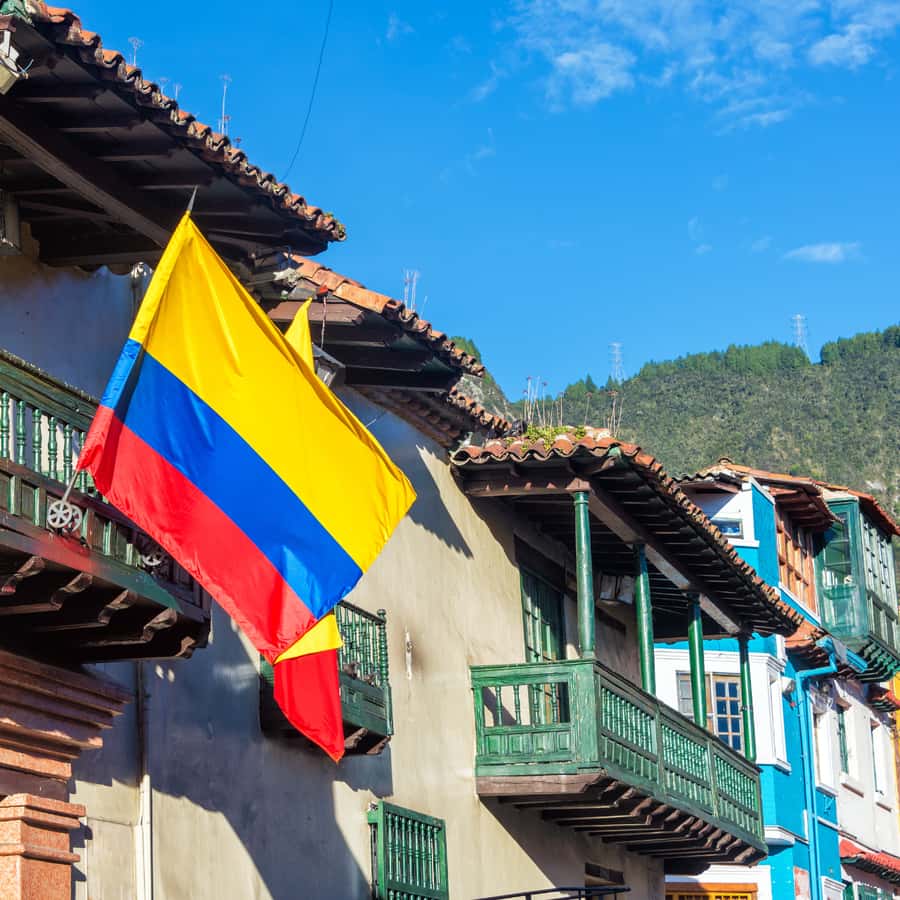
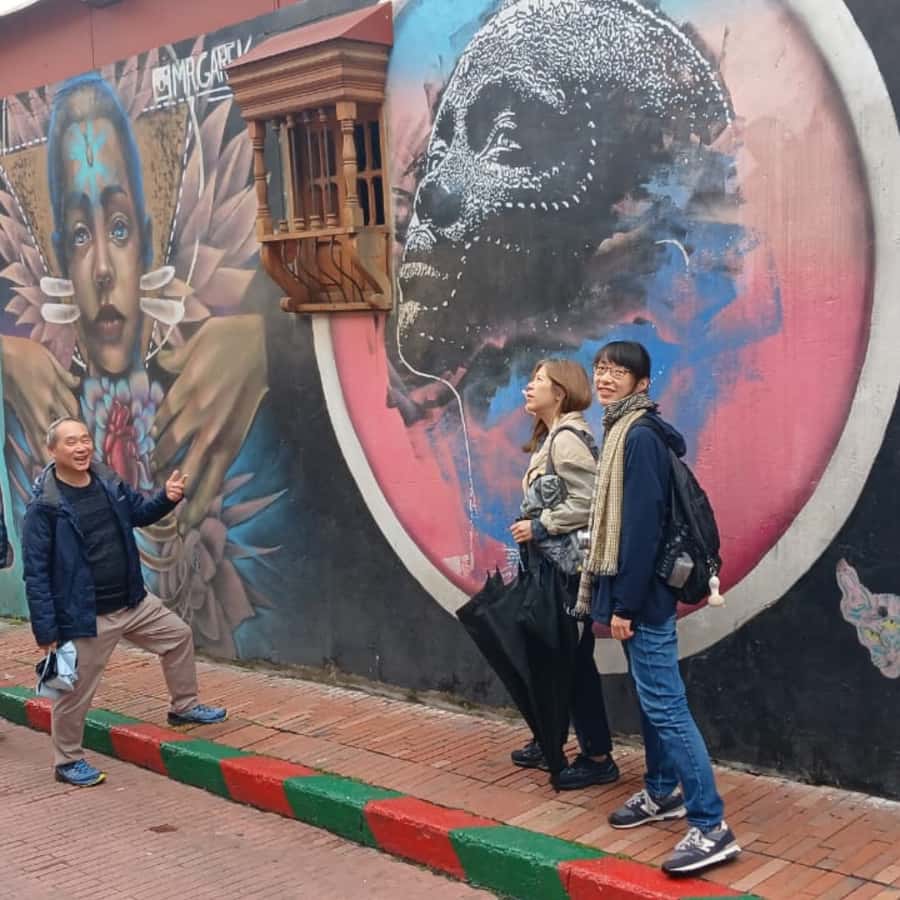
After Monserrate, the tour heads into La Candelaria, Bogotá’s historic center. This is the part of the day where the city becomes more intimate. Cobblestone streets, colonial buildings, Republican-era architecture, churches, murals, cultural institutions, and small commercial streets create a route with plenty to examine.
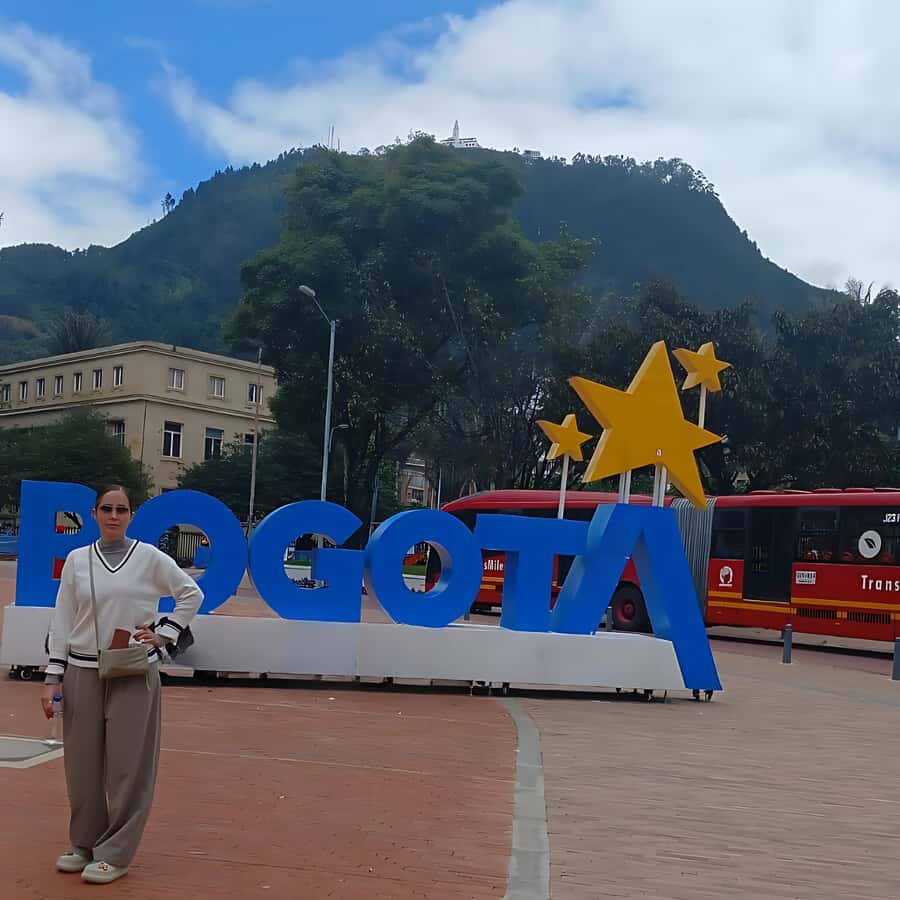
Start at Chorro de Quevedo, identified as the place connected with Bogotá’s founding in 1538. It is a compact public space, but it carries an outsized role in the city’s story. This is where a guide earns his or her keep, explaining what is documented, what is remembered, and how the neighborhood grew around such early landmarks.
The walking can be uneven and steep in places. Carlos specifically advises comfortable walking shoes, and that is sound advice. High heels are not allowed on the activity, and even ordinary shoes should have good support. If someone in your group has mobility concerns, tell the guide early. Juan Carlos has been praised for patiently adapting to a group member with mobility problems, though the route itself still includes hills and cobbled surfaces.
The route includes La Candelaria Church, an architectural marker in the neighborhood, and Teatro Colón, one of Latin America’s notable theaters. You also pass the Luis Ángel Arango Library, a major cultural and learning center, and the Gabriel García Márquez Cultural Center, which connects literature and the arts with Colombia’s Nobel Prize-winning writer.
You should think of these stops as an outdoor history lesson rather than a series of guaranteed interior tours. The supplied information confirms the places included, but it does not promise a full performance, special access, or extended time inside every building. Your guide’s commentary is an important part of what makes the route useful.
Bolívar Square and the Story of a Nation
Plaza de Bolívar is the political center of the tour. It was declared a National Monument in 1995 and is surrounded by buildings that show how religion, government, law, and civic life meet in Colombia’s capital.
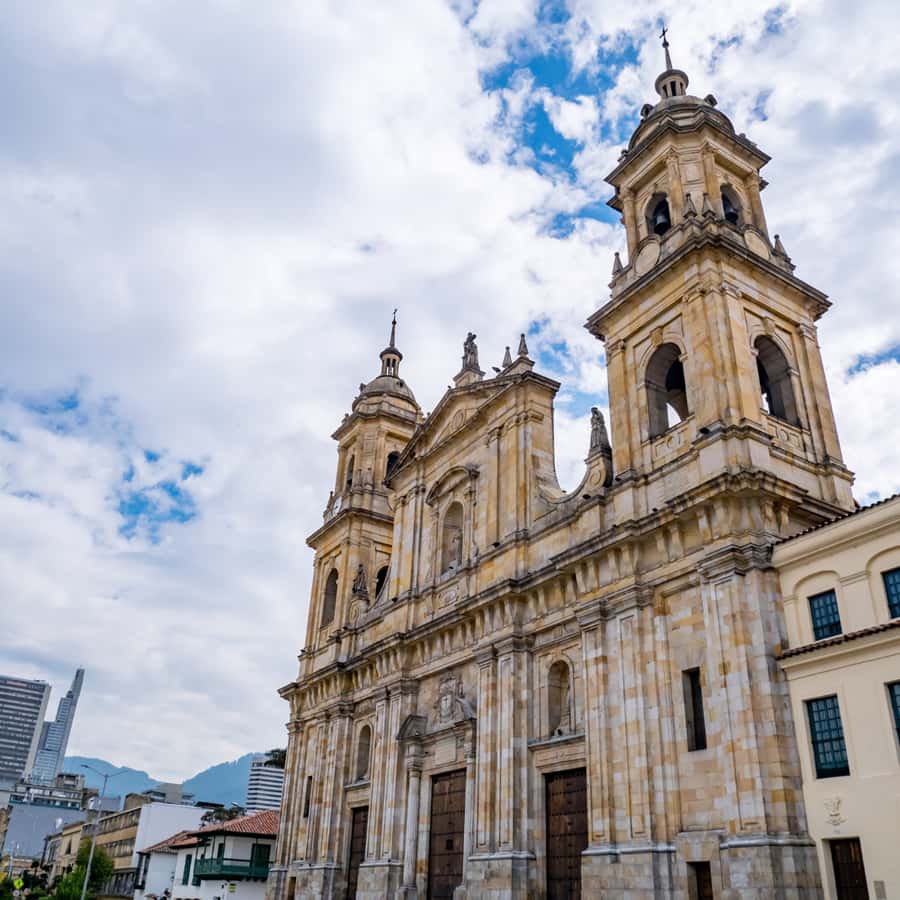
Look around the square for the Palace of Justice, Capitol Building, Cathedral of Bogotá, Chapel of the Sagrario, Archbishop’s Palace, and Liévano Palace. The value of this stop is not just visual. Together, these buildings give you a quick way to understand Colombia’s political and social development.
The square also helps connect the earlier neighborhood walk with the modern capital. In La Candelaria, you see older streets and cultural institutions. Here, the focus turns toward public power and national identity. A bilingual guide can make that shift easier to follow, especially if Colombian history is new to you.
Allow for the fact that this is a public square, not a quiet museum room. Activity and crowds can affect how long you want to stand in one spot, and the best experience comes from listening while also looking closely at the buildings around you.
A few more Bogota day trips to weigh up
- Shared Tour of Bogota’s Historic Downtown (La Candelaria)
★ 4.7 · 100 reviews - Historical tour Bogota
★ 5.0 · 72 reviews - From bogota: Salt Cathedral tour a Cultural Heritage Tour
★ 4.5 · 23 reviews - Bogota’s Historic Center and Monserrate in one day
★ 4.9 · 8 reviews
Botero Museum: Art with a Colombian Point of View
The Botero Museum adds an art stop to a day otherwise centered on buildings, religion, and public history. It is home to works by Fernando Botero along with pieces by other respected artists. Botero is known internationally for figures with exaggerated volume, and the collection gives you a direct way to connect Colombian art with a wider European and international setting.
I like having this museum in the route because it breaks up the architecture. You are not only looking at façades and monuments. You are also given time with objects that express humor, social observation, and a distinctive artistic style.
The Botero Museum is closed on Tuesdays. If your tour falls on that day, the published plan indicates that the guide will suggest another attraction, depending on availability. Check the operating day before booking if Botero is one of your priorities.
The schedule may not allow a full art-history visit. Use the guide to identify a few key works and ask questions rather than trying to see everything. That approach suits a seven-hour city tour much better than rushing through every room.
Gold Museum: Colombia Before the Spanish Arrival
The Gold Museum, or Museo del Oro, is one of the strongest cultural stops on the route. Its collection includes more than 50,000 pieces of gold, ceramics, precious stones, and textiles from Indigenous cultures in Colombia. The objects show the technical skill and ceremonial importance of pre-Hispanic societies.
This visit adds necessary context to the city’s colonial churches and government buildings. Without it, Bogotá’s story can seem to begin with Spanish foundations and later political institutions. The museum broadens the picture by showing cultures and craft traditions that came long before those structures.
The Gold Museum is closed Mondays. On that day, another attraction is offered based on availability, with options recommended by the guide. If the museum is essential to your plans, avoid Monday or confirm the replacement before you commit.
As with the Botero Museum, the practical challenge is time. A collection this large deserves several hours, while this tour must also include Monserrate and the historic center. I would treat the museum as a well-chosen introduction, then return independently if one section catches your attention.
Colombian Fruit, Juice, and Coffee
The food stops keep the tour from feeling like a procession of monuments. You taste typical and endemic Colombian fruits, along with an exotic juice. This is a small part of the day, but it gives you a direct sense of Colombia’s agricultural variety and lets you try flavors that may not be familiar from home.
Hydration is not included, so bring drinks or plan to buy them. That matters more than it might seem at Monserrate, where altitude and walking can leave you feeling dry or tired. Extra drinks are also your own expense.
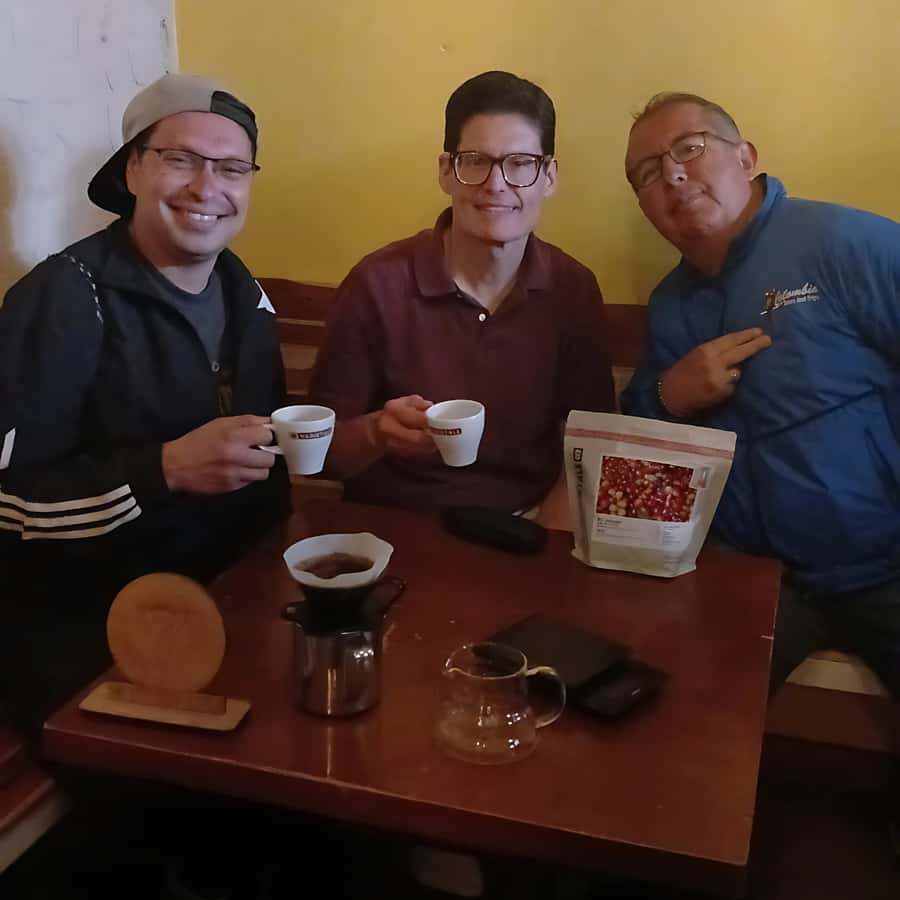
The coffee tasting is handled by a professional barista. That gives you more than a routine café break. You can learn how Colombian coffee is prepared and ask questions about the drink itself, rather than simply receiving a cup during a transfer.
The available information does not specify the exact fruits, juice flavors, coffee preparation, or tasting venue. Think of these as guided samples, not a full meal or a cooking class. They are useful cultural pauses, but you still need to budget time and money for lunch.
Transport, Timing, and the Real Cost
The price is $118 per person. For that amount, you receive a private group, private shuttle service to and from your accommodation in Bogotá, a bilingual guide, Monserrate tickets, the listed historic and cultural stops, fruit and juice tasting, professional coffee tasting, and medical insurance during the tour.
I see the value in the transport and private guide most of all. Bogotá is large, and saving the effort of arranging separate rides between Monserrate, La Candelaria, and the museums can make a seven-hour day much more productive. The guide also keeps the historical thread intact instead of leaving you to interpret each stop alone.
The price does not include lunch, hydration, or extra drinks. Add those costs to your daily budget. You should also remember that a private tour can be expensive for a solo visitor, while the per-person value improves when shared by a small group.
The listed coach or bus travel totals about 1.5 hours, with pickup and return in Bogotá. That means a meaningful portion of the seven-hour schedule is spent moving through the city. The benefit is convenience; the tradeoff is less time on foot at each individual stop.
The tour offers free cancellation up to 24 hours before departure for a full refund, and you can reserve now and pay later. Starting times depend on availability, so check the schedule before planning museum visits or a flight connection.
Who Will Enjoy This Tour Most
I would recommend this tour to a first-time Bogotá visitor with limited time, especially someone staying in the city for one day or fitting sightseeing around a business trip. It is also a good match if you want private transportation and a guide who can explain Colombia in English or Spanish.
It suits people who prefer a broad introduction to several subjects: geography at Monserrate, colonial and Republican architecture, national politics, Colombian art, Indigenous cultures, fruit, and coffee. The mix keeps the day moving.
It is less suitable if you want a slow museum day, a long lunch, or several hours for shopping. One visitor specifically wanted more time for souvenirs, so make your shopping priorities clear at the start. The tour includes visits to Colombian souvenir and emerald shops, but the day is not designed as an extended shopping trip.
You should also reconsider it if you have altitude sickness, are under one year old, or are over 95. Babies under one year and people over 95 are listed as not suitable for the activity. Anyone with mobility concerns should discuss them in advance, since the route includes walking, cobblestones, and steep sections even though the private guide can adjust the pace.
Practical Packing Advice
Wear comfortable shoes and clothes. You will walk through historic streets, climb or descend uneven sections, and spend time at a high viewpoint.
Bring a hat, camera, charged smartphone, sunscreen, and biodegradable sunscreen. Bring drinks too, since hydration is not included. Alcoholic drinks are not permitted in the vehicle, and alcohol and drugs are not allowed on the activity.
The restrictions also exclude high heels, baby strollers, bikes, fishing, fireworks, explosive substances, diving, audio recording, and bare feet. Most of these will not affect a normal sightseeing day, but the footwear and stroller rules are worth noting before you book.
Should You Book It?
Book this tour if you want Bogotá’s major first-day sights tied together by one private bilingual guide. Monserrate, La Candelaria, Bolívar Square, the Botero Museum, and the Gold Museum cover a lot of ground, while the fruit and coffee tastings make the day feel more connected to Colombia than a monument-only route.
I would be especially comfortable booking with a clear museum plan and a willingness to walk. Check the day of the week, bring water, ask for a slower pace if needed, and accept that you will sample the museums rather than master them. At $118 per person, the tour is strongest for a small group that values convenience, transportation, and direct explanations over free time.
FAQ
How long does the Bogotá tour last?
The tour lasts seven hours, including transport between the listed Bogotá stops. The itinerary lists approximately 1.5 hours by bus or coach.
What is the tour price?
The price is $118 per person.
Does the tour provide pickup and return transportation?
Yes. Private shuttle service to and from your accommodation in Bogotá is included.
Is the tour private?
Yes. It is organized as a private group experience.
What languages does the guide speak?
The live guide is available in English and Spanish. The tour includes a bilingual guide throughout the day.
Is the Gold Museum open every day?
No. The Gold Museum is closed on Mondays. When it is closed, the guide will recommend another attraction based on availability.
Is the Botero Museum open every day?
No. The Botero Museum is closed on Tuesdays. Another attraction may be offered depending on availability.
Are food and drinks included?
Fruit, endemic Colombian produce, juice, and a Colombian coffee tasting with a professional barista are included. Lunch, hydration, and extra drinks are not included.
Just added around Bogota
- Fun Graffiti Workshop: The Art of Aerosol and Color★ 5.0 · 3 reviews
- Zipaquirá: Private Salt Cathedral Mine and Walking Tour★ 4.8 · 3 reviews
- Walking tour José Celestino Mutis Botanical Garden 3 hrs★ 5.0 · 3 reviews
- Bogota: East Hills Mountain Hike★ 4.2 · 3 reviews
- Bogota: Explore the forest and bird watching at Chicaque Natural Park★ 5.0 · 3 reviews
- Bogota: Downtown City and Monserrate Hill Private Tour★ 3.7 · 3 reviews
- From Bogota: White Water Rafting Experience★ 4.4 · 3 reviews
- From Bogota: Excursion to Jaime Duque Park★ 5.0 · 3 reviews
Bogotá Tours, compared.
Zipaquirá: Salt Cathedral Group Tour with Pickup
Read our review →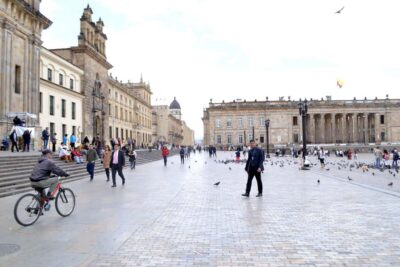
Bogotá´s Barrios: El Paraíso Favela Tour with Cable Car
Read our review →
Bogota: Guatavita and Salt Cathedral Daily Group Tour
Read our review →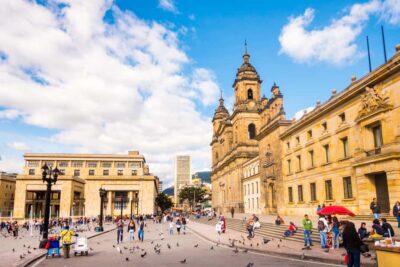
Bogotá City Tour with Monserrate, Gold and Botero Museums
Read our review →
Bogota: Zipaquirá Salt Cathedral and Lake Guatavita Day Tour
Read our review →
Browse the lists this tour appears in