
Reviewed · BOGOTÁ TOURS
Bogotá City Tour with Monserrate, Gold and Botero Museums
Bogotá reveals itself best through contrasts: a sip of ancient chicha, a serious talk about Colombia’s armed conflict and peace process, a room full of pre-Spanish gold, and then a cable-car ride above the city. This private tour links those pieces into one long, busy day, with La Candelaria and Monserrate at its heart.
I like the local tastings, especially the chance to try chicha, unfamiliar Colombian fruits, fresh juices, and coffee with a local barista. I also like the way guides such as Sergio, Sara, Leslie, and Rodrigo have adapted the day to individual interests, weather, airport layovers, and walking speed.
The catch is simple: this is a lot of ground on foot. A seven-hour version can feel like a full day of walking, and lunch is not included. If your knees, feet, or altitude tolerance are an issue, choose the shorter Monserrate option or ask the guide to trim the museum time.
Key points to know before booking
- Chorro de Quevedo sets the tone: Begin with Bogotá’s indigenous roots, Spanish colonization, and a taste of ancestral corn-based chicha.
- The day connects art with politics: Bolívar Square, the museums, and the discussion of Colombia’s conflict give the city more meaning than a quick photo stop.
- Monserrate is the big payoff: The cable car or funicular carries you up the city’s main hill for broad views across the valley and a visit to its basilica.
- The private format matters: Your guide can adjust timing, explain selected museum pieces, and focus on food, art, history, or current affairs.
- Budget about $65 per person: That covers pickup, drop-off, guide, insurance, tastings, museum admissions when chosen, and the two-way Monserrate ticket.
- Plan around museum closing days: The Gold Museum is closed Mondays and the Botero Museum Tuesdays, with another museum offered instead.
Why this Bogotá tour works as a first introduction
At $65 per person, this is not the cheapest way to see central Bogotá. But you are paying for more than transport between sights. The price includes hotel pickup and return anywhere within Bogotá, a private guide, Monserrate’s two-way cable-car ticket, entry to the Gold and Botero museums when included in your chosen version, tastings, and all-risks insurance.
That bundle makes the tour useful if you have one day in the city, are traveling alone, or do not want to sort out transport between La Candelaria and Monserrate. It has also worked well for people with a long layover. One guest was collected and returned at the airport, turning a complicated city visit into a single organized outing.
The private setup is the main value. Your guide is not trying to keep a large group moving. Guides have adjusted the order for weather, helped with busy Monserrate days, chosen key museum floors, and changed the emphasis for people interested in politics, food, art, or Colombian culture.
You should still set realistic expectations. The seven-hour version is not a gentle hop-on, hop-off sightseeing ride. It includes long periods of walking, cobblestones, stairs or uneven surfaces, and time at altitude. Comfortable shoes are essential, and large bags or luggage are not allowed.
More Monserrate visits:
- Bogotá: Private City Tour, Monserrate, Emerald and Botero
★ 4.9 · 798 reviews - Bogota: Monserrate Entry Ticket
★ 4.4 · 233 reviews - Bogotá: City Tour, Monserrate, Gold Museum, Plaza de Bolivar
★ 4.7 · 168 reviews
Chorro de Quevedo and the first taste of Bogotá
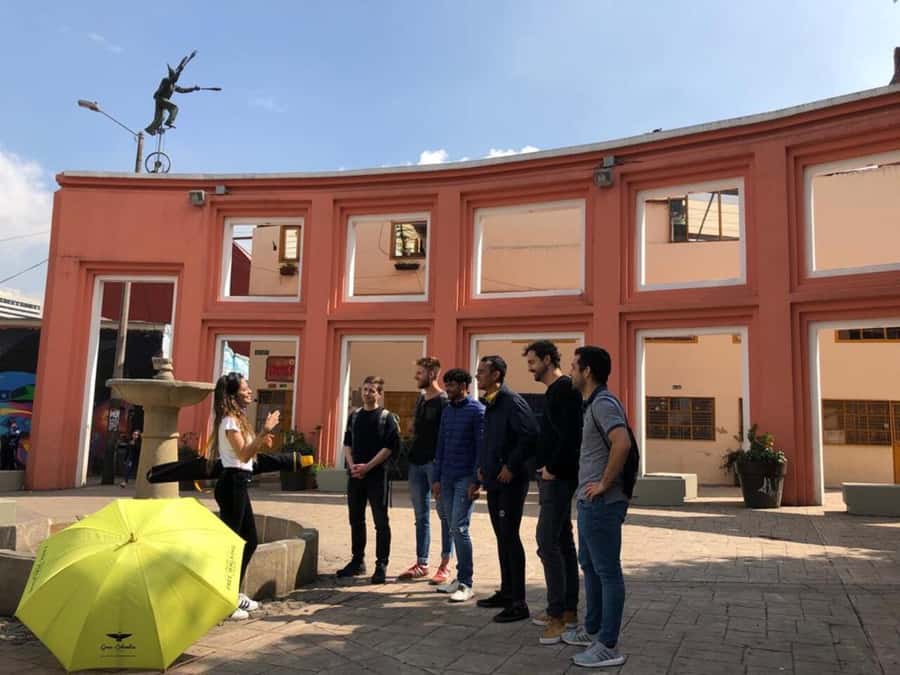
The walk begins in La Candelaria, Bogotá’s old central district, where cobblestoned lanes and colonial buildings create a very different mood from the city’s modern districts. The tour uses these streets as a classroom, not just a backdrop for photographs.
At Chorro de Quevedo Plaza, your guide explains the shift from indigenous societies to Spanish colonization and the role of this area in Bogotá’s foundation story. The stop lasts about 20 minutes, but its importance goes beyond the clock. It gives you a starting point for understanding why Bogotá looks and feels layered rather than uniform.
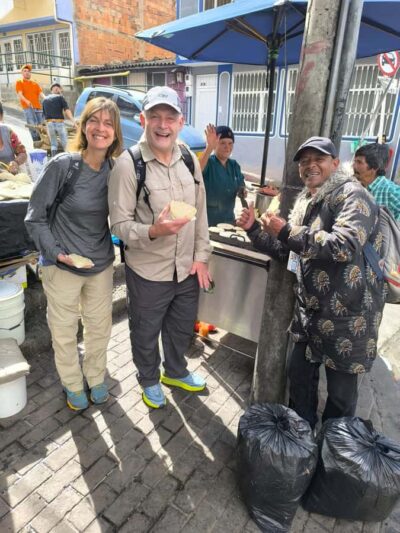
Then comes chicha, a fermented corn drink with ancestral roots. This is a small tasting, not a drinking tour, but it gives you a direct connection to an older food tradition. I like this kind of introduction because you are not only hearing about local culture. You are given something to taste.
The food stops continue with Colombian fruits and natural juices. The exact selection can vary, but the experience may include fruits less familiar to many international visitors. One person particularly enjoyed soursop and bought more afterward. If you like trying new produce, this may be one of the most memorable parts of the morning.
La Candelaria, Bolívar Square, and Colombia’s difficult questions
The La Candelaria walk continues through streets where historic architecture sits beside everyday city life. Your guide explains how the district developed and points out the links between the old city, national politics, religion, and present-day Colombia.
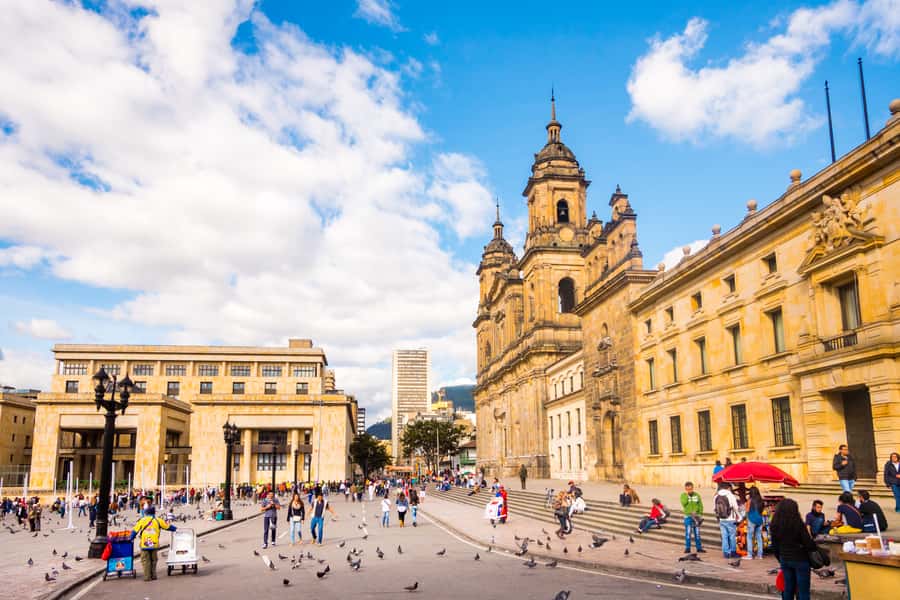
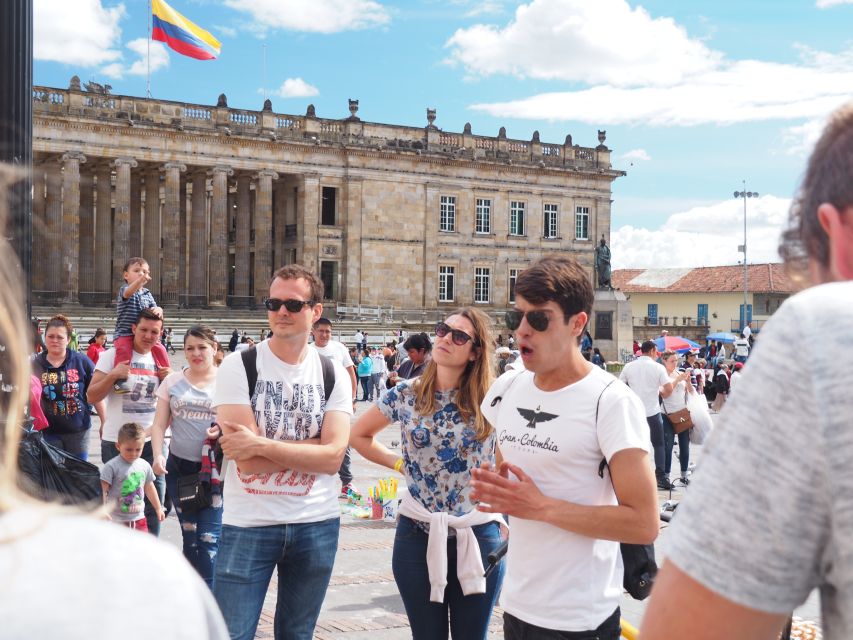
At Bolívar Square, the focus becomes more serious. You see the Palace of Justice, the National Capitol, the Town Hall, the Primary Cathedral, and the Presidential Palace. The square is a useful place to discuss how political power and armed conflict have shaped the country.
The tour also covers Colombia’s recent history, including the armed conflict, the role of the state, and the peace agreement. This is one of the strongest parts of the experience for anyone who wants more than a list of dates and buildings. A good guide can connect what you see around the square with current challenges, while keeping the discussion clear and grounded.
Guides have been praised for explaining political and cultural subjects in an accessible way. Cindy, for example, was noted for covering both Bogotá’s past and its current situation. Sergio has added current events and local references to museum visits and city walks. Those details matter because Colombia’s story is still unfolding, not locked away in a colonial-era display.
You can ask your guide how much time to spend on this subject. If you want a relaxed introduction, the explanation can stay broad. If you are interested in peace, state power, or modern Colombian politics, this is a good place to slow down.
The Botero Museum and art with a local guide
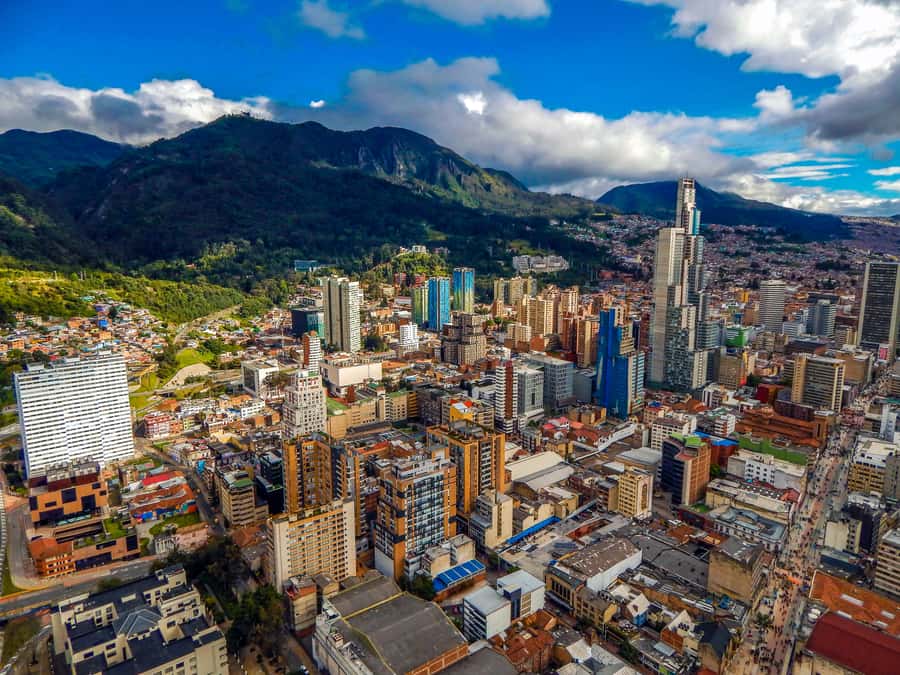
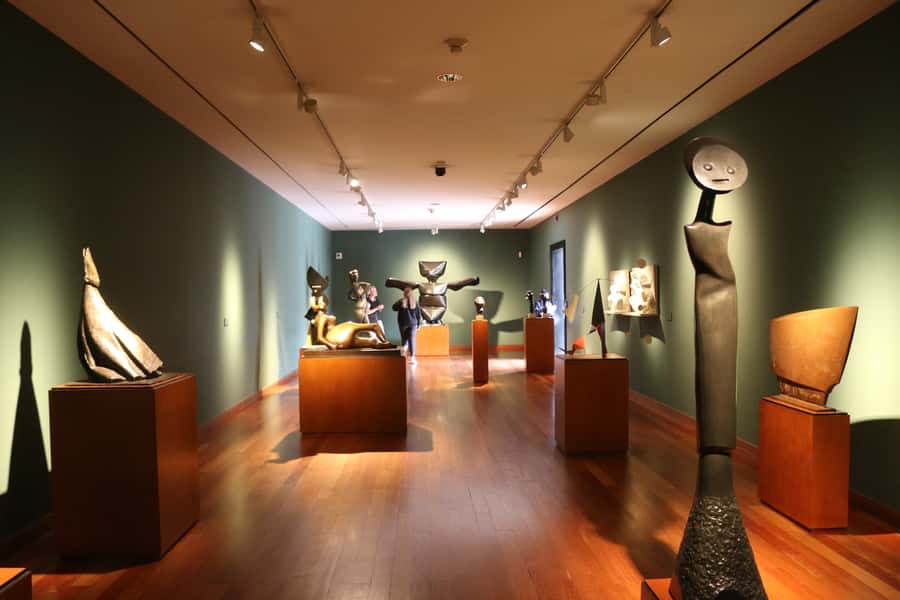
The Botero Museum usually receives about 45 minutes on the tour. It offers a strong selection of work by Fernando Botero along with national and international art. The museum itself is free, but the guide’s explanation adds value by helping you decide what deserves your limited time.
Botero’s exaggerated figures are easy to recognize, yet a quick walk through the rooms can leave you with only a visual impression. Your guide can explain the humor, social commentary, and artistic choices behind selected works. You do not need to be an art specialist to enjoy this stop, and the museum is compact enough to fit into a packed day.
The main drawback is time. Forty-five minutes gives you an introduction, not a slow museum visit. If Botero is a major reason for your trip, tell your guide early. The private format gives you a better chance of spending those minutes on the paintings that interest you instead of trying to see everything.
Check the calendar before booking. The Botero Museum is closed on Tuesdays, and the guide will provide another museum option on that day. Do not assume every stop will operate exactly as shown if your date falls on a closure.
A few more Bogota day trips to weigh up
- BOGOTA: City Tour, Monserrate, Gold Museum, Botero Museum, Plaza Bolívar
★ 4.8 · 146 reviews - La Candelaria Private Tour Bogotá + Local Lunch + 2 Museums (6 Hrs.)
★ 5.0 · 41 reviews - Bogotá: Private Candelaria Walking Tour and Gold Museum
★ 5.0 · 17 reviews - BOGOTA: Tour of Jaime Duque Park, Zoo, and Aerospace Museum
★ 4.6 · 15 reviews
The Gold Museum and pre-Spanish metalwork
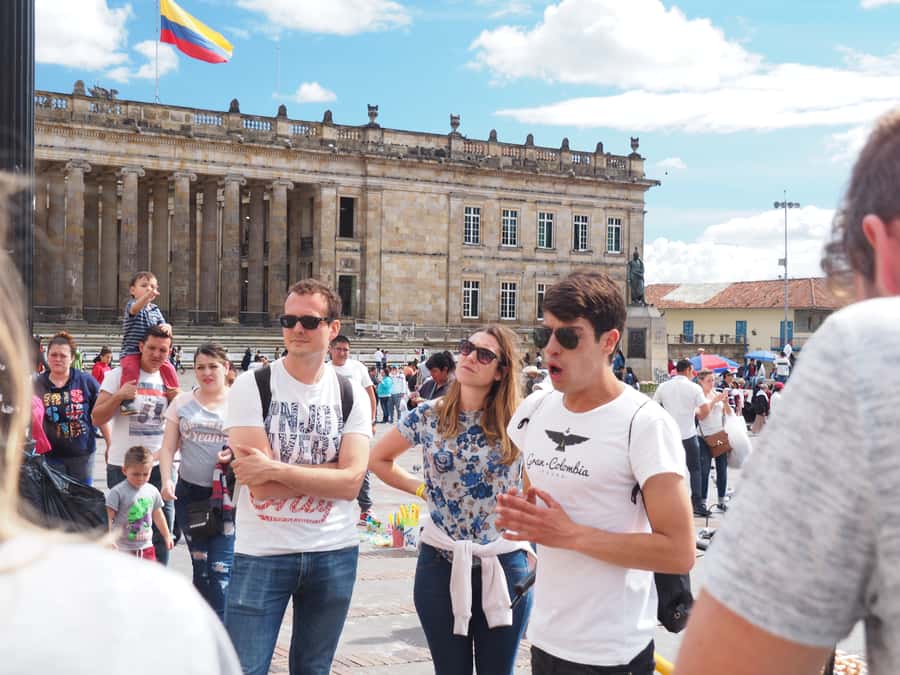
The Gold Museum receives about an hour, making it one of the more substantial stops. Its collections show metalwork made before the arrival of the Spanish, offering a direct look at the skill, beliefs, and ceremonial traditions of the region’s earlier societies.
This museum can easily overwhelm you with objects and display cases. That is where a private guide earns their keep. Emilio, for instance, was able to select key floors and explain the most important pieces rather than rushing through every room. You can use the same approach: ask for the objects that best explain the culture, technology, and meaning behind the collection.
The museum adds an essential counterpoint to the colonial streets of La Candelaria. Earlier, you hear how Spanish colonization changed the region. Here, you encounter the material culture that existed before that arrival. Together, the stops prevent Bogotá’s story from becoming only a Spanish and republican story.
The Gold Museum closes on Mondays. If you book for that day, another museum will be offered. That is a fair backup, but if the gold collection is a priority, schedule this tour Tuesday through Sunday.
Coffee, lunch, and the rhythm of the day
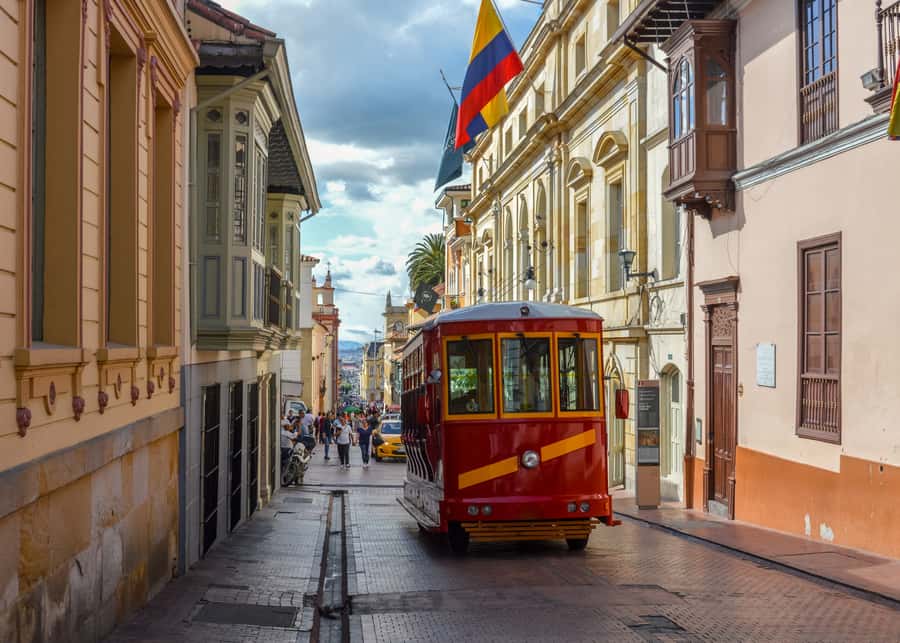
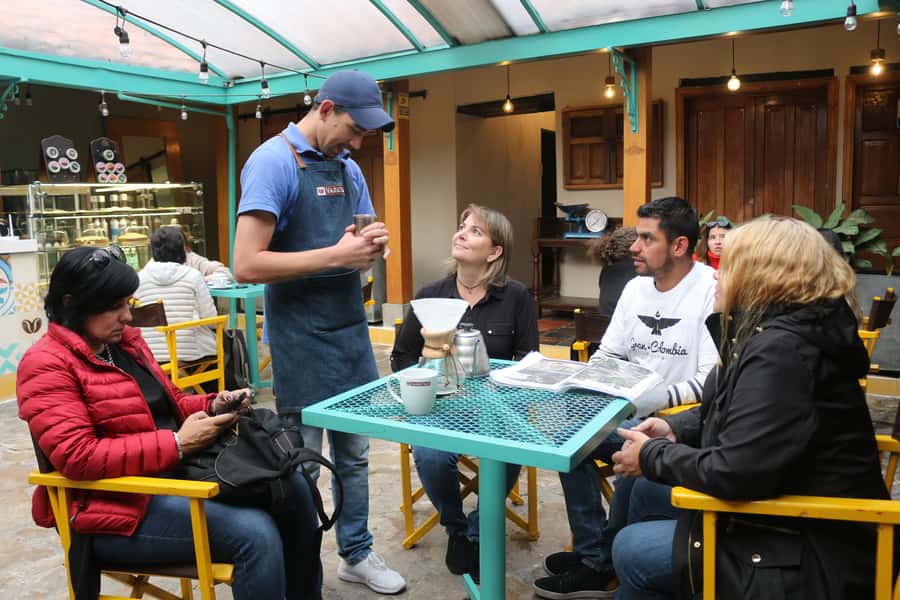
Coffee tasting gives the tour a quieter pause. You receive a cup of Colombian coffee at a local place where baristas explain the basics of the drink. This is not presented as a long technical workshop. Instead, it is a practical introduction to one of the country’s best-known products.
I like this stop because it turns a familiar beverage into a local experience. You can ask questions, taste the coffee, and get a better sense of how Colombian coffee fits into daily life. The fruit and juice tasting also breaks up the museums and walking.
Lunch is not included, but your guide will recommend restaurants in the area. Build time for it rather than treating it as an afterthought. One guest described the day as seven hours of walking with no real lunch break, although snacks were provided through the tastings. That is a useful warning, especially if you are traveling with children or need regular rest.
Ask about lunch timing when the tour begins. The schedule is flexible enough to shape the day, but you should not assume a formal meal is automatically built into the seven-hour version.
Riding up Monserrate for Bogotá’s broadest view
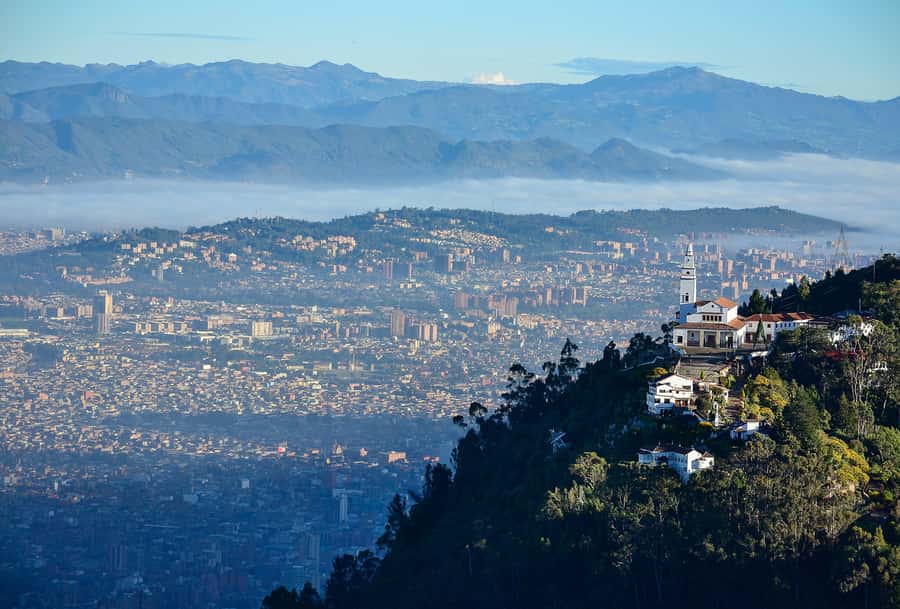
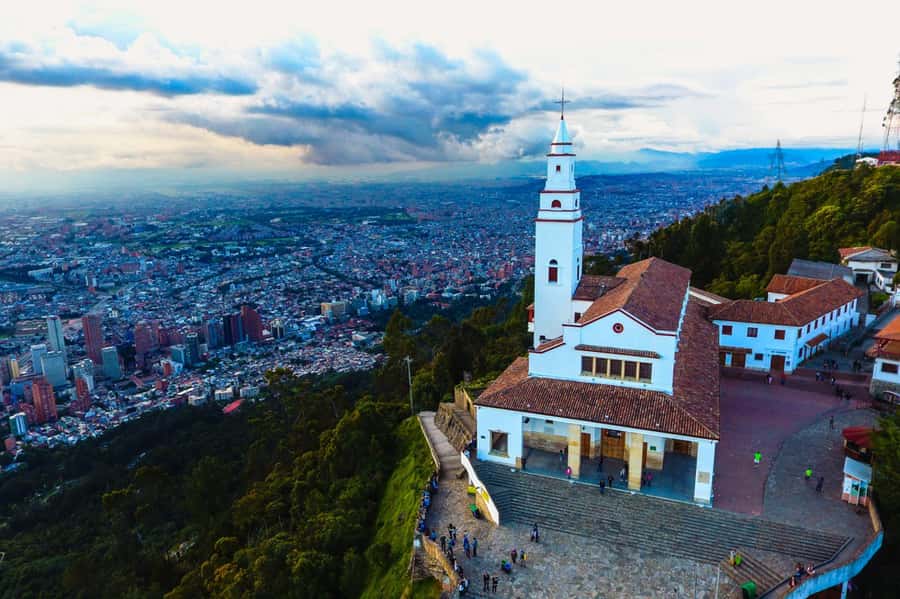
Monserrate is the tour’s grand visual finish. You ride the cable car up the mountain, with a two-way ticket included. Depending on operating arrangements, the ascent may use the funicular, and one person described going up by funicular and returning by cable car.
At the top, you get a broad view along the Bogotá valley from one of the city’s best vantage points. The change is striking. Down below, you have been threading through narrow streets, political squares, and museum rooms. Up here, the city spreads out beneath you.
The Basilica of Monserrate gives the viewpoint a religious purpose as well as a scenic one. Your guide explains why the hill matters to local people and points out the significance of the basilica. This makes the stop more than a cable-car ride followed by photographs.
Allow about two hours for Monserrate, including the ride, sightseeing, and walking. Weather can change the experience. The tour operates rain or shine, so bring suitable clothing and expect visibility to vary. Clear weather can produce excellent views, while cloud or rain may limit them.
Altitude deserves attention. Bogotá is already high, and Monserrate is higher still. One guide, Rodrigo, helped a guest whose wife became unwell with altitude symptoms, providing practical assistance and helping obtain medicine. That does not remove the need for caution. Move at your own pace, drink water, and tell your guide if you feel dizzy or develop a headache.
The tour is not suitable for people with mobility impairments or wheelchair users. Even if you walk well, the combination of altitude, slopes, cobblestones, and a long day can be demanding.
How much walking and how much flexibility to expect
The full option lasts about seven hours and includes La Candelaria, Chorro de Quevedo, Bolívar Square, both museums, tastings, and Monserrate. The shorter version lasts about five hours and focuses on Monserrate rather than including every museum.
Some people have walked close to 14 kilometers on the full day. That is not a guaranteed distance, but it shows why footwear and stamina matter. You will be on your feet for much of the experience, with museum visits adding standing time rather than replacing the walking.
The advantage is that a private guide can adjust the pace. Guides such as Kata, José, and Myra have been praised for adapting the day to personal interests and timing. If you want more art, less politics, an earlier lunch, or a shorter museum visit, say so at the start.
The guide languages are English and Spanish. Pickup and drop-off are available from hotels, hostels, Airbnbs, vacation rentals, and points of interest within Bogotá. This saves time and makes the tour easier to fit into a first or final day in the city.
Free cancellation is available up to 24 hours before departure, and you can reserve without paying immediately. Those policies are useful if your Bogotá plans depend on weather, flight connections, or a changing schedule.
Who should book this tour?
I would choose this tour if you are visiting Bogotá for the first time and want a guided framework for the city. It is especially useful if you want history explained in plain language, prefer private touring, or have only one day or a long layover.
It suits curious eaters, museum beginners, photographers, and people who want to understand Colombia’s recent politics without attending a formal lecture. Several guides have also been praised for taking photos, so solo visitors can ask for help with pictures during the day.
I would hesitate if you dislike long walks, need a guaranteed lunch break, or want to spend half a day in one museum. Families with young children may find the seven-hour schedule too long, and anyone sensitive to altitude should consider the five-hour version or discuss pacing with the guide.
Should you book it?
Book this Bogotá tour if you want a well-packed first look at La Candelaria, Colombian art, pre-Spanish goldwork, local flavors, and Monserrate in one private day. At $65 per person, the combination of transport, guide, admissions, tastings, insurance, and cable-car tickets offers solid value, particularly for a short stay.
Choose the shorter option if you want the city’s main hill and a lighter schedule. For the full version, wear good shoes, bring water, avoid large bags, and check the museum closing days before choosing your date. The tour’s greatest strength is its human guide, so use that private time well: ask questions, request a sensible pace, and let the day become your introduction to Bogotá rather than a race through its sights.
FAQ
How long does the Bogotá City Tour with Monserrate last?
You can choose a 5-hour version with Monserrate or a 7-hour version that also includes the Gold Museum and Botero Museum. Starting times depend on availability.
What is included in the $65 price?
The price includes hotel pickup and drop-off within Bogotá, a tour guide, a two-way cable-car ticket to Monserrate, chicha and coffee tastings, fruit and juice tastings, and all-risks insurance. Entry to the Gold Museum and Botero Museum is included if you choose the option with those museums.
Is lunch included?
No. Lunch is not included, but you can choose from restaurants in the area and receive recommendations from your guide.
Which languages are available?
The tour is offered in English and Spanish.
Are the museums open every day?
No. The Gold Museum is closed on Mondays, and the Botero Museum is closed on Tuesdays. Your guide will provide another museum option when needed.
Is the tour suitable for wheelchair users?
No. The experience is a walking tour and is not suitable for people with mobility impairments or wheelchair users. Comfortable shoes are recommended, and large bags or luggage are not allowed.
Just added around Bogota
- Fun Graffiti Workshop: The Art of Aerosol and Color★ 5.0 · 3 reviews
- Zipaquirá: Private Salt Cathedral Mine and Walking Tour★ 4.8 · 3 reviews
- Walking tour José Celestino Mutis Botanical Garden 3 hrs★ 5.0 · 3 reviews
- Bogota: East Hills Mountain Hike★ 4.2 · 3 reviews
- Bogota: Explore the forest and bird watching at Chicaque Natural Park★ 5.0 · 3 reviews
- Bogota: Downtown City and Monserrate Hill Private Tour★ 3.7 · 3 reviews
- From Bogota: White Water Rafting Experience★ 4.4 · 3 reviews
- From Bogota: Excursion to Jaime Duque Park★ 5.0 · 3 reviews
Bogotá Tours, compared.
Zipaquirá: Salt Cathedral Group Tour with Pickup
Read our review →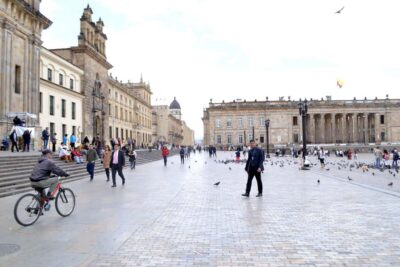
Bogotá´s Barrios: El Paraíso Favela Tour with Cable Car
Read our review →
Bogota: Guatavita and Salt Cathedral Daily Group Tour
Read our review →
Bogota: Zipaquirá Salt Cathedral and Lake Guatavita Day Tour
Read our review →
Bogota: Salt Cathedral of Zipaquira Private daily Trip
Read our review →Browse the lists this tour appears in