
Reviewed · BOGOTÁ TOURS
Fun Graffiti Workshop: The Art of Aerosol and Color
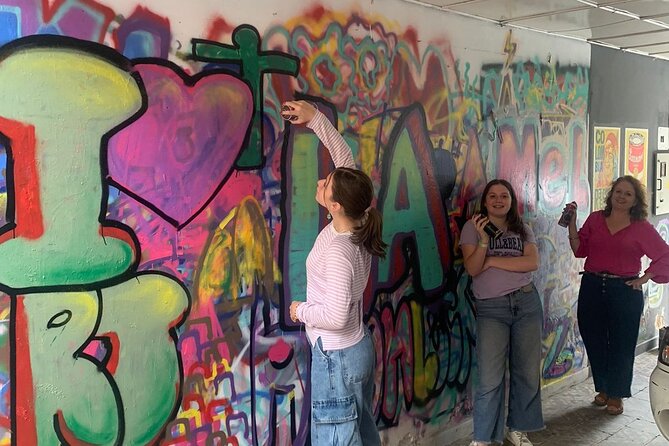
Bogotá’s Macarena neighborhood is a fitting place to learn graffiti, and this two-hour workshop takes you beyond simply looking at painted walls. You begin with markers and basic drawing, then work toward a spray-painted design of your own. The session takes place at a cultural house and garden filled with murals and photographs, giving the activity a real sense of place.
I like the clear progress from paper to wall, and I like that the workshop treats graffiti as both a visual skill and a form of personal expression. Guide Diego took one participant from basic marker work to a 3D spray-painted design, which is a useful sign that beginners are not left staring at a blank wall. The main consideration is that paint can drip, so wear old clothes. Also, the $115 price is listed per group of up to one person, making the value much better for a solo private session than for someone hoping to split a group rate.
Key points to know before you book
- Start with markers, then use spray paint: You learn basic drawing, color theory, lettering, and sketching before working with aerosol paint.
- Create your own graffiti identity: The goal is to develop a graffiti name and throw-up, a simple, bold piece built for quick visual impact.
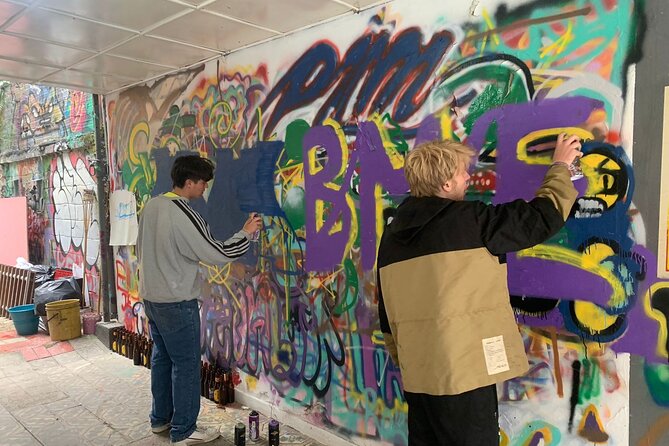
- Practice real spray techniques: The workshop covers can control, gradient fills, opposite colors, contrast, and ways to create three-dimensionality.
- Work inside a cultural house and garden: The setting includes murals, photographs, wall space, and paper for your own experiments.
- Suitable for beginners and experienced artists: The basic session needs no previous spray-paint experience, while advanced workshops can focus on realism, stencils, or characters.
- Wear clothes you can sacrifice: Spray paint may drip, and one participant specifically recommends old clothing.
From Tapas Macarena to a working art space
You meet in front of Tapas Macarena at Calle 26b #4 13. Look for the guide wearing a purple hoodie or cap, or carrying a purple umbrella. This is a simple meeting point, but pay attention to the exact address because the workshop itself takes place at a cultural house and garden rather than at the restaurant.
The Macarena area is in central Bogotá, close to the city’s cultural core. The workshop uses that setting well. Instead of beginning in a generic classroom, you enter a place decorated with murals and photographs connected to the experience. That matters because graffiti makes more sense when you see it as part of a neighborhood art culture, not just as a set of spray-paint tricks.
The meeting arrangement is especially useful if you are arriving independently. There is no pickup service, so you need to make your own way to the restaurant. The activity lasts two hours, which is long enough for a complete beginner session but short enough to fit beside a museum visit, walking tour, or meal in central Bogotá.
More street art walks in Bogota:
- Bogotá: La Candelaria Graffiti & Urban Art Guided Tour
★ 4.7 · 250 reviews - Fun Graffiti Workshop: The Art of Aerosol and Color
★ 5.0 · 73 reviews - Graffiti Tour in La Candelaria Bogotá with Transportation
★ 5.0 · 68 reviews
The first stage: markers, sketches, and a graffiti name
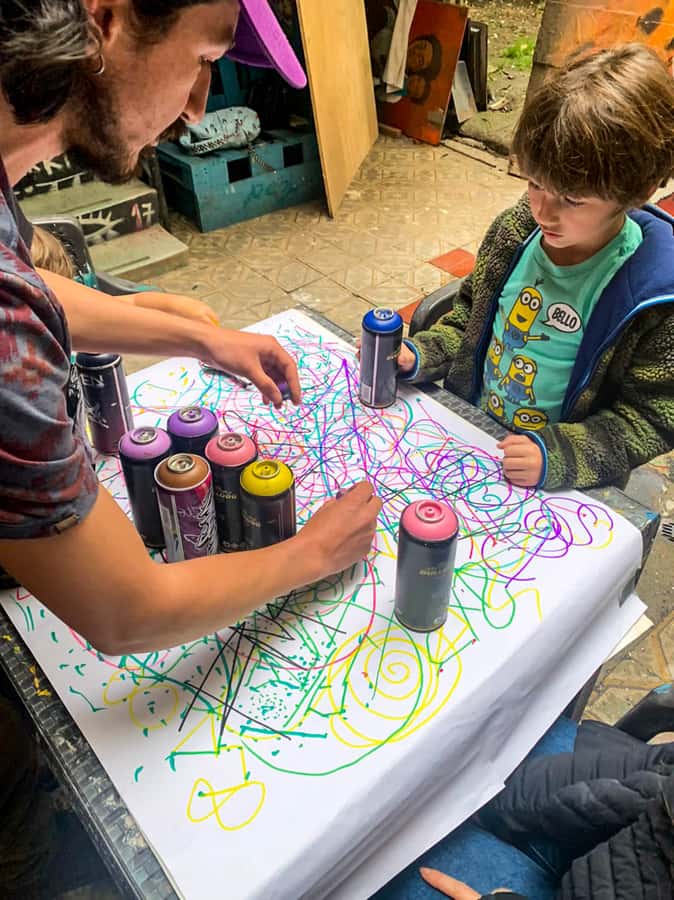
The workshop begins away from the wall. You use graphic markers and thick paper to explore basic drawing and lettering. This may sound modest, but it is the right place to start. Spray paint is hard to control when you are also trying to invent a design, choose colors, and understand letter shapes.
You work through foundational ideas such as line, form, color, and contrast. The instructor also introduces color theory and uses imagination games and chromotherapy as part of the creative process. You do not need to arrive with a polished concept. The structure is designed to help you find a starting point and turn it into something personal.
A central task is creating your graffiti name. You then develop a throw-up, a compact piece based on bold letters and strong color. This is a practical introduction to graffiti culture because it focuses on identity and repetition. Your name becomes the design problem: how can you make the letters readable, distinctive, and visually strong?
I like this stage because it protects you from the most common beginner mistake, picking up a spray can with no plan. The marker sketch gives you a rough map. It also lets the instructor correct your proportions and composition before paint makes changes harder.
The experience can work for children and adults, though the supplied information does not specify a minimum age. It is described for enthusiasts of all ages, and private or small-group formats are available. If you are booking for a family, ask the provider to confirm the age arrangements before paying.
Handling the spray can without losing control
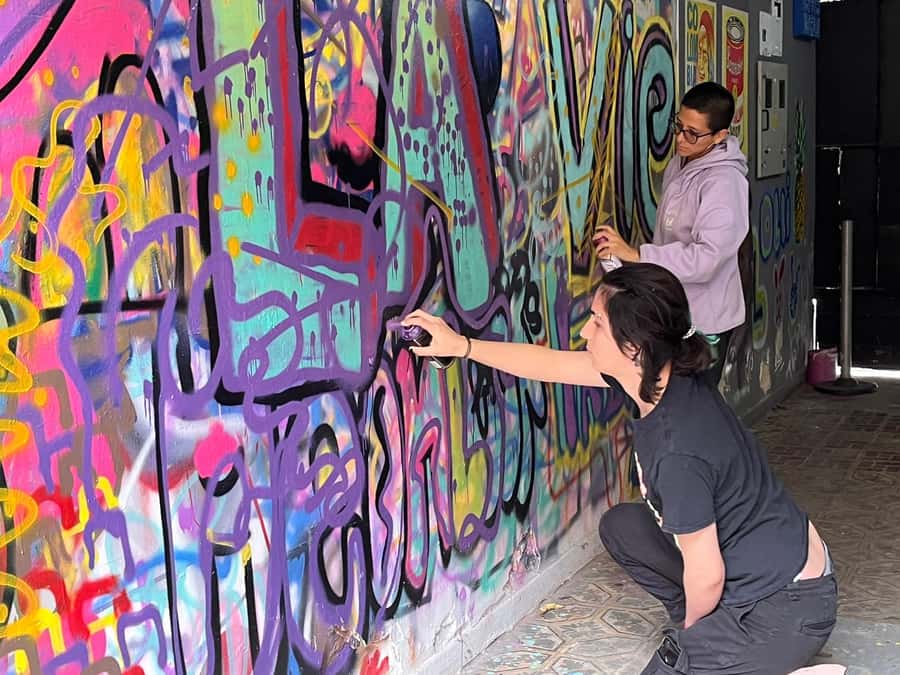
Once the idea is ready, you move to aerosol paint. This is where the workshop becomes more physical. You learn can control, which means understanding how distance, movement, and pressure affect the line. The goal is not just to spray color onto a surface. It is to make the paint behave with some purpose.
The session also covers filling areas with gradients. A gradient can turn a flat letter into a more polished shape, but it takes practice to blend colors without creating a muddy patch. You work with opposite colors and contrast to create separation and a sense of depth.
The word 3D can sound ambitious for a two-hour class, but the method described is grounded in simple visual ideas. Opposing colors, clear outlines, and careful placement can make letters appear fuller. You are not expected to produce a gallery-ready mural. You are learning enough technique to make your own design look intentional.
One participant, Amy from Canada, described a session with Diego that moved from marker basics and foundational principles to a 3D spray-painted wall design. That progression is important. It suggests the lesson is not just a quick photo opportunity with a can in your hand. The instructor builds toward a finished piece.
Still, spray paint has a learning curve. Your first lines may be uneven, and your first fill may not be smooth. That is part of the point. The class gives you a controlled place to make those mistakes, with guidance nearby and materials provided.
Paper first, wall later
The workshop includes thick paper and wall space, so you may work on both surfaces depending on the session plan and your chosen project. Paper is forgiving. You can test a color combination, refine a letter, or keep a smaller finished piece to take home.
The wall gives the activity its proper scale. Spray painting letters on a wall feels different from drawing them in a notebook. Your arm movement changes, the surface has a different texture, and the design has to be seen from farther away. That shift helps you understand why large-scale graffiti uses bold shapes and strong contrast.
The available information does not promise that every participant will complete the same wall project. The basic workshop aims to create your own graffiti name and throw-up, and the included wall space makes that possible. If taking home a physical souvenir matters to you, ask whether your booking includes a paper piece, a photograph, or both. The experience includes a visit to the cultural house with murals and photographs, but a take-home print is not listed.
Paint splashes are another practical issue. Albin from Switzerland strongly recommends old clothing after attending with his daughter. I would also avoid open-toed shoes and anything you want to wear later that day, though only the advice about old clothes is directly confirmed here.
A few more Bogota day trips to weigh up
- Bogota: Colombian Emerald Ring Workshop
★ 5.0 · 61 reviews - Private Salsa Class and / or Latin Rhythms
★ 5.0 · 54 reviews - Bogotá: Candelaria Tour with Cacao and Coffee Workshop
★ 5.0 · 3 reviews - Cartagena: Pub Crawl with Dancing Lessons and Free Shots
★ 4.2 · 211 reviews
What makes the cultural house worth seeing
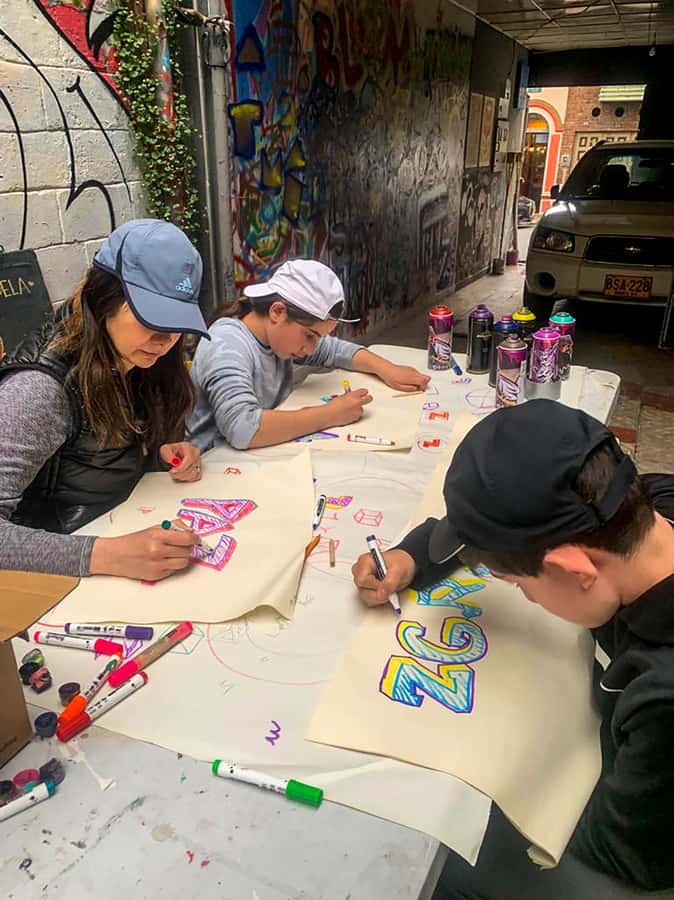
The setting adds more than decoration. The cultural house and garden give you a look at murals and photographs connected to the local art scene before or during your own work. That visual context can help you notice choices in scale, color, outlines, and composition.
Graffiti often looks effortless when you see a finished wall. A short workshop reveals the planning underneath it. You see how a name becomes a sketch, how a sketch becomes a color plan, and how the paint needs to be handled to keep the design legible.
The house also provides a calmer setting than a public street. You can focus on the lesson without worrying about passing traffic or trying to paint quickly before someone interrupts. At the same time, the session keeps the subject connected to street art through its lettering, spray techniques, and emphasis on identity.
This balance is one of the activity’s strongest features. It is not a formal art-school lesson, and it is not only a tourist photo stop. You get a short, hands-on introduction in a place built around cultural and visual work.
The advanced option for artists with more experience
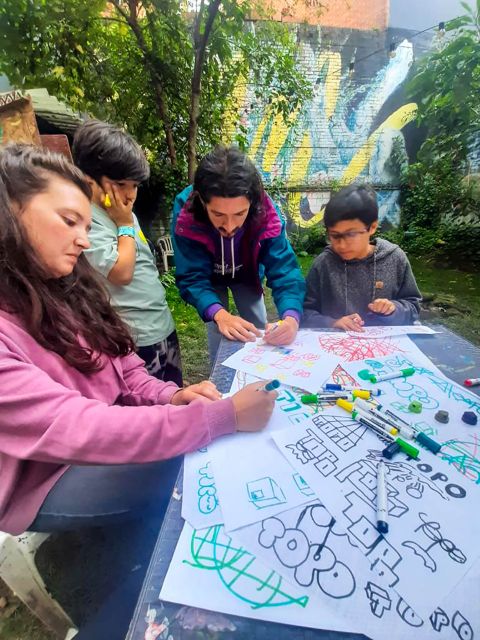
The basic class is aimed at beginners and people with no previous spray-paint experience. The provider also offers an advanced street art workshop for participants who want more technical or personal direction.
The advanced session can be tailored to different needs, including duration and skill level. Possible subjects include realism with spray paint, political stencil art, and character creation with renowned artists. These are not minor variations on the basic class. They point toward different branches of street art, from detailed image-making to bold graphic messaging and illustrated figures.
You should clarify the advanced plan before booking because the activity can be customized. The supplied information does not set one fixed advanced itinerary or price. If you already paint, have a character design in mind, or want to work on stencils, explain that when you inquire.
For a first-time painter, the basic workshop is likely the better fit. For an artist who already understands marker work and spray handling, the advanced option may make the two-hour format more worthwhile, especially if the lesson is adjusted to a specific goal.
Is $115 a fair price?
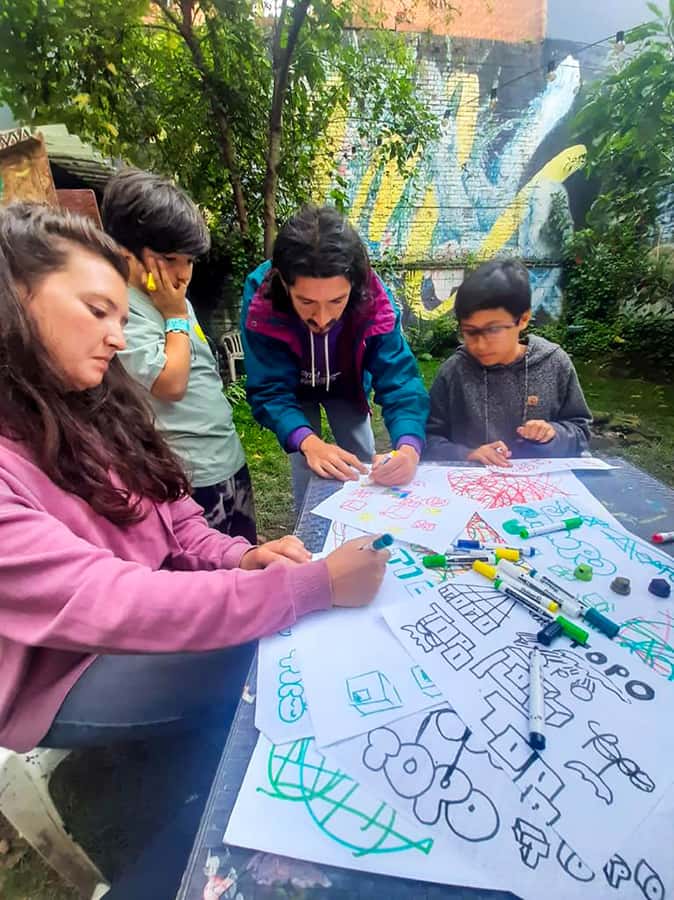
The listed cost is $115 per group up to one person. That wording matters. It appears to be priced as a solo booking rather than a per-person rate for a large public class, while private or small groups are also available. You should confirm the final cost if you are booking with more than one participant.
The fee includes spray cans, graphic markers, nozzles, thick paper, wall space, and a visit to the cultural house. Those supplies can add up, and the nozzles matter because different spray patterns affect line width and control. You are also paying for an instructor who guides the whole process rather than simply handing you a can.
For a solo visitor who wants direct help and a finished design, the price can make sense. You receive a focused lesson, materials, a cultural setting, and the chance to paint on a wall. For a larger group, the value depends on how the price changes, how much individual instruction each person receives, and whether everyone gets comparable wall time.
Food, drinks, and pickup are not included. Plan your route to the meeting point and consider eating before or after the session. Since the class is only two hours, the lack of refreshments is not a serious issue, but it is worth knowing if you are fitting the activity into a full day.
Languages, group size, and the feel of the lesson
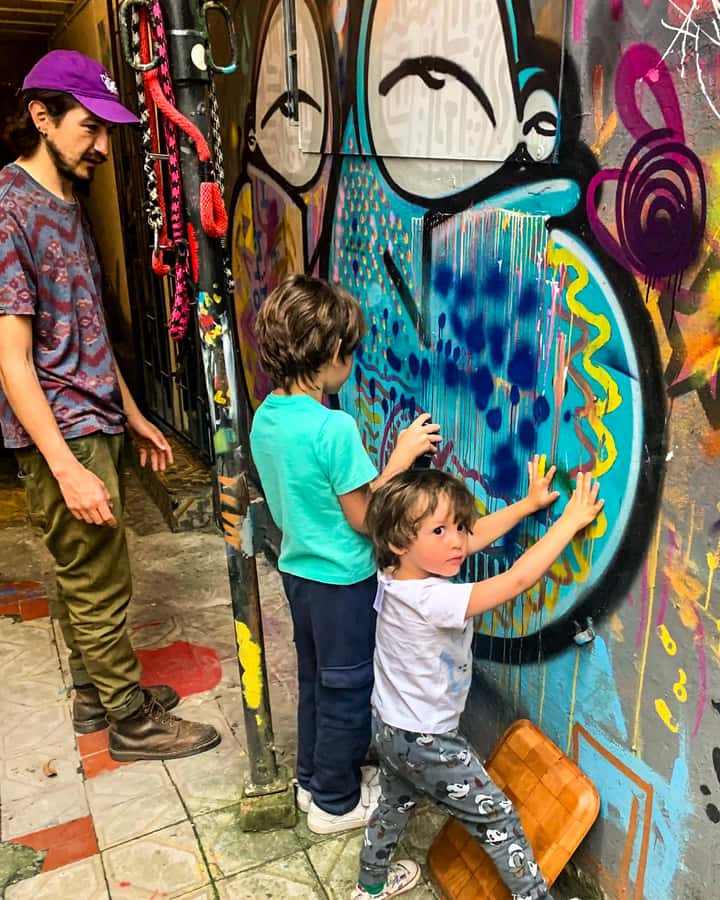
Instruction is available in English, Spanish, German, French, and Italian. That is a useful choice in a technical class, where small details about spray distance and hand movement are easier to follow in a language you understand well.
Private and small-group formats are available. A private session should give you more room to shape the project around your own graffiti name and preferred colors. A small group may be more social, especially for families or friends, but individual wall time could depend on the booking arrangement.
The experience is presented as supportive and playful, with body, mind, and emotions included in the teaching approach. That does not mean the class is therapy. It means the instructor uses imagination and color as ways to help you loosen up and make a personal design.
The activity received a rating of 5 from three reviews, with especially strong praise for the step-by-step teaching and the fun of producing a surprisingly good result. Albin’s experience with his daughter also points to the workshop’s family appeal, while Amy’s session with Diego shows how far a complete beginner can progress in one class.
Who should book this Bogotá graffiti workshop?
I would recommend it to first-time spray painters, creative couples, families, solo visitors, and anyone who wants a hands-on activity in central Bogotá. It suits people who enjoy making something rather than only photographing finished art.
It is also a good choice if you are nervous about your artistic ability. The lesson starts with simple marker work, and the process gives you a design to follow. You do not need to arrive with a natural talent for drawing. Albin specifically felt his pictures turned out surprisingly well despite not considering himself talented.
You may want a different format if you are looking for a long street-art tour, a large public mural project, or a detailed professional portfolio piece. Two hours gives you a solid introduction, not mastery. The advanced option may suit experienced artists, but you need to agree on the subject and format in advance.
Book with care if you dislike getting messy. The paint can drip, and old clothing is a practical requirement. Also check the group price before booking if you are not attending alone.
Final call: a hands-on way to meet Bogotá’s art scene
This workshop is worth booking if you want a direct, creative connection with Bogotá rather than another passive sightseeing stop. The strongest reasons are the marker-to-wall progression, the personal graffiti name, the access to spray cans and nozzles, and the chance to work inside a mural-filled cultural house.
I especially like that the experience gives beginners a clear path. You sketch, learn color and contrast, practice can control, and then attempt a 3D design. Diego’s teaching, as described by a participant, follows that path carefully.
The price deserves a closer look because $115 for a group of up to one person is not a casual budget activity. It makes the most sense as a private lesson with supplies and dedicated guidance. Wear old clothes, confirm the group rate, and meet at Tapas Macarena with enough time to find the guide in purple.
FAQ
Where does the graffiti workshop meet?
You meet in front of Tapas Macarena at Calle 26b #4 13. Look for the guide wearing a purple hoodie or cap, or carrying a purple umbrella.
How long does the workshop last?
The workshop lasts two hours. Starting times vary, so you need to check availability when booking.
Is previous spray-paint experience required?
No. The basic workshop is designed for beginners and enthusiasts with no previous spray-paint experience.
What languages are available?
The instructor can teach in English, Spanish, German, French, and Italian.
What materials are included?
The price includes spray cans, graphic markers, nozzles, thick paper, and wall space. It also includes a visit to the cultural house with its murals and photographs.
Is pickup service included?
No. Pickup service is not included, so you need to reach the meeting point on your own.
Can I cancel the booking?
Yes. You can cancel up to 24 hours in advance for a full refund. You can also reserve now and pay later, keeping your plans flexible.
Just added around Bogota
- Zipaquirá: Private Salt Cathedral Mine and Walking Tour★ 4.8 · 3 reviews
- Walking tour José Celestino Mutis Botanical Garden 3 hrs★ 5.0 · 3 reviews
- Bogota: East Hills Mountain Hike★ 4.2 · 3 reviews
- Bogota: Explore the forest and bird watching at Chicaque Natural Park★ 5.0 · 3 reviews
- Bogota: Downtown City and Monserrate Hill Private Tour★ 3.7 · 3 reviews
- From Bogota: White Water Rafting Experience★ 4.4 · 3 reviews
- From Bogota: Excursion to Jaime Duque Park★ 5.0 · 3 reviews
- Bogotá: La Candelaria Food Tour with Tastings★ 4.2 · 3 reviews
Bogotá Tours, compared.

Zipaquirá: Salt Cathedral Group Tour with Pickup
Read our review →
Bogotá´s Barrios: El Paraíso Favela Tour with Cable Car
Read our review →
Bogota: Guatavita and Salt Cathedral Daily Group Tour
Read our review →
Bogotá City Tour with Monserrate, Gold and Botero Museums
Read our review →
Bogota: Zipaquirá Salt Cathedral and Lake Guatavita Day Tour
Read our review →
Browse the lists this tour appears in