
Reviewed · BOGOTÁ TOURS
Bogotá: La Candelaria Graffiti & Urban Art Guided Tour
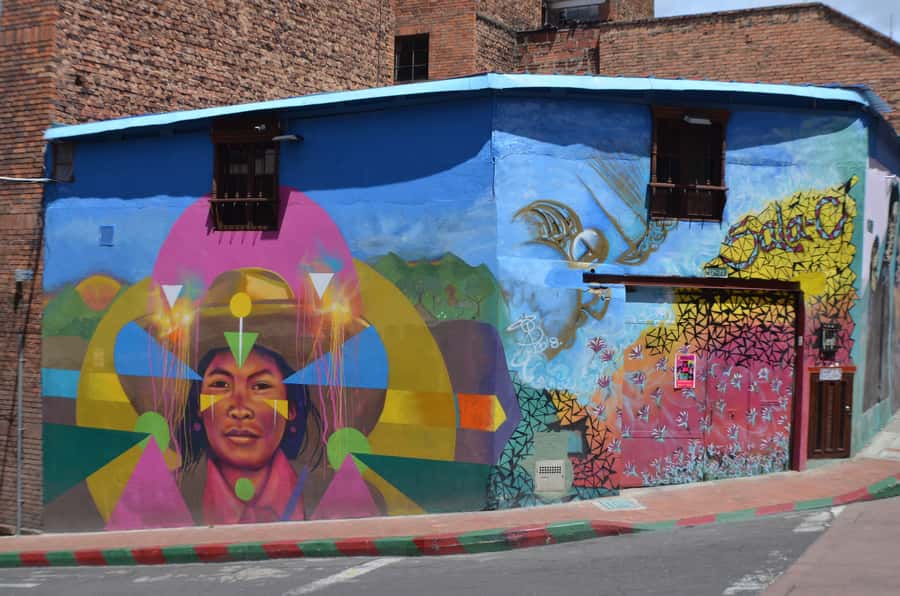
Bogotá’s street art is not just decoration. In La Candelaria, painted walls tell stories about indigenous identity, politics, environmental concerns, and the changing face of downtown. This 150-minute walk turns those walls into a readable record of Colombia’s past and present, with guides such as Juana, Luis, Christian, and Bernardo adding the context you would likely miss on your own.
I especially like the way the tour connects art with real places, including La Concordia Market and Journalist’s Park. I also like the final stop at Café Herencia, where you can try coca leaf tea and see a café that supports local artists. The main consideration is pace and weather: this is a long city walk, and the guide may speak English and Spanish at the same time if the group is mixed.
Key points at a glance
- Murals with a message: Learn how artists address indigenous ancestry, current issues, the environment, and city life.
- Artists to watch for: See work associated with 3 Manos, Ledania, Bastardilla, Vera, Carlos Trilleras, Wosnan, and Ocio 4.
- Three useful neighborhood stops: Chorro de Quevedo, La Concordia Market, and Journalist’s Park give the art a social setting.
- Small-group format: The group is limited to 10 people, and the tour can sometimes feel almost private when attendance is low.
- A thoughtful finish: End at Café Herencia with a Colombian tea tasting and a connection to local artists.
- Simple value: At $16 per person, the price covers the guide, art interpretation, tea, insurance, and a rain umbrella.
Why La Candelaria is the right place for this walk
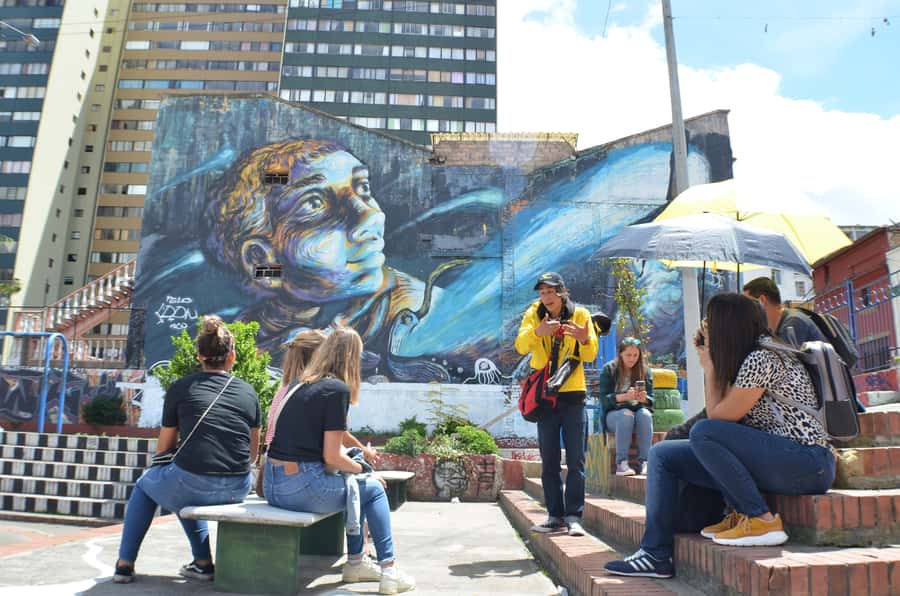
La Candelaria is Bogotá’s old central district, and its narrow streets make a good outdoor gallery. The walls change over time, so this is not a fixed museum collection. A mural can be painted over, altered, or joined by a new piece. That temporary quality is part of the point.
The tour begins at Plazoleta del Chorro de Quevedo, a lively meeting place in the district. Look for the fountain and the yellow umbrella, which mark the meeting spot. Tours leave daily at 10 a.m. and 2 p.m., giving you a choice between a morning walk and an afternoon introduction to the neighborhood.
I would choose this tour early in a Bogotá stay. It gives you a useful way to read the city, and you can return later to photographs or streets that caught your eye. It also works well for a short visit because the walk combines art, local history, and several recognizable downtown places in one outing.
More street art walks in Bogota:
- Fun Graffiti Workshop: The Art of Aerosol and Color
★ 5.0 · 73 reviews - Graffiti Tour in La Candelaria Bogotá with Transportation
★ 5.0 · 68 reviews - Bogotá: Graffiti Tour el mejor recorrido de arte urbano
★ 4.7 · 41 reviews
Chorro de Quevedo and the first hour of murals
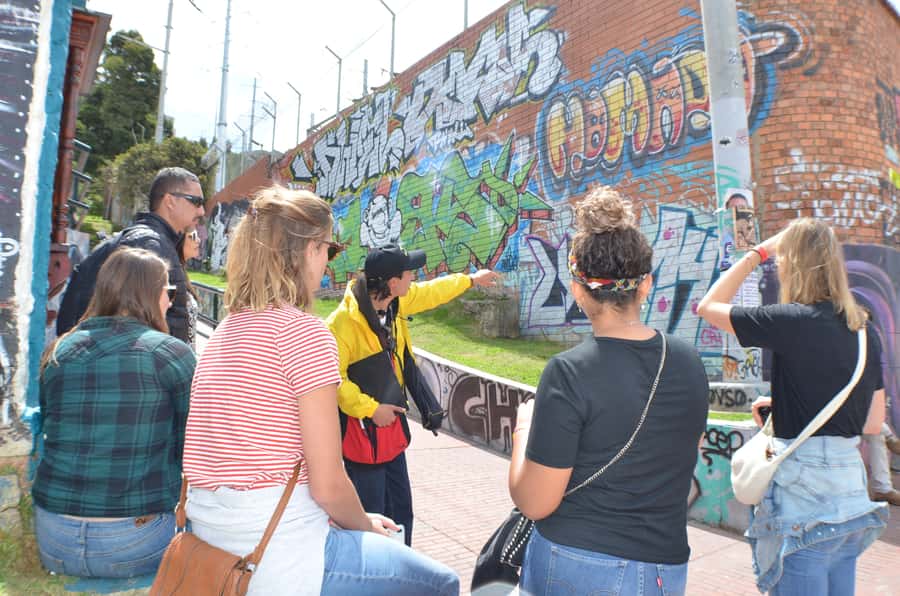
From the square, your guide leads you through La Candelaria on foot. The first hour is devoted mainly to the district’s graffiti and mural scenes, with stops to explain the work rather than simply point at it.
That difference matters. Spray paint, tags, large murals, and more detailed urban works can look like one broad category when you are walking alone. A good explanation helps you notice the artist’s approach, the difference between a signature and a larger composition, and the ideas built into the image.
The tour focuses on artists connected with Bogotá’s downtown scene, including Carlos Trilleras, Wosnan, Ocio 4, and 3 Manos. You also hear about artists such as Bastardilla, Vera, and Ledania, whose work helps broaden the story beyond a male-only view of graffiti.
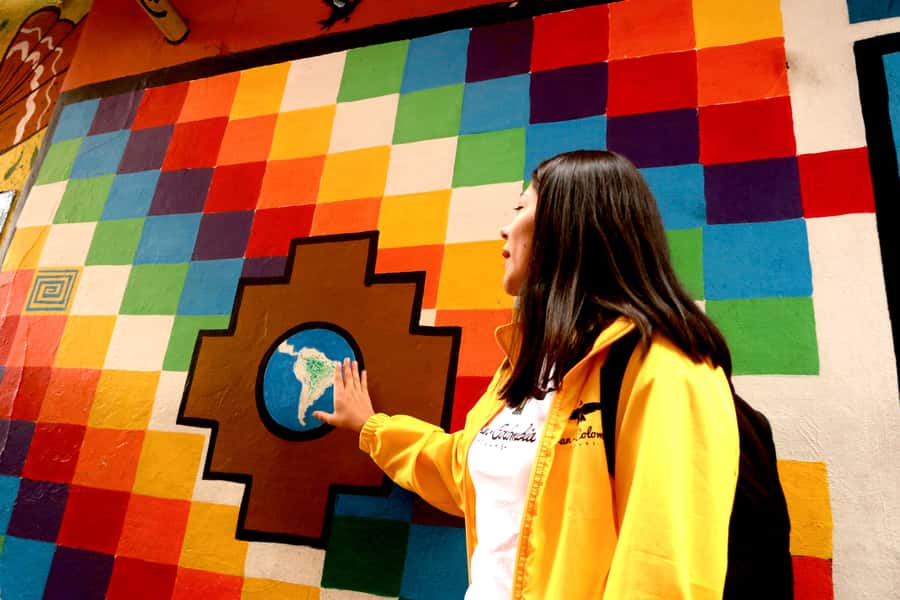
The strongest part of the experience is the social and political background. Your guide gives a short introduction to why Bogotá became so well known for spray painting, then connects individual works to Colombia’s cultural debates and indigenous ancestry. You are not asked to admire color without asking why the image is there.
Guides use different methods. Carolina’s guide, for example, used supplemental videos to show parts of the mural process, while other guides focus on discussion and questions. Juana is repeatedly noted for connecting the art to current issues and local culture. The exact presentation depends on your guide, but the structure allows time for conversation.
La Concordia Market after 60 minutes
The walk continues toward La Concordia Market, with about 15 minutes set aside for a guided look. This is a short stop, but it gives the art a useful setting.
Markets are places where local life, food, work, and ideas meet. Here, you can connect the painted streets with the everyday downtown environment rather than treating the murals as isolated attractions. You may have a little time to look around, but this is not presented as a full market visit or a food tour.
I like this pause because it breaks up the wall-to-wall art. Two and a half hours of murals can become visually heavy, especially if you are stopping for photographs at every corner. The market adds a change of pace while keeping the focus on how public spaces shape Bogotá’s identity.
Do not expect transportation between stops. You walk throughout the tour, and the route returns to the starting square. Wear shoes that can handle a city walk, carry water, and bring sunscreen. Weather-appropriate clothing is sensible in Bogotá, and an umbrella is supplied in case of rain.
Journalist’s Park and Bogotá’s public conversations
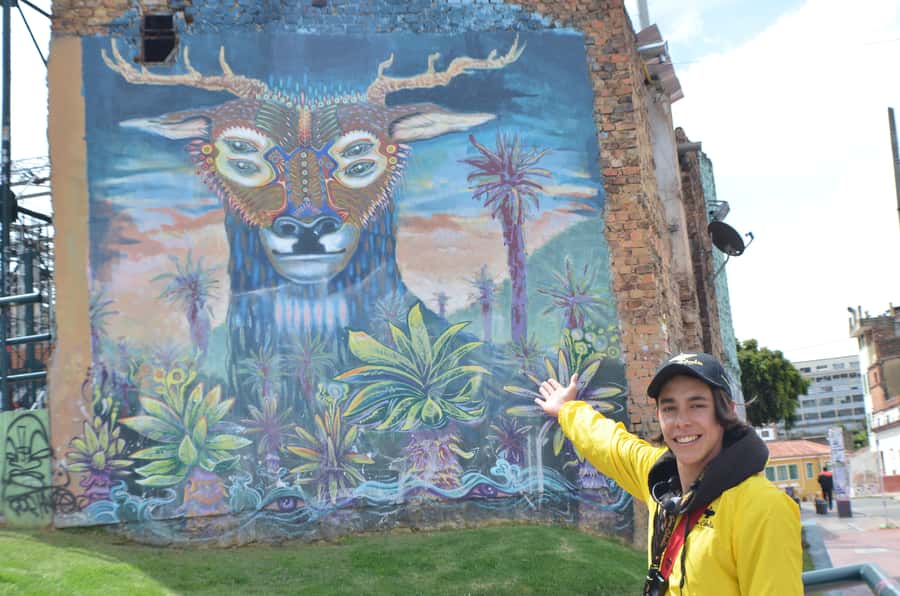
The next major section takes you to Journalist’s Park, with roughly an hour of guided walking and sightseeing in this part of the route. Like Chorro de Quevedo and La Concordia, it is presented as a meeting point where ideas and influences have helped shape downtown Bogotá.
This is where the tour’s broader theme becomes clear: street art reflects the city around it. The works are tied to public space, changing neighborhoods, and the way artists choose to make an argument where anyone can see it.
Your guide explains symbolism, the artists’ different working methods, and the social and political setting behind the pieces. Ebru’s experience with guide José points to the kind of detail available on this walk, including the background of the graffiti movement, the meaning of individual images, and the differing approaches artists use.
That does not mean every stop becomes a lecture. The best guides keep the group involved. Christian is described as patient and able to keep people interested, while Luis is noted for clear English and a willingness to answer questions. If you want a quiet photo walk, this tour may feel too talkative. If you want to understand what you are photographing, the explanations are the main reason to book.
A few more Bogota day trips to weigh up
- Bogota: Bicycle City Tour
★ 4.9 · 2,156 reviews - Zipaquirá: Salt Cathedral Group Tour with Pickup
★ 4.8 · 1,606 reviews - Bogotá: Guided La Candelaria Walking Tour
★ 4.8 · 1,229 reviews - Bogotá: Private City Tour, Monserrate, Emerald and Botero
★ 4.9 · 798 reviews
Women artists and a wider view of the scene
A valuable feature is the specific attention given to women in Bogotá’s street-art movement. The tour discusses Bastardilla, Vera, and Ledania, rather than presenting urban art as a single male-led story.
That wider view also helps you see how varied the subject matter can be. One route may include indigenous themes, environmental concerns, and current issues, alongside pieces that are more personal or stylistic. The selection is described as well rounded, so you get more than a parade of colorful walls.
The art can be temporary. A photograph may be the only lasting record of a particular version of a wall, and the guide’s explanation gives that image more meaning. Bring a camera, but do not let photography replace the walk. Your guide may point out smaller details, nearby tags, or connections between works that are easy to miss while framing a shot.
The final half hour and Café Herencia
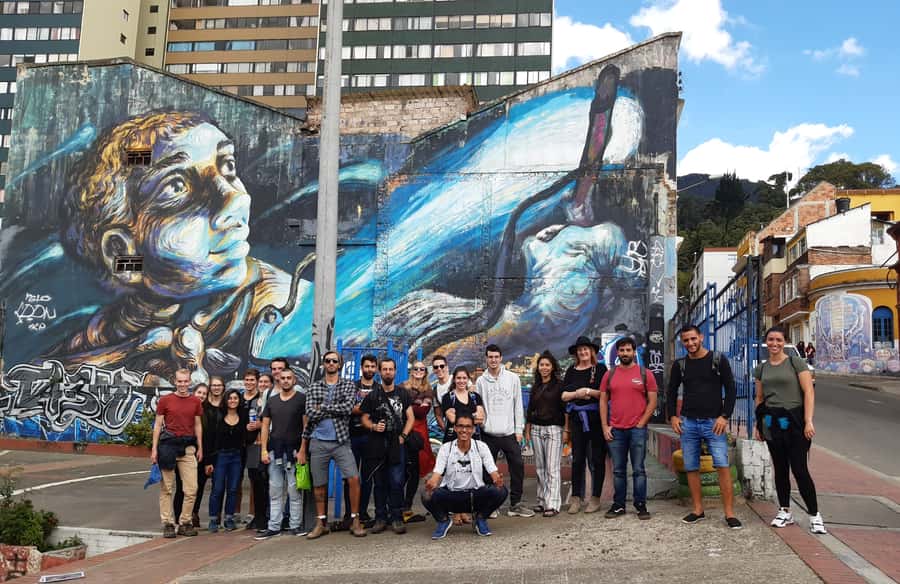
The last part of the route returns through La Candelaria, with a photo stop and more guided sightseeing before arriving back at Chorro de Quevedo. The final destination is Café Herencia, where you taste coca leaf tea.
The tea is a small inclusion, but it gives the tour a pleasant closing point. It also ties into the experience’s interest in local culture and artists. Café Herencia works with and supports local artists, so the stop continues the idea that art belongs in everyday places, not just galleries.
Some earlier descriptions of the experience also mention chicha alongside coca tea, but the stated inclusion is a Colombian tea tasting, specifically coca leaf tea. I would treat the tea as a cultural sample rather than the main attraction. The murals and the guide’s interpretation carry most of the tour’s value.
The café setting offers a chance to sit, ask final questions, and let the walk settle. If you have spent the afternoon taking pictures, this is a useful pause before continuing through Bogotá.
What $16 gets you
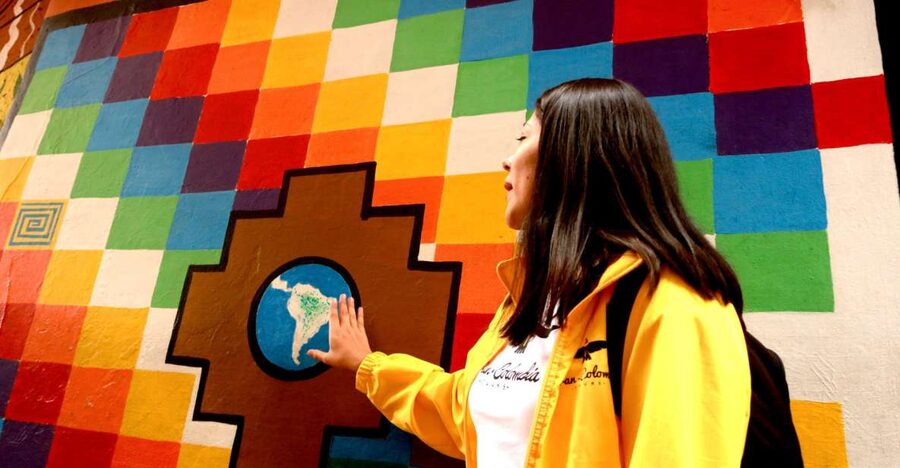
At $16 per person, this is good value for a guided city experience. The fee includes a Gran Colombia Tours guide, the social and political explanation of Bogotá’s street art, visits to several downtown works, the tea tasting, all-risk insurance, and an umbrella if rain arrives.
You are not paying for transportation, and none is needed during the route. The meeting point is central to the tour, and the entire experience is designed as a walk. That keeps the cost low and puts you close to the streets where the art actually appears.
The group limit is 10 people. That is small enough for questions without promising a private tour. Attendance can be lighter, and when only two people booked, the walk became effectively private. Still, you should plan for a shared group and mixed language delivery.
The tour has a 4.7 rating from 250 reviews, with especially strong praise for the guides’ explanations, friendly manner, and ability to connect art with Colombian culture. Names that come up often include Juana, Luis, Christian, Bernardo, Lorena, José, and Myra. You cannot select a particular guide from the information provided, but the range of positive guide comments suggests that the quality is not tied to just one person.
English, Spanish, and the pace of the group
The tour is offered in English and Spanish. If your group includes both languages, the guide may conduct the tour in both at once. That is worth considering if you want every explanation to move quickly in one language.
Mixed-language tours can take longer at each stop, but they may also suit people who want to practice Spanish. One participant specifically appreciated the chance to improve Spanish while the guide communicated clearly in both languages.
The pace is described as leisurely, but the duration is 150 minutes. You will be standing and walking for much of that time. Comfortable shoes, water, sunscreen, and suitable clothing are not throwaway suggestions here.
Stay with the group. The instructions specifically warn you not to walk away, which is sensible in a dense central district with many streets and distractions. The supplied umbrella is practical, but rain can still make photography and footing less pleasant.
Who should book this experience
I would choose this tour if you want more than attractive backdrops. It suits you best if you are interested in how public art carries political ideas, indigenous references, environmental concerns, and stories about the city.
It is also a strong choice for a first or second day in Bogotá. The walk helps you get oriented in La Candelaria, introduces several downtown landmarks, and gives you a set of visual clues for exploring later.
Art lovers should enjoy the range of artists, especially the inclusion of women such as Bastardilla, Vera, and Ledania. Short-stay visitors also get good use from the compact format. Parents with older children may find the murals easier to discuss than a formal museum visit, though the long walk and political material will not suit every child.
I would skip it if you want a private, silent photography session, a vehicle-based tour, or a food-focused visit. This is an interpretive walk, and the guide’s talking is central to the experience. If your main goal is simply to see as many walls as possible, you may prefer to explore independently, but you will lose the background that makes the art easier to read.
Practical verdict
Book the Bogotá La Candelaria Graffiti and Urban Art Guided Tour if you want the city’s murals explained in their social setting. The $16 price is modest for a small group, a 150-minute route, a bilingual guide, insurance, a tea tasting, and a walk through several important downtown locations.
Choose the 10 a.m. or 2 p.m. departure that fits your day, arrive at the yellow umbrella by the fountain in Chorro de Quevedo, and come ready for weather and walking. The tour delivers its best value when you pay attention to the ideas behind the paint, not just the colors on the wall.
FAQ
Where does the tour begin?
The tour begins next to the fountain by the yellow umbrella in Plazoleta del Chorro de Quevedo.
What time does the tour start?
Tours are available every day at 10 a.m. and 2 p.m.
How long does the tour last?
The tour lasts 150 minutes, or two and a half hours.
What language is the tour offered in?
The tour is offered in English and Spanish.
Can the guide speak English and Spanish during the same tour?
Yes. If the group includes both language groups, the tour may be conducted in English and Spanish at the same time.
How large is the group?
The small group is limited to 10 participants.
Is transportation included?
No. Transportation is not included. The activity is a walking tour that begins and ends at Plazoleta del Chorro de Quevedo.
What is included in the price?
The price includes a Gran Colombia Tours guide, an explanation of the social and political context of street art, visits to several downtown graffiti works, Colombian tea tasting, all-risk insurance, and an umbrella in case of rain.
Where do you try coca leaf tea?
The tea tasting takes place at Café Herencia, a coffee shop that supports local artists.
What should you bring?
Bring comfortable shoes, a camera, sunscreen, water, and clothing suited to the weather. You should also remain with the group during the walk.
Just added around Bogota
- Fun Graffiti Workshop: The Art of Aerosol and Color★ 5.0 · 3 reviews
- Zipaquirá: Private Salt Cathedral Mine and Walking Tour★ 4.8 · 3 reviews
- Walking tour José Celestino Mutis Botanical Garden 3 hrs★ 5.0 · 3 reviews
- Bogota: East Hills Mountain Hike★ 4.2 · 3 reviews
- Bogota: Explore the forest and bird watching at Chicaque Natural Park★ 5.0 · 3 reviews
- Bogota: Downtown City and Monserrate Hill Private Tour★ 3.7 · 3 reviews
- From Bogota: White Water Rafting Experience★ 4.4 · 3 reviews
- From Bogota: Excursion to Jaime Duque Park★ 5.0 · 3 reviews
Bogotá Tours, compared.
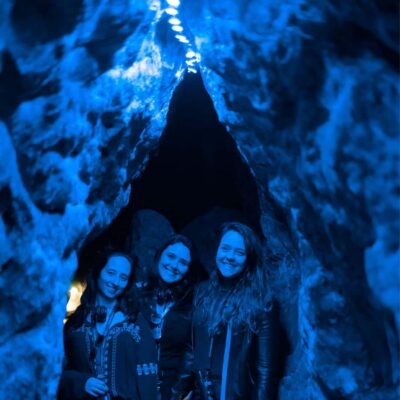
Zipaquirá: Salt Cathedral Group Tour with Pickup
Read our review →
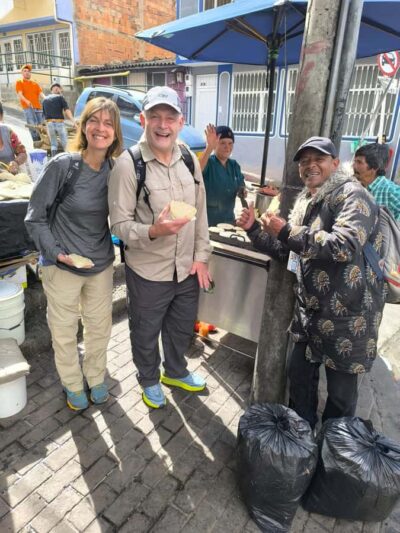
Bogotá´s Barrios: El Paraíso Favela Tour with Cable Car
Read our review →
Bogota: Guatavita and Salt Cathedral Daily Group Tour
Read our review →
Bogotá City Tour with Monserrate, Gold and Botero Museums
Read our review →
Bogota: Zipaquirá Salt Cathedral and Lake Guatavita Day Tour
Read our review →
Browse the lists this tour appears in