
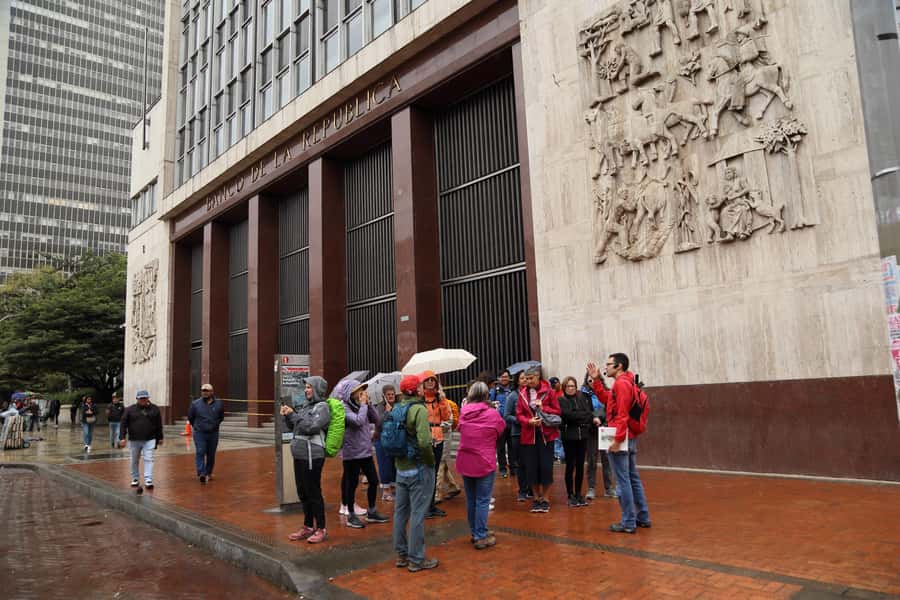
Reviewed · BOGOTÁ TOURS
Shared Tour Colombian Conflict War, Drug Trafficking & Peace
Bogotá’s political story is not tidy, and that is exactly why this walking tour matters. Over roughly 150 minutes, you follow the roots of Colombia’s armed conflict through the Bogotazo, the Liberals and Conservatives, military rule, guerrilla movements, drug trafficking, and the peace agreement with FARC.
I like the tour’s clear historical sweep, which helps you connect events instead of treating each violent period as a separate story. I also like the effort to stay objective, with an English-speaking guide explaining why guerrillas, paramilitaries, political parties, drug traffickers, and state forces became tangled together. The main drawback is the pace: about 9 kilometers on foot and a lot of serious information in a short time, with some unevenness in how much detail you receive about current politics.
Key points at a glance
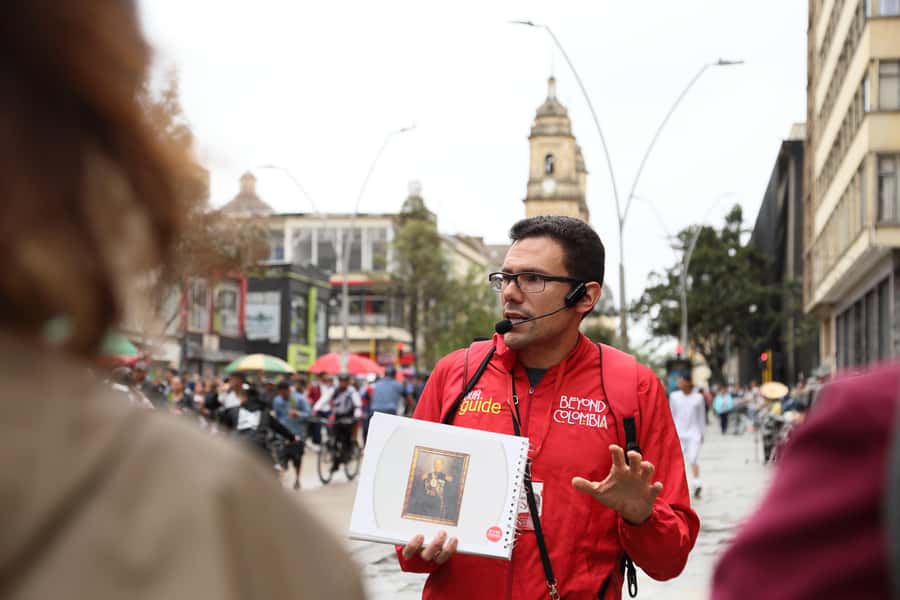
- The Bogotazo is the turning point: Learn why Bogotá’s 1948 riot helped push Colombia into a long period of political violence.
- The tour connects politics and conflict: Liberals, Conservatives, military rule, guerrilla groups, paramilitaries, and drug cartels are explained as parts of one long story.
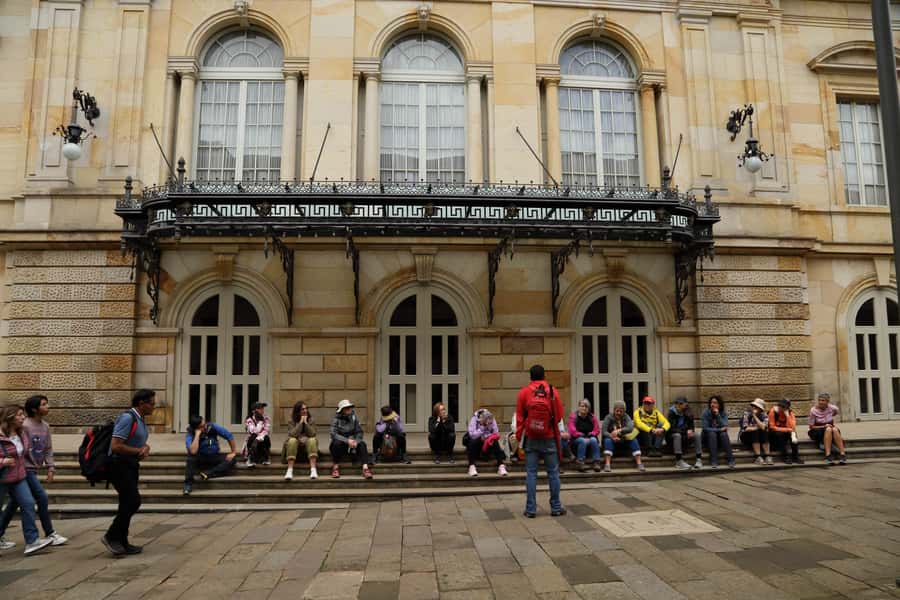
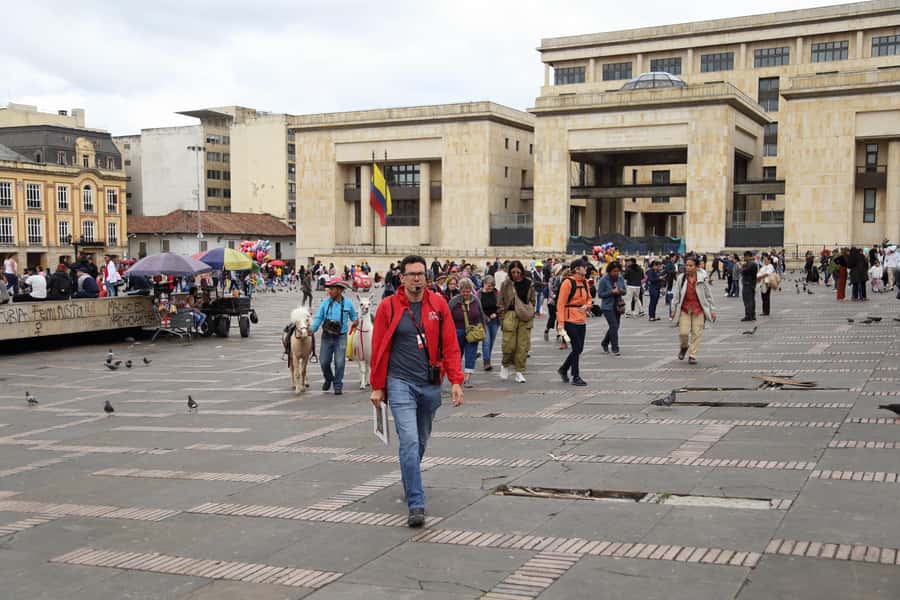
- You walk through historic central Bogotá: Essential sites in the old center provide the setting for the discussion, rather than a classroom or bus window.
- The FARC peace process reaches the present: The tour covers the agreement and the reasons fighting has continued among other armed groups.
- It is strong value at $13: You get a live English-speaking guide, historical interpretation, and a substantial walking route without extra entrance fees.
- Expect a serious, active morning or afternoon: Bring water, rain protection, sunscreen, and comfortable shoes for around 9 kilometers of walking.
Starting at the Museo del Oro
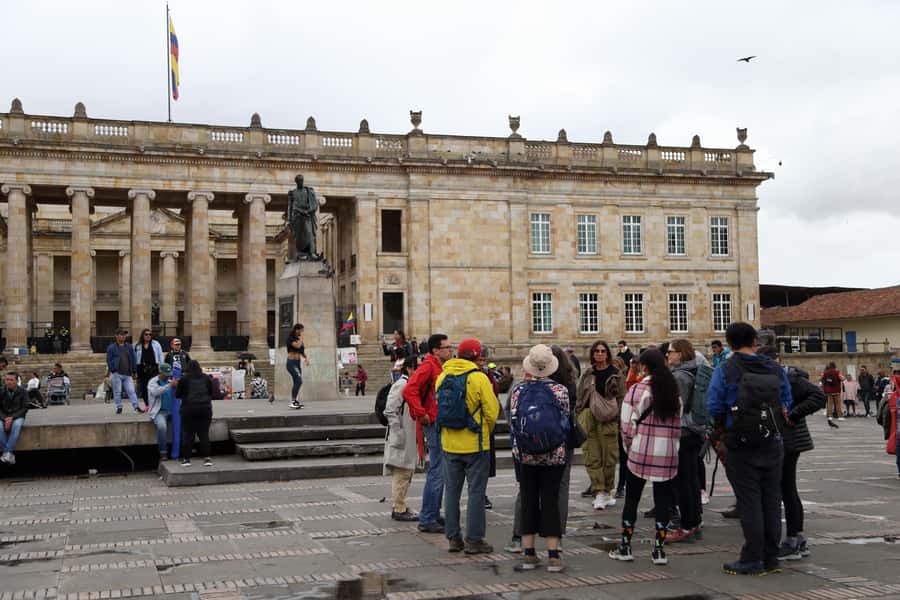
The tour begins in front of the Museo del Oro, where you look for Beyond Colombia’s red umbrellas. This is a useful meeting point in central Bogotá, but arrive with your bearings sorted out. The area can be crowded, and the practical rule is simple: keep your phone and wallet close.
From here, the tour moves through the historic center. You are not paying for museum admissions or a series of indoor attractions. Instead, the city itself becomes the setting, with streets and important public spaces used to explain how political decisions and violence shaped Bogotá.
That format suits this subject. Conflict is easier to understand when you can connect it to the places where political power, public protest, and social life met. It also keeps the $13 price honest. You are paying for the guide’s interpretation and the walking route, not for a collection of expensive tickets.
A few more Bogota day trips to weigh up
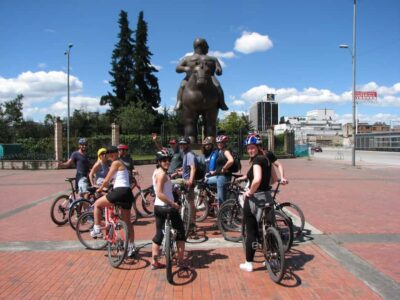
- Bogota: Bicycle City Tour
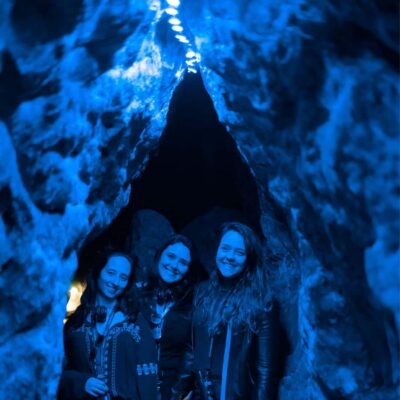
★ 4.9 · 2,156 reviews - Zipaquirá: Salt Cathedral Group Tour with Pickup
★ 4.8 · 1,606 reviews - Bogotá: Guided La Candelaria Walking Tour
★ 4.8 · 1,229 reviews
From independence to the Liberals and Conservatives
The story begins before the modern armed conflict. The guide covers Colombia’s independence process, then builds toward the long struggle for political control between Liberals and Conservatives.
This early section gives you the background needed to understand why party loyalty became such a powerful force. The point is not simply that Colombia had two major political camps. It is that competition between them helped shape institutions, local power, elections, and violence over generations.
I appreciate this broad opening because the later discussion of guerrillas and paramilitaries can otherwise seem to appear from nowhere. You need to understand the older political divisions first. The tour’s stated aim is to explain the causes and development of the conflict, rather than presenting Colombia as a country that suddenly became violent because of cocaine.
That said, the amount of time available is limited. If you want a detailed account of independence or party politics, you will need to read further after the walk. Here, these subjects serve as the foundation for the events that follow.
The Bogotazo and the beginning of the Violence Era
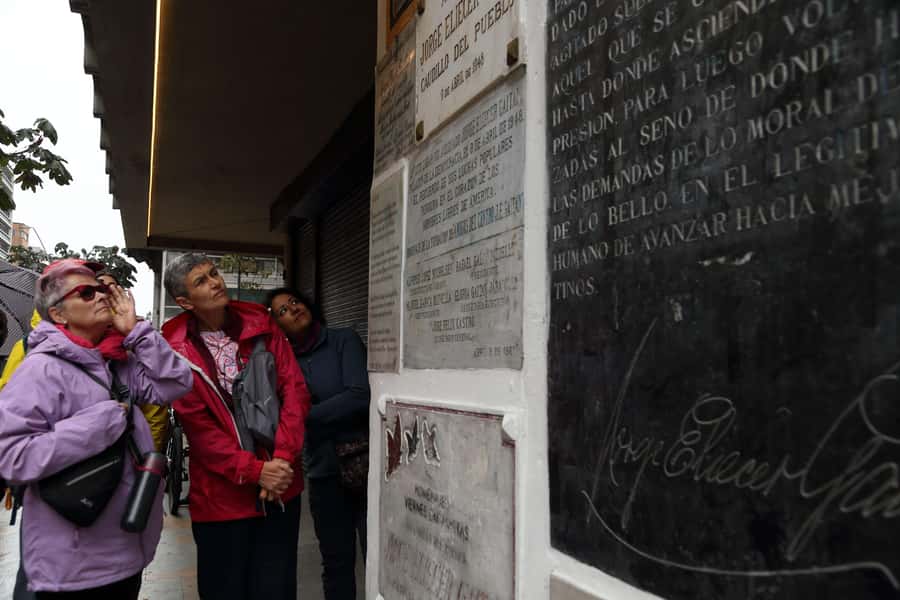
The key historical episode is Bogotá’s riot of 1948, commonly known as the Bogotazo. The tour treats this event as a major turning point in what is often called Colombia’s Violence Era.
You learn why the killing of Liberal leader Jorge Eliécer Gaitán triggered an explosion of public anger and destruction in Bogotá. The important lesson is that the riot was not just an isolated outburst. It reflected deep political divisions, social frustration, and distrust that had been building for years.
Walking through central Bogotá while discussing the Bogotazo gives the subject weight. You are looking at a city that still carries visible reminders of political upheaval, even as daily life carries on around you. The contrast can be striking: ordinary streets become evidence of a national crisis when the guide explains what happened there and why it mattered.
This part is likely to be one of the most useful sections for first-time visitors. Many people know the name Bogotazo but not its place in the longer conflict. The tour gives you a starting point for understanding why rural violence expanded, why political institutions struggled, and why later armed movements found room to grow.
Military rule and the birth of guerrilla movements
The next stage covers military dictatorship and the creation of guerrilla groups, including FARC, ELN, and M-19. This is where the tour shifts from party conflict into organized armed struggle.
The guide explains that these groups did not all begin for identical reasons. Their political ideas, origins, methods, and relationships with civilians differed. That distinction matters. A short tour cannot provide every detail, but it should help you avoid treating all guerrillas as one interchangeable force.
FARC and ELN are discussed as part of the conflict’s long development, while M-19 is included as another important armed movement. You also examine the reasons current guerrilla and paramilitary groups continue to fight, a useful link between past events and present concerns.
I value the promised effort to avoid taking sides. On a subject involving state violence, insurgency, political ideology, drug money, and civilian suffering, a guide can easily turn the walk into a political speech. The best version of this tour gives you the facts and competing explanations, then lets you think about them.
The limitation is that a neutral tone does not guarantee equal depth on every subject. One recent assessment found the current political section too vague and incomplete, especially for someone from Bogotá seeking more than an introduction. I would treat this tour as a strong framework, not your final source on contemporary politics.
Same city, a completely different kind of day:
- Bogotá: Private City Tour, Monserrate, Emerald and Botero
★ 4.9 · 798 reviews - Bogotá´s Barrios: El Paraíso Favela Tour with Cable Car
★ 4.8 · 731 reviews - Bogota: Guatavita and Salt Cathedral Daily Group Tour
★ 4.7 · 615 reviews - Bogotá City Tour with Monserrate, Gold and Botero Museums
★ 4.9 · 584 reviews
Drug trafficking and the machinery of war
Drug trafficking forms another major part of the discussion. The tour explains the connection between Colombia’s armed conflict and national and international drug markets, including the role of drug cartels in worsening violence.
This section is valuable because it avoids the lazy version of Colombia’s story, where drug trafficking becomes the entire explanation for the country’s conflict. The political struggle came first, and armed groups later used illegal economies to finance operations, buy weapons, control territory, and influence communities.
You should expect the guide to place cartels within that larger chain of events. The discussion also includes the people and forces behind the violence, although the exact balance between cartel history, guerrilla financing, paramilitary activity, and government policy can vary by guide.
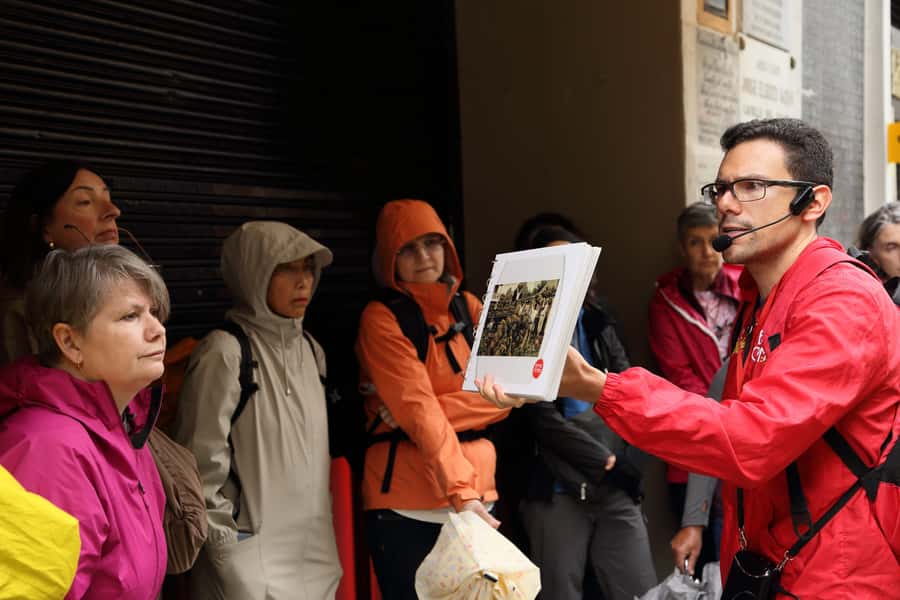
That variation is worth keeping in mind. Guides identified with this experience include Lorenzo, Hector, Santi, and Daniel. Lorenzo is noted for involving the group with questions and humor, while Hector and Daniel are praised for handling a difficult subject with warmth and strong command of the material. Your guide may be someone else, but the individual guide will shape how much detail you receive and how freely the group discusses sensitive issues.
Paramilitaries, ongoing fighting, and the peace agreement
The tour does not stop with the major drug cartels or the older guerrilla movements. It also covers paramilitary groups, the reasons armed actors continue to fight, and the peace process that led to the agreement with FARC.
This is the section most likely to matter if you want to understand Colombia today rather than only its past. A peace agreement can end one major armed conflict without removing every cause of conflict. Armed groups may remain active, new groups may form, and control of territory and illegal economies can continue to fuel violence.
The guide’s job here is to show the difference between the FARC peace process and the wider question of peace in Colombia. You should come away understanding that an agreement with one organization does not automatically settle every dispute involving guerrillas, paramilitaries, political movements, and drug trafficking.
The current political situation receives some attention, but this is also where expectations need managing. If you want a detailed explanation of recent governments, current parties, or every armed group active today, the tour may feel too brief. Use the walk to identify the questions you need to research next.
What the walking route demands
The route covers about 9 kilometers, with stops to listen to the guide. That is a substantial walk for a tour described as about two and a half hours, so wear proper walking shoes rather than something chosen only for photographs.
You will also want water, sunscreen, a hat, and comfortable clothing. Bogotá’s weather can change, so bring a rainproof coat or umbrella. The tour does not include transportation to or from your hotel, drinks, food, or souvenirs.
Resting stops are built into the walk, which helps with a subject that requires concentration. Still, this is not a gentle stroll with occasional commentary. The distance and the seriousness of the material make it a better fit for an active visitor who is comfortable listening while standing outdoors.
There is conflicting information about mobility access. One part of the activity details describes the tour as wheelchair accessible, while the practical information says it is not suitable for wheelchair users or people with mobility impairments. Because the route covers about 9 kilometers on foot, contact Beyond Colombia before booking if accessibility is important to you.
Why the $13 price works
At $13 per person, this is a strong-value way to get an introduction to one of Colombia’s hardest subjects. The price includes an English-speaking guide, a central Bogotá route, historical explanations, and stops at important places connected to the conflict. There are no sudden admission charges because the tour does not take you into sites requiring tickets.
You also receive recommendations for further reading or viewing, plus possible benefits and discounts from suggested local partners when you show the wristband given at the end. Those extras should be treated as a bonus, not the reason to book.
The value depends on your expectations. If you want a polished private seminar with a specialist focused only on modern politics, $13 will not buy that. This is a shared tour, so you do not have an exclusive guide and you may need to work around the questions and pace of the group.
For a first orientation, though, the combination of place, price, and subject is hard to fault. You get a useful structure for understanding Bogotá, and you can decide later which parts deserve more study.
The guide makes the difference
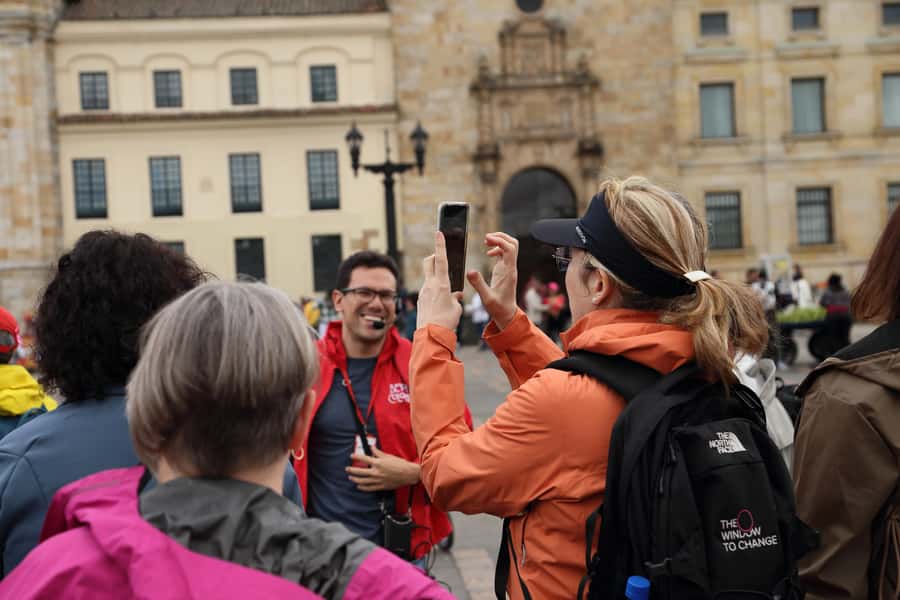
A good guide is especially important here. Dates and names matter, but the real challenge is explaining how political rivalry, economic inequality, armed ideology, state policy, drug money, and civilian life affected one another.
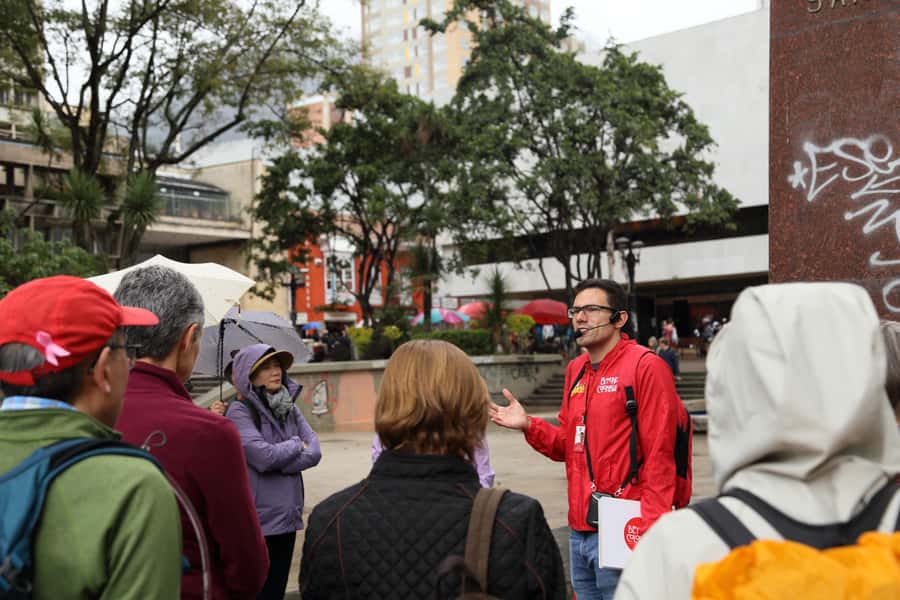
Lorenzo’s approach includes questions and humor, which can help a heavy subject feel more open without making light of it. Hector is described as friendly and ready to answer questions. Santi is praised for strong subject knowledge, while Daniel is noted for extensive command of a difficult topic.
You should ask questions during the walk. The tour is interactive, and the guide is expected to involve the group rather than deliver a silent lecture. Ask for clarification when the story moves quickly, particularly during the discussion of current armed groups and the peace agreement.
The overall rating is 4.8 from 46 reviews, with repeated praise for the guides’ preparation, friendliness, and ability to explain a difficult history. One lower assessment points to incomplete explanations and a weak current-politics section. That mix gives you a fair picture: the tour is often excellent as an introduction, but the depth may depend on the guide and the questions asked.
Who should book this Bogotá walk
I would choose this tour if you want more than postcard Bogotá. It suits you if you are interested in politics, modern history, human rights, journalism, or the forces that shaped Colombia’s international reputation.
It is also a good choice early in your visit. The guide’s explanations can give later museum visits, conversations, and trips to other Colombian cities more meaning. The subject may help you understand why Colombia’s present mood cannot be reduced to old headlines about cocaine and violence.
You may want to skip it if you are looking for a light sightseeing walk. The subject includes war, political killing, drug trafficking, and the suffering caused by armed groups. It is serious, and the 9-kilometer route requires energy.
Bring an open mind. The stated goal is objectivity, but no short tour can remove every disagreement from Colombian history. Listen for the causes, consequences, and competing views rather than waiting for one simple villain or one perfect explanation.
Should you book it?
Book this tour if you want a low-cost, English-language introduction to Colombia’s conflict and you are willing to walk. The best reasons are the route through historic Bogotá, the wide time span from independence to the FARC peace agreement, and guides such as Lorenzo, Hector, Santi, and Daniel who are praised for explaining difficult material clearly.
Do not book it expecting a full account of current politics or a private expert consultation. For that, you will need more time and additional reading. But for $13, this is a sensible first step toward understanding the history behind Bogotá’s streets. Confirm the mobility arrangements before reserving, bring rain protection and water, and make sure your shoes can handle the distance.
FAQ
Where does the tour meet?
Meet in front of the Museo del Oro, beside Beyond Colombia’s red umbrellas.
How long does the tour last?
The activity lasts about 150 minutes, or roughly two and a half hours. The description also says approximately three hours, so allow some flexibility.
How much walking is involved?
You will walk about 9 kilometers, with stops to rest and hear the guide explain the sites and history.
What language is the tour in?
The tour is conducted in English by a live English-speaking guide.
What subjects does the tour cover?
It covers Colombia’s independence process, the Bogotazo, the Violence Era, military dictatorship, FARC, ELN, M-19, drug trafficking, paramilitary groups, the peace process, and current political issues.
Are entrance tickets included?
There are no entrance tickets required on the route. Food, drinks, and souvenirs are not included.
What should I bring?
Bring comfortable shoes, water, sunscreen, a hat, and a rainproof coat or umbrella. Comfortable clothing is recommended.
Can I cancel the booking?
You can cancel up to 24 hours before the tour for a full refund. The reserve-now, pay-later option lets you hold a place without paying immediately.
Just added around Bogota
- Fun Graffiti Workshop: The Art of Aerosol and Color★ 5.0 · 3 reviews
- Zipaquirá: Private Salt Cathedral Mine and Walking Tour★ 4.8 · 3 reviews
- Walking tour José Celestino Mutis Botanical Garden 3 hrs★ 5.0 · 3 reviews
- Bogota: East Hills Mountain Hike★ 4.2 · 3 reviews
- Bogota: Explore the forest and bird watching at Chicaque Natural Park★ 5.0 · 3 reviews
- Bogota: Downtown City and Monserrate Hill Private Tour★ 3.7 · 3 reviews
- From Bogota: White Water Rafting Experience★ 4.4 · 3 reviews
- From Bogota: Excursion to Jaime Duque Park★ 5.0 · 3 reviews
Bogotá Tours, compared.
Zipaquirá: Salt Cathedral Group Tour with Pickup
Read our review →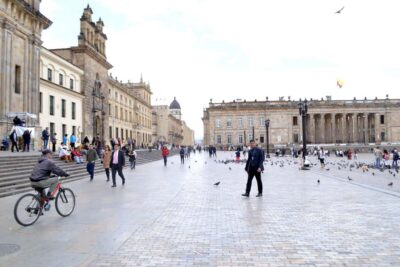
Bogotá´s Barrios: El Paraíso Favela Tour with Cable Car
Read our review →
Bogota: Guatavita and Salt Cathedral Daily Group Tour
Read our review →
Bogotá City Tour with Monserrate, Gold and Botero Museums
Read our review →
Bogota: Zipaquirá Salt Cathedral and Lake Guatavita Day Tour
Read our review →
Browse the lists this tour appears in