
Reviewed · BOGOTÁ TOURS
Cable car to el Paraiso, the city slum
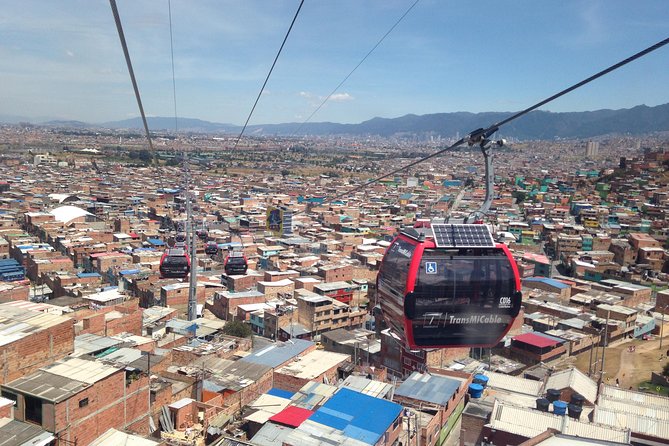
Bogotá’s TransMiCable ride takes you far beyond the usual historic center, climbing into El Paraíso in Ciudad Bolívar for broad views, public art, and a closer look at daily life on the city’s southern hills. I like the cable car itself, since you travel as residents do, and I like the chance to meet a local person who can explain the neighborhood from lived experience. The main consideration is that this is not a polished sightseeing district. You need to approach it with respect and an open mind.
I also like the mix of transport, walking, history, and food. The ride toward the hill is part of the lesson, and the tour has included buses, cable cars, empanadas, traditional juices, and other small snacks. The four-hour format gives you time to ask questions rather than simply snap a photo and leave.
- The TransMiCable climbs to one of Bogotá’s best viewpoints, with the city spread out below.
- El Paraíso’s street art gives the walking tour a strong visual focus, while also opening discussion about local projects.
- A local host helps explain daily life in Ciudad Bolívar, not just the area’s tourist image.
- Public transport is part of the experience, including the ride toward TransMiCable Tunal Station.
- The tour has a maximum of 15 people, with private-tour attention highlighted in the experience description.
- Food can be part of the morning, including empanadas, traditional juices, and other snacks.
Why El Paraíso Adds Something Different to Bogotá
Most first visits to Bogotá focus on La Candelaria, the Gold Museum, Monserrate, and the restaurant districts around Chapinero. Those places deserve their time, but they show only part of the capital.
El Paraíso sits in Ciudad Bolívar, a large southern district whose hills are home to more than a million people. This tour gives you a guided introduction to a part of Bogotá that is easy to miss if you stay near the center.
The word slum can flatten a complicated place into a stereotype. On this walk, you see a working neighborhood with shops, families, children playing, colorful walls, and residents involved in efforts to improve their community. You also hear about the challenges that shaped the area. That combination matters. The tour is not simply a lookout stop dressed up as an adventure.
I appreciate that the experience puts local voices near the center. Guides including Brian and Andrea have helped explain life in the neighborhood, while guides such as Juan, Yacky, Melissa, and Gerald have provided background during the wider trip. Your exact guide team can vary, but the structure is designed to pair a city guide with someone connected to El Paraíso.
From Teusaquillo to the Tunal Cable Car Station
The tour begins at El Empanadazo de lla 39Dg. 40a #14-03 in Teusaquillo at 9:00 a.m. That meeting point is useful for visitors staying in or near central Bogotá, though you should allow time to reach it in the morning.
The route to the cable car is not dead time. Past tour groups have used a bus for roughly 40 minutes, with the guide explaining Bogotá, Ciudad Bolívar, and the city’s social divisions along the way. I like this choice because it lets you see the transition from central neighborhoods to the southern hills at street level.
You are not being driven straight to a viewpoint in a private vehicle. You are using the same public transport that helps connect residents with the rest of Bogotá. That makes the trip more revealing, though it also means you should expect ordinary city movement rather than a perfectly controlled tour setting.
The named cable car stop is TransMiCable Tunal Station. The experience description lists about 15 minutes for the cable car portion, with admission included. The ride may be brief, but it is the visual centerpiece of the outing.
A few more Bogota day trips to weigh up
- Bogota: Bicycle City Tour
★ 4.9 · 2,156 reviews - Zipaquirá: Salt Cathedral Group Tour with Pickup
★ 4.8 · 1,606 reviews - Bogotá: Guided La Candelaria Walking Tour
★ 4.8 · 1,229 reviews
The TransMiCable Ride to El Paraíso
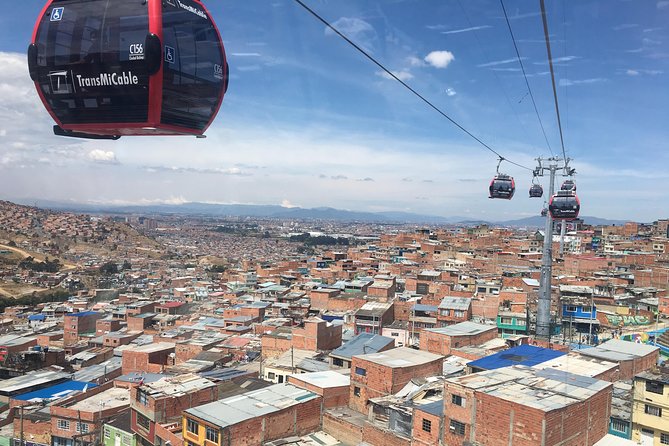
As the car rises, Bogotá opens below you. The system carries you toward the highest part of the hill, where the view is described as one of the finest in the city.
I find cable cars useful for more than sightseeing. From above, you can see how tightly homes and streets fit across the hills, and how different the southern districts look from the colonial center. The ride gives you a quick sense of Bogotá’s scale and elevation without the long climb required at some traditional viewpoints.
Several people who have taken this tour compare the view favorably with Monserrate. That does not mean it replaces Monserrate for every visitor. Monserrate offers its own religious and historic setting, while El Paraíso gives you a view tied to a residential district and the city’s daily transport network. If you have already visited Monserrate, this is a good way to see Bogotá from a different angle.
The cable car is also a practical part of life in the area, not only a scenic attraction. Riding it helps you understand why this system matters to residents of the hills. It links neighborhoods with the wider transport network and turns what might otherwise be a difficult journey into a faster connection.
The ride is short, so keep your camera ready, but do not spend every second looking through it. The best part is watching the city change as the car rises.
Walking El Paraíso with a Local Perspective
At the top, the tour moves from transport to walking. You explore the neighborhood with a guide who explains the area, its past, and the projects aimed at improving local life.
This is the portion that requires the most sensitivity from you. El Paraíso is not a stage set for visitors. People live and work here. Listen to the guide, avoid treating residents as photo subjects, and ask before taking close-up pictures of people. The art is the natural focus, and it gives you plenty to look at without turning the visit into a human zoo.
The neighborhood’s murals and painted walls are a major draw. You might find scenes that celebrate local identity, community action, and the effort to make public spaces more welcoming. The art is not merely decoration. It helps tell the story of how residents see their home and how they want others to see it.
Andrea has guided visitors through the graffiti culture and explained projects that support the community. A local host such as Brian can add details that a guide passing through could not provide. The value is in the exchange: you can ask what a mural means, how the neighborhood is changing, and what daily life feels like beyond the viewpoint.
The walk also gives you a chance to see ordinary details. Earlier groups have described lively streets, shops serving local customers, and children playing. Those details help correct the idea that the area is only a place of hardship. At the same time, you should not expect the guide to hide the difficulties. The strongest part of the experience is its balance between social problems, local pride, and practical efforts to make conditions better.
Street Art, Community Work, and Ciudad Bolívar
The tour presents El Paraíso as a place shaped by solidarity and resilience. Those are broad words, but here they refer to specific things you can see: residents using art to change the feel of public spaces, local projects aimed at helping people, and transport links that connect the hills to Bogotá as a whole.
You will not receive a full academic study of Ciudad Bolívar in four hours. What you get is an accessible introduction. Guides have discussed the area’s development, the history of the hills, and the ways communities are trying to improve life for residents.
I like this approach because it connects the visible and the unseen. A mural may catch your eye first, but the explanation gives it meaning. The cable car may look like a fun ride, but the guide can place it within the larger story of access and connection.
If you are interested in photography, the tour offers strong subjects. The colors of the walls contrast with the wide view over Bogotá, and the changing angles from the cable car provide a different set of images from the street art. Still, photography should remain secondary to the visit. The neighborhood is home to real people, and a respectful pace is more important than collecting every possible picture.
Same city, a completely different kind of day:
- Bogotá: Private City Tour, Monserrate, Emerald and Botero
★ 4.9 · 798 reviews - Bogotá´s Barrios: El Paraíso Favela Tour with Cable Car
★ 4.8 · 731 reviews - Bogota: Guatavita and Salt Cathedral Daily Group Tour
★ 4.7 · 615 reviews - Bogotá City Tour with Monserrate, Gold and Botero Museums
★ 4.9 · 584 reviews
Snacks and the Small Details That Make the Morning Work
Food is not the main reason to book this outing, but it adds a pleasant local touch. The experience has included empanadas, traditional juices, and snacks. Specific offerings can change, so I would not treat the food as a guaranteed tasting menu.
The snack stop matters because it gives the morning a social rhythm. You are not walking continuously or listening to a lecture without a pause. You get a chance to taste something familiar to Bogotá and talk with the guide about what you have seen.
The meeting point itself, El Empanadazo, suggests an easy connection to local food, though the supplied details do not promise a specific meal there. If food is important to your plans, ask for current details when booking.
Is $67 a Fair Price?
At $67 per person, this is more expensive than taking Bogotá’s public transport independently. You could ride buses and the cable car for less, but you would miss the interpretation, local introduction, planned route, and support that make the visit practical.
For me, the value comes from the combination. You are paying for roughly four hours, a guide, the cable car admission, a walk through El Paraíso, context about Ciudad Bolívar, and possible snacks. The maximum group size is 15, and the experience is described as private, so the guide should have more room to answer questions than on a large coach outing.
The price makes the most sense if you want to understand the place rather than simply see it. If all you want is a high view of Bogotá, another lookout may be cheaper and simpler. If you want the view plus public transport, murals, local history, and a resident’s perspective, $67 is a reasonable cost for a half-day.
The tour is also a good use of time for a repeat visit. Once you have covered La Candelaria and the main museums, this outing helps you see how much of Bogotá exists beyond the standard visitor route.
Safety, Comfort, and What to Expect
Safety is a fair concern whenever a tour enters a neighborhood unfamiliar to you. The supplied details say the activity has a maximum of 15 people, and participants have described feeling safe with their guides. That is useful, but you should still follow local advice, stay with the group, and avoid wandering away to explore alone.
The experience includes public transport and walking, so wear comfortable shoes and keep your belongings secure. The information says most people can participate, and service animals are allowed. It is also near public transportation, which helps with access to the meeting point.
Weather matters. The tour requires good weather and may be canceled if conditions are poor. In that case, you are offered another date or a full refund. Bogotá’s weather can change, so a light waterproof layer is a sensible choice, though the tour details do not specify equipment or clothing requirements.
The four-hour length is long enough to feel substantial but short enough to fit alongside other Bogotá plans. I would avoid scheduling a museum or timed attraction immediately afterward. Public transport, walking, and weather can all affect the pace.
Who Will Get the Most from This Tour?
I would recommend this for you if you:
- Want to see a side of Bogotá beyond La Candelaria and Chapinero.
- Enjoy public transport as part of the travel experience.
- Care about street art and community projects.
- Prefer a guide who can explain social context instead of only pointing out sights.
- Are comfortable entering a residential neighborhood with humility and curiosity.
- Want a strong city view without making Monserrate your only lookout.
It may not suit you if you want a luxury outing, a private vehicle throughout, or a quick photo stop with little walking. It also may feel uncomfortable if you expect every part of Bogotá to look polished or designed for tourism.
Families can participate, and the activity notes that most people are able to take part. Still, parents should consider the public transport, walking, and the need to stay close to the guide. Solo visitors may find the small group format especially useful, since guides such as Melissa and Gerald have been praised for attentive, friendly support.
Booking Timing and Cancellation
This experience is booked an average of 21 days ahead, so I would reserve early if it is important to your schedule. Confirmation is provided at booking.
You can cancel for a full refund up to 24 hours before the 9:00 a.m. start time. Cancellations or changes made within 24 hours are not accepted for a refund. If the minimum number of participants is not reached, the provider can offer another date or experience, or return your payment.
Rolombia Trips operates the tour. Since guides can vary, you should not assume that Melissa, Brian, Andrea, Juan, Yacky, Gerald, Nick, or Juan Sebastian Marin will lead your departure. Their names are useful examples of the local and city-guide roles that have shaped this experience, but your assigned team may be different.
Should You Book the El Paraíso Cable Car Tour?
I would book it if you want a thoughtful, direct look at Bogotá beyond its usual sights. The cable car is fun, the views are excellent, and the street art gives the walking portion a clear focus. The strongest reason to go, though, is the chance to hear about El Paraíso from people connected to the neighborhood.
Book with the right expectations. You are not visiting a theme park or a carefully restored old town. You are entering a residential area where public art, local pride, and serious social challenges exist side by side. If that sounds worthwhile, this four-hour tour offers a useful and respectful introduction to a part of Bogotá that many visitors never see.
FAQ
Where does the tour begin?
It begins at El Empanadazo de lla 39Dg. 40a #14-03 in Teusaquillo, Bogotá.
What time does the tour start?
The scheduled start time is 9:00 a.m.
How long does the experience last?
The tour lasts approximately four hours.
Where does the tour end?
The activity ends back at the meeting point.
Is the cable car ticket included?
Yes. Admission for the TransMiCable portion is included.
How many people can join the tour?
The activity has a maximum of 15 participants.
Are service animals allowed?
Yes, service animals are allowed.
Can I cancel for a full refund?
Yes. You must cancel at least 24 hours before the local start time for a full refund. If poor weather or an insufficient minimum number of participants causes the provider to cancel, you are offered another date or a full refund.
Just added around Bogota
- Fun Graffiti Workshop: The Art of Aerosol and Color★ 5.0 · 3 reviews
- Zipaquirá: Private Salt Cathedral Mine and Walking Tour★ 4.8 · 3 reviews
- Walking tour José Celestino Mutis Botanical Garden 3 hrs★ 5.0 · 3 reviews
- Bogota: East Hills Mountain Hike★ 4.2 · 3 reviews
- Bogota: Explore the forest and bird watching at Chicaque Natural Park★ 5.0 · 3 reviews
- Bogota: Downtown City and Monserrate Hill Private Tour★ 3.7 · 3 reviews
- From Bogota: White Water Rafting Experience★ 4.4 · 3 reviews
- From Bogota: Excursion to Jaime Duque Park★ 5.0 · 3 reviews
Bogotá Tours, compared.
Zipaquirá: Salt Cathedral Group Tour with Pickup
Read our review →
Bogotá´s Barrios: El Paraíso Favela Tour with Cable Car
Read our review →
Bogota: Guatavita and Salt Cathedral Daily Group Tour
Read our review →
Bogotá City Tour with Monserrate, Gold and Botero Museums
Read our review →
Bogota: Zipaquirá Salt Cathedral and Lake Guatavita Day Tour
Read our review →
Browse the lists this tour appears in