
Reviewed · BOGOTÁ TOURS
Breaking Borders: Bogota Gansters Story
Bogotá’s Egipto neighborhood sits just uphill from the familiar streets of La Candelaria, yet it feels like a different city. This three-hour experience takes you there with people who know its past from the inside, including former gang members who now work to give local young people better choices.
I like two things right away: the personal stories make the social issues real, and the graffiti gives you a visual record of the neighborhood’s painful past and growing hope. The new football field and community projects show change in practical terms, not just in cheerful slogans.
The main consideration is emotional. You will hear about drugs, weapons, violence, poverty, and lost years. The walk also includes steep streets, so wear good shoes and be ready for a serious conversation rather than a light sightseeing outing.
Key points to know before you go
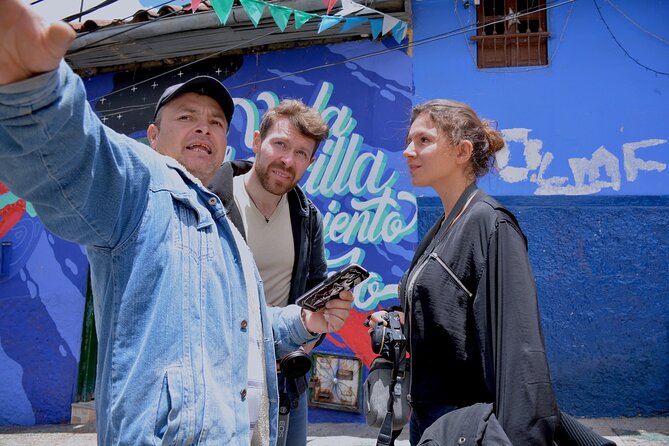
- Former gang members lead the local part of the visit, sharing personal stories about joining gangs, leaving that life, and working for change.
- The walk begins at Chorro de Quevedo, the traditional birthplace of Bogotá, then climbs toward Barrio Egipto.
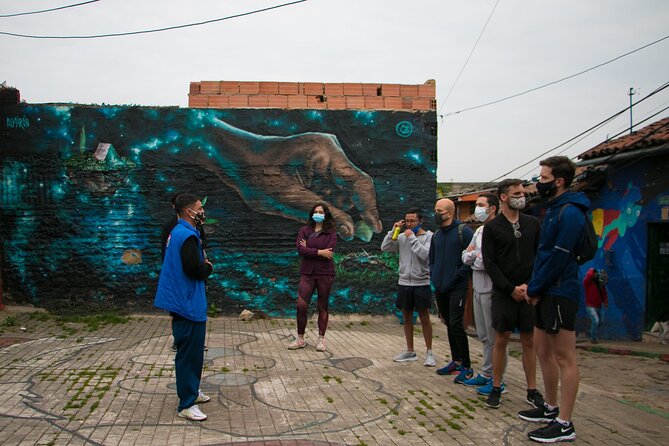
- Murals explain the neighborhood’s past and present, with local guides describing the meaning behind the artwork.
- The community football field is a symbol of progress, especially in creating better options for young people.
- A bilingual guide helps with translation and context, with guides such as Gigio, Raul, Andrea, Harold, Monkey, and Gildardo Arango appearing in different tour accounts.
- Private hotel transport is optional, while the standard meeting point is Plazoleta Chorro de Quevedo.
From Chorro de Quevedo to Barrio Egipto
The experience begins at Plazoleta Chorro de Quevedo, at Cl. 12b #2-98 in La Candelaria. This small square is a natural place to start because it connects Bogotá’s best-known historic quarter with the less familiar hills of Egipto.
You first meet the guide and hear about Breaking Borders, the local initiative behind the experience. The project uses tourism as one way to change how the neighborhood is seen and to create work for people who once had few safe options.
That opening matters. Without it, a walk through Egipto could feel like a quick look at poverty from the outside. Here, the purpose is made clear from the beginning: you are being introduced to a community by people involved in its effort to change.
The first hour includes a walk through the streets between Chorro de Quevedo and the entrance to Barrio Egipto. You will head toward Nuestra Señora de Egipto, the church that marks the neighborhood’s entrance. The church is also linked to the local January 6 festivities, an important community celebration.
The route is not a standard old-town walk. You will see colonial-era streets in La Candelaria, then begin climbing toward a neighborhood shaped by different forces: social inequality, gang control, drug and weapons activity, and limited access to education. The change happens over a fairly short distance, which helps you understand the physical divide between affluent and vulnerable parts of Bogotá.
A few more Bogota day trips to weigh up
- Bogota: Bicycle City Tour
★ 4.9 · 2,156 reviews - Zipaquirá: Salt Cathedral Group Tour with Pickup
★ 4.8 · 1,606 reviews - Bogotá: Guided La Candelaria Walking Tour
★ 4.8 · 1,229 reviews
Reading Egipto through its murals
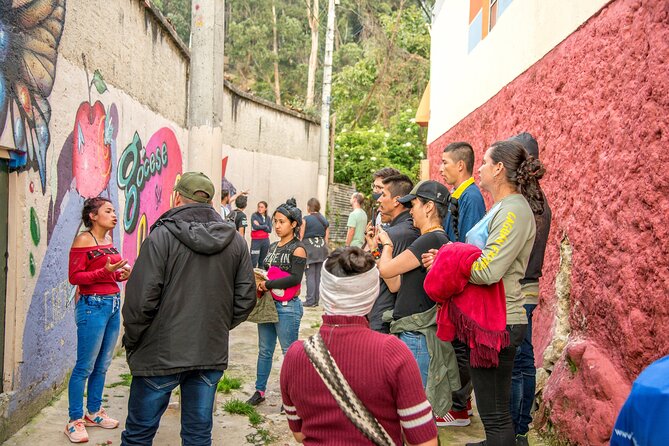
The graffiti is one of the strongest parts of the experience. These are not simply colorful walls added to make a street look attractive. The murals tell stories about local people, past violence, community identity, and the wish to give the next generation a different path.
Your guide explains the meaning behind the images as you walk. That local explanation is important because street art can be easy to admire without understanding. Here, it becomes a kind of public history, showing how the community wants its story told.
I like this part because it gives you something concrete to look at while the guide discusses difficult subjects. A wall, face, symbol, or scene can make the conversation easier to follow. You are not only hearing about Egipto’s past. You are seeing how residents have chosen to remember it and how they want outsiders to understand it now.
The murals also keep the walk from feeling like a lecture. You move through ordinary streets, stop to study the artwork, and listen to the people who can explain the neighborhood’s changes. The route remains active and visual, even when the subject matter is heavy.
Meeting the people behind Breaking Borders
The local guides are the heart of this activity. Former gang members describe how they became involved, what life in the gang system was like, and why they chose to leave. Their stories are personal rather than academic, and that gives the experience its force.
Names connected with this experience include Harold, Monkey, and Gildardo Arango, also known as Gigio in some accounts. English-speaking guides such as Raul and Gigio have helped translate and add context, while Andrea has also guided visitors through the project. Your exact team can vary, but you should expect a bilingual expert guide along with a local guide from Egipto.
You may hear about the practical changes that have replaced parts of the old routine. One former gang member described feeling relaxed after leaving behind drinking, drugs, and Friday-night violence. Family movie nights for the neighborhood became part of the new pattern. That small detail says more than a broad claim about social progress. It shows how change can appear in ordinary weekly habits.
You might also meet younger people connected with the organization. One young person described in the tour experience hopes to stay in school and eventually become an English guide. That kind of goal helps explain why education, sport, and paid local work matter so much here.
This is not a performance built around a neat redemption story. The community still faces problems, and the work needs support. The value is in hearing directly from people who are trying to change the story while dealing with its consequences.
The church, the hills, and the football field
The second part takes you farther into Egipto. You visit Iglesia de Egipto and continue up the neighborhood’s hills. Expect an uphill walk, uneven streets, and a setting that feels more local and residential than the polished parts of La Candelaria.
The climb is part of the lesson. Egipto’s position on the hills affects daily life, and the route gives you a direct sense of how close the neighborhood is to central Bogotá while still feeling separated from it. One practical tip is to avoid stiff shoes and wear something comfortable for walking uphill.
The new community football field is another central stop. It represents more than a place to play. The field is tied to youth programs and to the attempt to reshape the neighborhood’s social fabric by giving children and teenagers constructive spaces.
I find this one of the most useful stops because it turns the idea of community change into something visible. You are not only told that local leaders want better choices for young people. You see a facility built around that aim.
The field also helps balance the difficult parts of the tour. You will hear about what went wrong, but you will also see where energy and money are being directed now. The experience does not pretend that a football pitch solves poverty or violence. It shows one practical tool in a much larger effort.
Same city, a completely different kind of day:
- Bogotá: Private City Tour, Monserrate, Emerald and Botero
★ 4.9 · 798 reviews - Bogotá´s Barrios: El Paraíso Favela Tour with Cable Car
★ 4.8 · 731 reviews - Bogota: Guatavita and Salt Cathedral Daily Group Tour
★ 4.7 · 615 reviews - Bogotá City Tour with Monserrate, Gold and Botero Museums
★ 4.9 · 584 reviews
A traditional drink and possible community connections
A local snack and traditional chicha are included. Chicha is a fermented corn drink with deep roots in Colombia and other parts of the Andes. The serving here is part of the local welcome, not a full meal, so you should eat beforehand if you need lunch.
Alcoholic drinks are not included, and other food and drinks are also excluded unless specifically stated. Souvenir photos may be available for purchase. It is sensible to carry cash for personal expenses, purchases, and optional tips.
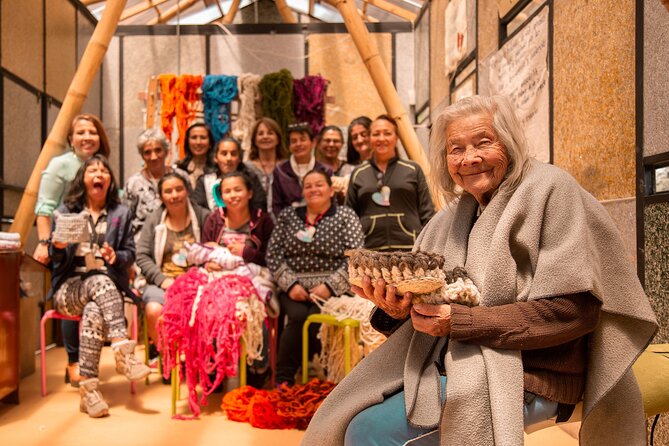
One account also describes a weaving workshop where visitors could buy a hand-loomed rug directly from local women. The supplied tour details do not promise that workshop on every departure, so treat it as a possible addition rather than a guaranteed stop. If it is offered, it gives you a direct way to support local work, but the schedule may feel tight if you want time for conversation and shopping.
The same practical point applies to tipping. Tips are optional, but you may want to bring extra cash if you hope to thank the local guides personally. This is an experience built around human contact, and many people find themselves wanting to support the people who shared their stories.
How the three hours are used
The planned timing is about one hour for the walk from Chorro de Quevedo and about two hours in Egipto. That sounds generous, but the experience contains several layers: the project introduction, the church, the murals, personal stories, the hills, and the football field.
If you enjoy asking questions, three hours can pass quickly. The personal accounts are not something you want rushed, and translation naturally takes time. One useful expectation is to treat this as a conversation with walking, not simply a walk with a few facts added along the way.
The route ends back at the original meeting point in Chorro de Quevedo. If you choose the transport option, private transportation to and from your hotel is included. If you do not select that option, plan to reach the square yourself and return from there.
The activity is private, so only your group participates. That is a real advantage for a subject this personal. You can ask more direct questions, move at a pace that suits your group, and avoid being part of a large crowd entering a sensitive neighborhood.
The tradeoff is price. At $91 per person, this costs more than a basic group walking tour of La Candelaria. The price is easier to justify if you value private guiding, bilingual support, direct access to local community leaders, and the chance to put money into a social-change project. If you mainly want Bogotá’s architecture, food, or major sights, a less expensive city walk will give you more of that.
Safety, comfort, and respectful conduct
The experience is designed to bring you into a neighborhood with a history of serious violence. That does not mean you should approach it as a danger spectacle. Listen carefully, avoid intrusive photography, and let your guides set the tone.
The people leading the local portion are sharing difficult parts of their lives. You can ask questions, but respectful curiosity works better than trying to force a dramatic confession. The strongest moments come when the conversation is allowed to remain human.
Comfortable clothing and shoes are recommended. The climb into Egipto is the main physical point to consider. Most people can participate, and service animals are allowed. Children must be accompanied by an adult.
The meeting point is near public transportation. Private hotel pickup and drop-off can make the outing simpler, especially if you are unfamiliar with Bogotá or prefer not to arrange transport before and after the walk.
The experience has a 100 percent recommendation rate from 62 published ratings, with a five-star average. That does not remove the need to choose carefully, but it does show unusually consistent satisfaction with the guides, the personal stories, and the community focus.
Who will get the most from this experience
You should consider booking this if you want to understand Bogotá beyond its museums, restaurants, and colonial streets. It suits people who care about social change, community projects, local voices, and the complicated work of rebuilding trust.
It is also a strong choice if you have already spent time in La Candelaria and want to see what lies just beyond the usual route. The short distance between Chorro de Quevedo and Egipto makes the contrast especially clear.
Families can take part, provided children stay with an adult. The football field and youth focus may help younger visitors connect with the subject, though parents should decide if the discussion of gang violence and drugs is right for them.
I would be more cautious about booking it for someone who wants a relaxed morning of sightseeing. The mood can be moving and hopeful, but it can also be uncomfortable. You will not get a polished version of Bogotá. You will get a serious look at how some residents are working to change their neighborhood.
Book at least a little ahead if you can. The activity is booked an average of 20 days before the date, which suggests that popular departure times may fill. Free cancellation is available when you cancel at least 24 hours before the start time. Later cancellations and changes are not accepted for a refund.
Should you book Breaking Borders?
Book this tour if you want a direct, personal look at Bogotá’s social change and are willing to listen with respect. The former gang members, the murals, and the football field give the experience a strong sense of place that a standard city tour cannot match.
Skip it if you want famous sights, shopping, or a light introduction to the capital. At $91, it is not the cheapest way to spend three hours, especially if you do not need private transportation. But if the money, time, and subject fit your interests, this is one of the more meaningful ways to understand the city beyond its tourist center.
FAQ
Where does the Breaking Borders tour begin?
It begins at Plazoleta Chorro de Quevedo, located at Cl. 12b #2-98 in La Candelaria, Bogotá.
Where does the experience end?
The activity ends back at the original meeting point at Chorro de Quevedo.
How long does the tour last?
The experience lasts about three hours. The first walking portion takes about one hour, followed by about two hours in Egipto.
Is hotel transportation included?
Private transportation to and from your hotel is included only when you select the transportation option. The standard meeting point is Chorro de Quevedo.
Is the tour conducted in English?
A bilingual expert guide speaking English and Spanish is included. A local guide from the Egipto neighborhood also takes part.
What is included in the price?
The experience includes the bilingual guide, a local Egipto guide, a snack, and traditional chicha. Private hotel transportation is included if that option is selected.
Are food and alcoholic drinks included?
A local snack and traditional chicha are included. Lunch, additional food and drinks, and alcoholic drinks are not included. Alcoholic drinks may be available to purchase.
Is the tour suitable for children?
Most people can participate, but children must be accompanied by an adult. Comfortable clothing and shoes are recommended because the route includes uphill walking.
Just added around Bogota
- Fun Graffiti Workshop: The Art of Aerosol and Color★ 5.0 · 3 reviews
- Zipaquirá: Private Salt Cathedral Mine and Walking Tour★ 4.8 · 3 reviews
- Walking tour José Celestino Mutis Botanical Garden 3 hrs★ 5.0 · 3 reviews
- Bogota: East Hills Mountain Hike★ 4.2 · 3 reviews
- Bogota: Explore the forest and bird watching at Chicaque Natural Park★ 5.0 · 3 reviews
- Bogota: Downtown City and Monserrate Hill Private Tour★ 3.7 · 3 reviews
- From Bogota: White Water Rafting Experience★ 4.4 · 3 reviews
- From Bogota: Excursion to Jaime Duque Park★ 5.0 · 3 reviews
Bogotá Tours, compared.
Zipaquirá: Salt Cathedral Group Tour with Pickup
Read our review →
Bogotá´s Barrios: El Paraíso Favela Tour with Cable Car
Read our review →
Bogota: Guatavita and Salt Cathedral Daily Group Tour
Read our review →
Bogotá City Tour with Monserrate, Gold and Botero Museums
Read our review →
Bogota: Zipaquirá Salt Cathedral and Lake Guatavita Day Tour
Read our review →
Browse the lists this tour appears in