
Reviewed · BOGOTÁ TOURS
Bogota´s Gastronomic Wonders – Experience the best traditional food
Bogotá’s food story is best told one bite at a time. This four-hour walk moves from the working-class La Perseverancia market to old bakeries, street scenes, colonial houses, and an Indigenous shop where you learn why coca leaf is a sacred food plant, not cocaine. You get a useful taste of Bogotá’s history along with the food.
I like the small private format, since your guide can adjust the pace and explain unfamiliar ingredients without rushing. I also like the unusual range: exotic fruit, traditional pastries, hot chocolate with cheese, Amazonian ice cream, and dishes from several Colombian regions all appear in one outing.
The main caution is consistency. Some outings have delivered a generous spread, while others have included only a few fruit samples and bakery items. Book a morning departure, especially if the market is central to your plans, and confirm what food stops will operate on your chosen day.
Key things to know before you book
- La Perseverancia market brings you close to traditional cooks, produce sellers, and local food customs.
- Hot chocolate with cheese and a hot drink with bakery pastries offer two classic Bogotá tastes.
- Amazonian fruit ice cream adds a less familiar flavor to the route.
- La Candelaria food stop serves savory regional recipes in a restored colonial house.
- An Indigenous Embera visit gives context to coca leaf and the pressure faced by Indigenous communities.
- The private group format means only your party takes part, with no strangers added.
A four-hour walk through Bogotá’s food culture
This is not a sit-down restaurant tour with a fixed lunch and a neat course-by-course menu. It is a walking route with repeated tastings, short neighborhood visits, and conversations about Colombian ingredients and customs.
You begin at Origen Bistro in Bogotá’s Centro Histórico, at Cra. 4 #12 C 88. The end is back at the same meeting point, so you can leave your larger luggage at your accommodation and keep the day simple. There is no hotel pickup, no drop-off, and no transport between stops. Plan to walk the route with your guide.
The tour is offered in English or Spanish, and the private setup is especially helpful if you have food questions, a slower walking pace, or a strong interest in one part of Colombian cuisine. The minimum age is 10, and you should report dietary needs when booking.
At $93 per person, the price is not low for a half-day food walk. The value depends on how actively your guide manages the tastings. If you receive the full range of samples, the neighborhood history, and the personal attention promised by a private tour, it can be a good first-day introduction to Bogotá. If the market is quiet or the guide leaves food choices entirely to you, the price feels harder to justify.
More Food Tours in Bogota
- Bogota Food Tour with over 12 Tastings & Tejo
★ 4.9 · 454 reviews - Bogotá: Craft Beer Tour with Tasting
★ 4.9 · 120 reviews - Bogota: Colombian Coffee Tasting
★ 4.8 · 92 reviews
La Perseverancia, where the food story begins
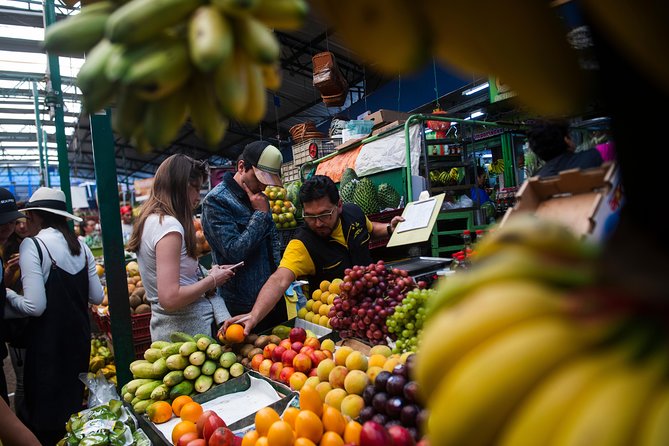
After meeting at Origen Bistro, you head to Plaza de Mercado La Perseverancia. The market grew from a working-class community formed at the beginning of the 20th century, so this is more than a produce hall. It gives you a look at the everyday food culture of Bogotá and the people who keep it going.
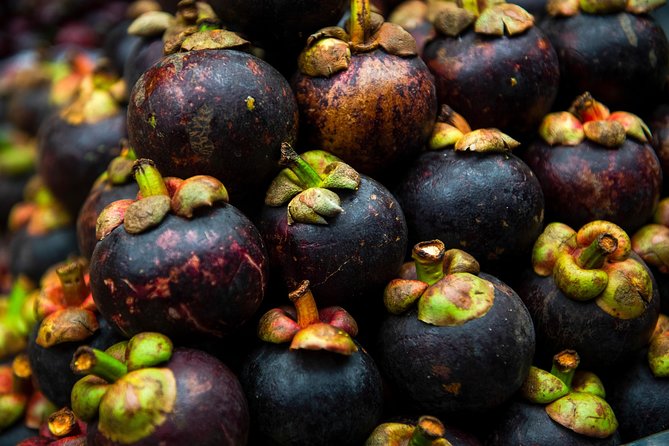
Expect to speak with traditional cooks and local vendors while trying Colombian fruits. This can be the most rewarding part of the experience if you are curious about ingredients you would not recognize on your own. Several kinds of fruit, juices, potatoes, and other produce have appeared on past outings, and one guide-led visit included samples at a large market along with a traditional pork and rice dish.
The market is also where timing matters most. A Monday afternoon departure caused trouble for one group because the larger market activity was closed or limited. Another group found many vendors closed later in the day. The tour still continued, but the food choices were narrower.
For the best chance of seeing the market at full strength, choose the morning option if it is available. I would also ask the provider what is expected to be open on your date. That small check can make the difference between a full market visit and a short fruit tasting.
La Macarena, from bohemian quarter to restaurant district
The route then passes through La Macarena, once known as a bohemian part of Bogotá in the mid-20th century. Today, it is associated with international restaurants and art galleries.
The stop itself is brief, about 10 minutes, so do not expect a long food session here. Its value is mainly as a transition between the traditional market and the more central streets. You get a sense of how Bogotá’s neighborhoods change from one block to the next, from working-class food stalls to restaurants and cultural spaces.
This is also a good point to ask your guide for recommendations for later meals. Past guides have helped visitors plan other activities and find additional places to eat during their stay. The private format gives you room to ask those practical questions without holding up a large group.
Seventh Street and the old Florida Bakery
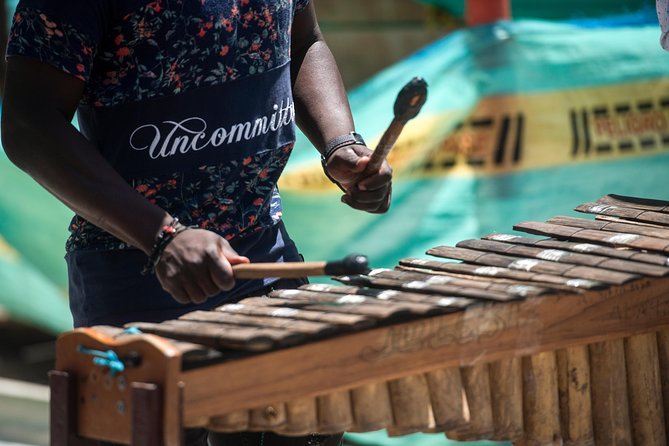
From La Macarena, you walk along Seventh Street during the route known as the Septimazo. This broad city path brings together street performers, singers, food carts, handicraft sellers, and notable buildings.
The walk is not only about eating. It gives you a street-level view of central Bogotá and shows the contrast between older colonial and republican buildings and newer cultural, commercial, and student housing projects. You are seeing a city in transition, not a preserved historic district cut off from daily life.
The food stop here is La Florida Bakery, a traditional place for pastries and a hot drink. You may taste aguapanela, a warm drink made with panela, or hot Santafereño chocolate with cheese. The cheese is placed into the hot chocolate, creating a combination that can sound odd until you try it. It is one of Bogotá’s signature food experiences, and it deserves a place on your first-visit list.
Past outings have included tamales alongside the chocolate and cheese. Other food samples have included empanadas and churros, though these are not guaranteed at every departure. The tour description promises designated snacks and meals, but it also states that lunch is not included. Think of this as a succession of substantial tastings rather than a formal midday meal.
Same city, a completely different kind of day:
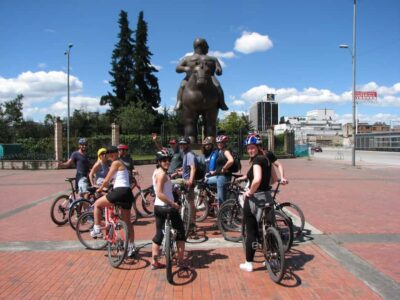
- Bogota: Bicycle City Tour
★ 4.9 · 2,156 reviews - Zipaquirá: Salt Cathedral Group Tour with Pickup
★ 4.8 · 1,606 reviews - Bogotá: Guided La Candelaria Walking Tour
★ 4.8 · 1,229 reviews - Bogotá: Private City Tour, Monserrate, Emerald and Botero
★ 4.9 · 798 reviews
Amazonian fruit ice cream in central Bogotá
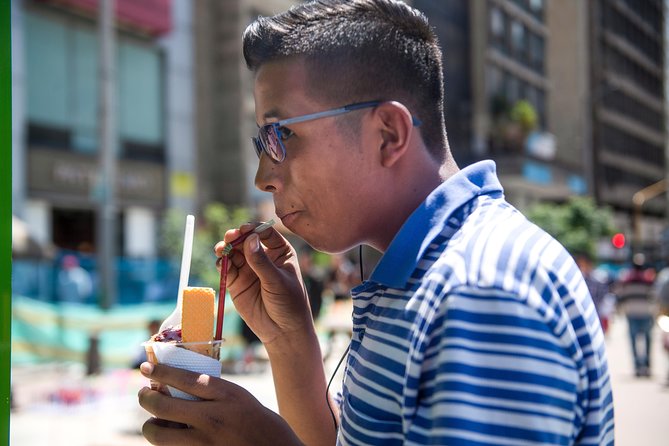
Heading southeast, the route pauses for an artisanal ice cream made from exotic Amazonian fruits. This is a smart addition to the tour because it moves beyond the familiar bakery and chocolate stops.
The Amazon is represented here through flavor rather than a long regional lecture. Your guide can explain the fruit and its place in Colombian food culture, while you get a cool break from the walking route. The exact flavor selection is not specified, so approach it with curiosity rather than expecting one particular fruit.
This part also makes the tour useful for cautious eaters. You can try something new in a small serving, then decide what you want to seek out later. If you are an adventurous eater, it adds a welcome change from the heavier baked and savory foods.
La Candelaria and regional recipes in a restored house
The route reaches La Candelaria, Bogotá’s historic district, for the longest walking and food segment. Narrow streets, colonial buildings, and older republican structures give the meal a fitting setting.
You stop at a restored colonial house for a savory meal featuring recipes from different parts of Colombia. The precise dishes can vary, and the information provided does not promise a fixed menu. In past outings, traditional chicken soup, a pork and rice dish, tamales, empanadas, and other regional foods have appeared.
This is where the tour can shift from simple tasting to useful cultural context. Colombia’s food differs widely by region, and a selection of dishes lets you compare ingredients and cooking styles without leaving Bogotá. Your guide can also help you understand what you are eating, which matters when a dish has a name or texture unfamiliar to you.
Still, keep your expectations measured. One disappointing outing included very little food after the market and bakery, with no empanadas, arepas, or street food. That experience suggests you should not assume every advertised example will appear. Ask at the start what has been arranged for your particular group, especially if eating is your main reason for booking.
Coca leaf, Indigenous culture, and an important distinction
The final stop is an Indigenous store, where you can taste coca leaf products and speak with an Embera Indigenous woman. She explains why coca is not cocaine and why the plant has a role in Indigenous nutrition and sacred practice.
This is one of the tour’s most distinctive elements. Many food walks stay with restaurants, markets, and famous snacks. Here, food becomes a way to discuss identity, survival, and cultural rights. You also hear about the struggle to preserve Indigenous traditions and economic life in the face of conflict involving narcos, industry, and government policy.
The stop should be approached with respect. It is not a novelty tasting or a chance to treat coca as an exotic product. The value is in understanding the difference between a traditional plant and the illegal drug made through chemical processing, as well as learning about the Embera community’s efforts to protect its culture.
Because this conversation forms part of the experience, it may be especially meaningful for you if you want food tours to include social and cultural context. If you prefer a route focused only on eating, this section may feel less directly connected to a standard culinary tour.
What the strongest guide-led outings provide
The quality of the guide has a major effect on this experience. Past guide pairings have included Sandra, Emilio, Jorge, Luis Suarez, Jaime, and Juan Frederick, along with driver Jonathan on one market-focused outing.
Sandra was praised for making sure her group tried typical dishes and snacks, and for staying beyond the scheduled time after an unavoidable delay. Emilio combined food stops with a broad introduction to Bogotá’s geography and history, then offered useful ideas for the rest of the visit.
Jorge handled a less-than-ideal Monday afternoon by changing the route for a small group. That group still sampled fruit, catfish, ponchos, churros, bakery items, hot chocolate with cheese, tamales, and an aromatic drink near Bolívar Square. This is a good example of why a private tour can work well when the guide takes responsibility for adapting the plan.
Another outing with Juan Frederick and Jonathan went to a large produce market, where the group sampled fruit, coffee, breads, and a pork and rice dish before having traditional chicken soup. Juan Frederick was described as a chef who also guides tours, which can be useful when you want more detail about preparation and ingredients.
The pattern is clear: the best version of this tour depends on a guide who recommends what to try, explains the food, and keeps the tastings moving. If your guide simply asks you to choose what you want, you may not get the insight you are paying for. Be direct. Ask which foods are essential, which dishes are regional, and what the group will taste at each stop.
Who will get the most from this experience
I would recommend this tour to an adventurous eater who wants a first introduction to Bogotá without spending a full day in restaurants. You get a mix of fruit, baked goods, hot drinks, savory dishes, ice cream, and Indigenous food traditions, plus a walk through several central neighborhoods.
It also suits a solo visitor. One solo participant enjoyed having the guide’s full attention and moving at a personal pace, even though a larger social group might have created more conversation. Families with children aged 10 and older can take part, provided the children are open to unfamiliar foods and several hours of walking.
This may not be the right choice if you want a guaranteed meal, a published menu, or a food stop at every few minutes. The route includes history, architecture, street life, and cultural discussion. It is a city walk built around food, not a nonstop eating contest.
Wear comfortable shoes and clothes. Bring an appetite, but do not arrive expecting a conventional lunch, since lunch is specifically excluded. Dietary restrictions should be shared when you book, and you should be ready for food choices to change with market hours and vendor availability.
Practical value, timing, and cancellation
At about four hours, the experience fits well on a first or second day in Bogotá. It can help you learn what foods to order for the rest of your stay and gives you an orientation to La Candelaria, La Macarena, central Seventh Street, and La Perseverancia.
The $93 cost per person is easiest to defend when you are traveling as a small private party and want a guide in your preferred language. You are paying for interpretation, local navigation, arranged tastings, and the ability to shape the conversation around your interests. It is less compelling if you mainly want to wander through a market and buy food on your own.
The tour is generally booked well ahead, with an average booking time of 42 days. That does not mean you must reserve that far out, but it is a useful signal for planning during busy travel periods.
Free cancellation is available up to 24 hours before the local start time. Changes or cancellations inside that window are not accepted for a refund. Public transport is nearby, and most people can participate, but the route itself involves walking between sites.
Should you book Bogota’s Gastronomic Wonders?
Book it if you want food plus neighborhood context, and if you value a private English or Spanish guide who can explain Colombian traditions as you go. Choose the morning, confirm the market schedule, and ask what tastings are planned for your date.
I would be more cautious if your top priority is a guaranteed spread of street food. The strongest outings include a generous range of fruit, pastries, empanadas, tamales, hot chocolate with cheese, regional dishes, and unusual local products. The weaker version can become a short market visit, a bakery stop, and a city walk.
The tour earns its place on your Bogotá plans when the guide takes an active role. If that happens, you get an approachable introduction to local food and a thoughtful conversation about Indigenous culture. If you want certainty, confirm the food plan before paying.
FAQ
Where does the Bogotá food tour start?
It starts at Origen Bistro in Bogotá’s Centro Histórico, at Cra. 4 #12 C 88, Bogotá, Colombia.
Where does the tour end?
The activity ends back at the meeting point at Origen Bistro.
How long does the experience last?
The tour lasts approximately four hours.
Is lunch included?
Lunch is not included. Designated meals and snacks are included, but the experience is best understood as a series of substantial tastings rather than a standard restaurant lunch.
Which language can I request?
You can request an expert guide in English or Spanish.
Is this a private tour?
Yes. Only your group participates in the activity.
Can I cancel for a full refund?
Yes, if you cancel at least 24 hours before the experience start time. Cancellations made less than 24 hours before the start time are not refunded, and changes inside that period are not accepted.
Just added around Bogota
- Fun Graffiti Workshop: The Art of Aerosol and Color★ 5.0 · 3 reviews
- Zipaquirá: Private Salt Cathedral Mine and Walking Tour★ 4.8 · 3 reviews
- Walking tour José Celestino Mutis Botanical Garden 3 hrs★ 5.0 · 3 reviews
- Bogota: East Hills Mountain Hike★ 4.2 · 3 reviews
- Bogota: Explore the forest and bird watching at Chicaque Natural Park★ 5.0 · 3 reviews
- Bogota: Downtown City and Monserrate Hill Private Tour★ 3.7 · 3 reviews
- From Bogota: White Water Rafting Experience★ 4.4 · 3 reviews
- From Bogota: Excursion to Jaime Duque Park★ 5.0 · 3 reviews
Bogotá Tours, compared.
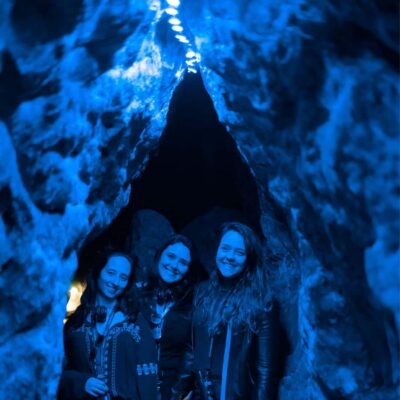
Zipaquirá: Salt Cathedral Group Tour with Pickup
Read our review →
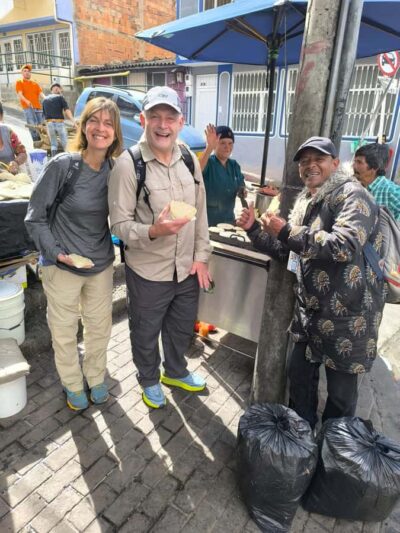
Bogotá´s Barrios: El Paraíso Favela Tour with Cable Car
Read our review →
Bogota: Guatavita and Salt Cathedral Daily Group Tour
Read our review →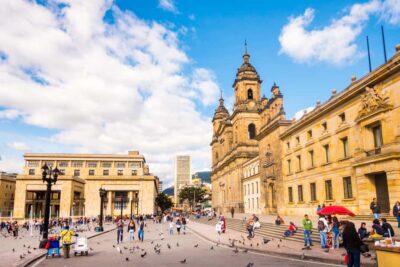
Bogotá City Tour with Monserrate, Gold and Botero Museums
Read our review →
Bogota: Zipaquirá Salt Cathedral and Lake Guatavita Day Tour
Read our review →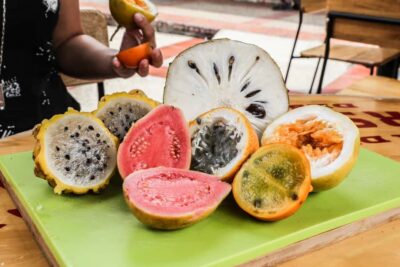
Browse the lists this tour appears in