
Reviewed · BOGOTÁ TOURS
Bogota Walking Tour Teusaquillo, a different part of the city
Teusaquillo shows you a side of Bogotá that many first-time visitors miss. This 2.5-hour walk links national politics, early industry, mid-century architecture, street art, and the café culture of Parkway. It is a neighborhood tour with a clear sense of place, not a quick march between famous sights.
I like the mix of subjects, from Colombia’s independence-era story to the first beer company in the country. I also like the built-in coffee tasting and craft beer, which give the walk two useful pauses. The main drawback is simple: you do not get lunch, and a 2.5-hour walk may feel long if you want a museum-heavy day.
Key points
- Museo Nacional begins the story: See art, national history, and a building linked to Colombia’s political past.
- Cavas and Falcas explain urban growth: Learn how brewing and industrialization helped push Bogotá toward modern expansion.
- A politically important house adds difficult context: The stop connects one figure to the start of Colombia’s political conflict.
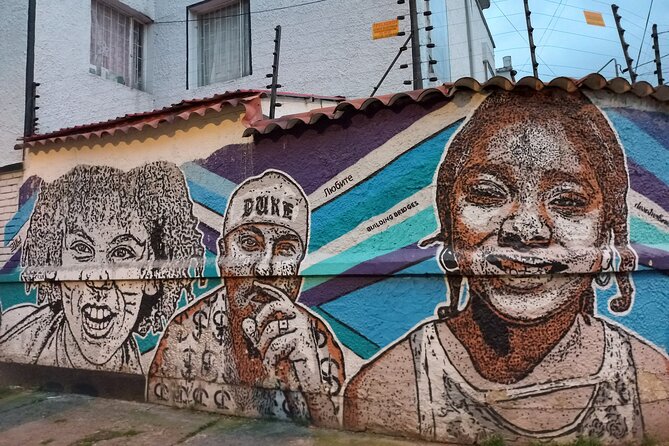
- Street art brings the present into view: The route includes work by leading Colombian artists.
- Parkway is the natural finish: End among cafés, restaurants, bars, and independent projects in a 1950s setting.
- Coffee and craft beer are included: The two tastings add flavor without turning the walk into a food tour.
Why Teusaquillo makes a strong Bogotá walk
Bogotá is often presented through La Candelaria, with its colonial streets, grand plazas, and major museums. Teusaquillo offers a different lesson. Here, the city’s story is tied to political change, industrial growth, residential expansion, modern architecture, and creative life.
That change of focus is the best reason to book this tour. You are not simply collecting pretty buildings. You are looking at how Bogotá grew and how its public life changed along the way.
The tour begins at Museo Nacional in Santa Fe and finishes at Parkway. Those two points create a useful arc. You start with the national story, move through industry and politics, and finish in a social zone filled with food, drink, art, and independent projects.
The route lasts about two and a half hours. That gives the guide time to explain the stops rather than point at a building and move on. The group can include up to 20 people, so expect a small-to-medium walking group rather than a private visit.
More Walking Tours in Bogota
- Bogotá: Guided La Candelaria Walking Tour
★ 4.8 · 1,229 reviews - Zipaquirá Salt Cathedral Private Tour + Walking Tour
★ 5.0 · 66 reviews - La Candelaria Walking Private Tour (3 Hrs.)
★ 5.0 · 51 reviews
Starting at Museo Nacional with Colombia’s national story
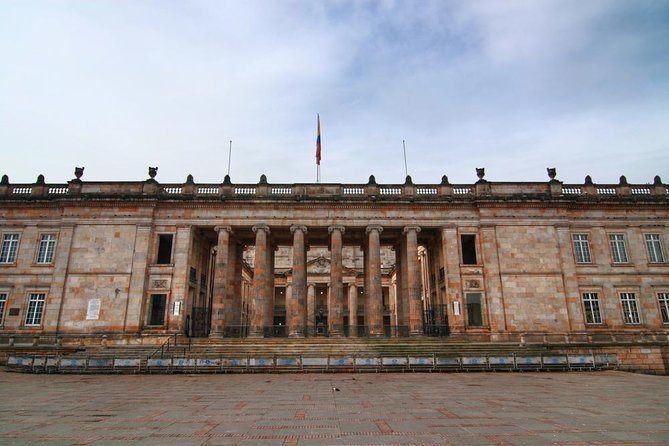
The opening stop is the museum that covers Colombia from independence to recent times. The tour also points out important works by major Colombian artists and uses the museum building itself to discuss the country’s political past.
This is a smart place to begin. Before you look at individual streets, you get a framework for the country’s struggles and changes. The museum helps connect national events to the neighborhood you are about to walk through.
The building matters as much as the collection. Its walls and architecture carry political meaning, so the stop is not only about viewing art indoors. You are also learning how public buildings can hold memory and shape the way a city tells its story.
The exact amount of time spent inside is not specified, so you should not assume this is a full museum visit. Think of it as an introduction to the museum, its major works, and its role in understanding Bogotá.
That distinction matters if you are deciding between this tour and a dedicated museum outing. If your main goal is to see every gallery, you will need separate time at Museo Nacional. If you want context before walking through Teusaquillo, the opening stop does that well.
Cavas and Falcas, where beer meets city growth
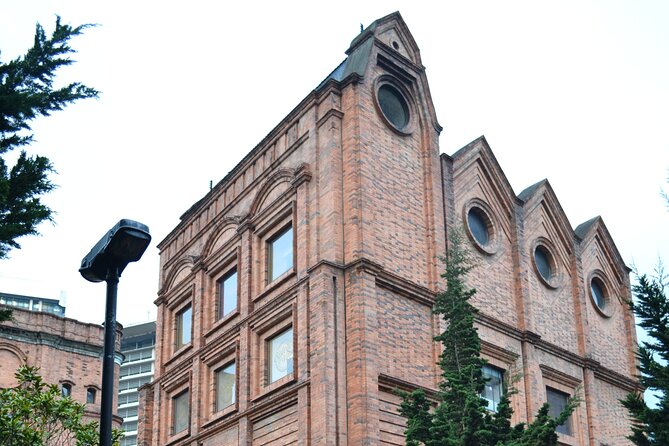
The route then turns to the Cavas and Falcas buildings. These structures were once part of the country’s first beer company, making them a useful doorway into Colombia’s industrial story.
This stop gives the walk a practical angle. Industrialization is not treated as an abstract chapter in a textbook. You see how production, business, and new buildings helped Bogotá expand beyond its older center.
The discussion also covers the growth of modern urbanizations. That phrase points to a key change in the city: Bogotá was not only adding factories and businesses, it was building new areas for a changing population.
I like this part because it explains why the neighborhood looks different from the historic center. Architecture becomes evidence of economic change. The buildings tell you that Bogotá’s identity was shaped by industry as much as by government, churches, and monuments.
The stop is also well placed within the walking route. After the national focus of Museo Nacional, Cavas and Falcas shift your attention toward work, production, and the physical expansion of the city.
A house linked to Colombia’s political conflict
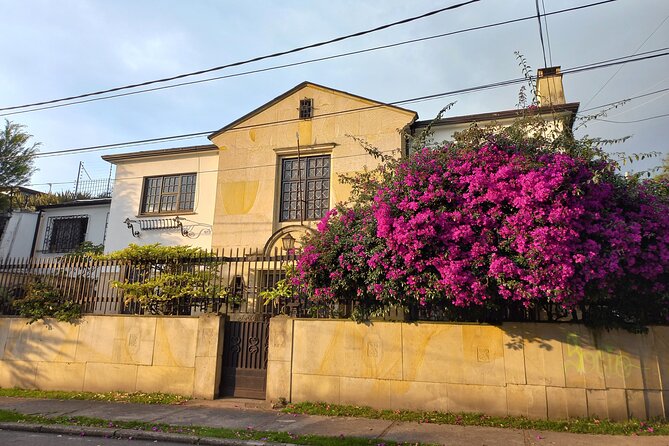
One stop focuses on the home of a figure who changed Colombia’s history and helped mark the beginning of the country’s political conflict. The house is surrounded by some of Bogotá’s most appealing architecture.
The identity of the character is not specified in the tour details, so you should expect the guide to supply the name and explain the connection on site. That leaves the stop dependent on the guide’s storytelling, but the subject itself gives the walk serious historical weight.
This is also where the route moves beyond architecture. The attractive houses and streets are not presented as decoration alone. They form the setting for political decisions and social tensions that affected the country for decades.
For me, this is one of the most useful elements of the experience. It asks you to look at a pleasant residential area and consider what happened there, who held power, and how national conflict can begin in ordinary urban spaces.
The balance is important. You get attractive buildings, but you also get difficult context. That makes Teusaquillo feel like a lived-in part of Bogotá rather than a preserved stage set.
Same city, a completely different kind of day:
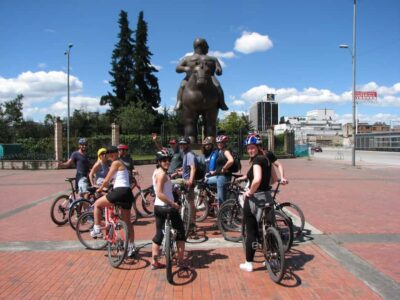
- Bogota: Bicycle City Tour
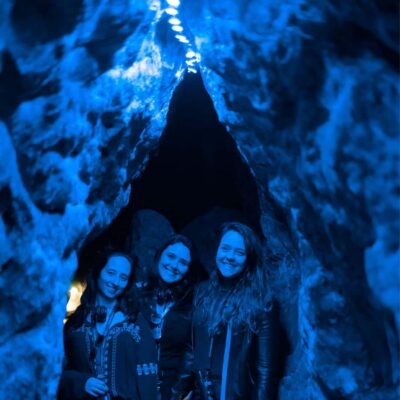
★ 4.9 · 2,156 reviews - Zipaquirá: Salt Cathedral Group Tour with Pickup
★ 4.8 · 1,606 reviews - Bogotá: Private City Tour, Monserrate, Emerald and Botero
★ 4.9 · 798 reviews - Bogotá´s Barrios: El Paraíso Favela Tour with Cable Car
★ 4.8 · 731 reviews
Street art by major Colombian artists
The street art stop adds a sharp change of mood. You visit an outdoor gallery featuring work by some of Colombia’s leading artists.
The details of the artists and murals are not listed in advance, so the guide’s explanation will shape this section. Still, the inclusion of street art makes sense. It connects the older political and industrial story to the city’s current creative expression.
Street art also changes how you walk. Instead of looking only at facades, you begin scanning walls, corners, and public spaces for images and messages. The city becomes something you read as you go.
This stop should appeal to you if you like art with a strong local setting. It is not a formal gallery visit, and the appeal lies partly in seeing artwork as part of daily city life.
Do not book this tour expecting a dedicated street-art excursion. The murals are one part of a broader route that also covers museums, buildings, politics, and cafés. That variety is the strength, but it means no single subject gets the whole afternoon.
Coffee, craft beer, and the walk’s two useful pauses
Condor Tours includes a coffee tasting and craft beer. These are not minor extras. They break up the walking and give you two different ways to experience Bogotá.
The coffee tasting fits the daytime rhythm of the route. It offers a chance to pause, talk with the guide, and consider one of Colombia’s best-known products in a local setting.
The craft beer brings the earlier Cavas and Falcas discussion back into the present. You have heard about the country’s first beer company, then later get an alcoholic drink connected to Bogotá’s modern social life.
The tour does not include lunch. That is easy to manage because the walk ends in Parkway, where you can find restaurants, cafés, and bars. Still, plan for your own meal if you are booking this around lunchtime. The included tastings should not be treated as a full meal.
Alcohol also makes timing worth considering. If you are traveling with children, avoiding alcohol, or simply do not want a beer stop, check the arrangements before booking. The tour specifically includes craft beer, so it is part of the experience rather than an accidental option.
Parkway, a relaxed finish in Bogotá’s 1950s city
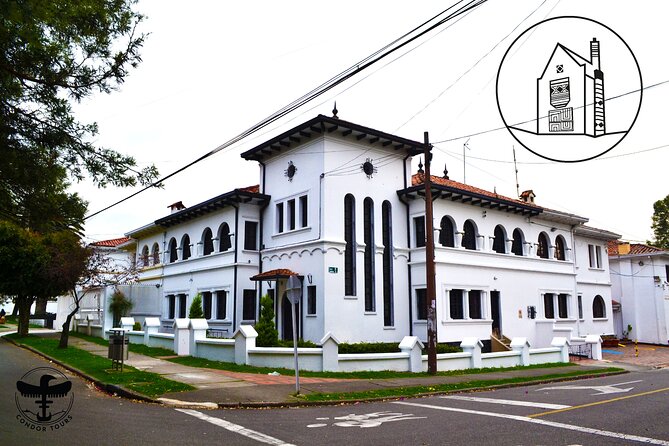
The walk ends at Parkway, one of Bogotá’s best-known meeting points for artists, restaurants, cafés, and independent projects. The area also has architecture from Bogotá’s 1950s and a bohemian character.
Ending here is practical. You are not left at an isolated monument with nothing nearby. You can continue with coffee, dinner, drinks, or a little more exploring after the guide says goodbye.
Parkway also gives the tour a fitting final note. The earlier stops explain political change, industry, and urban growth. The final stop shows how that built environment supports social and creative life today.
The area is not simply a final address. It is part of the lesson. A neighborhood can preserve older architecture while making room for restaurants, artists, cafés, and independent work.
Because the tour ends in a food and drink area, you may want to leave the rest of your afternoon open. This is a better finish than rushing straight back to another scheduled attraction.
What the $28 price gets you
At $28 per person, the value depends on how you use the experience. You receive a 2.5-hour guided walk, a Condor Tours guide, coffee tasting, and craft beer. You are paying for interpretation as much as for movement between locations.
A self-guided walk would cost less, of course. But it would be harder to connect the national museum, old brewery buildings, political history, architecture, murals, and Parkway into one clear story. The tour earns its price if you want those links explained while you walk.
The price is less compelling if you want a long museum visit or a full meal. Neither is the main purpose here. This is a neighborhood and context tour, with drinks included and lunch left to you.
The tour is booked around 18 days ahead on average. That suggests you should not leave it until the last morning if your dates are fixed, especially since the group is capped at 20 people.
A full refund is available if you cancel at least 24 hours before the start time. Cancellations within 24 hours are not refunded, and changes in that window are not accepted. The cut-off uses Bogotá local time.
Who will get the most from this experience
I would choose this walk if you have already seen the main historic center or want something beyond the standard Bogotá route. It suits you if architecture, social history, politics, and street art matter as much as landmark photographs.
It is also a good fit if you enjoy learning through neighborhoods. The route does not isolate each subject. Instead, it shows how art, industry, politics, and public life overlap in one part of the city.
The walk may be less suitable if you dislike outdoor touring, need a seated museum experience, or want a tightly focused food tour. You should also allow for the fact that it is a walking activity lasting about two and a half hours.
Most people can participate, and service animals are allowed. The meeting point is near public transportation, which makes the start easier to reach, though the supplied details do not specify the exact transit lines or walking conditions.
The guide matters here. Daniel is named in connection with the tour and is praised for explaining both the sights and the political and social meaning of the neighborhood. Since guide assignments can vary, you should not assume Daniel will lead every departure, but the experience clearly depends on a guide who can connect details rather than recite dates.
Should you book the Teusaquillo walk?
Book it if you want Bogotá to make more sense beyond its postcard center. The route covers a lot in a short time: Museo Nacional, national art and politics, former brewery buildings, a politically important house, street art, and Parkway’s cafés and independent projects.
The included coffee and craft beer add real value, while the ending makes it easy to continue your day. Just remember that lunch is not included, the tour is entirely on foot, and the group may reach 20 people.
I would especially recommend it for a second day in Bogotá, or for a first visit when you prefer neighborhoods and context over a checklist of major sights. If that sounds like your style, $28 is a fair price for a thoughtful walk through a different part of the city.
FAQ
Where does the Bogotá Teusaquillo walking tour start?
The tour starts at Museo Nacional Santa Fe in Bogotá, Colombia.
Where does the tour end?
It ends in the Parkway zone at Cl. 39a, Bogotá. Restaurants, cafés, and bars are available in that area.
How long does the tour last?
The walking tour lasts approximately 2 hours and 30 minutes.
How much does the experience cost?
The listed price is $28 per person.
What is included in the price?
The experience includes a Condor Tours guide, a coffee tasting, and craft beer.
Is lunch included?
No. Lunch is not included.
How many people can join the tour?
The activity has a maximum group size of 20 people.
Is this a walking tour?
Yes. The experience is conducted on foot.
Are service animals allowed?
Yes. Service animals are allowed.
Can I cancel for a full refund?
Yes, if you cancel at least 24 hours before the experience start time. Cancellations within 24 hours are not refunded.
Is the tour near public transportation?
Yes. The tour information states that it is near public transportation.
Just added around Bogota
- Fun Graffiti Workshop: The Art of Aerosol and Color★ 5.0 · 3 reviews
- Zipaquirá: Private Salt Cathedral Mine and Walking Tour★ 4.8 · 3 reviews
- Walking tour José Celestino Mutis Botanical Garden 3 hrs★ 5.0 · 3 reviews
- Bogota: East Hills Mountain Hike★ 4.2 · 3 reviews
- Bogota: Explore the forest and bird watching at Chicaque Natural Park★ 5.0 · 3 reviews
- Bogota: Downtown City and Monserrate Hill Private Tour★ 3.7 · 3 reviews
- From Bogota: White Water Rafting Experience★ 4.4 · 3 reviews
- From Bogota: Excursion to Jaime Duque Park★ 5.0 · 3 reviews
Bogotá Tours, compared.
Zipaquirá: Salt Cathedral Group Tour with Pickup
Read our review →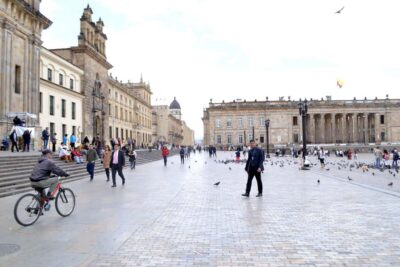
Bogotá´s Barrios: El Paraíso Favela Tour with Cable Car
Read our review →
Bogota: Guatavita and Salt Cathedral Daily Group Tour
Read our review →
Bogotá City Tour with Monserrate, Gold and Botero Museums
Read our review →
Bogota: Zipaquirá Salt Cathedral and Lake Guatavita Day Tour
Read our review →
Browse the lists this tour appears in