
Reviewed · BOGOTÁ TOURS
Bogotá: City tour Monserrate, emerald and gold museum & more
Monserrate is the star of this Bogotá tour. At 3,152 meters above sea level, the mountain gives you wide views over the city and the Andes, plus a look at one of Colombia’s best-known pilgrimage sites. The day also connects that high viewpoint with the Gold Museum, emerald culture, and the old streets of La Candelaria.
I like the private format, which gives you room to ask questions and move at a sensible pace. I also like the pairing of the Gold Museum and Emerald Museum: one explains Colombia’s pre-Hispanic cultures, while the other shows how a prized modern export is mined and cut.
The main consideration is the pace. Six hours covers several important places, but it does not allow unlimited time at each one. The cable car ride to Monserrate is not included, and the tour is not suited to wheelchair users or people with mobility impairments.
Key points to know before booking
- Monserrate reaches 3,152 meters, with panoramic views of Bogotá and the Andes.
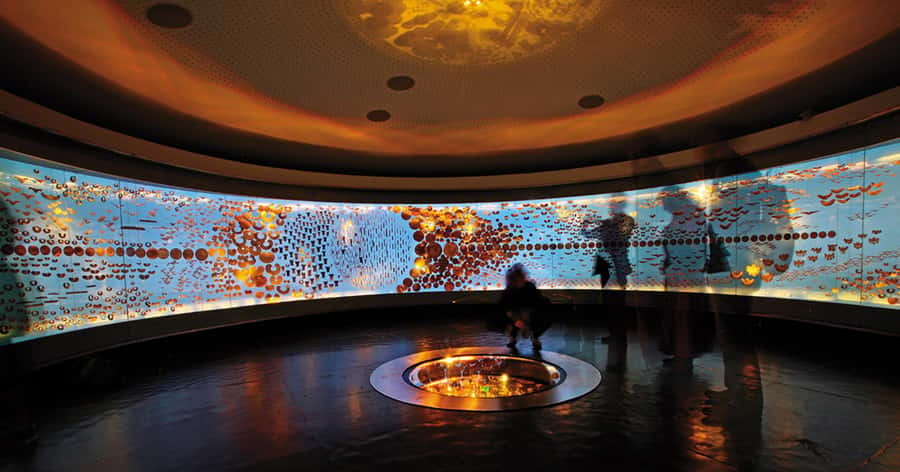
- The Gold Museum includes the famous Muisca raft, linked to the El Dorado ceremony.
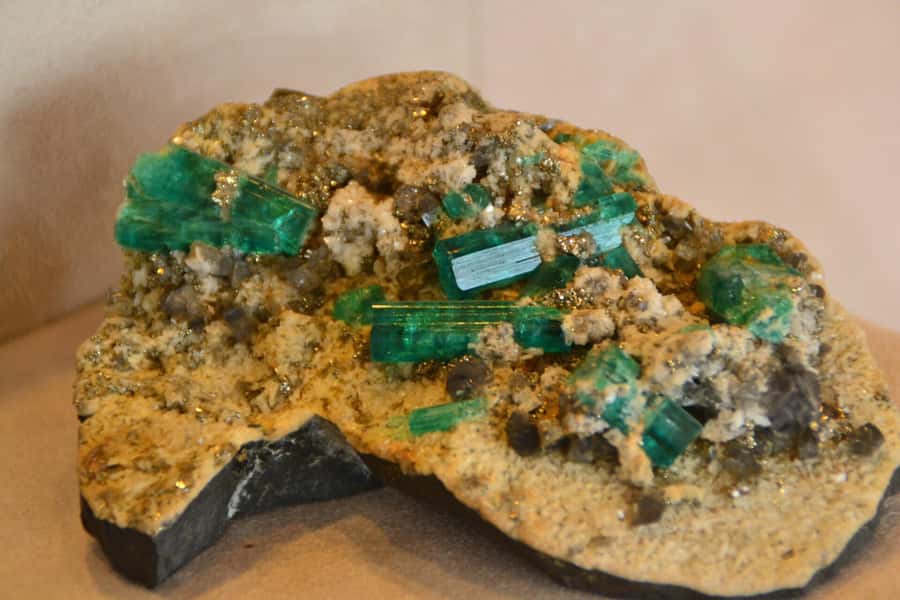
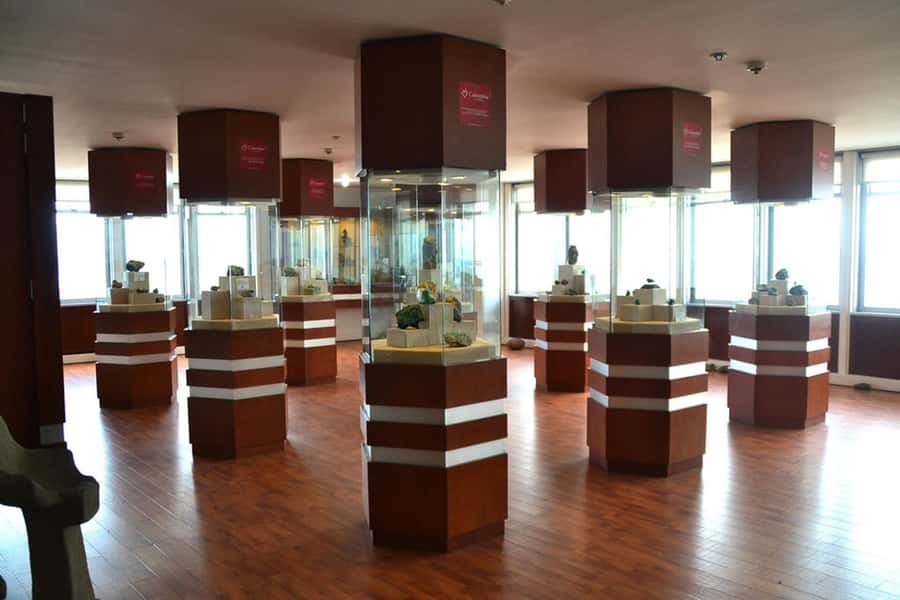
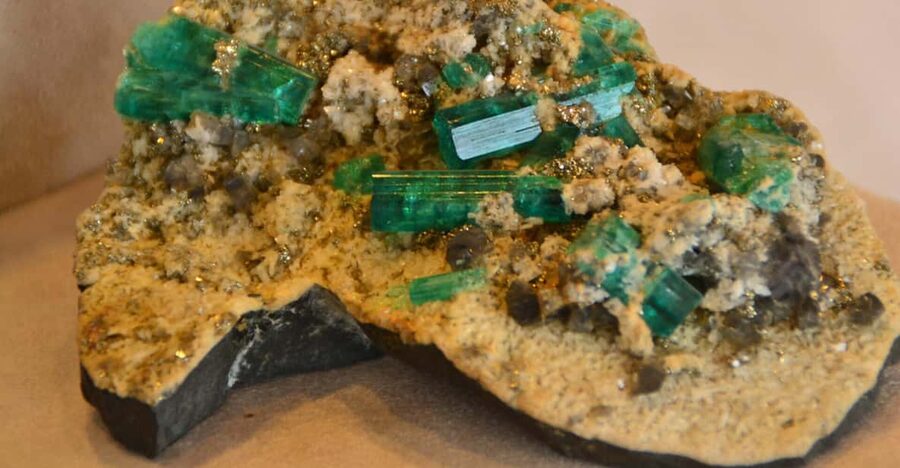
- The Emerald Museum shows Colombian stones in natural form and as jewelry, with an explanation of mining and cutting.
- The private guide format helps you connect the museums to Bogotá’s wider story, rather than simply walking through displays.
- Jhair is praised for patient, detailed guiding, including careful attention to an elderly guest.
- Museum closing days matter: the Emerald Museum is closed Sundays and holidays, while the Gold Museum is closed Mondays.
Why this tour works as a first look at Bogotá
This is a six-hour introduction to Bogotá that covers several different sides of the city. You move from a mountain sanctuary to colonial streets, then into museums that explain both indigenous Colombia and the country’s famous emerald trade.
That variety is the real value. You are not spending the entire day in one museum or on a single walking route. Instead, the tour gives you a basic map of Bogotá’s past and present, with a guide to connect the stops.
Hotel pickup and drop-off are included, which is useful in a large city where traffic can affect your plans. You also have a private group and a live guide in English or Spanish. That makes this a better fit than a large bus tour if you want to ask about details, adjust the pace, or spend more time on one subject.
The price is $85 per person. That is not the cheapest way to see Bogotá, especially since the Monserrate cable car is extra. Still, the price includes transport from your hotel, admission to both museums, guided visits, the historic center, and a small Colombian snack. For a first day in the city, that combination can be good value, particularly if you prefer a planned route with one guide handling the connections.
More Monserrate visits:
- Bogotá: Private City Tour, Monserrate, Emerald and Botero
★ 4.9 · 798 reviews - Bogotá City Tour with Monserrate, Gold and Botero Museums
★ 4.9 · 584 reviews - Bogota: Monserrate Entry Ticket
★ 4.4 · 233 reviews
Starting above the city at Monserrate
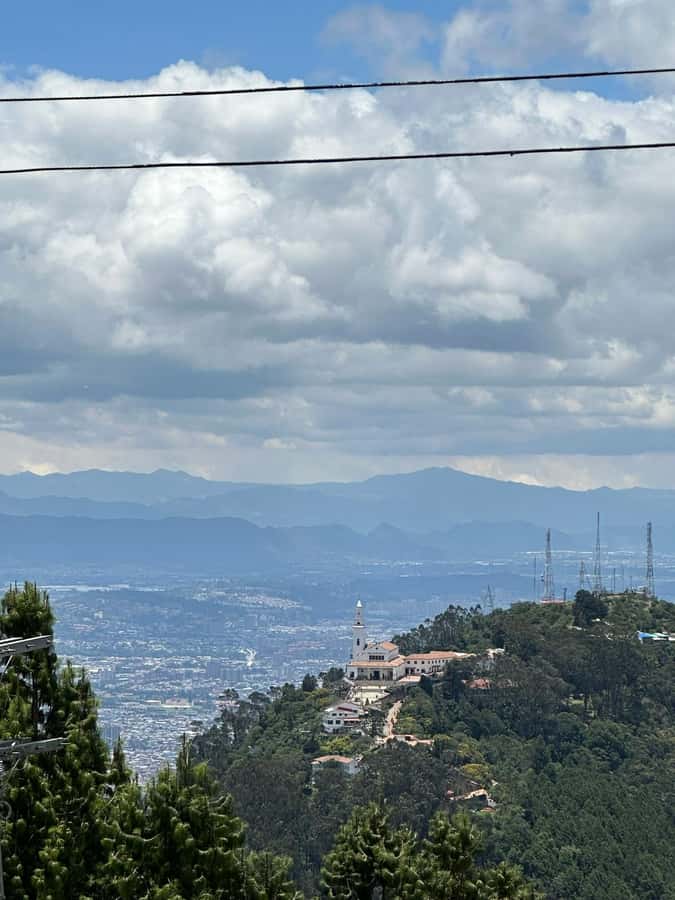
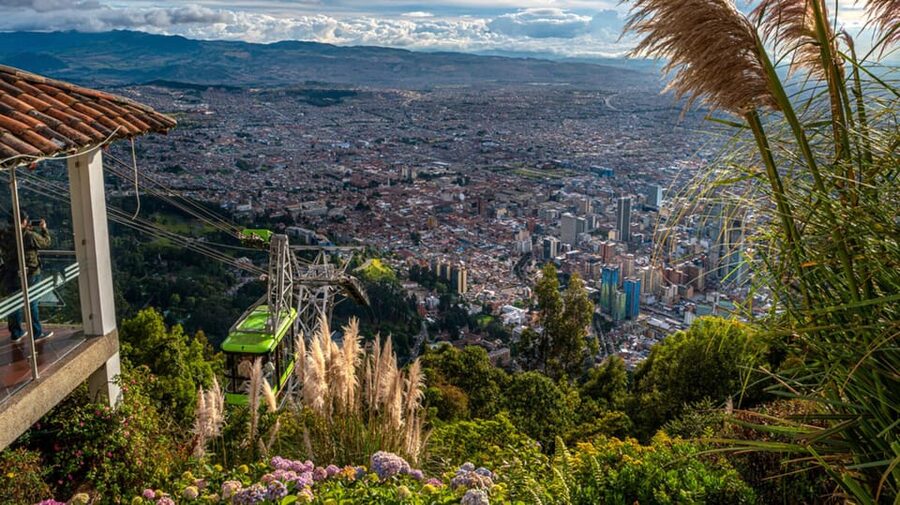
Monserrate usually provides the most memorable opening to the day. The mountain rises sharply above Bogotá, and from the top you can look across the city toward the Andes. The view gives you an instant sense of Bogotá’s scale and location.
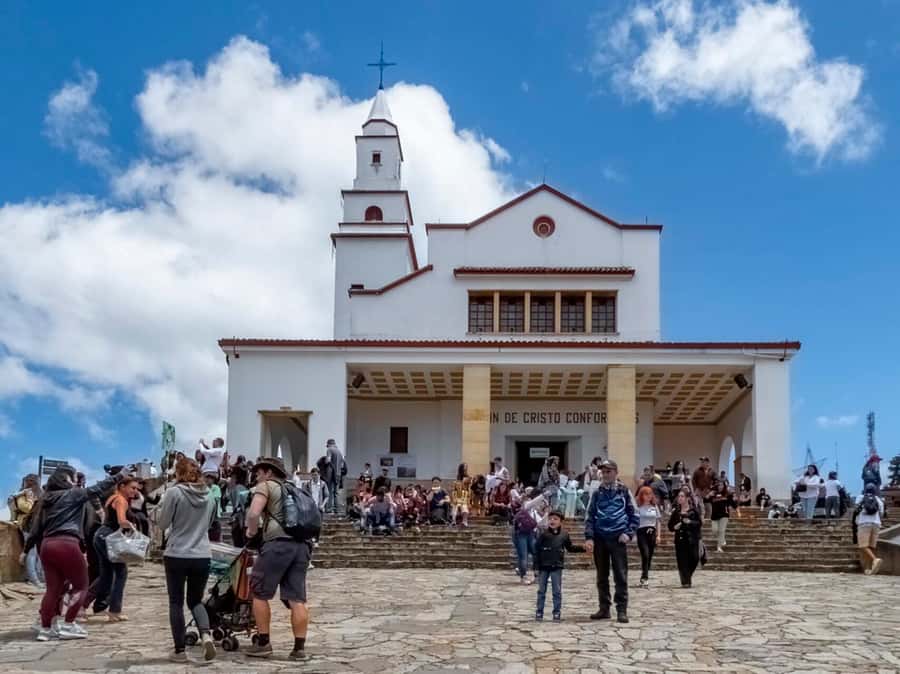
At the summit, you will also see the Sanctuary of the Fallen Lord of Monserrate. This is not only a sightseeing stop. It is a pilgrimage site with religious importance for Colombians, and your guide can help explain that side of the mountain rather than treating it as just a photo point.
The standard visit lasts about an hour and a half, including guided time, free time, and walking. You can reach the summit by cable car, funicular, or hiking. The tour does not include the cable car ride, so budget for that separately if you do not plan to walk.
The altitude deserves attention. Bogotá itself is already high, and Monserrate is higher still. Take the walk slowly, drink water, and bring clothing suitable for changing weather. Comfortable shoes are essential, even if you use the cable car or funicular, because you will still walk around the summit.
The mountain can be busy, and clouds may affect the view. That is part of the tradeoff. You are visiting one of the city’s most popular sights, not a quiet wilderness lookout. Still, the height, the sanctuary, and the city panorama make Monserrate a strong start to a Bogotá overview.
Walking La Candelaria and Chorro de Quevedo
After Monserrate, the tour turns to La Candelaria, Bogotá’s old central district. This is where the city feels most historic and atmospheric, with colorful colonial houses, small cafes, art shops, and narrow streets.
The route includes Chorro de Quevedo, a small plaza linked to the founding of Bogotá by Gonzalo Jiménez de Quesada in 1538. The site is modest in size, but that is part of its charm. It is a place for understanding the city’s beginnings, not a grand monumental square.
Your guide can point out how the neighborhood functions today as a cultural meeting place. Street performances, storytellers, music, and artists are part of its character, especially later in the day. The plaza is also a useful place to pause and watch local life instead of rushing from one formal sight to another.
The La Candelaria portion takes about an hour. That is enough for an introduction and a guided walk, but not enough for every side street, gallery, and cafe. If the neighborhood interests you most, plan to return on your own with more time.
Walking is central here. The tour is not a good match for anyone who has difficulty walking or uses a wheelchair, and the cobbled or uneven historic streets may require extra care. Wear shoes with good support and keep your camera ready, but remember that flash photography is not allowed in the museums.
Reading Colombia’s past at the Gold Museum
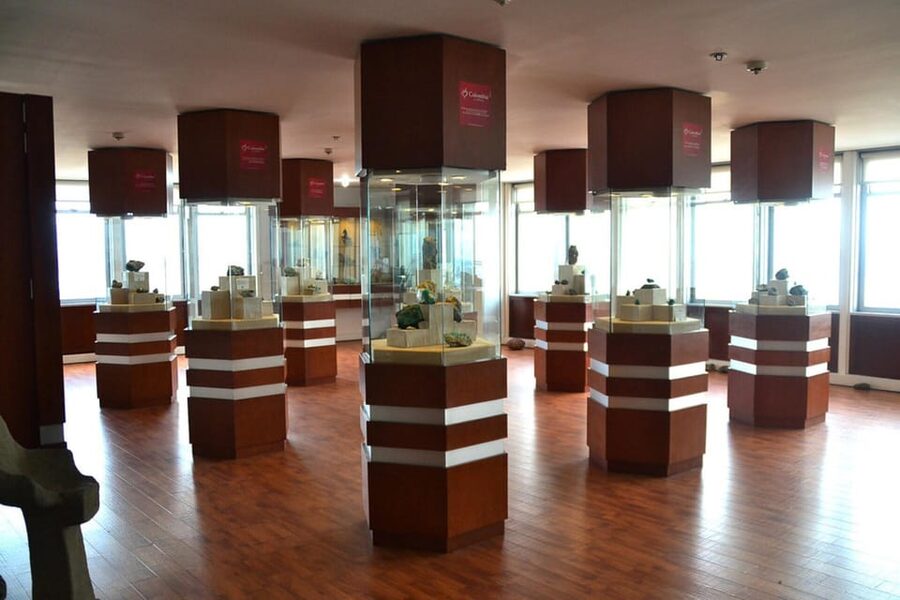
The Gold Museum, or Museo del Oro, is one of the strongest stops on the route. It holds pre-Hispanic objects made from gold, ceramics, stone, and other materials. Together, these pieces show the variety and skill of indigenous cultures in Colombia before Spanish conquest.
The museum is important for more than its precious materials. Gold objects were tied to ceremony, status, belief, and political power. Looking at the objects in that wider setting helps you understand why gold mattered, rather than reducing the collection to a display of expensive metal.
The museum’s best-known object is the Muisca raft. It represents the El Dorado ceremony, the story that helped drive European interest in South America. Seeing the raft in person gives the legend a clearer setting in Muisca culture and ceremony.
You have about an hour here. That is enough to see the major displays with a guide, but the museum can reward a longer visit. If you already know you want to study every room, this tour may feel quick. If you want the key pieces and a clear explanation of what you are seeing, the one-hour stop is practical.
The exhibit design is another reason the visit works well. The displays are arranged to help you follow the story, and interactive elements make the material easier to approach. Entry is included, and the tour provides skip-the-ticket-line access, which helps keep a tight schedule moving.
Plan around the museum’s closing day. The Gold Museum is closed on Mondays. That is especially important because the Emerald Museum has a different closing pattern, so a poorly chosen day can affect the route.
A few more Bogota day trips to weigh up
- Bogotá: City Tour, Monserrate, Gold Museum, Plaza de Bolivar
★ 4.7 · 168 reviews - BOGOTA: City Tour, Monserrate, Gold Museum, Botero Museum, Plaza Bolívar
★ 4.8 · 146 reviews - La Candelaria Private Tour Bogotá + Local Lunch + 2 Museums (6 Hrs.)
★ 5.0 · 41 reviews - Bogotá: Private Candelaria Walking Tour and Gold Museum
★ 5.0 · 17 reviews
Understanding emeralds at the International Emerald Museum
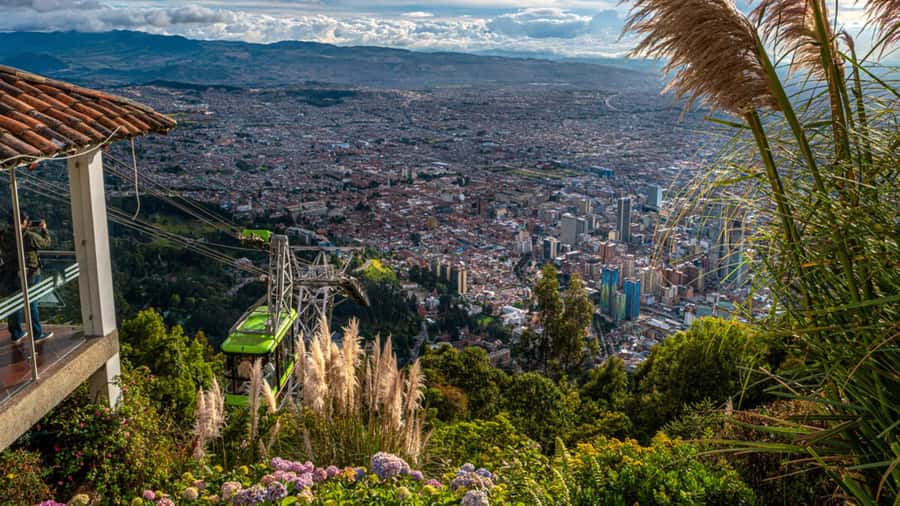
The International Emerald Museum gives the tour a modern Colombian focus. Colombia is known for its emeralds, and this visit explains the process from mining to cutting and display.
You will see emeralds in their natural form as well as in jewelry. That comparison matters. A rough stone has a very different appearance from a finished piece, and the museum helps you see how mining, cutting, and craftsmanship affect the final product.
The museum also covers the history and culture connected with Colombian emeralds. Your guide can put the stones into a national context, linking a valuable export with the people and work behind it.
The scheduled visit lasts about an hour. That is enough time for a guided introduction, especially if you are new to the subject. It is less useful if you are hoping to shop or compare jewelry, since the stated focus is museum education rather than a shopping stop.
The Emerald Museum is closed on Sundays and holidays. Since the Gold Museum is closed Mondays, check the day carefully before you reserve. The two museums do not share the same closing schedule, and this is the most important planning detail for the tour.
Plaza de Bolívar, Bogotá’s civic center
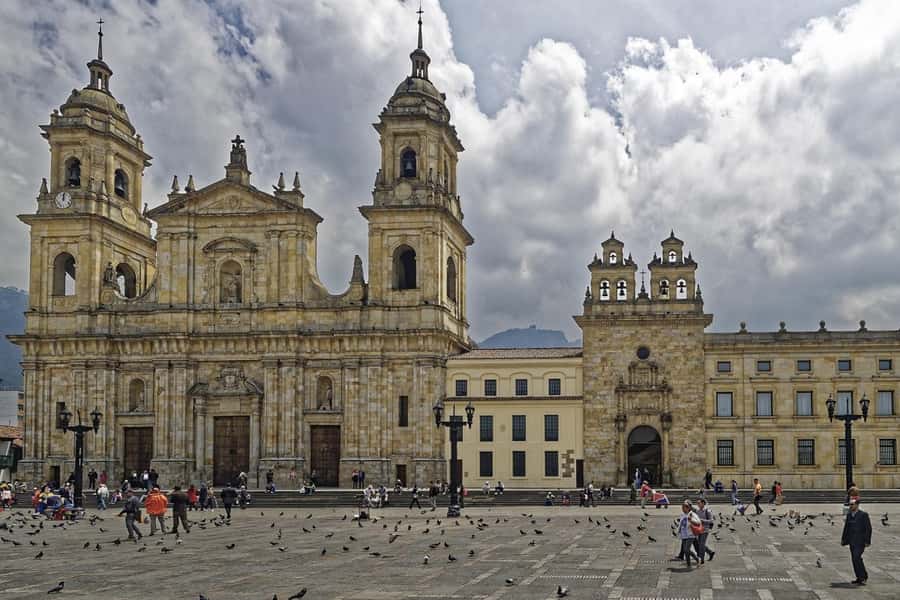
Plaza de Bolívar gives you a different view of the capital. This is Bogotá’s historical and political heart, surrounded by major buildings including the Primatial Cathedral of Colombia, the National Capitol, the Palace of Justice, and Liévano Palace, the city hall.
The square has hosted demonstrations, concerts, public events, and important moments in national history. In its center is a statue of Simón Bolívar, the military and political leader associated with the independence of several South American nations.
The visit lasts about 30 minutes and includes walking with the guide. That is enough to identify the main buildings and understand the square’s role, but not enough for a detailed interior tour of every structure. Think of it as a guided orientation to the center of power, not a museum visit.
I like this stop because it gives context to the more intimate streets of La Candelaria. Chorro de Quevedo feels local and compact, while Plaza de Bolívar feels official and national. Seeing both in one day helps you understand how Bogotá’s old center works.
The guide can make or break the six hours
A route this full depends heavily on the guide. The best version is not simply a driver dropping you at five locations. You want someone who explains why the objects, buildings, and viewpoints matter.
Jhair is the guide name associated with the strongest feedback for this experience. He is praised for supplying historical detail and for being patient with an older guest in her nineties. If you can request him, that may be worth doing, especially if someone in your party needs a slower pace or extra attention.
The private group format is useful here. You can ask why Colombian emeralds are important, how the Muisca raft relates to El Dorado, or what makes Monserrate a pilgrimage site. In a large group, those questions can be harder to fit in.
Guiding is offered in English and Spanish. Be clear about your preferred language when booking, and tell the guide if you want more museum explanation or more time outdoors. The schedule is fixed enough to cover every stop, but a private format should give you some room to shape the emphasis.
What to bring and how to plan the day
Bring comfortable shoes, water, a camera, and clothing suitable for the weather. You will walk in La Candelaria, move around museum galleries, and spend time at high elevation on Monserrate.
A small Colombian snack is included, but meals and drinks are not. Six hours is a long stretch, so do not assume the snack replaces lunch. If your starting time overlaps a meal, plan accordingly.
The cable car ride to Monserrate is also not included. The activity information allows hiking, cable car, or funicular access, but you should confirm the current transport arrangement and cost before the day begins.
Flash photography is not allowed. Follow that rule in both museums and bring a camera that works well without flash.
The tour is not suitable for wheelchair users or people with mobility impairments. The mountain access, walking portions, and historic district make this a better choice for people comfortable on foot.
Free cancellation is available up to 24 hours before the activity for a full refund, and you can reserve now and pay later. Those terms are useful if your Bogotá schedule is still shifting, but the museum closing days remain your responsibility to check.
Who should book this Bogotá tour?
I would recommend this experience if you have one day to get oriented in Bogotá and want the major sights handled in one private outing. It suits first-time visitors, couples, families who value a guide, and anyone who wants history explained rather than simply photographed.
It is also a good choice if you are curious about both indigenous Colombia and modern Colombian exports. The Gold Museum and Emerald Museum provide that contrast, while Monserrate and La Candelaria add the city’s religious and architectural sides.
You may want a different plan if you prefer slow museum visits, long cafe breaks, or an entirely self-guided day. The six-hour schedule is efficient, but it is still a survey. The cable car cost is extra, and the walking and altitude make the tour less suitable for anyone with mobility concerns.
At $85 per person, I see the strongest value in the private guide, hotel transport, and combined access to several major sights. If you would otherwise book separate transport and museum visits, the package is easier to manage. If you already know Bogotá well, you may get more from a specialized museum or food tour.
FAQ
How long does the Bogotá tour last?
The tour lasts six hours, including visits to Monserrate, La Candelaria, the Gold Museum, the International Emerald Museum, and Plaza de Bolívar.
Is hotel pickup and drop-off included?
Yes. Hotel pickup and drop-off in Bogotá are included.
Is the Monserrate cable car included in the price?
No. The cable car ride is not included. Monserrate can also be reached by hiking or funicular, according to the activity information.
Which languages are available?
The live guided tour is available in English and Spanish.
Are museum tickets included?
Yes. Admission to the Emerald Museum and Gold Museum is included, along with a guided visit to the Emerald Museum.
Which days are the museums closed?
The Emerald Museum is closed on Sundays and holidays. The Gold Museum is closed on Mondays, so check the date carefully before booking.
Just added around Bogota
- Fun Graffiti Workshop: The Art of Aerosol and Color★ 5.0 · 3 reviews
- Zipaquirá: Private Salt Cathedral Mine and Walking Tour★ 4.8 · 3 reviews
- Walking tour José Celestino Mutis Botanical Garden 3 hrs★ 5.0 · 3 reviews
- Bogota: East Hills Mountain Hike★ 4.2 · 3 reviews
- Bogota: Explore the forest and bird watching at Chicaque Natural Park★ 5.0 · 3 reviews
- Bogota: Downtown City and Monserrate Hill Private Tour★ 3.7 · 3 reviews
- From Bogota: White Water Rafting Experience★ 4.4 · 3 reviews
- From Bogota: Excursion to Jaime Duque Park★ 5.0 · 3 reviews
Bogotá Tours, compared.
Zipaquirá: Salt Cathedral Group Tour with Pickup
Read our review →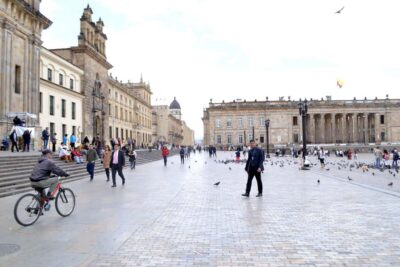
Bogotá´s Barrios: El Paraíso Favela Tour with Cable Car
Read our review →
Bogota: Guatavita and Salt Cathedral Daily Group Tour
Read our review →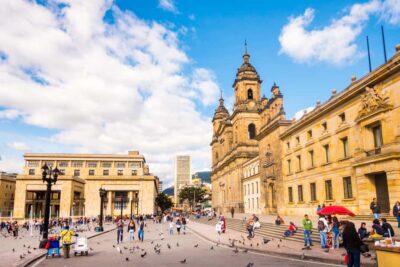
Bogotá City Tour with Monserrate, Gold and Botero Museums
Read our review →
Bogota: Zipaquirá Salt Cathedral and Lake Guatavita Day Tour
Read our review →
Browse the lists this tour appears in