
Reviewed · BOGOTÁ TOURS
Anti-tour Bogotá
Bogotá’s rebellious side comes alive through chicha, music, and stories of resistance on this unusual four-hour tour. You’ll visit the monument to revolutionary heroine La Pola, make a traditional corn brew near Chorro de Quevedo, see Manu Chao’s former home, then ride public transport to La Trocha Casa de la Paz.
I like the hands-on chicha workshop, which gives ancient indigenous tradition a place in the present, and I like the visit to La Trocha, where former FARC combatants are building a new life through peace work, crafts, and conversation. The main consideration is pace: you cover several subjects and cross the city in four hours, so this suits curious, open-minded visitors more than anyone seeking a relaxed sightseeing stroll.
Key points to know before booking
- Make chicha near Chorro de Quevedo: You take part in the process and taste a drink rather than simply hearing a lecture about it.
- Visit Manu Chao’s former home: The stop connects Bogotá’s street culture with one of the city’s lesser-known music stories.
- Meet peace builders at La Trocha: Former FARC members share personal stories and serve viche, an ancestral sugarcane spirit.
- See Bogotá through public transport: The TransMilenio ride is part of the city lesson, not just a way to get from one stop to the next.
- Expect a small group: Numbers are limited to 10 people, with an English-speaking guide such as Andrés or Michael.
- Allow for a frank, political tour: Resistance, injustice, capitalism, ecocide, and Colombia’s armed conflict are part of the conversation.
A different way to read Bogotá
Many city tours move from church to museum to viewpoint. This one takes another route. It uses a few landmarks in La Candelaria as entry points into questions about power, tradition, music, conflict, and peace.
You begin at Parque de los Periodistas Gabriel García Márquez, in front of the Bogotá sign. From there, the tour quickly introduces La Pola, the name commonly used for Policarpa Salavarrieta, a heroine of Colombia’s independence struggle. Her monument provides a short historical stop, about 15 minutes, and sets the tone for the morning: Bogotá is presented through people who challenged authority rather than through grand buildings alone.
I like this opening because it gives the tour a human scale. You are not asked to memorize a long list of dates. Instead, you meet a figure whose courage helps explain Colombia’s long tradition of political resistance. The stop is brief, so anyone wanting a full account of independence will need another visit or a separate history tour.
From the monument, you continue toward Chorro de Quevedo Plaza. This part of La Candelaria is central to the city’s old quarter, but the tour is interested in more than postcard views. You’ll be led toward less obvious corners and stories, with attention to the people and cultural movements that have shaped the area.
A few more Bogota day trips to weigh up
- Bogota: Bicycle City Tour
★ 4.9 · 2,156 reviews - Zipaquirá: Salt Cathedral Group Tour with Pickup
★ 4.8 · 1,606 reviews - Bogotá: Guided La Candelaria Walking Tour
★ 4.8 · 1,229 reviews
Chicha, corn, and a tradition under pressure
The chicha workshop lasts about an hour and a half, making it the longest part of the early program. That timing matters. You are not rushing through a quick sample. You have room to take part, ask questions, and understand why this drink carries cultural weight.
Chicha is an ancient indigenous corn brew. The workshop shows how a traditional practice can survive beside modern city life, even after years of social and political pressure. You’ll help make it and taste a drink, so the lesson is practical as well as historical.
This is one of the tour’s strongest ideas. Food and drink can explain cultural conflict better than a display case. Chicha is not simply a local beverage to check off a list. It points to the tension between indigenous customs and modern ideas about respectability, progress, and commercial culture.
You should arrive ready to participate. Comfortable shoes, water, and a camera are sensible, but the most useful thing to bring is curiosity. The activity is hands-on, and the setting may feel more informal than a standard cooking class. If you dislike tasting unfamiliar drinks, you can still follow the discussion, but the workshop loses some of its purpose.
The guide’s role matters here. Andrés receives especially strong praise for making the activity both informative and fun, while Michael is described as an inclusive guide who keeps the tone pleasant. Guide assignments can vary, so you should not assume a particular person will lead your departure, but these names give you a sense of the style to expect: engaged, conversational, and focused on the meaning behind the activity.
Manu Chao’s Bogotá at a quiet La Candelaria stop
After the chicha workshop, you visit the former home of Manu Chao. The attraction is not a formal museum filled with objects and labels. Its value comes from the story of a well-known musician finding inspiration in Bogotá’s streets and leaving a mark on the city’s cultural scene.
This stop works best if you enjoy music, urban culture, and the way artists respond to a city. It offers a different view of La Candelaria, moving away from the usual colonial architecture and major museums. You get a sense of Bogotá as a place that can shape creative work, not simply as a backdrop for sightseeing.
The home is listed as included, so you do not pay a separate entrance fee for it. Still, keep your expectations in check. The supplied details do not promise an extensive collection or a long museum visit. Think of it as a focused cultural stop within a larger story about Bogotá’s independent spirit.
The tour also includes a visit to a less obvious place in La Candelaria, which is part of its appeal. I would choose this outing if you have already seen the standard central sights or if you want your first visit to include local stories that do not appear in every guidebook.
The Gold Museum stop and a ride through the city
The route then reaches the TransMilenio Gold Museum stop for roughly 30 minutes. The title suggests a connection with Bogotá’s Gold Museum area, but the supplied schedule does not describe a full museum visit or museum entry. Treat this as a guided stop connected to the route rather than assuming you will receive a complete Gold Museum tour.
That distinction is useful when planning your day. If the Gold Museum is high on your list, reserve separate time for it and confirm the exact stop details when booking. This tour’s focus is the movement from historic central Bogotá toward La Trocha, not an extended museum program.
You then use public transport for about 12 minutes. This is one of the more telling parts of the outing. The TransMilenio is part of everyday Bogotá, and riding it lets you see how the city links different communities and districts. It also gives the tour a more grounded feel than a private vehicle would.
The trade-off is comfort and predictability. Public transport can be busy, and the group must move together. You should wear comfortable shoes, keep your belongings secure, and follow the guide’s instructions. The tour data does not state that transport fares are included, so carry some Colombian pesos for personal expenses and any public transport cost not covered at the meeting point.
Same city, a completely different kind of day:
- Bogotá: Private City Tour, Monserrate, Emerald and Botero
★ 4.9 · 798 reviews - Bogotá´s Barrios: El Paraíso Favela Tour with Cable Car
★ 4.8 · 731 reviews - Bogota: Guatavita and Salt Cathedral Daily Group Tour
★ 4.7 · 615 reviews - Bogotá City Tour with Monserrate, Gold and Botero Museums
★ 4.9 · 584 reviews
La Trocha Casa de la Paz and Colombia’s next chapter
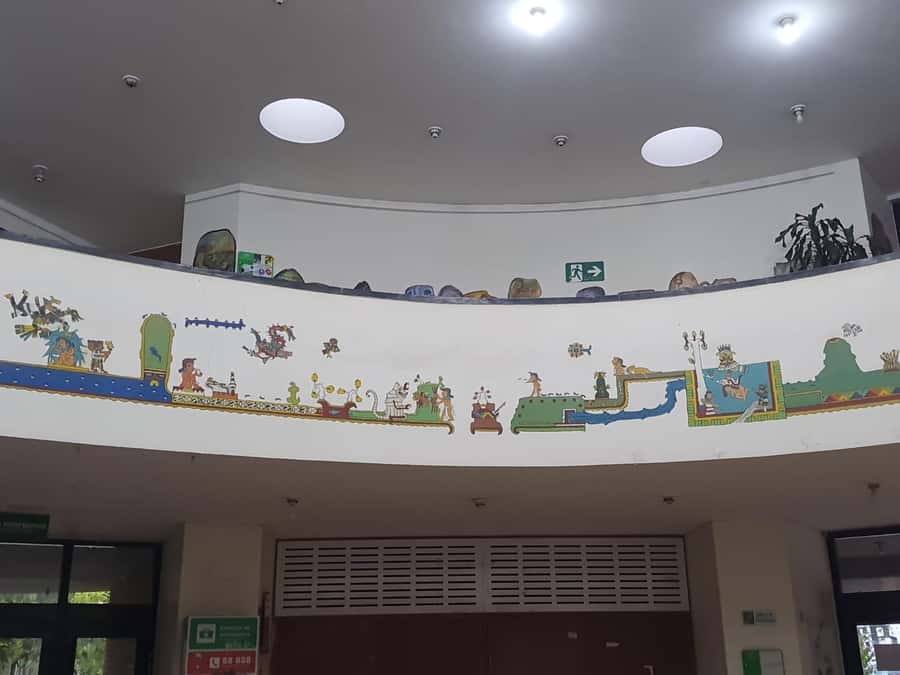
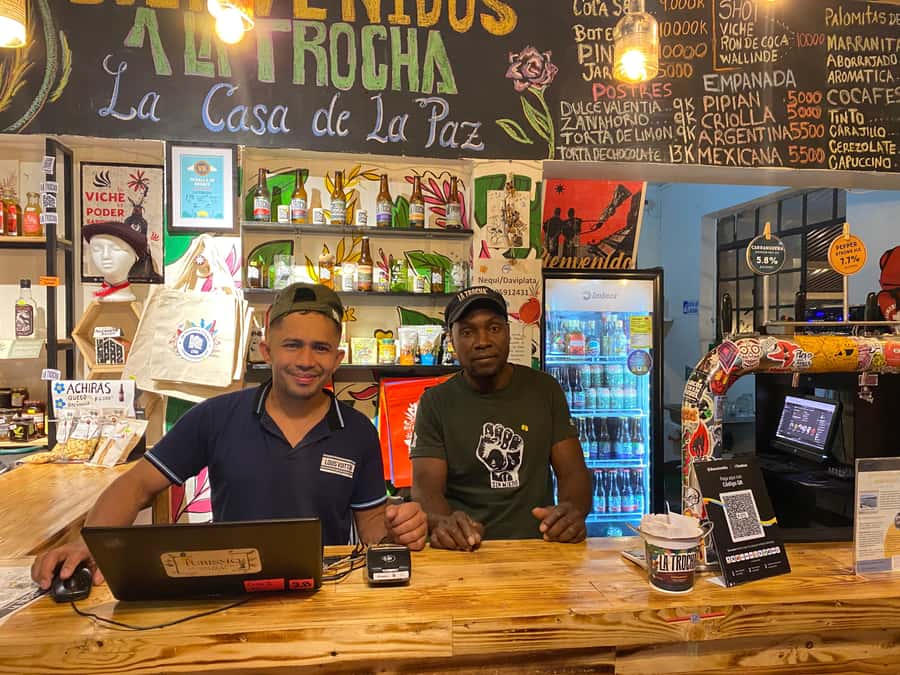
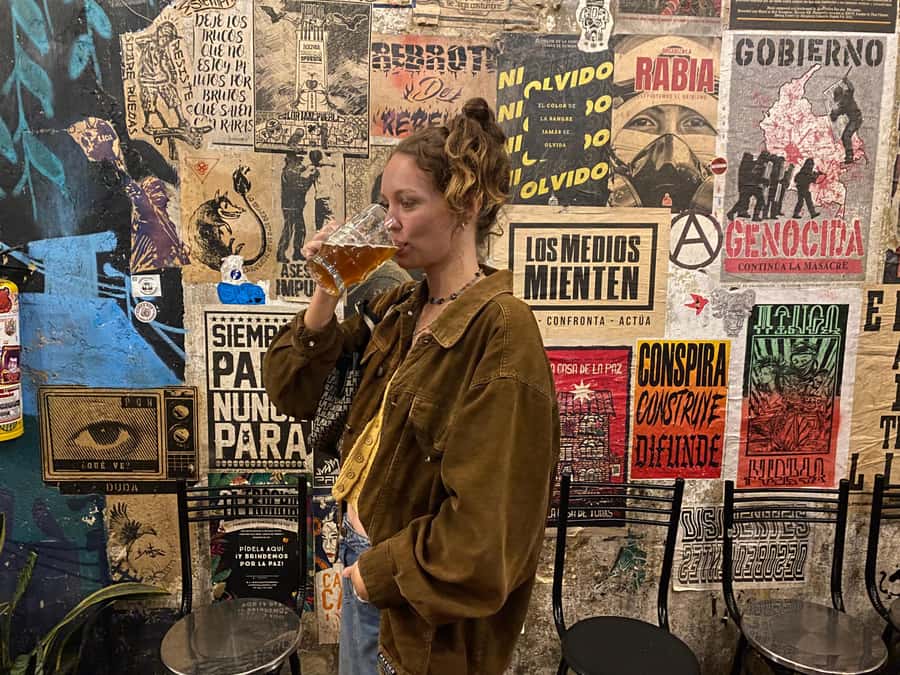
The final stop is La Trocha, La Casa de la Paz, where you spend about 80 minutes. This is the emotional center of the tour. The space is run by former FARC combatants who are now working toward peace, and the visit brings you into direct contact with personal stories of transformation.
You’ll taste viche, an ancestral sugarcane spirit, and hear from people whose lives were shaped by Colombia’s armed conflict. The value here is not a polished political slogan. It is the chance to listen to people who have moved from fighting toward community work, creative projects, and a different future.
La Trocha also includes an arts and crafts market visit. You may see local artisans producing crafts, and the space is described as a place where poets and performers can share their work. These details help explain why the stop feels larger than a tasting. It links peace-building with culture, income, and public expression.
I especially like the way this part widens the definition of a city tour. You are not only looking at Bogotá’s past. You are meeting people involved in the country’s ongoing attempt to live with that past and move forward. The conversation may be challenging, and the subject matter is serious. This is not the right choice if you want a light afternoon with only food, architecture, and photos.
The program ends at La Trocha rather than returning to the starting point. That is practical if you want to continue exploring the area from there, but it means you should plan your next move before the tour finishes. The supplied details do not give a return transfer, so do not expect to be brought back to Parque de los Periodistas.
What the four-hour schedule feels like
The schedule has a clear arc:
- About 15 minutes at La Pola’s monument
- About 90 minutes around Chorro de Quevedo, including the chicha workshop
- About 30 minutes at the TransMilenio Gold Museum stop
- About 12 minutes on public transport
- About 80 minutes at La Trocha Casa de la Paz
The listed times add up to a little under four hours, leaving room for walking, introductions, transitions, and discussion. Even so, the morning or afternoon will feel full. You move between political history, indigenous tradition, music, transport, conflict, peace, and craft production in a compact period.
That density is part of the appeal. I would not book this as a slow first morning if you are tired from a long flight or want plenty of time for photographs. I would choose it when I am ready to listen, take part, and accept that the city may not always present itself neatly.
The group limit of 10 is a real advantage. A small group makes it easier to ask questions during the workshop and to take part in conversations at La Trocha. It also reduces the chance that the personal stories get lost behind a large crowd. Still, the quality of the discussion will depend on the guide and on how actively the group participates.
Guides, tone, and the strongest parts of the program
The English-language guiding is an important part of the value. Andrés is singled out for creating a fun, informative chicha session and for explaining how Bogotá and Colombia have changed. Michael is praised for being pleasant and inclusive, with a strong focus on communities that are often left out of standard tourism.
Paula is also specifically praised for her role at La Casa de la Paz. That suggests the final stop benefits from people who know the space and can speak directly about its work.
Do keep in mind that the information names more than one guide, so the person leading your tour may vary. One booking note also suggests that beginning directly at La Trocha could make the route smoother. That is a fair point: if your main interest is the peace and community work, the early stops may feel like a long lead-in. If you want the full argument of the tour, though, La Pola and chicha make the later visit more meaningful.
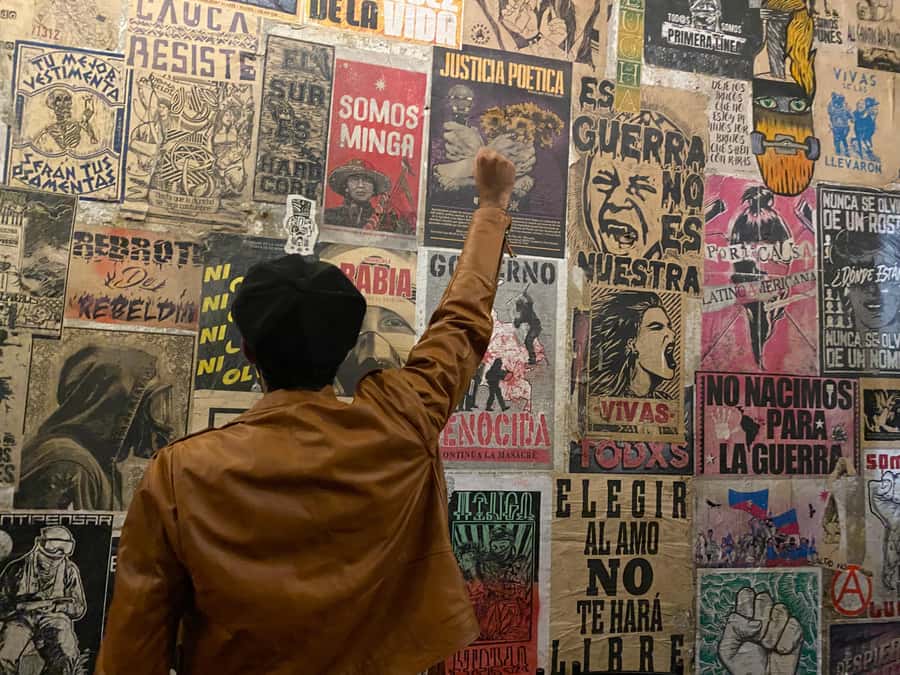
The tone is openly critical of injustice, toxic capitalism, and ecocide. You do not need to share every political view presented, but you should be willing to hear a perspective that challenges standard tourist storytelling. The tour works best as a conversation, not as a neutral list of facts.
Is $42 a fair price?
At $42 per person, the tour is not the cheapest way to spend four hours in Bogotá. You are paying for a live English-speaking guide, a small group, the chicha workshop, chicha tasting, viche tasting, entrance to Manu Chao’s former home, and guided visits to historical and cultural sites.
The price looks reasonable if you place value on access and interpretation rather than on the number of major attractions. You are not buying a long list of ticketed monuments. You are paying for a route that connects places and people you might not easily find on your own, especially La Trocha and its peace-focused work.
The small group strengthens the value. With no more than 10 participants, the workshop and personal conversations should feel more direct than they would on a large coach outing. You also avoid spending your own time researching how to connect the central district with La Trocha.
Personal expenses are not included. Carry money for anything extra, including transport costs if required, additional food, drinks, or crafts. The schedule includes tastings, but it does not promise a full meal.
Who should book this tour?
I would recommend it to you if you want a social and political reading of Bogotá, enjoy meeting people through food and drink, and prefer unusual stops to a standard checklist. It is a good fit for repeat visitors, music fans interested in Manu Chao, people curious about indigenous traditions, and anyone who wants to understand Colombia’s peace process through personal stories.
It also suits visitors who appreciate a small group and an English-speaking guide. The route gives you several subjects to discuss later, and the final stop at La Trocha can leave a stronger impression than another conventional museum visit.
I would hesitate to recommend it to young children unless they are comfortable with serious topics and hands-on tasting. The same applies to anyone looking for a purely historical tour, a food tour, or a relaxed walk through La Candelaria. This program combines all three areas with modern political discussion, so its appeal depends on your mood and interests.
Bring comfortable shoes, a hat, sunscreen, water, and a camera. Meet in front of the Bogotá sign at Parque de los Periodistas Gabriel García Márquez. Since the tour ends at La Trocha, plan the rest of your day from that location.
Should you book Anti-tour Bogotá?
Book it if you want Bogotá to feel complicated, candid, and human. The chicha workshop gives you something to do, Manu Chao’s home adds a cultural thread, and La Trocha provides the most meaningful contact with Colombia’s present-day peace work.
Skip it if you want a simple sightseeing route or dislike political discussion. For the right person, $42 buys more than four hours of stops. It buys a guided connection between Bogotá’s revolutionary past, its street culture, and the people working to shape its future.
FAQ
How long does Anti-tour Bogotá last?
The tour lasts four hours. The schedule includes visits to La Pola’s monument, Chorro de Quevedo, the TransMilenio Gold Museum stop, and La Trocha Casa de la Paz.
How much does the tour cost?
The listed price is $42 per person.
What language is the tour conducted in?
The live tour guide speaks English.
How large is the group?
The tour is limited to 10 participants.
Where does the tour start?
Meet in front of the Bogotá sign at Parque de los Periodistas Gabriel García Márquez.
Where does the tour finish?
The tour finishes at La Trocha, La Casa de la Paz.
What is included?
The price includes the hands-on chicha workshop, a chicha drink tasting, viche tasting, personal stories of transformation, entrance to Manu Chao’s former home, and visits to historical sites. Personal expenses are not included.
Just added around Bogota
- Fun Graffiti Workshop: The Art of Aerosol and Color★ 5.0 · 3 reviews
- Zipaquirá: Private Salt Cathedral Mine and Walking Tour★ 4.8 · 3 reviews
- Walking tour José Celestino Mutis Botanical Garden 3 hrs★ 5.0 · 3 reviews
- Bogota: East Hills Mountain Hike★ 4.2 · 3 reviews
- Bogota: Explore the forest and bird watching at Chicaque Natural Park★ 5.0 · 3 reviews
- Bogota: Downtown City and Monserrate Hill Private Tour★ 3.7 · 3 reviews
- From Bogota: White Water Rafting Experience★ 4.4 · 3 reviews
- From Bogota: Excursion to Jaime Duque Park★ 5.0 · 3 reviews
Bogotá Tours, compared.
Zipaquirá: Salt Cathedral Group Tour with Pickup
Read our review →
Bogotá´s Barrios: El Paraíso Favela Tour with Cable Car
Read our review →
Bogota: Guatavita and Salt Cathedral Daily Group Tour
Read our review →
Bogotá City Tour with Monserrate, Gold and Botero Museums
Read our review →
Bogota: Zipaquirá Salt Cathedral and Lake Guatavita Day Tour
Read our review →
Browse the lists this tour appears in