
Reviewed · SALT CATHEDRAL TOURS
Bogotá: Zipaquirá Salt Cathedral, with tickets and guide
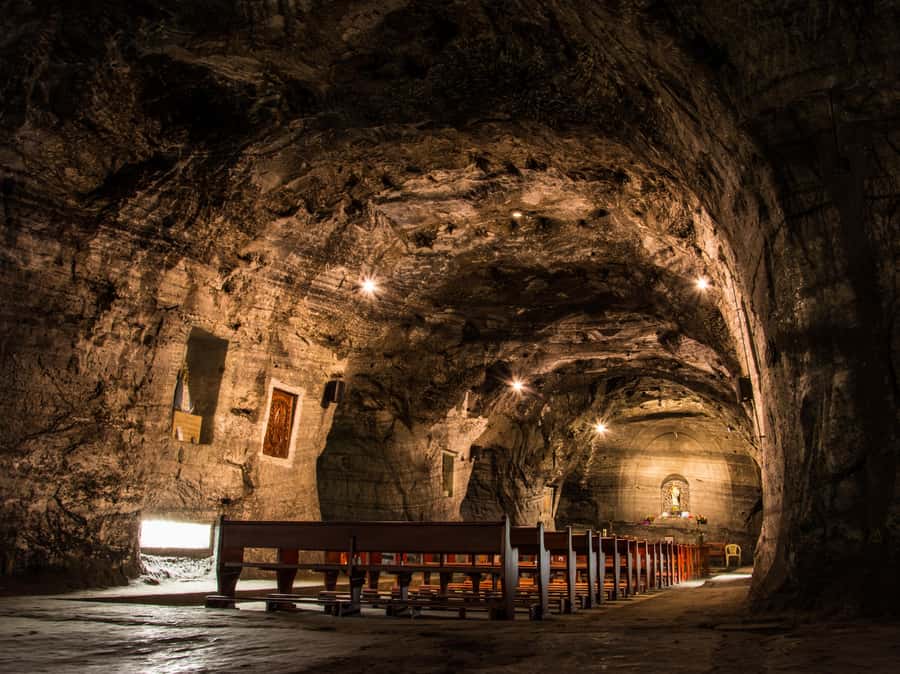
The remarkable part of this outing happens 180 meters below ground, inside a former salt mine reshaped into Colombia’s Salt Cathedral. You’ll follow the 14 stations, see the great cross and dome, and watch salt crystals and water mirrors turn a working mine into a place of worship.
I like the hotel pickup and return, which removes a fair bit of Bogotá transport planning. I also like the human side of the trip: guides such as Daniel Melo and Rosita have been singled out for clear explanations, good humor, and time for photographs. The main drawback is the price, $117 per person, and the long underground walk may not suit anyone with mobility limits.
Key points to know before you book
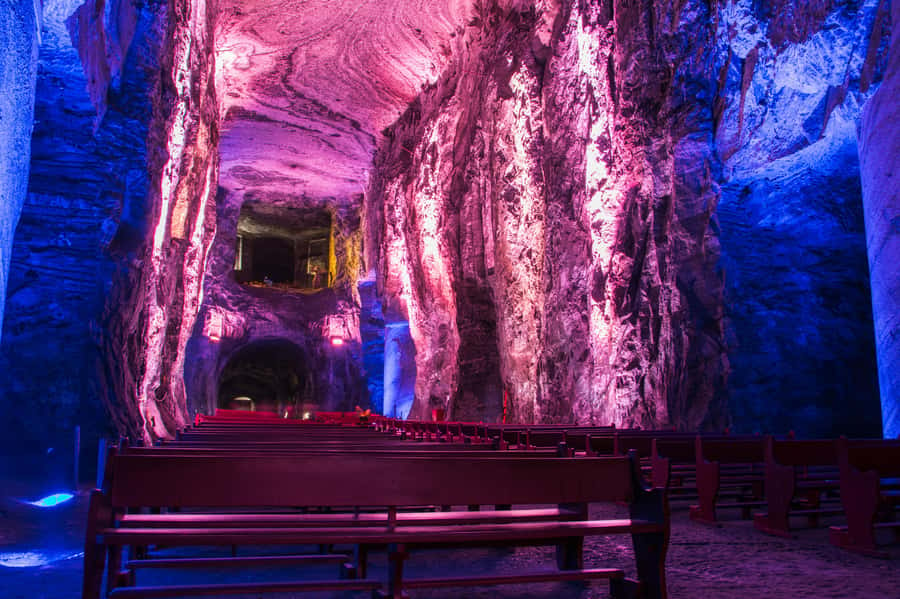
- The cathedral sits 180 meters underground: Expect a mine setting, dim passages, salt walls, sculpted details, and a cool, unusual atmosphere.
- The tour covers all 14 stations: Your guide explains how religious art and mining engineering were brought together.
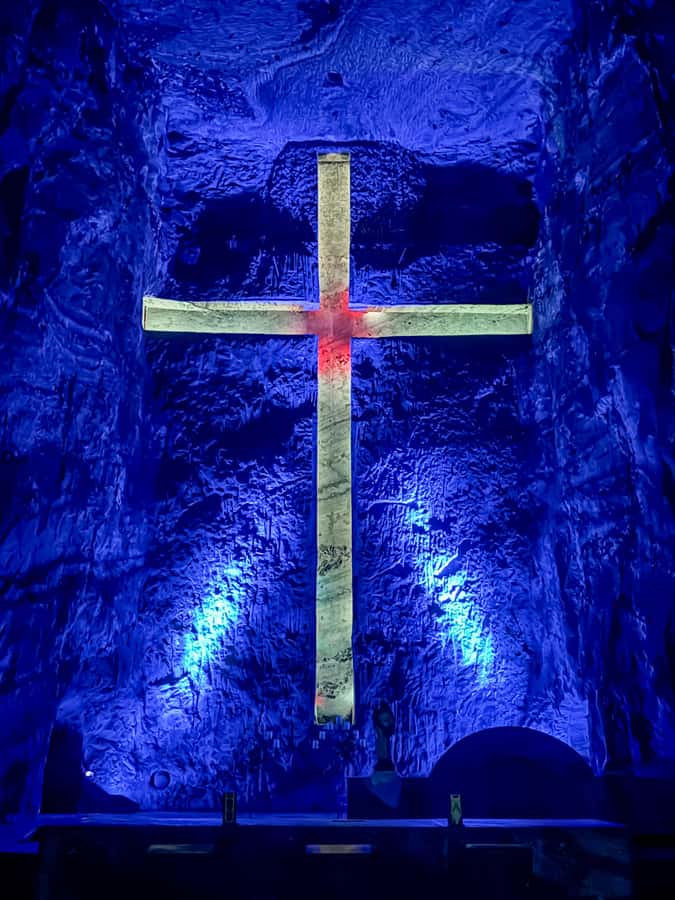
- The dome and central cross are the visual high points: These give the cathedral its sense of scale after the tighter corridors.
- Pickup and drop-off are included: A company vehicle collects you at your specified hotel or pickup point in Bogotá.
- You get free time in Zipaquirá: Lunch is not included, so you can choose how to spend this pause in town.
- Daniel Melo, Rosita, and Jon received specific praise: Daniel and Rosita for their explanations and warmth, and Jon for friendly driving.
Why the Salt Cathedral is worth the trip from Bogotá
Bogotá gives you museums, restaurants, and city energy. Zipaquirá gives you a very different story, one tied to salt, mining, faith, and the Muisca people of the highlands. This tour puts those subjects together in one half-day outing.
The Salt Cathedral is not a traditional church built from stone blocks on a town square. It was shaped inside salt-mine tunnels, where the walls themselves carry the marks and color of the mineral. The result is part religious site, part engineering project, and part underground art walk.
Your guide adds useful context before you reach the entrance. The trip is framed around pre-Columbian life and the Muisca connection to gold and salt. That matters because the cathedral can otherwise feel like a striking photo stop without much background. With explanation, the visit has a clearer thread: salt was an important resource, the region had a long cultural story before Spanish rule, and the mine later became a setting for Christian devotion.
The tour describes the cathedral as the first underground temple in the world and as the First Wonder of Colombia. Those labels explain the scale of the attraction, but the real appeal is more direct. You are walking through a place where the natural mine structure and human design are hard to separate.
More Salt Cathedral trips:
- Zipaquirá: Salt Cathedral Group Tour with Pickup
★ 4.8 · 1,606 reviews - Bogota: Guatavita and Salt Cathedral Daily Group Tour
★ 4.7 · 615 reviews - Bogota: Zipaquirá Salt Cathedral and Lake Guatavita Day Tour
★ 4.8 · 551 reviews
The road across the Bogotá savanna
The day begins with pickup from your specified location. One listed meeting point is Cra. 11a #93A-80 in Bogotá, and hotel pickup and drop-off are included. A staff member from the company meets you at the hotel, which is useful in a city where getting to a separate departure terminal can eat up time.
During the drive toward Zipaquirá, the guide talks about the Cundiboyacense highlands and the history of the region. This is more than filler between stops. It helps you see the journey as a move from Colombia’s capital into an area tied to farming, mineral resources, and older Muisca traditions.
The exact timing depends on the starting time you select and the traffic leaving Bogotá. The advertised duration ranges from 270 minutes to five hours, so plan on roughly half a day rather than a tightly fixed schedule. That flexibility is helpful, but you should avoid booking another important activity immediately afterward.
A private or small-group format is available. That can make a real difference underground, where a guide who can hear your questions and keep the group together is more useful than a rushed lecture. The experience is also offered in English or Spanish. If you want detailed cultural and architectural explanations, choose the language in which you can ask follow-up questions comfortably.
Descending into the Salt Cathedral
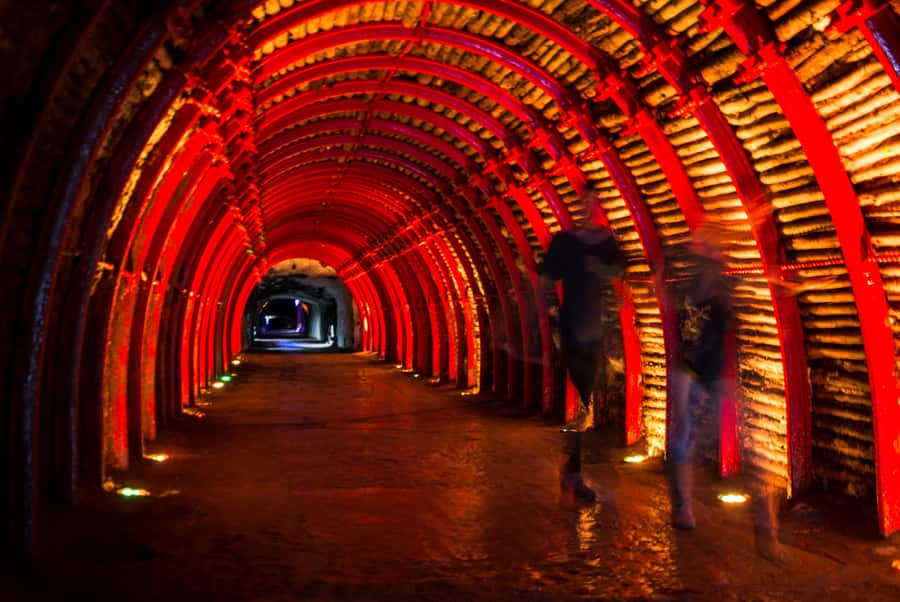
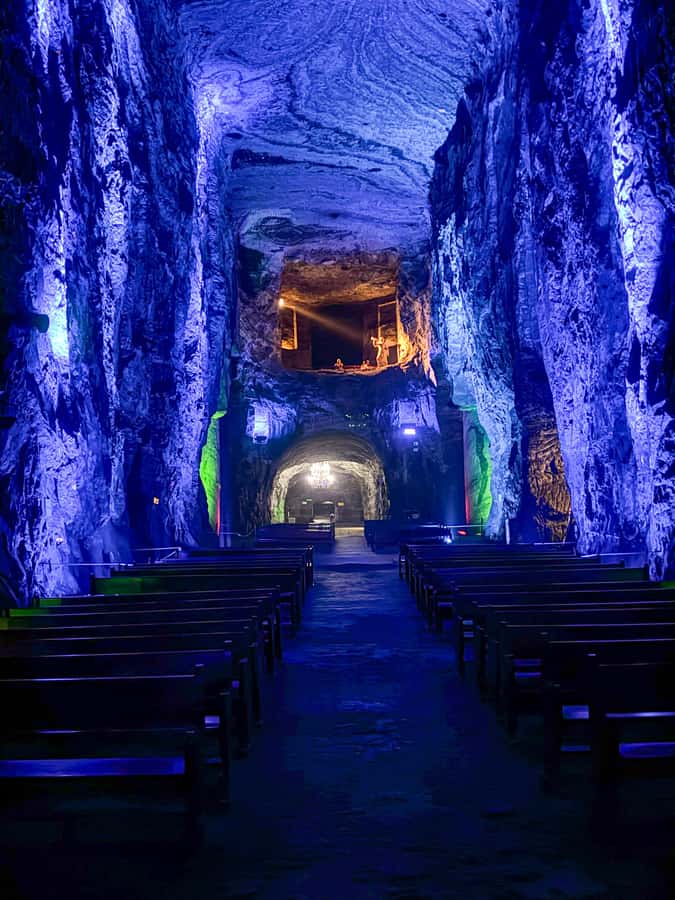
The main visit lasts about three hours. You descend 180 meters below the surface, entering a series of mine spaces transformed into a religious complex. The route is not simply a single grand chamber. It leads you through the 14 stations, each connected to the Christian Stations of the Cross.
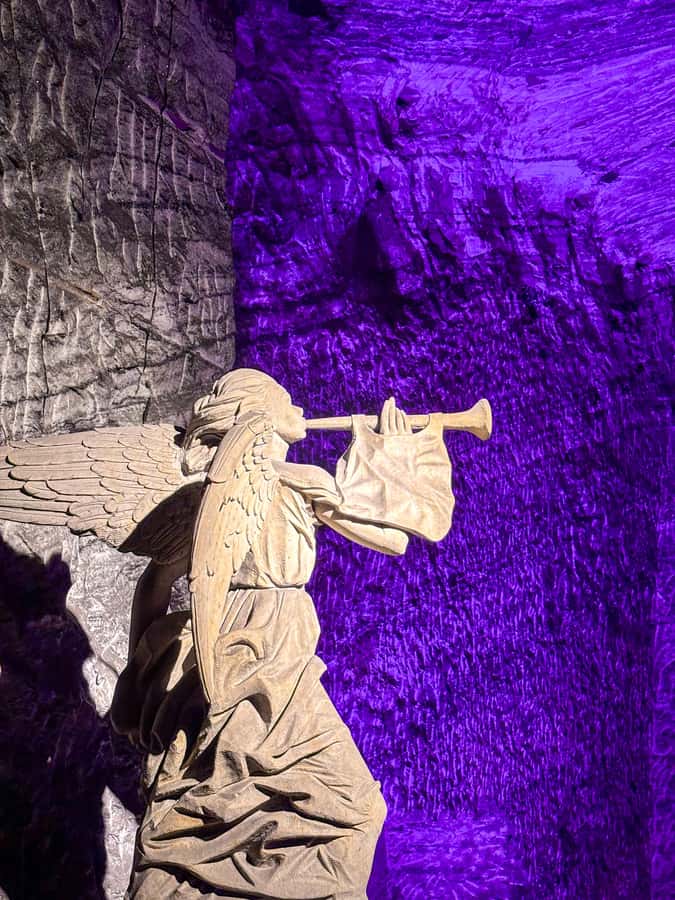
Your guide explains the history and design of these stations as you go. Pay attention to the way the salt walls change from rough mine surfaces to shaped and polished sections. The details are not the bright, colorful decoration you might see in a conventional church. Here, the material is subdued, mineral, and closely tied to the place itself.
The cathedral’s architecture is the heart of the tour. Religious symbols are cut into or set against salt, while the mine’s scale gives the rooms a heavy, quiet feeling. You are not looking at a building placed inside a mine. You are looking at a site made by adapting the mine’s own underground spaces.
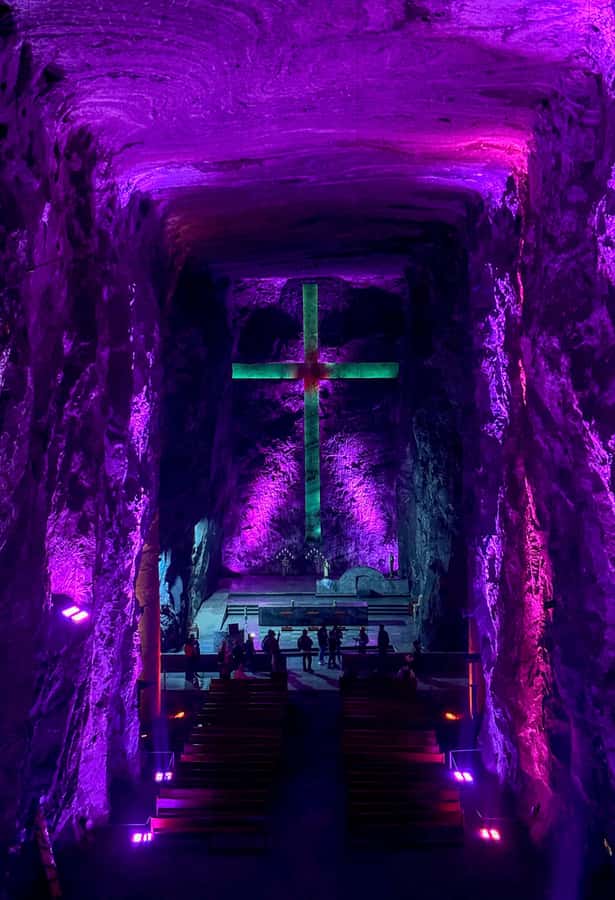
The famous cross is one of the essential stops. It rises at the heart of the cathedral and is designed to be seen from a large viewing area. After the narrower parts of the route, this open space gives you a stronger sense of the engineering involved.
The dome is another major feature. Your guide explains how the structure was formed and why it matters to the cathedral’s layout. It is worth pausing here instead of treating the dome as a quick photograph. The appeal comes from the contrast between the immense interior volume and the solid salt around it.
Salt crystals, water mirrors, and the Muisca story
The salt details are not limited to the main religious symbols. The route includes crystal-clear water mirrors formed in cavities. These surfaces create optical effects, reflecting light and nearby shapes in ways that make the underground rooms seem larger or less stable than they are.
You’ll want comfortable shoes for this part of the outing. The tour involves a substantial underground walk, and the site is specifically not considered suitable for people with mobility impairments. The supplied information also advises against bringing large bags or oversize luggage, so pack lightly.
The Muisca story gives the cathedral a broader Colombian setting. The tour introduces pre-Columbian life and the Muisca secrets associated with gold and salt. You should think of this as an introduction rather than a full archaeological program. The main attraction remains the cathedral, but the regional background gives the salt mine more meaning.
The guide is important here. Daniel Melo is specifically praised for being very friendly and for giving excellent explanations. Rosita is described as cheerful, well informed, and willing to pause for photographs. Those details point to the kind of guide service you can expect: not just a route through the rooms, but someone who can answer questions and adjust the pace enough for pictures.
The tour is religious in subject, but you do not need to approach it as a pilgrim to appreciate it. The site also works for anyone interested in mining, architecture, geology, or Colombian culture. Your guide can help connect those pieces without forcing the visit into only one category.
A few more Colombia day trips to weigh up
- Medellín: Private Guatapé with Peñol Tickets and Boat Ride
★ 4.9 · 256 reviews - Bogota: Monserrate Entry Ticket
★ 4.4 · 233 reviews - Medellin: Football Tour with Match Tickets and Pre-Game
★ 4.9 · 150 reviews - Monserrate Tour in Bogotá Including Tickets
★ 4.5 · 82 reviews
Free time in Zipaquirá after the underground visit
After the cathedral, you have free time in Zipaquirá. This is a useful break after several hours of transport and walking, and it lets you experience the town at your own pace rather than being taken straight back to Bogotá.
Lunch is not included. That is a clear extra cost, but it also gives you choice. You can decide how much time and money to spend on food instead of being tied to a set menu. Bring enough Colombian pesos or a payment method you normally use in Colombia, though the tour information does not specify which businesses accept cards.
The free period is one reason this tour feels less like a simple admission transfer. You are given room to pause, eat, and take in Zipaquirá’s local character. The amount of free time can vary with traffic, group pace, and the selected departure, so do not assume you will have a full afternoon in town.
The return vehicle takes you back to Bogotá and drops you at your hotel or specified drop-off point. Jon, one of the named drivers, received praise for being friendly. A courteous driver matters on this outing because the road portion takes a substantial share of the day.
Is $117 a fair price?
At $117 per person, this is not the cheapest way to reach Zipaquirá. You are paying for more than the cathedral ticket: hotel pickup and drop-off, transportation, a professional guide, medical assistance, and the option of a private or small group. Food and drinks are left out.
The value is strongest if you want convenience and interpretation. You do not need to work out the trip from Bogotá, find the entrance, choose between languages, or manage the return journey. The guide also supplies the Muisca, mining, religious, and architectural context that you might miss on a self-guided visit.
The value is weaker if you are comfortable arranging transport yourself and prefer to explore with no fixed group schedule. The $117 does not cover lunch, tips, or unspecified meals, so budget for those separately.
I would especially consider this tour if you are staying in Bogotá for a short time. It combines transport, entry, guiding, and a town visit in one booking. If you are in Colombia for a longer trip and enjoy planning your own day, compare the cost with independent transport before deciding.
Practical details that affect your day
The tour includes medical assistance, but you should still bring any personal medication you need. Your passport or ID card is listed as a required item, so keep one with you.
Wear comfortable shoes. The underground route is the central activity, and the information specifically warns that the tour is not suitable for people with mobility impairments. It is also listed as unsuitable for pregnant women.
For the road portion and time outdoors in Zipaquirá, bring sunglasses, a sun hat, and sunscreen. These items may feel unnecessary when you are thinking about an underground cathedral, but the day includes travel across the highlands and time in town.
Pets, smoking, alcohol, drugs, large bags, and oversize luggage are not allowed. Keep your belongings compact. A small day bag is more practical than a full suitcase.
You can cancel up to 24 hours before the activity for a full refund, and the reserve-now, pay-later option lets you hold a place without paying today. Check the available starting times because the total duration is listed as 270 minutes to five hours, not as one exact fixed length.
The activity has a five out of five rating from 24 reviews. More useful than the number itself are the repeated service details: Daniel Melo is praised for friendly, high-quality explanations, Rosita for her cheerful approach and patience with photos, and the driver Jon for being kind. One English-speaking customer also noted that the guide answered all questions well, which is a good sign if you want more than a memorized speech.
Who should book this Salt Cathedral outing?
I would recommend it to first-time visitors to Bogotá who want one well-organized excursion outside the city. It suits people who like cultural context, unusual architecture, and a guide who can explain what they are seeing.
It is also a good match for couples, families with older children, and small groups that value hotel pickup. The English and Spanish options make it easier to choose a guide who can explain the site clearly.
I would hesitate if you have trouble walking, are pregnant, dislike underground spaces, or want a relaxed day with very little structure. The mine setting is the point of the visit, but it also means stairs, passages, and a long route below ground.
Should you book it?
Book this tour if you want the Salt Cathedral handled from start to finish, with a guide, entrance ticket, transport, and a short stop in Zipaquirá. The strongest reason to choose it is the combination of a remarkable setting and personal guiding. Clear explanations from guides such as Daniel Melo or Rosita can turn a striking underground walk into a better understanding of Colombia’s salt, Muisca, mining, and religious traditions.
Skip it if $117 feels high for a half-day outing or if you would rather arrange your own transport and lunch. For most visitors with limited time in Bogotá, the convenience makes the price easier to justify. Just wear good shoes, pack light, and leave room in your schedule for traffic.
FAQ
How long does the Salt Cathedral tour take?
The activity lasts between 270 minutes and five hours, depending on the available starting time and the day’s schedule. The guided visit inside the cathedral is listed as taking about three hours.
Is hotel pickup and drop-off included?
Yes. Pickup and return to your hotel or specified location in Bogotá are included. Cra. 11a #93A-80 is one listed pickup and drop-off location.
Is the entrance fee included?
Yes. The Salt Cathedral entrance ticket is included, along with transportation, a professional guide, and medical assistance.
Which languages are available?
Live guiding is available in English and Spanish. You choose from the language options offered when booking.
Is lunch included?
No. Food and drinks are not included. You have free time in Zipaquirá to arrange lunch yourself.
What should I bring?
Bring your passport or ID card, comfortable shoes, sunglasses, a sun hat, and sunscreen. Large bags, oversize luggage, pets, smoking, alcohol, and drugs are not allowed.
Just added around Colombia
- Fun Graffiti Workshop: The Art of Aerosol and Color★ 5.0 · 3 reviews
- Gastronomic and musical experiences in San Andres Rondontour★ 4.7 · 3 reviews
- Cartagena: Ecoplan on Barú, Aviary and Oceanarium in one day★ 3.3 · 3 reviews
- CARTAGENA, EXCLUSIVE launch for Rosario and Baru Islands★ 5.0 · 3 reviews
- Cartagena: Day Tour to Tierra Bomba Island★ 3.2 · 3 reviews
- Villavieja: Tatacoa Desert Horseback Riding Tour★ 5.0 · 3 reviews
- Zipaquirá: Private Salt Cathedral Mine and Walking Tour★ 4.8 · 3 reviews
- photo session through the streets of cartagena★ 5.0 · 3 reviews
Salt Cathedral Tours, compared.
Zipaquirá: Salt Cathedral Group Tour with Pickup
Read our review →
Bogota: Guatavita and Salt Cathedral Daily Group Tour
Read our review →
Bogota: Zipaquirá Salt Cathedral and Lake Guatavita Day Tour
Read our review →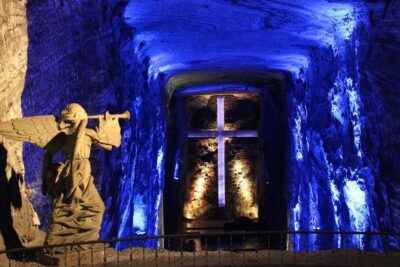
Bogota: Salt Cathedral of Zipaquira Private daily Trip
Read our review →
Bogota:Zipaquirá Salt Cathedral & Guatavita Trip with Pickup
Read our review →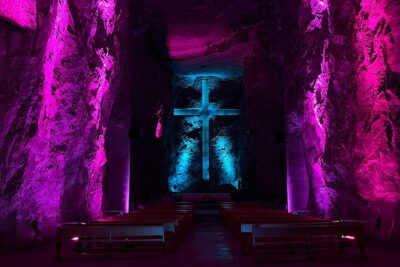
New & Cheapest ZIPAQUIRA & GUATAVITA LAKE Visit 5 Sites/PICKUP
Read our review →
Shared Tour Zipaquirá Salt Cathedral and Guatavita Lagoon
Read our review →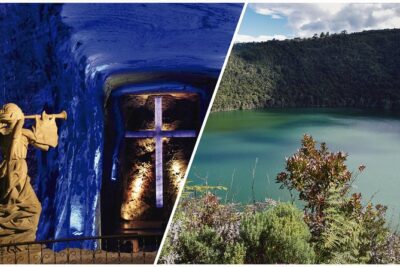
Salt Cathedral of Zipaquirá & Lake Guatavita: Private or Shared
Read our review →Browse the lists this tour appears in