
Reviewed · CALI TOURS
Afro Walking Tour. The colors of Cali.
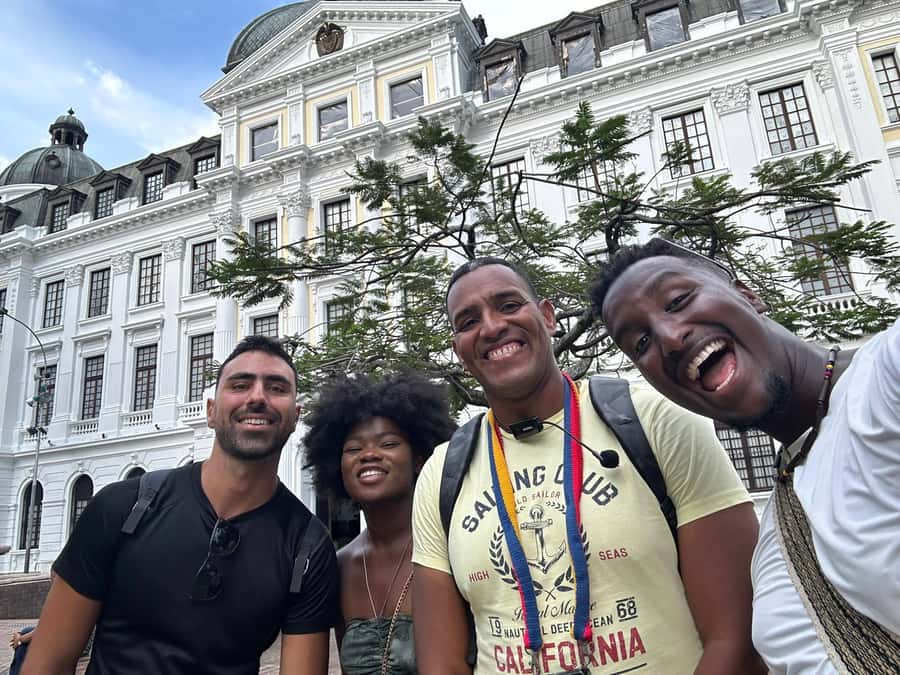
Cali’s Afro Walking Tour puts the city’s African heritage at the center of the story. With guide Andrés Jiménez, you walk through central Cali and an Afro-Colombian neighborhood, reading murals, tasting local food, visiting cultural institutions, and seeing how African traditions shape the city’s music, dance, commerce, and daily life.
I love the way the tour links big subjects, such as enslavement, emancipation, race, and identity, to ordinary streets and community businesses. I also like the bilingual format and Andrés’s conversational style. You are encouraged to ask questions and share your own background, rather than simply listen to a memorized speech.
The main consideration is the pace and setting. This is a 150-minute walk through the city center, where you will see vendors, beggars, and many kinds of people. The experience is designed for visitors aged 10 and older, and it may not suit people with hearing impairments.
Key points at a glance
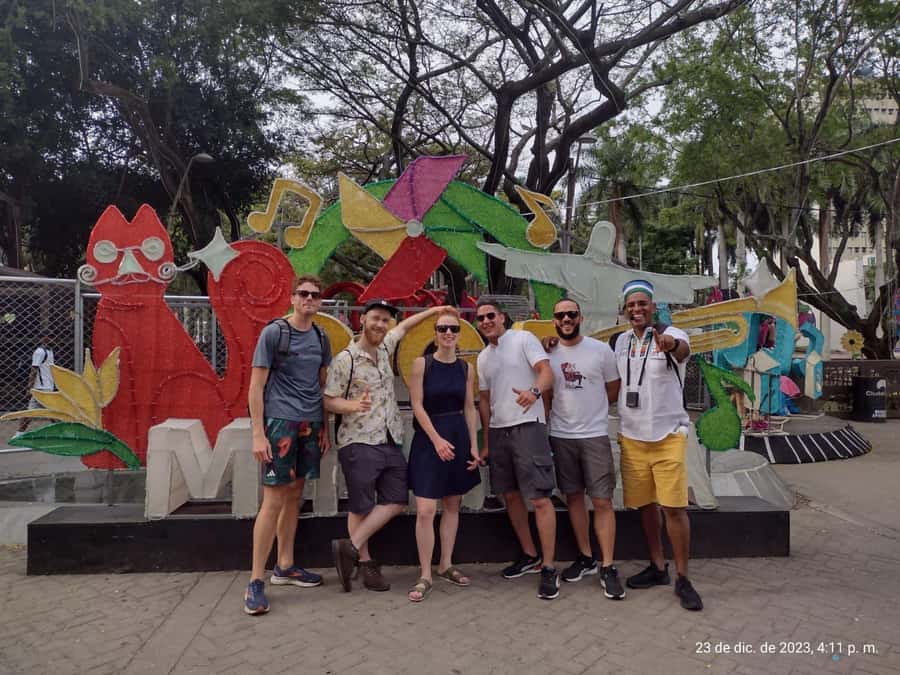
- Three cultural institutions: Visit places that connect Afro-Colombian culture with music, education, social programs, and community life.
- A guide who makes it personal: Andrés Jiménez leads in English and Spanish and encourages real conversation throughout the walk.
- Food, art, and salsa together: Taste Afro-Colombian dishes, study street murals, and learn why Cali is called the world capital of salsa.
- Beyond the postcard city: Walk through central Cali and an Afro-Colombian area in the east, including places many visitors would miss alone.
- A living cultural lesson: Explore the contributions of Afro-Colombian and Indigenous communities to Cali and Colombia.
- Practical half-day value: At $42 per person, the tour combines guiding, cultural visits, food tasting, and city orientation in one outing.
Why Afro-Colombian culture is central to Cali
Cali is often introduced through salsa. That is fair, but incomplete. The city’s music, dance, food, art, and social life also carry the influence of a large Afro-descendant population, one of the biggest in the Americas.
This tour helps you see those connections in place, not just in a list of dates. Andrés discusses the arrival of African culture, the effects of enslavement, the meaning of emancipation, and the different experiences of Afro-Colombian and Indigenous communities.
That context matters because it gives the city’s public art and music more weight. A mural is not just a colorful wall. A dance is not only entertainment. A food stall can point to migration, family traditions, and the way culture survives through everyday work.
I find this approach useful for first-time visitors because Cali can be easy to read only at the surface. You may see bright paint, hear salsa, and sample something unfamiliar, yet miss the political and social stories behind them. Andrés connects those layers without separating culture from the people who keep it active.
More Walking Tours in Cali
- The Cali Street Food Walking Tour
★ 5.0 · 81 reviews - Cali: Walking tour of the historic center
★ 5.0 · 69 reviews - Cali: Walking tour of the historic center
★ 4.9 · 18 reviews
Starting at the Subway meeting point
The meeting point is in front of the Subway sandwich restaurant. That is simple to find, but you should still check the exact starting time when booking, since several departure times may be available.
Wear comfortable shoes and clothing. Bring water, sunglasses, a camera, and cash for any personal purchases. Cash is especially useful if you want to buy beauty products, food, drinks, or goods from local businesses encountered along the way.
The format is interactive from the start. Andrés has a reputation for asking thoughtful questions and learning about the people in his group. One unusual touch described by participants was his preparation around a visitor’s name and home state, which helped turn the opening conversation into a genuine exchange.
That personal approach is useful if you enjoy tours that feel social rather than formal. It also means you should be ready to participate. If you prefer to walk silently while a guide gives a fixed lecture, this may feel more demanding.
Reading Cali through its murals
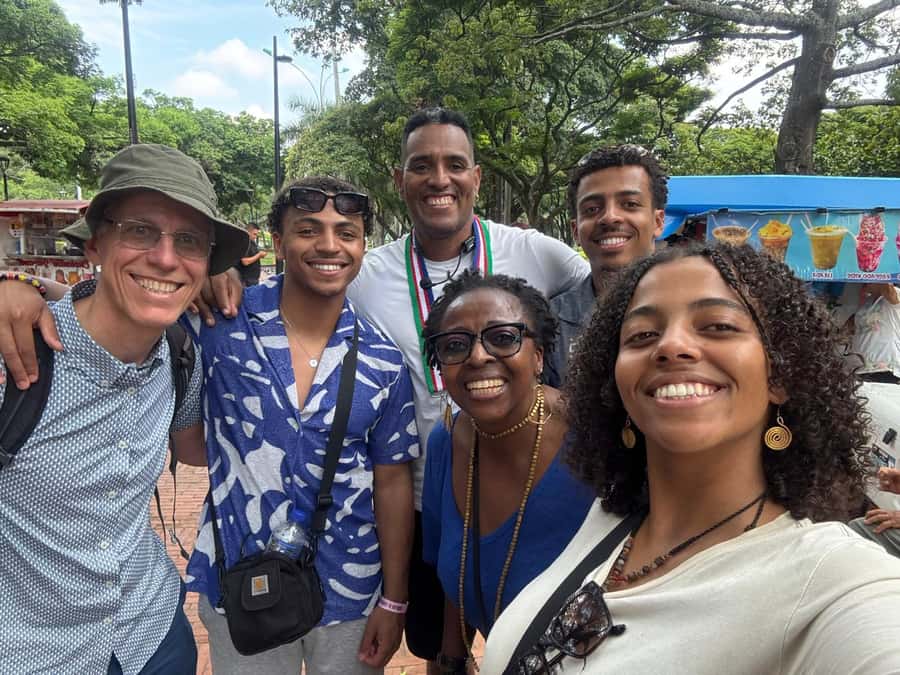
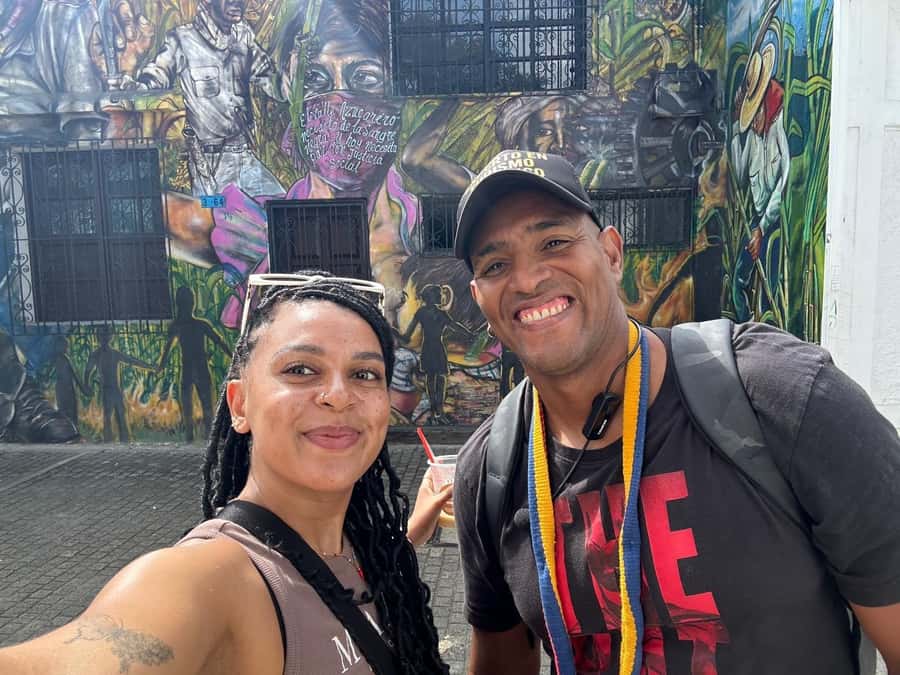
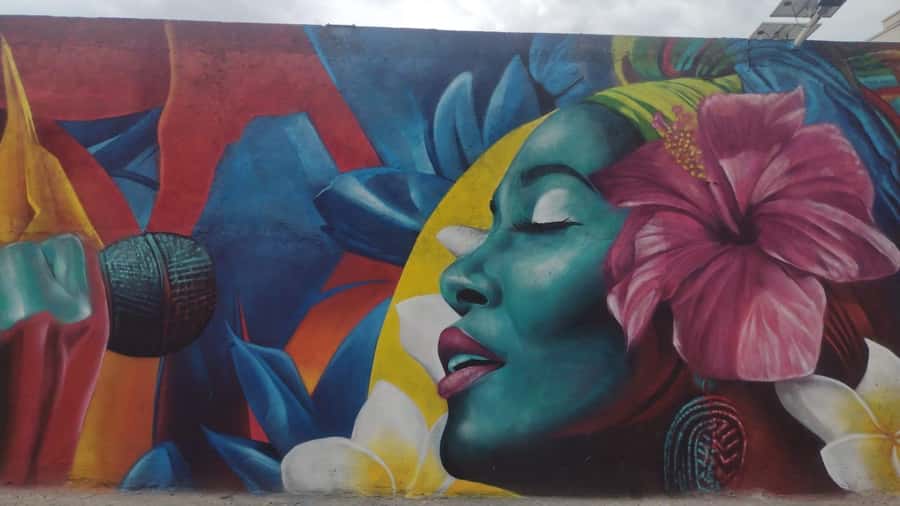
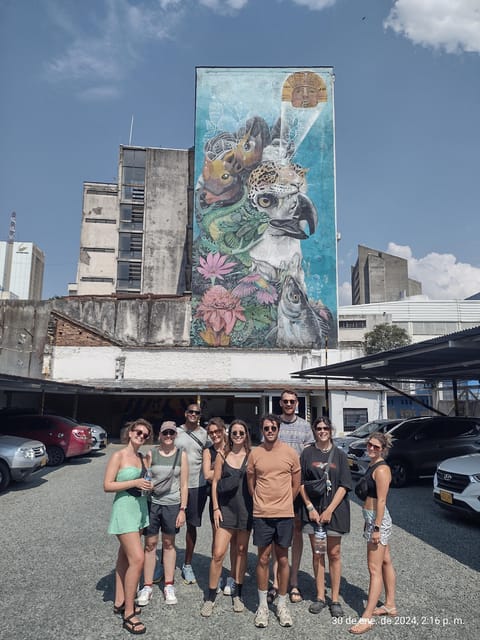
Street art is one of the strongest parts of the experience. Andrés explains what the murals represent and gives background about the people, struggles, and cultural ideas shown in the images.
This changes the way you look at downtown Cali. Instead of photographing a wall and moving on, you begin to ask who created it, whose story it carries, and why that story belongs in a public space.
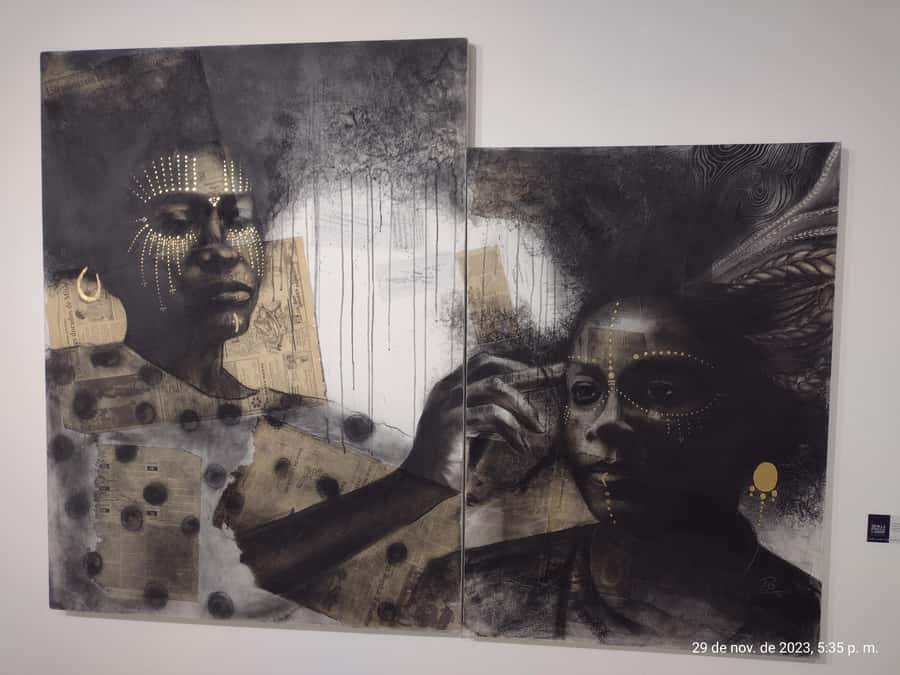
The art also provides a direct way to discuss Afro-Colombian identity. Themes of resilience, strength, music, ancestry, and community appear through images rather than only through spoken explanation. Some visitors have found that the stories behind the murals gave new meaning to architecture and streets that might otherwise seem ordinary.
You may see murals in both central Cali and an Afro-Colombian neighborhood in the east of the city. That contrast is important. It allows you to compare the better-known center with an area that shows more of everyday local life.
The tour does not present culture as something frozen in the past. It points to present-day artists, entrepreneurs, community groups, and cultural workers who continue to shape Cali.
Visiting three cultural institutions
The tour includes visits to three institutions of cultural interest. The exact institutions can vary, so you should treat this as a cultural route rather than a promise of three named museums.
The visits add structure to the walk. They offer indoor or organized settings where you can examine the work of cultural groups and learn how Afro-Colombian traditions are taught and maintained.
One cultural center described during the experience offers music, practical skills, and cultural education across generations. That detail is valuable because it shows culture as an active service, not simply a display for visitors.
You may also learn about social resources and programs that support local communities. For visitors interested in education, mental health, entrepreneurship, or social change, these stops can be as important as the murals and food.
The practical advantage is variety. In 150 minutes, you are not confined to a museum, a restaurant, or a single neighborhood. The tour moves between public art, institutions, shops, food vendors, and streets, giving you several ways to understand the city.
Same city, a completely different kind of day:
- Shared Tour Cali’s Historical Downtown
★ 4.8 · 143 reviews - Historical Shared Tour Salsa, Graffiti & Resistance in Cali
★ 5.0 · 107 reviews - San Cipriano Rainforest – River, Waterfalls and Adventure Day
★ 5.0 · 73 reviews - Cali: Street Food Tour
★ 4.8 · 71 reviews
Tasting Afro-Colombian food along the route
Food is included as part of the experience, with a stop for authentic Afro-Colombian fare and local snacks. The supplied details do not name every dish, so do not book expecting a fixed tasting menu.
Instead, think of the food as a cultural introduction. Andrés explains the African, Indigenous, and Spanish influences that meet in Colombian cooking, then gives you the chance to taste something connected to the communities you are learning about.
That combination works well. Food turns a historical conversation into something immediate. You can ask what an ingredient means, how a dish is eaten, or how recipes move through families and neighborhoods.
Some participants also mention local beverages and African-inspired delicacies. You may have the chance to try more than one item, but the selection can depend on what is available during the walk.
Bring cash if you want extra food or shopping beyond what is included. Alcohol and drugs are not allowed, and the experience is intended as a cultural walking tour rather than a nightlife outing.
Finding the salsa in Cali
Cali is widely known as the world capital of salsa, and the tour explains why music and dance are so closely tied to the city’s identity.
You may encounter dance, music, and possibly a short salsa lesson along the way. The focus is not only on steps. Andrés connects salsa to African rhythms, local creativity, social life, and the way music brings people together.
This is one of the tour’s most accessible themes. Even if you know little about Afro-Colombian history, you can understand the city through its sound and movement.
Do not expect a full evening dance class or a nightclub visit. The tour’s purpose is to show how salsa fits into Cali’s wider cultural story. If you want a longer dance session, you will need to arrange that separately.
Meeting local businesses and everyday Cali
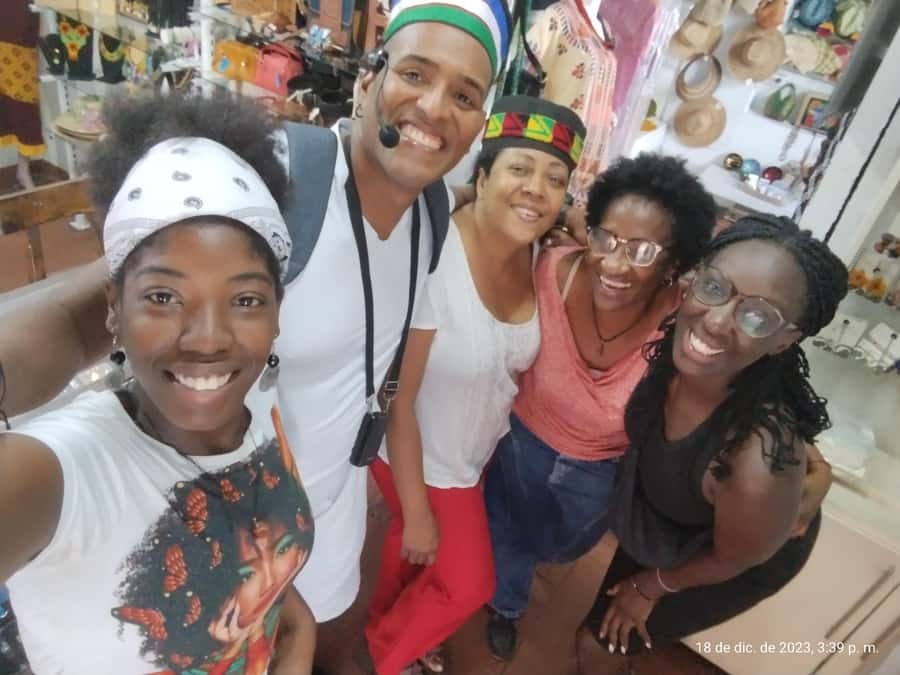
The walking route includes black-owned businesses and shops selling products connected to Afrocentric needs. This may include hair care products, lotions, accessories, and other personal goods.
For Afro-descendant visitors, this can be a practical highlight. You may find products that are harder to locate in standard tourist areas, while also meeting people who run businesses within the community.
For other visitors, these stops show how identity and commerce overlap. A shop can tell you about beauty standards, imported goods, local entrepreneurship, and the ways people create services for communities that are often overlooked.
You may also pass street vendors and see people going about their daily routines. The tour openly prepares you for a busy central-city setting with vendors, beggars, and different kinds of residents. The advice is simple: take it normally, stay aware, and respect the fact that you are walking through a working city rather than a stage set.
That honesty is helpful. This is not a polished route built only around monuments. Its appeal comes partly from showing real urban life, including scenes that can feel unfamiliar or uncomfortable.
Andrés Jiménez as your guide
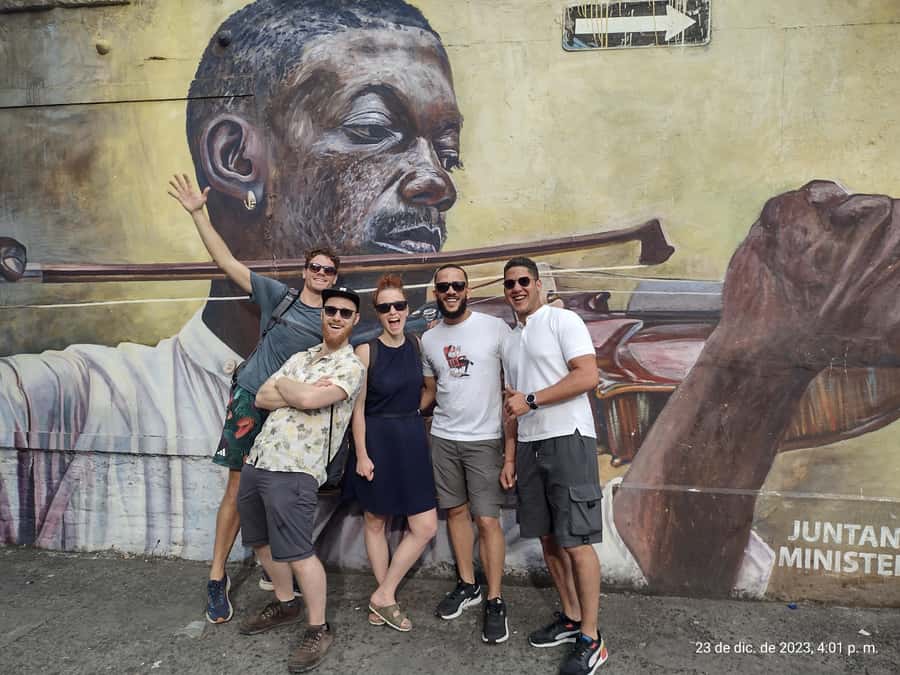
Andrés is the heart of the experience. He leads in English and Spanish, speaks clearly in both, and encourages questions throughout the walk.
His strongest quality is his ability to move between serious history and relaxed conversation. One moment you may be discussing military leaders, emancipation, or the role of Afro-Colombian communities in Colombia’s development. The next, you may be talking about food, music, shopping, or your own connection to the African diaspora.
That flexibility makes the tour suitable for visitors with different interests. You can focus on art, race, history, music, food, community programs, or daily life, and Andrés can connect those subjects.
I would still advise you to ask questions. The tour gains much of its value from discussion, and Andrés appears to welcome subjects such as race in Colombia and across the wider diaspora.
The strong response to his energy and presentation is understandable, but you should know what kind of guide he is. He is high-spirited and personal, not distant or purely academic. If you want a quiet, highly structured lecture, choose a different style of tour.
Is $42 a fair price?
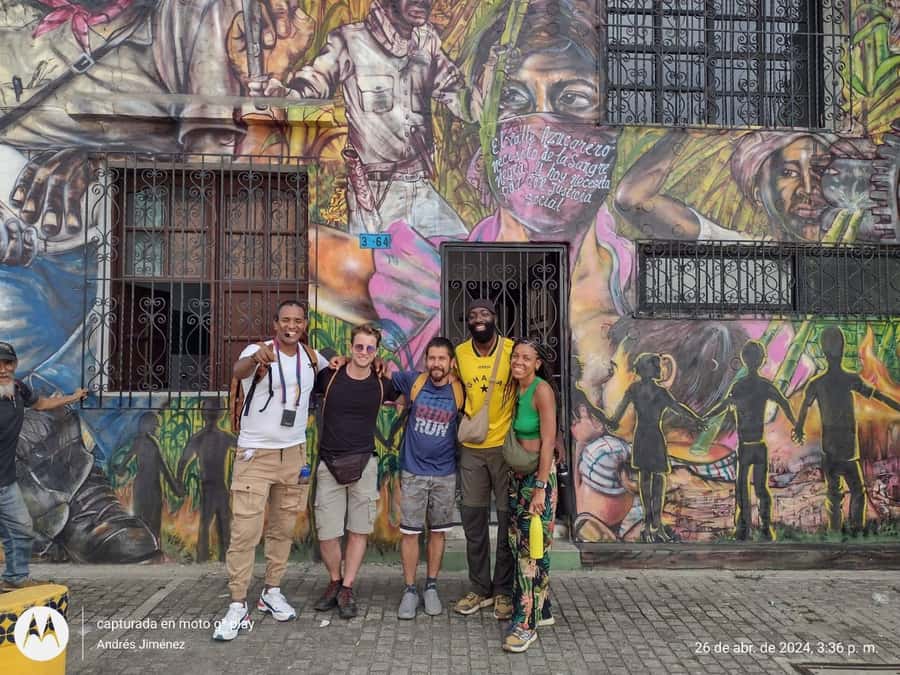
At $42 per person, the price is reasonable for a 150-minute guided experience that includes cultural visits and food tasting.
You are paying for more than a basic orientation walk. The tour combines historical explanation, public art, local businesses, Afro-Colombian food, salsa culture, and three institutions. It also saves you the work of finding these places and understanding how they relate to one another.
The value is greatest if this is your first visit to Cali or if you want to understand the city beyond its main tourist sights. It can also be useful early in your stay, since Andrés provides suggestions for restaurants, shopping, and other things to do.
The price is less compelling if you want a long museum visit, a full meal, or a dedicated salsa class. Those are not the main purpose here. You are buying a broad cultural introduction with a human guide and several short encounters.
Free cancellation up to 24 hours before the activity and a reserve-now, pay-later option make planning easier. The exact departure times should be checked before booking.
Who should book this walking tour?
I would choose this tour if you want to understand Cali through Afro-Colombian culture, especially if you care about the links between history, food, music, art, and community life.
It is a particularly good fit for:
- Visitors interested in African diaspora history
- People who enjoy street art and local food
- Afro-descendant visitors seeking cultural connections and relevant shopping
- First-time visitors who want orientation beyond standard sights
- English or Spanish speakers who enjoy a bilingual guide
- Anyone considering a longer stay or relocation to Cali
It is less suitable for children under 10, people with hearing impairments, or anyone unable to manage a city-center walking route. The tour is listed as wheelchair accessible, but you should still confirm the route details if you have specific mobility needs.
What to bring and how to prepare
Start with comfortable shoes. Two and a half hours on city streets can feel long in sandals or stiff footwear.
Bring:
- Water
- Sunglasses
- Comfortable clothing
- A camera
- Cash
- Questions and curiosity
Keep your belongings secure and follow normal city precautions. The tour takes place among vendors, residents, and street activity, so you will need to stay aware of your surroundings.
Most important, arrive ready for conversation. Andrés may ask about your background and perspective, and the experience works best when you respond. You are not just being shown places. You are being asked to think about how culture travels, changes, and remains present.
Should you book the Afro Walking Tour?
Yes, if you want a thoughtful introduction to Cali that goes past salsa clichés and postcard sights. Andrés Jiménez brings together murals, food, dance, history, community institutions, and local businesses in a way that makes the city easier to understand.
Book it early in your stay if you want practical ideas for the rest of your visit. Choose another activity if you need a relaxed, seated tour or a dedicated dance lesson.
For $42, this is a strong value for an interactive cultural walk, especially for visitors who want to see how Afro-Colombian identity shapes the colors, sounds, flavors, and daily life of Cali.
FAQ
Where does the Afro Walking Tour meet?
The meeting point is in front of the Subway sandwich restaurant.
How long does the tour last?
The walking tour lasts 150 minutes, or two and a half hours.
What languages does Andrés speak?
The tour is available in English and Spanish.
What is included in the price?
The experience includes a guided walking tour, cultural and historical explanations, a taste of local Afro-Colombian food, and visits to three cultural institutions.
Does the tour include salsa?
The tour explains why Cali is known as the world capital of salsa and includes music and dance as part of its cultural focus. One experience also included a short salsa class.
Will I taste local food?
Yes. Local Afro-Colombian food or snacks are included along the route. The exact dishes are not specified in advance.
Is the tour wheelchair accessible?
The activity is listed as wheelchair accessible. If you have particular mobility requirements, confirm the route details before booking.
What should I bring?
Bring comfortable shoes, sunglasses, a camera, water, comfortable clothes, and cash.
Can I cancel the booking?
You can cancel up to 24 hours in advance for a full refund. A reserve-now, pay-later option is also available.
Just added around Cali
- From Cali: Whale Watching Day Trip in Buenaventura★ 4.6 · 3 reviews
- Cali: Three hours walking Cali City discovery tour★ 4.7 · 3 reviews
- Cali: Two hours walking Cali City discovery tour★ 5.0 · 3 reviews
- Private Tour on a 1100cc Cruiser Motorcycle★ 5.0 · 4 reviews
- Cali: Pico de Loro Trekking Adventure – Farallones de Cali★ 5.0 · 4 reviews
- Craft Beer Pub Crawl in Cali★ 5.0 · 4 reviews
- Cali: Comuna 20 Siloé Street Art Tour★ 5.0 · 4 reviews
- Flavors of Cali: Food tour at the local market★ 5.0 · 5 reviews
Cali Tours, compared.
Historical Shared Tour Salsa, Graffiti & Resistance in Cali
Read our review →
San Cipriano Rainforest – River, Waterfalls and Adventure Day
Read our review →

Cali: Cali River Waterfall and Great River Pools Tour
Read our review →Browse the lists this tour appears in