
Reviewed · MEDELLÍN TOURS
Medellín: Walking Tour with Cable Car and Botero Plaza
Medellín’s Metro Cable is more than a scenic ride. It is public transport built to connect hillside barrios with the city below, and this three-hour tour uses it to show you Medellín from two angles: Botero’s playful bronze art downtown and everyday life in a comuna above the valley. You also get mountain views, colonial churches, plazas, and the striking Cultural Palace.
I like the practical design of the outing. Your guide handles the vehicle, parking, metro tickets, and cable car fares, so you can watch the city instead of sorting out each transfer. I also like the balance between famous sights and local context, especially the chance to walk with a guide who knows the neighborhood and can explain how residents move forward through education, transport, and community support.
The main drawback is time. Three hours goes quickly, and a moderate amount of walking is involved. The barrio visit is also best approached with an open mind and a willingness to listen, not as a quick photo stop. Hotel pickup and drop-off are included only in El Poblado, so you may need to arrange a meeting point elsewhere.
Key points at a glance
- Botero Plaza is free to visit: See Fernando Botero’s famous larger-than-life bronze figures in the open air without paying an admission fee.
- The Metro Cable is part of the story: The aerial line was built to improve connections between hillside barrios, the metro, and the rest of Medellín.
- Downtown comes before the hills: You’ll walk past old churches, plazas, and the Cultural Palace before riding uphill.
- A local guide adds important context: The comuna walk is meant to show daily life with care and explanation, not just provide a view from above.
- Transport is handled for you: A comfortable vehicle, parking, metro fares, and Metro Cable fares are included.
- The tour is short but active: Plan on three hours, moderate walking, and a flexible start time based on availability.
Starting in El Poblado and riding into the city
If you are staying in El Poblado, the day begins with hotel or apartment pickup in a comfortable newer vehicle. That is useful in Medellín, where getting from the hotel district to downtown can take effort, especially if you are still learning the city’s layout.
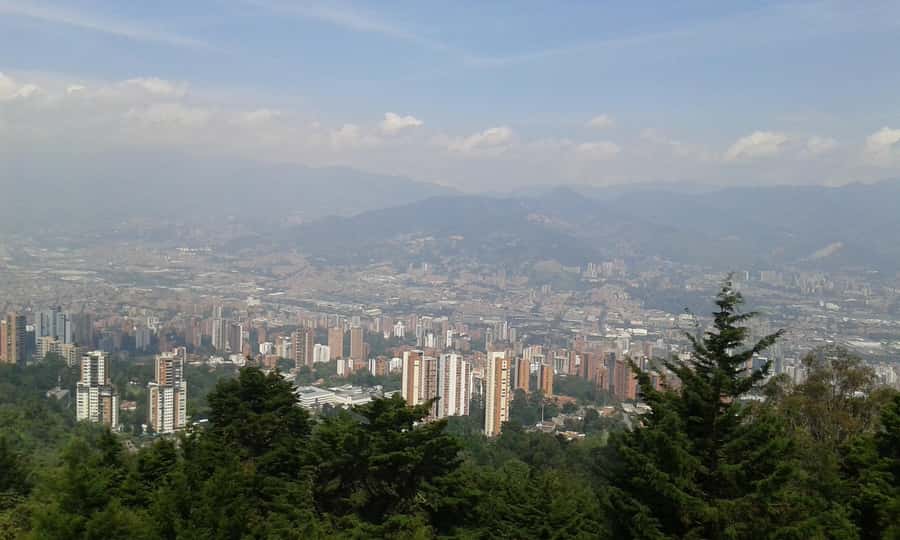
The guide takes you to a metro station, then you ride Medellín’s metro. This first part gives you a useful introduction to the city’s shape. Medellín sits in a long valley surrounded by the Andes, so the ride offers views of the river, neighborhoods, and steep mountain sides as the city stretches around you.
I like starting this way because the metro is not merely a way to reach the next stop. It is part of how Medellín works. The city’s public transport system links the valley floor with communities higher up the slopes, and the tour lets you see that connection before you board the cable car.
The exact starting time depends on availability, so check the schedule when you book. Pickup outside El Poblado is not included automatically. If you are staying in another part of the city, contact the provider for a meeting point before the day of the tour.
More Walking Tours in Medellin
- Comuna 4 Walking Tour Medellin
★ 5.0 · 217 reviews - Medellin Historic Walking Tour
★ 4.9 · 86 reviews - 2-Hours Street Art Walking Tour in Medellin Comuna 13
★ 5.0 · 54 reviews
Botero Plaza and Medellín’s famous bronze figures
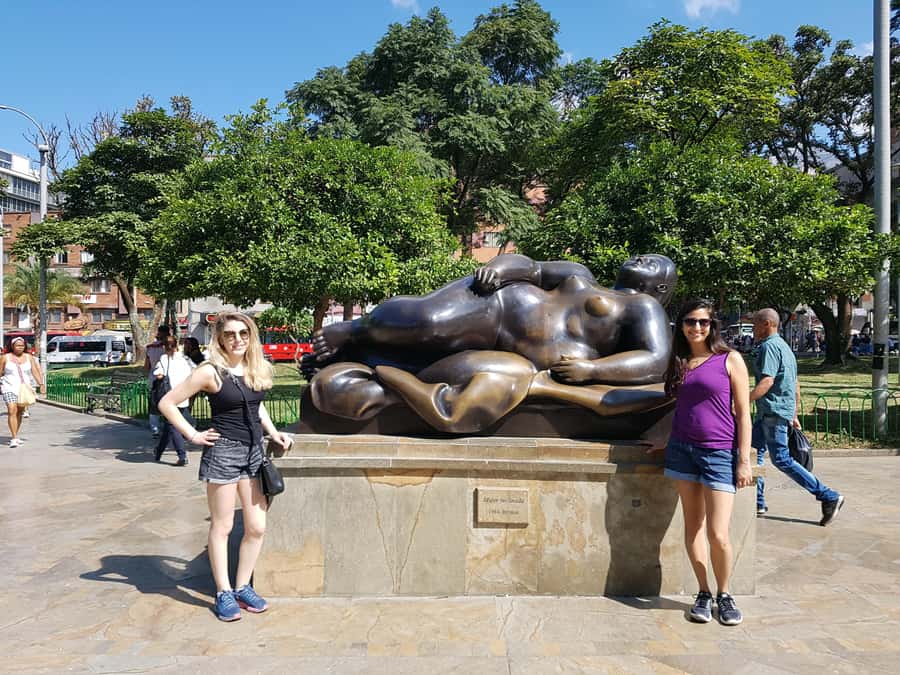
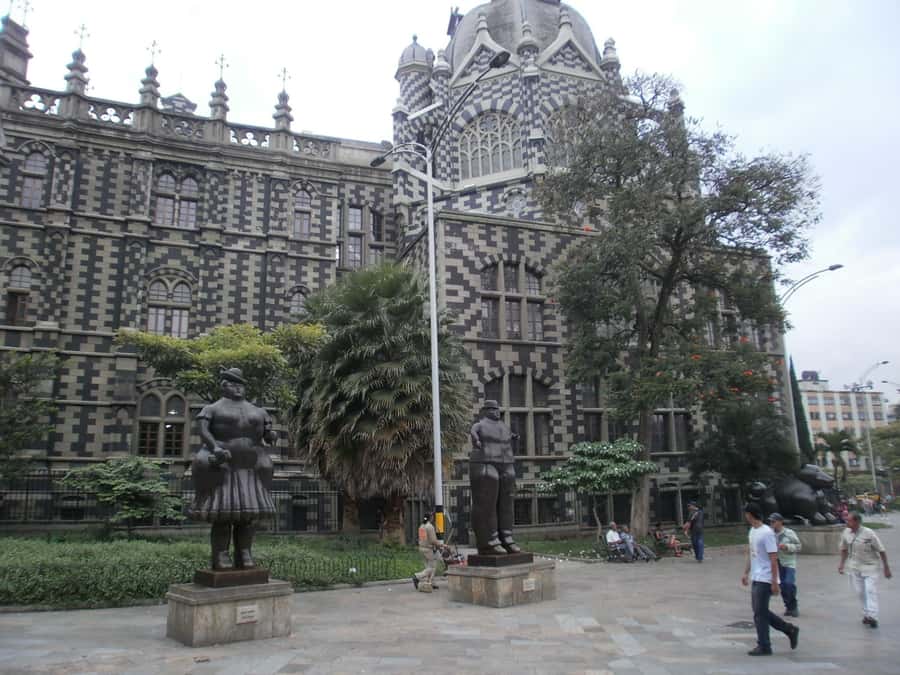
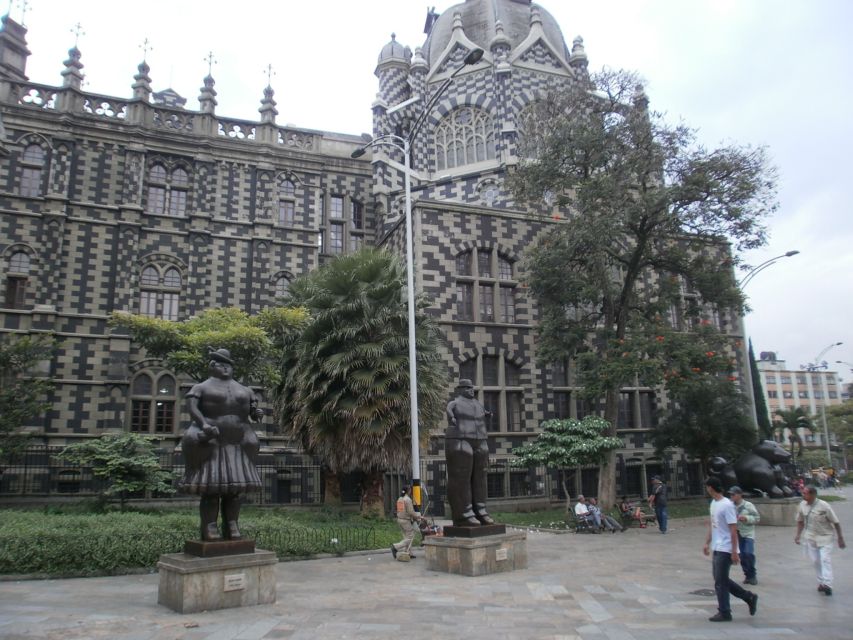
The first major stop is downtown Medellín’s Botero Plaza. This open-air collection presents the work of Fernando Botero, one of Colombia’s best-known artists and sculptors. His bronze figures are famous for their rounded, exaggerated forms, and the plaza gives you a chance to see them at close range rather than behind museum glass.
There is no cost to view the sculptures. That makes the stop especially good for first-time visitors who want a clear introduction to Colombian art without adding another admission fee to the day. Bring a decent camera, since the broad shapes and polished bronze surfaces make strong subjects for photographs.
Your guide can explain the artistic and historical setting behind the statues. That context matters. Without it, you might simply see amusing oversized figures. With a guide, you get a better sense of why Botero’s style is so recognizable and why these works have become part of Medellín’s public identity.
You can also ask your guide to take photos of you with the sculptures. This is a small but useful touch, particularly if you are traveling alone or want more than a quick arm’s-length phone picture.
Botero Plaza is a public space, not a quiet gallery. You should expect an urban setting with people moving through the area. The value here comes from seeing the art where city life is happening, then stepping directly into the surrounding streets.
Walking through downtown’s older streets
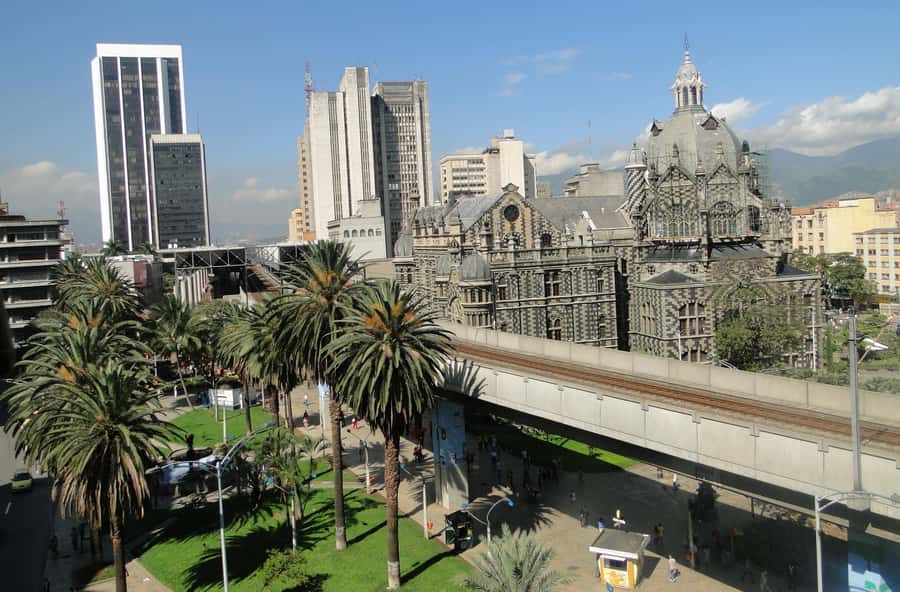
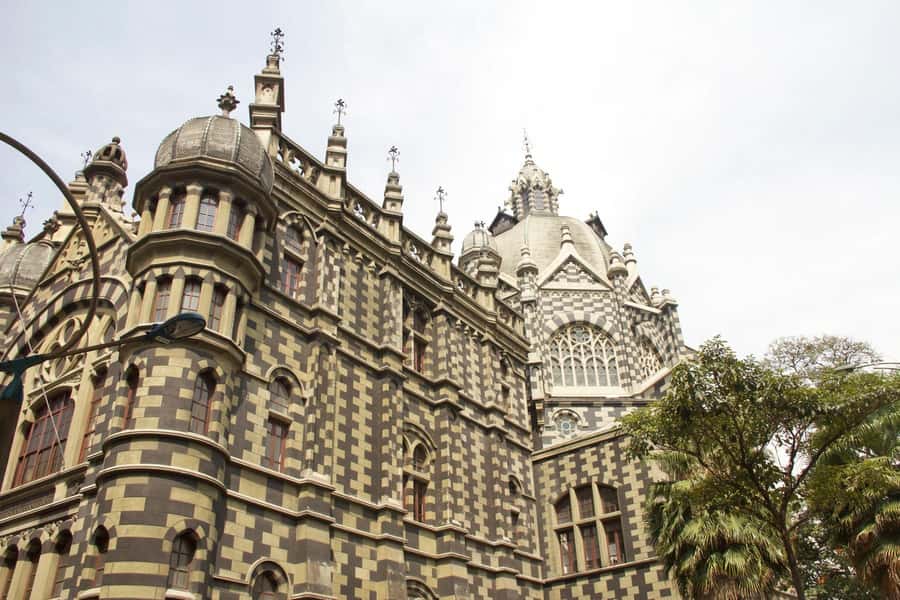
From the plaza, you continue on foot through central Medellín. The walk includes old colonial churches, public plazas, the Cultural Palace, and other downtown sights. The tour does not treat the city center as a backdrop for one famous artist. It places Botero’s work within a wider walk through Medellín’s civic and architectural center.
This portion is where a live guide can make the biggest difference. You can see a church or an ornate building on your own, but you may not understand how it fits into the city. A fluent Spanish or English-speaking guide can point out what matters, answer questions as you go, and help you keep the walk connected to the larger story of Medellín.
The route involves a moderate amount of walking. Wear comfortable shoes and keep your hands free enough for city streets, transit, and photography. The information provided does not give a precise distance or step count, so anyone who needs frequent rest should consider the walking requirement before booking.
The downtown section also gives you a useful contrast with El Poblado. The hotel district and the historic center feel like different parts of the same city. Seeing both in one outing helps you understand Medellín as a place with several distinct faces, not simply a base for day trips.
Taking the Metro Cable toward Santo Domingo Savio
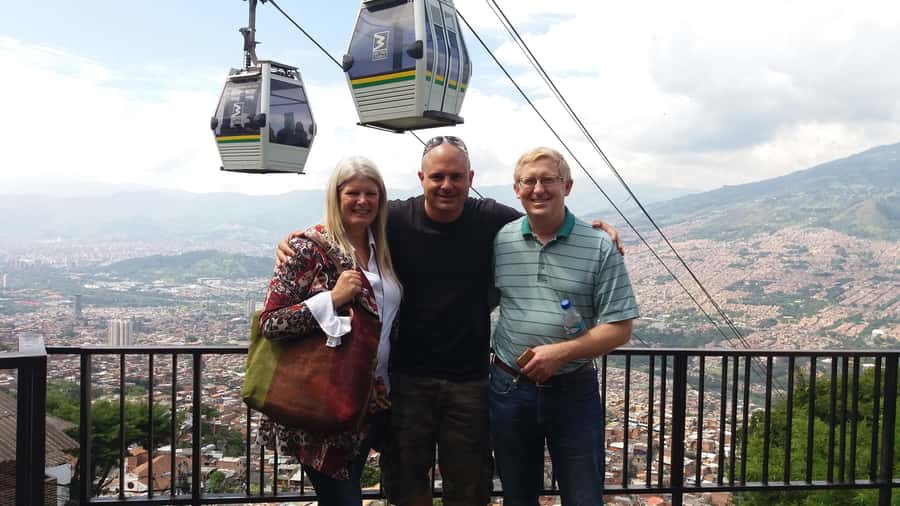
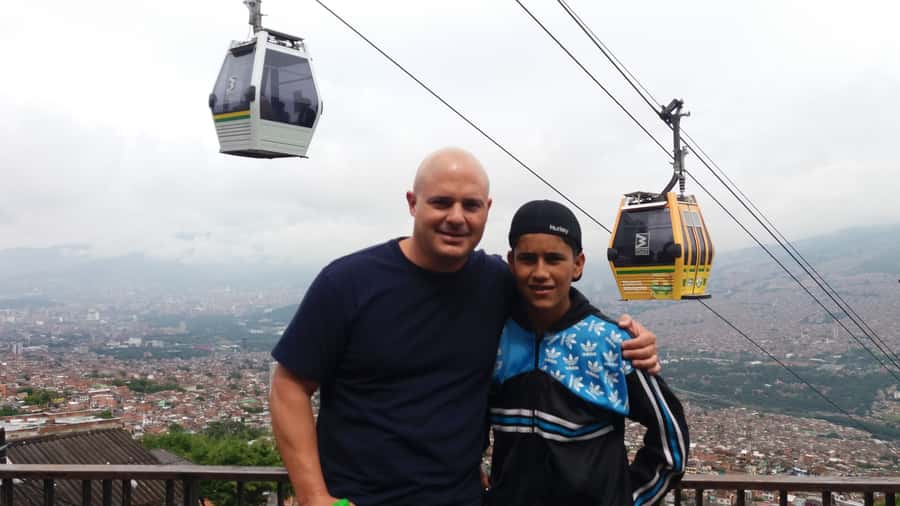
Next comes the Metro Cable, Medellín’s aerial cable car. The system was built to relieve traffic, improve transport, and give people in hillside barrios better links to the metro and other parts of the city.
From the cabin, you look down over the valley and up toward the surrounding Andes. The views are one reason to enjoy the ride, but the transport purpose is more important. You are seeing a working part of daily life, not a sightseeing gondola designed only for visitors.
The cable car also changes your sense of distance. A barrio on a steep hillside can look close on a map yet be difficult to reach by road. The aerial route connects it directly with the city below. That makes the ride a visual lesson in how geography shapes transport and opportunity.
The cable cars are described as sturdy and well maintained. All Metro and Metro Cable fees are included in the tour price, so you do not need to manage separate tickets during the outing. Your guide remains with you as you make the transition from the lower city to Santo Domingo Savio.
The ride itself is not long enough to be the whole tour. Think of it as a moving viewpoint and a bridge between two parts of Medellín. The more valuable part comes when you have the option to get off and walk through the barrio.
Same city, a completely different kind of day:
- Medellin: Comuna 13 Graffiti Tour, Cable Car & Street Food
★ 4.8 · 9,046 reviews - Medellín: The Real Pablo Escobar Tour
★ 4.8 · 3,205 reviews - Medellín: Comuna 13 True Story and Street Food Tour
★ 4.9 · 1,779 reviews - Medellín: Comuna 13 District Tour with Cable Car Ride
★ 4.8 · 1,467 reviews
Santo Domingo Savio and a closer look at barrio life
At Santo Domingo Savio, you can visit the modern library building, which was partially donated by the King of Spain. Its location gives the stop a clear connection to education, public investment, and access to services in a hillside community.
You have the option of walking farther into the comuna or barrio with your guide. This is the most sensitive part of the experience, and it deserves a thoughtful approach. The purpose is to see how people live and manage daily life, while learning about residents and children who have support and sponsorship as they move toward a more peaceful future.
I would choose this walk if you want your Medellín visit to include more than monuments and views. Your guide knows the people and the neighborhood, which helps you move through the area respectfully and understand what you are seeing. The emphasis is on real life and local progress, not on treating the community as a spectacle.
At the same time, you should be comfortable with the limits of a short visit. Three hours cannot explain every social, political, or economic issue in Medellín. A good guide can offer useful context, but this is an introduction rather than a complete study of the comuna.
The walk may also feel more personal than the downtown section. Listen carefully, ask polite questions, and follow your guide’s directions. The tour description promises a safe walk with the guide, but it does not provide a detailed route or list of specific community projects, so avoid expecting a fixed set of encounters.
What the $79 price covers
At $79 per person, this tour is priced above a simple walking tour, but it includes several services that can add up quickly if arranged separately. The fee covers a professional certified guide, transport by private vehicle, parking, and all metro and cable car fares.
Hotel pickup and drop-off are included for people staying in El Poblado. That return transfer matters because the tour finishes after several changes of transport and a moderate walk. You are not left to find your own way back from Santo Domingo Savio.
Food, drinks, lunch, and souvenirs are not included. Since the tour lasts three hours, you should plan to eat before or after rather than expect a meal during the activity. Souvenirs may be available for purchase, but you should budget separately if you want one.
The value is strongest if you want a guide, arranged transport, and a connected route in a short block of time. It is less compelling if you are already comfortable using Medellín’s metro, know the city center, and prefer to set your own pace. In that case, you could visit Botero Plaza and ride the cable car independently for less, though you would give up the guide’s explanations and the organized barrio walk.
The current rating is 4.7 from six reviews. The strongest praise centers on the guide service. Juan Pablo is specifically recognized for professionalism, warmth, and personal attention, while a more recent Danish review describes the guide as pleasant and well informed. Since the number of reviews is small, treat the score as encouraging rather than final proof of a uniform experience.
Who will get the most from this tour
I would recommend this tour to a first-time visitor who wants a fast but meaningful introduction to Medellín. In three hours, you see public art, the historic center, the metro, the mountains, the cable car system, and a hillside barrio.
It also suits you if you prefer having transport and city navigation handled for you. The certified guide speaks Spanish and English, and the vehicle transfer removes some of the friction between El Poblado, downtown, and the cable car route.
This is a good choice for anyone interested in how a city uses transport and public spaces to connect communities. The Metro Cable is not just a scenic attraction, and the barrio visit gives you a chance to think about Medellín’s changes through the people who live there.
You may want a different activity if you dislike walking, want a slow museum visit, or prefer a tour devoted only to Botero. The itinerary covers several subjects in a short time, so it favors variety over long stops and detailed art study.
The activity is marked wheelchair accessible, but moderate walking is also noted. If you use a wheelchair or have mobility concerns, confirm the exact route and transfer details with the provider before booking. The available information does not explain how much of the barrio walk is paved or how every vehicle transfer is handled.
Practical details for a smoother visit
Wear comfortable footwear. You will walk through downtown, change between forms of public transport, and may continue on foot in Santo Domingo Savio.
Bring a camera, but keep your attention on the guide and surroundings. Botero Plaza is especially good for photographs, and the Metro Cable offers broad views of the valley and mountains.
Choose English or Spanish when booking, depending on which language lets you ask the most natural questions. A bilingual guide can explain both the art and the social setting, but your experience will be better if you participate rather than simply follow.
Keep the schedule flexible. The advertised duration is three hours, while the starting time depends on availability. Hotel pickup is only automatic in El Poblado, and other accommodations require a meeting point.
You can cancel up to 24 hours before the activity for a full refund, and the reserve-now, pay-later option lets you hold a place without paying immediately. Those terms are helpful if your Medellín plans are still shifting.
Should you book it?
Book this tour if you want Medellín in miniature, with public art, old streets, working transport, mountain views, and a guided look at barrio life in one well-organized outing. The $79 price makes sense when you value the vehicle, return transfer, transit fares, parking, and a certified guide.
Skip it if you want a long, quiet art visit or prefer independent transit. Also think twice if moderate walking is difficult or if you are uncomfortable with a community visit that asks for attention and respect rather than quick sightseeing.
For most first-time visitors staying in El Poblado, this is a useful orientation tour. The best reason to book is not simply the cable car or Botero’s statues. It is the connection between them, and the chance to see how Medellín’s public art, transport system, and hillside communities fit together.
FAQ
How long does the Medellín walking tour last?
The tour lasts three hours. The starting time depends on availability when you book.
What languages does the guide speak?
The live guide is available in English and Spanish.
Is hotel pickup included?
Hotel or apartment pickup and drop-off are included if you are staying in El Poblado. If you are staying elsewhere, contact the provider for a meeting point.
Are metro and Metro Cable fares included?
Yes. All Metro and Metro Cable fees are included, along with parking fees and transport by private vehicle.
Is food or lunch included?
No. Food, drinks, and lunch are not included. Souvenirs are also separate, though they may be available to buy.
Is the tour wheelchair accessible?
The activity is listed as wheelchair accessible. It also involves a moderate amount of walking, so confirm the exact route and transfer details with the provider if you have mobility needs.
Just added around Medellin
- Comuna 13: Recorrido de Arte Urbano, Cultura y Resiliencia★ 5.0 · 3 reviews
- Tour to Río Claro and La Caverna del Cóndor★ 5.0 · 3 reviews
- Medellin: Tour to The Cathedral – History of Pablo Escobar and his Impact★ 5.0 · 3 reviews
- Medellín: Coffee Tour Experience at a Coffee Farm★ 4.8 · 3 reviews
- Medellin: waterfalls and naturals poolls tour★ 3.7 · 3 reviews
- Medellín: Private City Tour and Comuna 13 Tour★ 3.8 · 3 reviews
- Tour Medellín: Pablo Escobar and Commune 13★ 5.0 · 3 reviews
- Colombia: Official Pablo Escobar Meet the Family Museum Tour★ 5.0 · 3 reviews
Medellín Tours, compared.
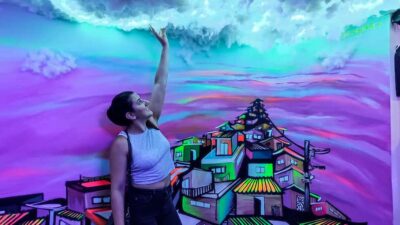
Medellin: Comuna 13 Graffiti Tour, Cable Car & Street Food
Read our review →
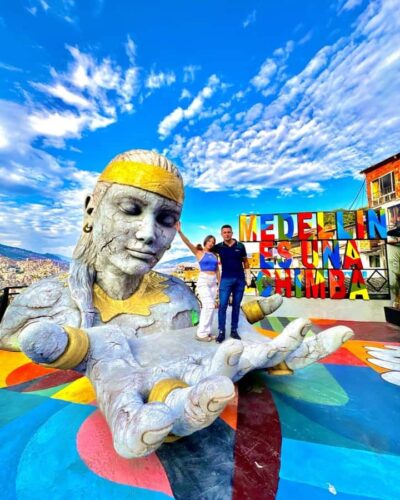
Medellín: Comuna 13 True Story and Street Food Tour
Read our review →
Medellín: Comuna 13 District Tour with Cable Car Ride
Read our review →
Medellin: Coffee Tour with Transport, Snacks and Tastings
Read our review →
From Medellín: Paragliding Tour with GoPro Photos & Videos
Read our review →
Medellín: Pablo Escobar Tour with beer included
Read our review →Browse the lists this tour appears in