
Reviewed · COFFEE REGION TOURS
Explore the Coffee Process_From Tree to Cup & Fun by Jeep
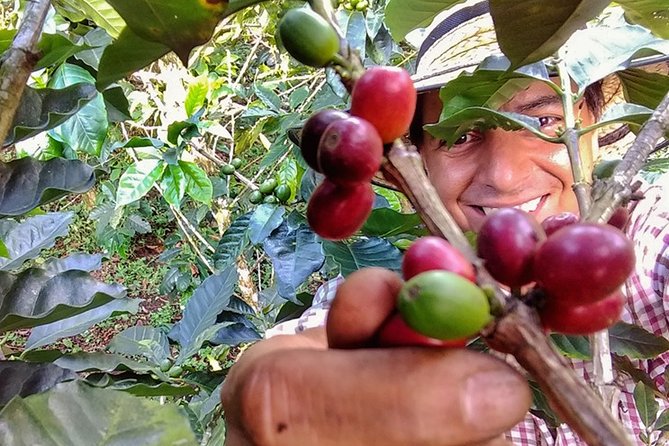
Colombian coffee makes far more sense once you see it growing, being processed, and brewed on the same farm. This four-hour outing takes you from Pereira into the Andes in a traditional Jeep, then follows coffee from cherry to cup with Arvey and Elizabeth.
I especially like the personal scale, with no more than 10 people, and the farm’s wider story of composting, vermiculture, fruit trees, birds, and clean agriculture. The main consideration is that this is a working mountain farm, not a polished museum, so expect insects, uneven outdoor paths, and a hands-on visit rather than a quick tasting.
Key points to know before you go
- Traditional Jeep ride: Your pickup and mountain transfer use the classic vehicle closely tied to Colombia’s coffee region.
- Coffee from tree to cup: See planting, picking, fermentation, washing, drying, roasting, and brewing.
- Hosts Arvey and Elizabeth: The couple guides the visit themselves and explains both coffee and their life as neo-peasants.
- Small-group setting: The experience is limited to 10 people, allowing time for questions and personal instruction.
- More than coffee: Walk among bananas, cocoa, avocados, citrus, guava, papaya, mango, guanabana, and other plants.
- Practical sustainability: See the compost area, vermiculture, and nursery, then learn to prepare Colombian coffee at home.
From Pereira to the coffee hills by Jeep
The experience begins with hotel pickup in Pereira. Instead of arranging a taxi, finding a rural meeting point, or trying to navigate mountain roads, you ride in a traditional Jeep, a fitting way to leave the city and reach the farm country.
The drive takes roughly 40 minutes according to the detailed trip description. That transfer is part of the experience, not just a way to get from one place to another. As you climb through the Andean countryside, Arvey introduces the region, coffee growing, and the farm he runs with Elizabeth.
The Jeep is also a useful cultural detail. These boxy vehicles are strongly associated with the coffee zone, where they remain practical for steep roads and farm transport. You can relax while someone else handles the drive, then return to Pereira the same way after the visit.
The listed itinerary names Andes and Pereira rather than giving a long series of stops. In practical terms, this is a farm visit outside Pereira with transportation included. If you are staying in another city, transportation costs an additional $25, so confirm the pickup arrangement before booking.
More coffee tours in Coffee Region:
- Coffee Tour at the Finca del Café
★ 5.0 · 213 reviews - Salento: Private Cocora Valley, Salento & Coffee Farm Tour
★ 4.9 · 202 reviews - Coffee Tour at Finca El Ocaso Salento: Traditional Spanish Farm
★ 4.8 · 89 reviews
Meeting Arvey and Elizabeth on their family farm
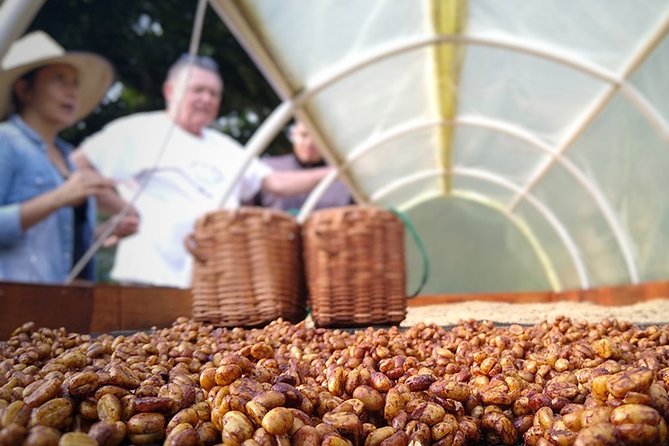
Arvey and Elizabeth lead the visit themselves. Their farm is not presented as a single-purpose coffee plantation. It is their home, their workplace, and a small working system where coffee shares space with food crops, animals, compost, and native life.
That personal connection changes the tone. You are not simply shown a row of coffee trees and sent to a gift shop. You walk with the couple, ask questions, and hear how they moved into farming. One account describes Arvey as a former accountant and Elizabeth as a former engineer, a useful reminder that coffee farming can become a chosen way of life rather than a family occupation passed down unchanged.
They describe themselves as neo-peasants, a term that reflects their decision to build a rural life based on farming and responsible production. The farm has also received the 2022 National Tourism Awards and the WTM Latin American Responsible Tourism Awards in Brazil in 2023.
Awards alone do not make a good tour, but here they help explain the emphasis on sustainability and community-minded tourism. The real value is seeing how those ideas work on the ground.
Walking through coffee, fruit, and farm life
The plantation walk follows the coffee plant through its growing cycle. You learn about the tree, the coffee cherry, harvesting, and the work required before the beans are ready for roasting.
The farm also grows bananas and plantains, cocoa, avocado, oranges, lemons, tangerines, guava, papaya, mango, and guanabana. Depending on the season, you might see fruit at different stages or taste something picked directly from the property. The changing crops mean the visit will not look exactly the same throughout the year.
The plant tour adds useful context. Coffee does not grow in isolation. Food crops provide variety, shade, and practical support, while plants such as citronella, cotton, pineapple, and several types of avocado contribute to the farm’s wider ecology and daily use.
You may also meet the farm animals, including chickens, ducks, cats, and the dogs Toby and Lola. Birdlife is another highlight. The farm’s owners have seen the number of bird species on the property rise from about 30 to around 120 since they began their work there. Cotton is grown in part to help birds gather material for nests, while some trees provide homes for iguanas.
These details make the walk rewarding even if coffee is not your main interest. You gain a picture of a farm as a living place, not simply a field devoted to one crop.
Compost, vermiculture, and clean agriculture
The sustainability portion is concrete rather than abstract. You see where organic waste is composted, visit the vermiculture area, and learn about the nursery.
Vermiculture uses worms to help turn organic material into useful compost. On a coffee farm, that approach connects kitchen waste, plant matter, soil care, and future planting. It also gives you something practical to take home: sustainability is not only about buying an ethical product. It involves what happens to waste, how soil is maintained, and how a small farm uses what it already has.
Arvey and Elizabeth explain their clean agriculture practices alongside their everyday lives. This is an important part of the visit for anyone interested in responsible tourism. Your admission supports a small agricultural project directly, while the tour shows you the labor and care behind specialty coffee.
The farm is not described as a large commercial operation, so do not expect industrial equipment or a factory-style presentation. Its strength is the close look at small-scale production.
A few more Coffee Region day trips to weigh up
- From Salento: Cocora Valley Shared Tour
★ 4.8 · 246 reviews - Salento, Cocora and Filandia Private Tour from Pereira or Armenia
★ 5.0 · 90 reviews - Coffee Tour Salento-Ocaso Farm- English Tour
★ 4.6 · 88 reviews - Salento/Pereira: Cocora Valley & Salento Hiking Private Tour
★ 4.8 · 78 reviews
Learning how coffee changes from cherry to bean
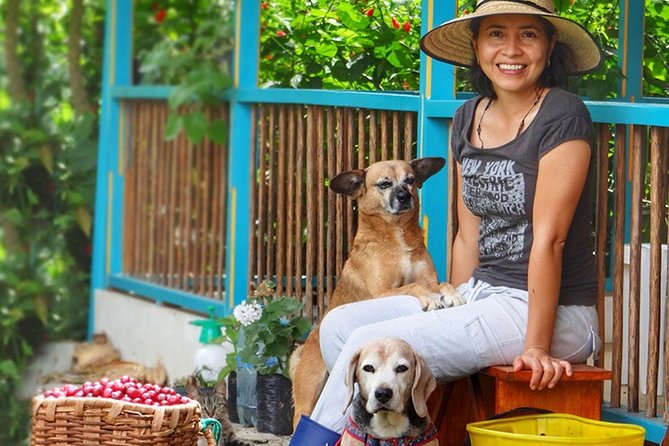
The coffee process is the heart of the outing. You follow the crop through harvesting and the stages that turn a coffee cherry into a dry bean ready for roasting.
The farm demonstrates fermentation, washing, and drying. You learn about three processing styles: washed, honeyed, and natural. These are not simply labels on a bag. They describe different ways of treating the coffee after the fruit is picked, and they can affect the flavor in the finished cup.
A washed process removes the fruit from the bean before drying. A natural process dries the coffee with more of the fruit attached. Honey processing falls between the two, leaving some mucilage on the bean during drying. The exact flavors are not promised in advance, which is part of the fun. The point is to understand how farm decisions shape the coffee you drink.
You also see quality control and the work that takes place after picking. That is where many casual coffee drinkers gain a new respect for the product. A cup looks simple, but it depends on careful timing and repeated decisions long before hot water reaches the grounds.
Brewing your own Colombian coffee
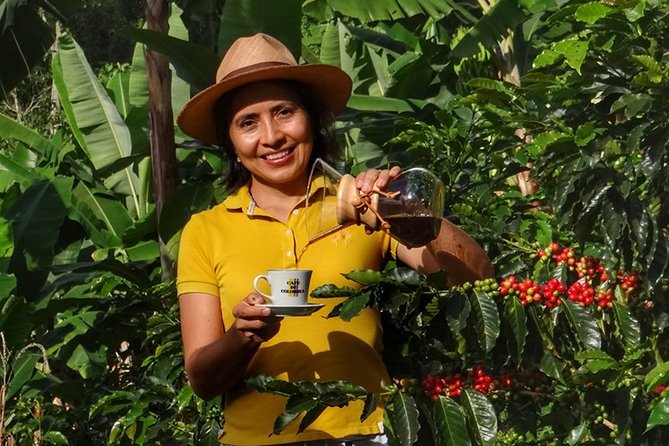
One of the strongest parts of the visit is the practical brewing lesson. Elizabeth teaches you how to prepare coffee using different methods, and you make your own cups rather than only watching a demonstration.
The experience includes coffee and tea, snacks, and several chances to taste the results. One account describes making an initial cup upon arrival, then preparing two more cups later with Elizabeth’s direction. You also learn about the roasting curve, which gives you a basic sense of how heat changes the bean.
The brewing lesson is useful because it travels home with you. You are shown a method simple enough to repeat in your own kitchen. That makes the tour more than a pleasant farm outing. You leave with a better idea of how to compare beans, processing styles, roast levels, and brewing methods.
Fresh refreshments may include lemonade made with lemons from the farm. Snacks have included patacones and empanadas. The exact food can vary, but the focus is on simple farm-linked hospitality rather than a formal meal.
What the four-hour schedule feels like
The advertised duration is about four hours. That gives you enough time for the transfer, welcome, plantation walk, processing explanation, sustainability tour, tasting, and brewing practice without turning the visit into an all-day commitment.
The pace is likely to feel fuller than a short coffee tasting. You are moving between outdoor paths, farm areas, and demonstration points. The detailed description mentions an initial coffee preparation, a longer walk through the crops, processing and quality control, refreshments, and additional coffee preparation near the end.
Because the group is limited to 10, you should have a better chance to hear the explanations and ask questions than on a large coach excursion. It also suits people who prefer conversation and personal attention. The tradeoff is that a small farm visit depends on the hosts and the rhythm of the property, so it may feel less tightly timed than a commercial attraction.
A good attitude is to allow the farm to set the pace. The value lies in seeing how the pieces connect, not in rushing from one photo stop to the next.
Price, group size, and practical value
The price is $115 per person. That includes private transportation, hotel pickup and drop-off, entrance, a guide, coffee or tea, and snacks.
For four hours, this is more expensive than a basic coffee tasting. The price makes more sense when you count the mountain transfer, the private-style transport, the small group, the hosts’ time, the farm walk, the processing lesson, and the brewing practice. You are paying for access to a working project and for instruction, not just a drink.
The group cap of 10 is especially important. Coffee production involves questions, comparisons, and demonstrations that can be hard to follow in a large group. Here, you can ask about the three processing styles, the trees, the composting system, or how to repeat the brewing method at home.
The tour is recommended by 100 percent of the 28 published ratings, with a five out of five score. That is a strong record, though the small number of ratings means I would still choose it because the format matches your interests, not simply because of the score.
Comfort, access, and small farm realities
Wear comfortable clothing and shoes suitable for an outdoor farm walk. The property is in the mountains, and the visit includes plantation paths rather than only flat indoor areas.
There are bugs. Mosquito repellent or lotion is a sensible addition, especially if you are uncomfortable around insects. This is a working farm, so you should also expect animals, soil, plants, and ordinary rural conditions.
A large portion of the farm has been described as wheelchair and blind accessible, and service animals are allowed. Since the experience includes outdoor paths and a mountain setting, it is wise to confirm your particular mobility needs when booking.
The confirmation arrives at booking. Free cancellation is available up to 24 hours before the start time for a full refund. Changes or cancellations inside that 24-hour window are not accepted for a refund, and the local time cut-off applies. The tour also requires a minimum number of participants, so a cancellation for that reason results in another date or experience, or a full refund.
Who should book this coffee farm visit
I would choose this outing if you want to understand Colombian coffee rather than simply buy a bag or pose beside a coffee tree. It suits coffee drinkers who enjoy learning how processing changes flavor, and it also works for people drawn to farming, birds, fruit, and responsible tourism.
Families and mixed-interest groups may appreciate the variety. Someone who does not drink much coffee can still enjoy the farm animals, mountain setting, fruit trees, and sustainability work. The direct instruction also suits curious beginners. You do not need advanced coffee knowledge to take part.
It is less suitable if you want a quick, polished attraction with a fixed script and little walking. You should also think twice if insects, rural paths, or a four-hour small-group visit are not your style.
Should you book it?
Yes, if you want a personal introduction to the Colombian coffee process and a closer look at sustainable small-scale farming near Pereira. Arvey and Elizabeth’s farm offers a rare combination: mountain transport, a working plantation, fruit and wildlife, practical environmental lessons, and coffee you prepare yourself.
The best reason to book is not the award or the perfect rating. It is the chance to connect the final cup with the tree, the soil, the workers, and the choices made after harvest. Add insect repellent, leave room for questions, and expect a genuine farm visit rather than a staged show.
FAQ
Where does the coffee farm experience take place?
The experience is based in Pereira, Colombia, with the farm located in the Andean mountain area. The itinerary identifies Andes and Pereira.
How long does the tour last?
The tour lasts approximately four hours.
Is hotel pickup included?
Yes. Hotel pickup and drop-off in Pereira are included, along with private transportation.
What kind of vehicle is used?
Pickup and transport use a traditional Jeep, an iconic vehicle of Colombia’s coffee culture.
How many people can join the tour?
The experience has a maximum of 10 participants.
Who leads the farm visit?
Arvey and his wife Elizabeth lead the visit and explain the coffee process, farming practices, and brewing methods.
What is included in the price?
The $115 per-person price includes coffee or tea, snacks, private transportation, entrance, and a guide.
Is transportation from another city included?
No. Transportation from other cities costs an additional $25.
Can I cancel for a full refund?
Yes, if you cancel at least 24 hours before the experience start time. Cancellations or changes made less than 24 hours before the start time are not refunded.
Just added around Coffee Region
- PEREIRA: PRIVATE TOUR OF MAIN SQUARES, HISTORICAL SITES + LOOKOUT POINT★ 3.6 · 3 reviews
- Coffee Farm and Salento Walking Tour★ 5.0 · 3 reviews
- Salento: hike to learn about Birds★ 4.9 · 6 reviews
- Salento: Coffee Master Roasting, Brewing and Tasting Tour★ 4.8 · 6 reviews
- Cocora Valley: Route of the Hummingbirds + breakfast & lunch★ 4.9 · 6 reviews
- Tour Santa Rosa hot springs from Pereira, Armenia or Salento★ 4.5 · 8 reviews
- Santa Rita Waterfall and Salento Private Tour★ 5.0 · 9 reviews
- Salento: Salento & Cocora Valley Tour★ 5.0 · 11 reviews
Coffee Region Tours, compared.
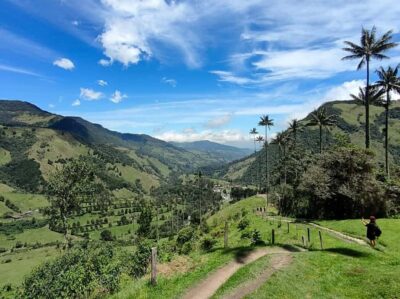
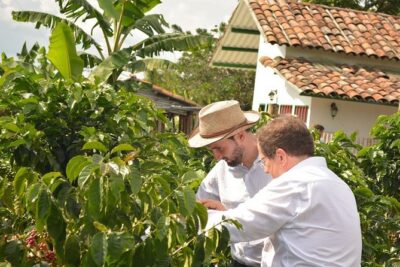
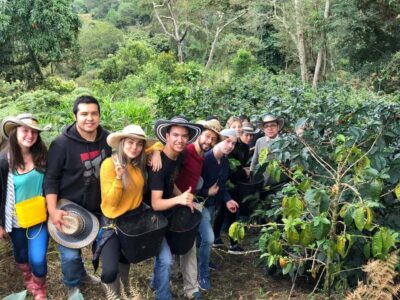
Salento: Private Cocora Valley, Salento & Coffee Farm Tour
Read our review →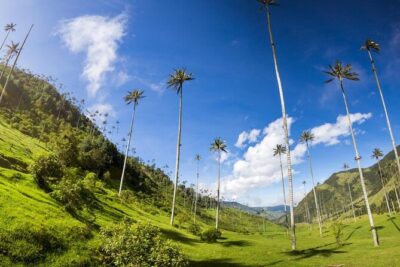
Salento, Cocora and Filandia Private Tour from Pereira or Armenia
Read our review →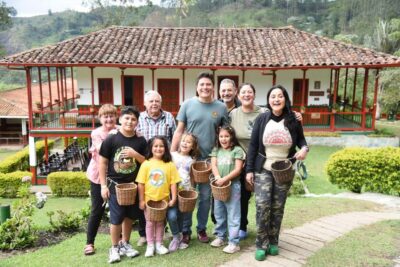
Coffee Tour at Finca El Ocaso Salento: Traditional Spanish Farm
Read our review →
Salento/Pereira: Cocora Valley & Salento Hiking Private Tour
Read our review →
Browse the lists this tour appears in