
Reviewed · MEDELLÍN TOURS
Post-conflict Shared Tour (Paul) and Violence Medellin
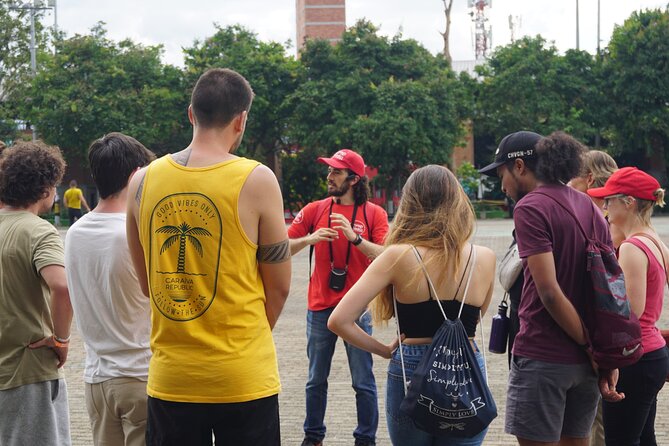
Medellín’s past is not tucked away in a museum. It is written into its parks, schools, towers, murals, and public spaces. This three-hour walking tour traces the city’s years of violence and its long, unfinished work toward peace, ending at the Memory House Museum.
I like the small group cap of 10 people, which gives you room to ask hard questions. I also like the route’s focus on ordinary city spaces rather than famous viewpoints alone. The main drawback is that some stops are visually plain, so the value depends heavily on your guide and your interest in politics and recent Colombian history.
Key points at a glance
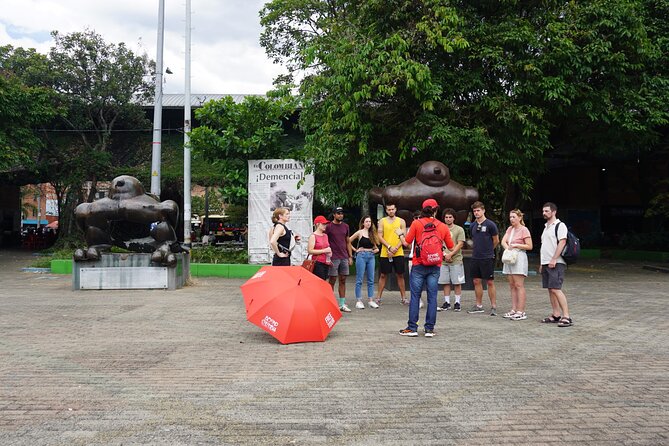
- Eight downtown stops: Walk from Parque San Antonio through San Ignacio, Boston, and Bicentenario.
- A conflict-focused route: Learn about Colombia’s national struggles and Medellín’s local story, including the continuing path toward peace.
- Strong guide element: Guides named in past bookings include Paul, Alejandro, Sebastian, Miguel, Daniel, and Manuel.
- Small shared group: The tour accepts no more than 10 participants.
- Three hours on foot: Expect a steady route with roughly 22 minutes at each stop.
- $14 suggested tip: The advance payment is the guide’s suggested gratuity, minus the Viator commission, rather than a conventional fixed tour fee.
Why this Medellín walk matters
Many city tours show you what Medellín looks like now. This one asks why the city changed, who pushed those changes forward, and what peace means in daily life. You will hear about violence, education, social programs, architecture, public art, and human rights in one connected story.
That makes the route useful early in a Medellín visit. You get names, places, and political context that can help you understand the rest of the city. The tour is not built around a single dramatic monument. Instead, it uses familiar public spaces as evidence of how a city tries to repair itself.
I would choose this walk after a general downtown tour, or near the beginning of a longer stay if Colombia’s recent past is a main reason you came. One guide, Paul, was praised for explaining the complex national and local story in detail and for leading participants to places they might not have visited alone. Guides including Miguel and Daniel were also singled out for clear, passionate explanations.
The subject calls for care. This is not a light sightseeing stroll with a few historical facts added on. You may hear about political struggle, violence, displacement, and the difficult route toward peace. Go with patience, listen closely, and leave space for questions.
A few more Medellin day trips to weigh up
- Medellin: Comuna 13 Graffiti Tour, Cable Car & Street Food
★ 4.8 · 9,046 reviews - Medellín: The Real Pablo Escobar Tour
★ 4.8 · 3,205 reviews - Medellín: Comuna 13 True Story and Street Food Tour
★ 4.9 · 1,779 reviews
Parque San Antonio begins the story
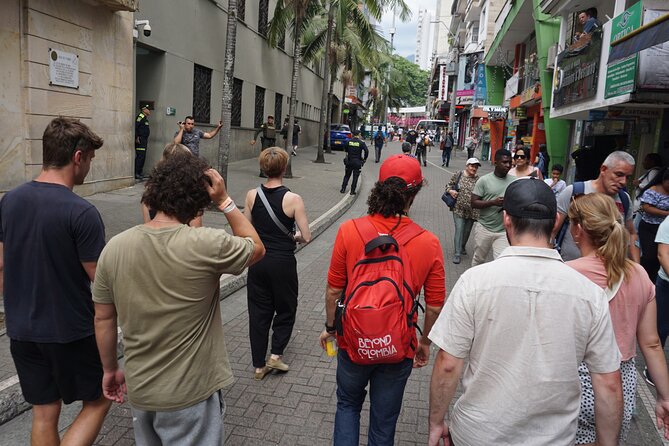
The meeting point is Parque San Antonio, at Cl. 44 #50 in La Candelaria. The walk begins at 2:00 p.m., and this first stop sets the tone by using the park’s own changes to explain Medellín’s wider transformation.
You will hear why the park matters to local residents and how its role has shifted over time. The point is not simply to look at trees, paths, or buildings. The guide uses the park as a starting point for understanding how public places reflect a city’s changing needs and fears.
This is a useful opening because you do not need prior knowledge of Colombia. The guide can begin with a recognizable Medellín location, then connect it to larger events. If you arrive early, confirm the exact meeting spot and look for the guide before the 2:00 p.m. start.
Education takes center stage at Plazuela San Ignacio
The second stop, Plazuela San Ignacio, turns from public space to education. Here the discussion focuses on the role schools and learning have played in Medellín’s efforts to build peace.
This section gives the tour a welcome change of pace. It shows that peacebuilding is not only about policing or political agreements. It can also involve access to education, stronger institutions, and places where people can meet and take part in city life.
You may find the square itself less striking than a major tourist sight. That is part of the route’s method. The meaning comes from the explanation, not from a grand visual spectacle. If you want a tour filled with famous buildings and photo stops, this may feel slow. If you want to understand how social change works, it is one of the more useful sections.
Comfama San Ignacio connects culture with community
At Comfama San Ignacio, the tour visits a cultural center devoted to art, culture, and education. The guide explains programs designed to strengthen social ties and support peaceful coexistence.
This stop helps turn broad ideas into practical examples. Instead of treating culture as decoration, the discussion presents it as a way to bring people together and create shared spaces. You will get a better sense of how a city can use public programs to address social fractures.
The visit also breaks up the walking. You are still on a route through central Medellín, but the setting gives you a chance to consider how institutions support neighborhoods and residents. Access details are not specified, so do not assume every interior area will be open or that a separate program is included. The tour is primarily a guided walk.
Same city, a completely different kind of day:
- Medellín: Comuna 13 District Tour with Cable Car Ride
★ 4.8 · 1,467 reviews - Medellin: Coffee Tour with Transport, Snacks and Tastings
★ 4.7 · 1,357 reviews - From Medellín: Paragliding Tour with GoPro Photos & Videos
★ 4.9 · 1,210 reviews - Tour Guatapé
★ 5.0 · 865 reviews
Torres de Bomboná shows the city’s built change
The Torres de Bomboná provide a look at modern architecture and urban transformation. The guide discusses the towers’ place in Medellín and asks what architecture can do in a city marked by conflict and change.
This is a good reminder that buildings are not neutral. Towers can signal growth, state investment, new housing patterns, or a changing idea of what a central city should be. The guide’s job here is to connect the physical setting to those larger questions.
Do not expect a special observation deck or a formal architectural visit. You are viewing the towers as part of the street route. The value lies in the interpretation, especially if your guide can explain how urban design affects the people who use a place.
Pasaje Cervantes turns murals into public history
Pasaje Cervantes is the route’s art-focused stop. Its colorful murals show how urban art can change a public passage, and the guide discusses the artists and messages behind the work.
This may be one of the most immediately enjoyable places to photograph. More important, it gives you a way to read public art as part of Medellín’s social story. The paintings are not presented as isolated decoration. They help open a discussion about memory, identity, and who gets to shape a public space.
The stop also keeps the tour from becoming a long political lecture. You can look closely, ask about particular images, and see how visual work carries ideas that might be difficult to express in a classroom. If you want the best pictures, keep your phone ready, but listen before rushing on.
Boston Park offers time to think
Boston Park is described as a place to rest and reflect on what you have heard. By this point, you will have moved through several different ways of discussing change: public space, education, social programs, architecture, and art.
I appreciate this pause in the schedule. Serious subjects can blur together when a guide moves from one fact to the next. A quiet moment lets you sort out what you think and prepare questions for the final part of the route.
The stop is not designed as a major attraction. It is a breathing space. You may find it especially useful if you have never studied Colombia’s political past, since the tour covers a lot in a short time.
Simona Duque Park brings human rights into view
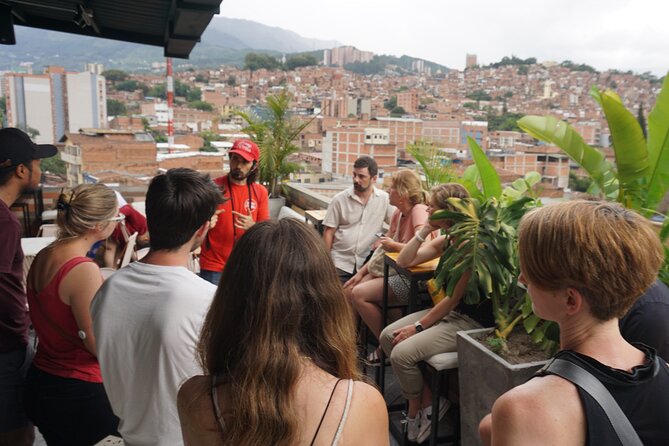
Simona Duque Park honors a woman associated with the fight for human rights. The guide tells her story and explains her legacy.
This stop gives the tour a personal focus. National conflict can feel distant when it is described only through dates, institutions, or political groups. A named individual helps make the human rights discussion more direct and easier to remember.
Admission is listed as not included, although the tour does not describe a separate paid attraction at this stop. Plan on covering your own small expenses if access or another charge applies. The important point is that this is still a public-space visit within the walking route, not a long museum session.
Bicentenario Park closes with the future in mind
The final stop is Bicentenario Park, a modern public space described as sustainable and forward-looking. The tour ends here with a discussion of Medellín’s remaining challenges and opportunities on the road to peace.
This is a fitting close because the tour does not pretend that the city’s work is finished. You will be asked to consider what has improved, what remains difficult, and how urban projects connect to a broader idea of the future.
The endpoint is the Memory House Museum at Parque Bicentenario, Cl. 51 #36-66. The museum itself is the stated end point, but entry is not included in the tour price. If you want to visit inside, check its opening arrangements separately rather than assuming the guide’s fee covers admission.
What the $14 price really means
The listed price is $14 per person, but the payment structure matters. This is a shared free-walking-tour model, where the advance amount is treated as the suggested tip for the guide’s work. The money goes to the guide after the booking platform takes its commission.
That is good value if you want three hours of informed conversation for the cost of a modest meal. The tour has no separate admission tickets included, and you must pay for snacks, lunch, and any tip or personal expense beyond the advance amount. Since the route lasts about three hours, eat beforehand or carry water.
The value depends on your priorities. You are paying for explanation, local framing, and the chance to ask questions in a small group. You are not paying for transport, a meal, a museum ticket, or a polished performance built around major landmarks.
The tour’s 4.8 rating from 69 reviews and 97 percent recommendation rate point to strong overall satisfaction, but the two serious complaints about the guide not arriving should not be ignored. They appear to be isolated incidents, yet they highlight a practical weakness of any booked walking tour: reliability matters. Keep your confirmation and contact details handy, and avoid scheduling an expensive activity immediately afterward.
The guide can make or break the afternoon
The strongest praise centers on the guides. Alejandro was credited with answering questions about the conflict. Sebastian was appreciated for a warm way of telling the story. Miguel was praised for clear English and for explaining both national and local struggles.
Daniel was described as honest and direct, with an approach that made the subject eye-opening without losing interest. Manuel was praised for making politics, history, and the continuing peace process engaging. Paul was noted for his detailed grasp of Medellín and Colombia and for taking the group to places participants might otherwise miss.
Guides can change from one departure to another, so a specific name is not guaranteed. Still, these accounts tell you what to look for: clear English, willingness to answer questions, a balanced account of difficult events, and the ability to connect each location to the larger story.
Because the group is capped at 10, you should have a fair chance to speak. Ask about terms you do not understand. This is the sort of tour where a good question can make a stop much more useful.
Walking conditions and who should book
The experience requires a strong level of physical fitness. You will walk between eight downtown locations, spend around 22 minutes at each stop, and remain on the move for close to three hours. The route is near public transportation, but transportation between stops is not included.
Wear comfortable shoes and bring water. A light snack before the 2:00 p.m. start is sensible because food is not provided. Service animals are allowed.
I would recommend this for:
- First-time visitors who want context before exploring Medellín on their own
- People interested in Colombia’s conflict, politics, human rights, and peace process
- Students, educators, and anyone who prefers social history to a checklist of monuments
- Participants who enjoy asking questions and listening to a guide’s interpretation
- Visitors comfortable with a serious subject and a steady walking pace
I would be more cautious if you want dramatic sights at every stop, cannot walk for three hours, or prefer a private tour with a fixed guide. Some places may not look especially important at first glance. You need to be willing to let the story give them meaning.
Booking and cancellation details
Confirmation is provided when you book. You can cancel for a full refund up to 24 hours before the 2:00 p.m. start time. Changes or cancellations made within 24 hours are not accepted for a refund, and the cut-off uses Medellín local time.
The experience requires a minimum number of participants. If that minimum is not reached and the tour is canceled, you will be offered another date or experience, or a full refund.
Should you book this Medellín tour?
Book it if you want to understand Medellín beyond its current image. The route gives you a practical way to connect parks, education, public programs, buildings, murals, human rights, and peacebuilding. It is especially worthwhile after a standard downtown walk, when you already know the basic streets and want to understand what shaped them.
Skip it if your main goal is scenery, shopping, food, or famous attractions. The stops are everyday urban places, and the tour succeeds through its guide rather than through ticketed sights.
For $14, a small group, and three hours of thoughtful discussion, I consider it a strong choice for curious visitors. Just allow extra time after the finish, confirm the meeting point, and remember that the guide’s skill is central to the experience.
FAQ
How long is the Post-conflict Shared Tour?
The tour lasts approximately three hours. It includes eight stops, with about 22 minutes allocated to each location.
Where does the tour start?
It starts at Parque San Antonio, Cl. 44 #50, in La Candelaria, Medellín.
Where does the tour finish?
The tour ends at the Memory House Museum beside Bicentenario Park, Cl. 51 #36-66, La Candelaria, Medellín.
What time does the tour begin?
The scheduled start time is 2:00 p.m.
How many people can join the shared tour?
The group has a maximum of 10 participants.
Is a guide included?
Yes. A certified guide is included. Guides named for past departures include Paul, Alejandro, Sebastian, Miguel, Daniel, and Manuel, though the assigned guide can vary.
Are meals or snacks included?
No. Snacks, lunch, and tips are not included. The $14 advance payment is the suggested guide tip for this free-walking-tour format, minus the booking platform’s commission.
Can I cancel for a refund?
Yes. You can cancel at least 24 hours before the local start time for a full refund. Cancellations or changes made less than 24 hours before the start are not refunded.
Just added around Medellin
- Comuna 13: Recorrido de Arte Urbano, Cultura y Resiliencia★ 5.0 · 3 reviews
- Tour to Río Claro and La Caverna del Cóndor★ 5.0 · 3 reviews
- Medellin: Tour to The Cathedral – History of Pablo Escobar and his Impact★ 5.0 · 3 reviews
- Medellín: Coffee Tour Experience at a Coffee Farm★ 4.8 · 3 reviews
- Medellin: waterfalls and naturals poolls tour★ 3.7 · 3 reviews
- Medellín: Private City Tour and Comuna 13 Tour★ 3.8 · 3 reviews
- Tour Medellín: Pablo Escobar and Commune 13★ 5.0 · 3 reviews
- Colombia: Official Pablo Escobar Meet the Family Museum Tour★ 5.0 · 3 reviews
Medellín Tours, compared.
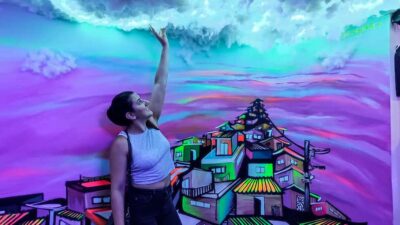
Medellin: Comuna 13 Graffiti Tour, Cable Car & Street Food
Read our review →
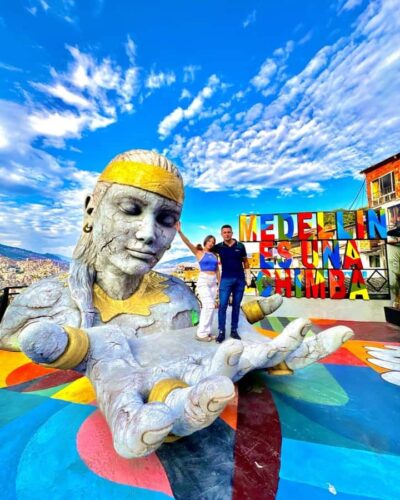
Medellín: Comuna 13 True Story and Street Food Tour
Read our review →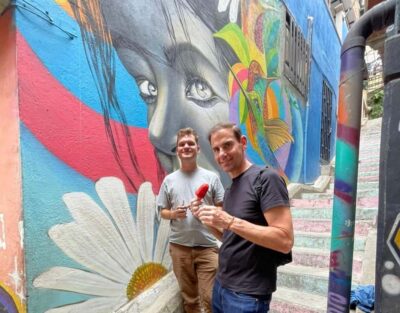
Medellín: Comuna 13 District Tour with Cable Car Ride
Read our review →
Medellin: Coffee Tour with Transport, Snacks and Tastings
Read our review →
From Medellín: Paragliding Tour with GoPro Photos & Videos
Read our review →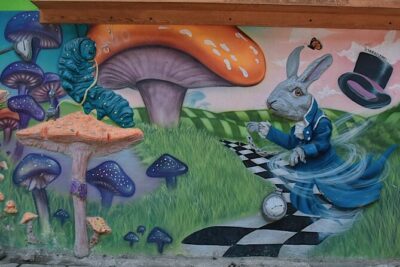
Medellín: Pablo Escobar Tour with beer included
Read our review →Browse the lists this tour appears in