

Reviewed · MEDELLÍN TOURS
Private Half-Day Tour to Comuna 13 in Medellín.
Comuna 13 is best understood from above and on foot. This private half-day tour combines a round-trip cable-car ride with the district’s electric escalators and graffiti route, giving you both the wide Medellín view and the close-up stories painted on its walls.
I like the hotel pickup and private transport, which remove the usual fuss of finding a meeting point. I also like the personal approach from guides such as Alexander and Juan Carlos, who explain the city’s past instead of leaving you to read a few signs. The main drawback is time: at three to four hours, this is a useful introduction, not a slow, all-day look at every corner of Comuna 13.
Key points at a glance
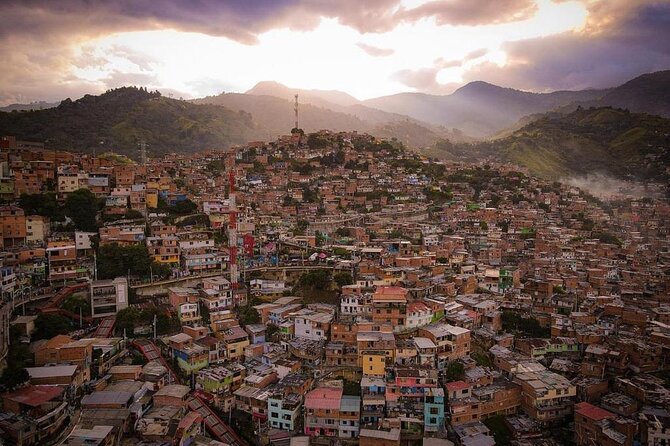
- Cable-car views: Ride above Medellín’s hillside barrios for about 45 minutes and see how the city spreads into the mountains.
- Electric escalators: Learn how a transport project changed daily access to jobs, schools, health care, and the wider Metro network.
- Graffiti route: Walk through streets, alleys, and passageways where murals tell stories of love, resilience, unity, and cultural identity.
- Private setting: Your group travels alone, with hotel pickup and drop-off included.
- Local explanation: Guides including Alexander and Juan Carlos add context about Medellín’s difficult past and social change.
- Useful for a short stay: The compact format lets you visit Comuna 13 without giving up a full day.
Why Comuna 13 is worth your half-day

Comuna 13 is not simply a stop for colorful photographs. It is a hillside district where transport, public art, and community life are tied together. The tour works because it shows those pieces in a sensible order.
You first gain a sense of Medellín from the cable car. Then you see how residents move through the steep neighborhoods. Finally, you walk the streets and read the local story through murals, music, shops, and public spaces.
The district became known for severe violence and conflict between neighborhoods. Today, it is presented as a place of change, opportunity, and creative expression. That shift is central to the visit, but a good guide needs to handle it with care. You are not just looking at art. You are seeing how public projects and community work helped alter the way this part of the city connects with the rest of Medellín.
I especially value the fact that the tour does not begin and end with the graffiti. The cable car and escalators show the practical side of the transformation. The murals then give that change a human voice.
More Comuna 13 walking tours:
- Medellin: Comuna 13 Graffiti Tour, Cable Car & Street Food
★ 4.8 · 9,046 reviews - Medellín: Comuna 13 True Story and Street Food Tour
★ 4.9 · 1,779 reviews - Medellín: Comuna 13 District Tour with Cable Car Ride
★ 4.8 · 1,467 reviews
A private pickup that saves time
The experience begins with pickup from your place in comfortable, private transportation. That matters in Medellín, particularly if you are trying to fit Comuna 13 between other plans. You do not need to work out where to meet a guide or find your own way to the district before the visit begins.
Hotel drop-off is included as well. For a half-day activity, this keeps the schedule tidy and makes the tour easier to pair with a morning or afternoon in another part of the city.
Your group is the only group taking part. That gives you a more personal setting than a large coach tour, and it lets you ask questions as the guide explains what you are seeing. The exact pace can still depend on traffic, walking speed, and how much time you spend at each point, so I would avoid booking another activity with a tight connection immediately afterward.
The tour is offered at about $65 per person. I see that as a fair price if you value private transport, a personal guide, and a compact route that covers the district’s major features. It is less attractive if you are mainly looking for a cheap ride to the escalators and plan to explore independently.
The strongest value comes from the interpretation. Comuna 13 is easy to photograph but harder to understand from a quick solo walk. A guide such as Juan Carlos can connect the cable system, public works, past conflict, and street art into one clear story.
Riding above Medellín on the cable car
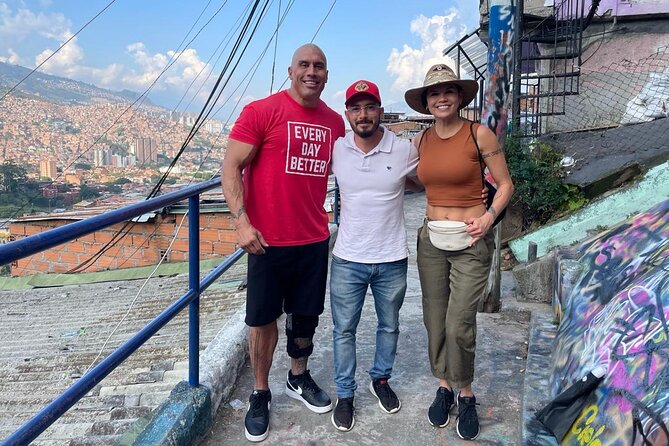
The first main stop is the cable metro station. From there, you take a round trip on the cable car, with about 45 minutes set aside for the ride and views.
This is the tour’s wide-angle moment. The cabins rise over the barrios and up the mountains, giving you a view that is very different from street level. You can see how Medellín occupies steep ground and how neighborhoods climb away from the central parts of the city.
The cable car is also more than a sightseeing ride. It is part of Medellín’s public transport system and is presented here as a symbol of progress and innovation. Medellín has Colombia’s only Metro system, and the Metro is widely regarded as one of the cleaner and more efficient systems in Latin America.
That transport context is important. The cable line helped connect hillside communities with the main city network. For residents, this can mean easier access to employment, education, and health care. For you, the ride provides a clear visual lesson in how a city can use transport to link areas that once felt cut off.
You will want to keep your camera ready, but do not spend the entire ride looking through a screen. The changing views are one of the best parts of the experience, and your guide can point out the relationship between the city center, the mountain slopes, and the neighborhoods below.
The cable-car portion takes a substantial share of a short tour, which is both a strength and a limitation. It gives you a memorable view and useful context, but it leaves less time for a long conversation or an extended walk through the district.
The electric escalators and the road-duct
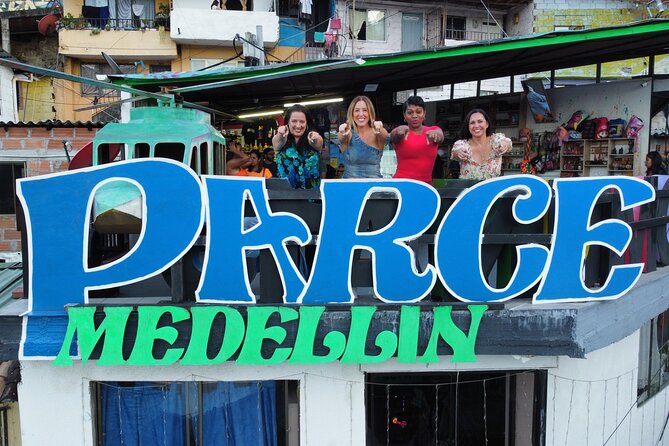
After the cable car, the route moves to the electric escalators of Comuna 13. These escalators are among the district’s most recognizable public projects.
The reason they matter is practical. Comuna 13 is built on steep slopes, and walking between upper neighborhoods and the main transport routes once required a hard climb. The escalators improve access and help connect residents with the larger city system.
As you use them, the guide explains how public infrastructure affects ordinary routines. Getting to work, school, or a medical appointment is not an abstract urban-planning issue when the route home includes a steep hillside. Here, transport can change the time and effort needed for basic parts of daily life.
The tour also includes a short walk along the road-duct connecting neighborhoods on the upper side. This route has a difficult past, since the communities it links were once involved in continuing conflict. Its present role gives it a different meaning. It now represents connection where there was once division.
The walking portion is described as short and leisurely. That makes the experience manageable for most people, and the activity notes say most participants can take part. Still, you should expect some standing and walking in an outdoor hillside district. The route is not designed as a long hike, but it is not a sit-down tour either.
The escalators can be busy, and they are part of everyday public infrastructure rather than a private attraction. You may find the stop more interesting when you watch how people use the system instead of treating it only as a photo point.
A few more Medellin day trips to weigh up
- Medellín: Half-Day Private Colonial Towns Tour
★ 4.8 · 35 reviews - Half-Day Tour of Cartagena by Air-Conditioned Vehicles
★ 4.5 · 105 reviews - Shore Excursion: Cartagena Half-Day Private Tour with transport
★ 4.5 · 10 reviews - Bogota: Gold Museum and Monserrate Private Half-Day Tour
★ 3.6 · 4 reviews
Following the Comuna 13 graffiti route
The final major stop is the graffiti route, with around 40 minutes set aside for walking through Comuna 13.
This is where the district’s public art comes into focus. You move through lively streets, narrow alleys, and passageways lined with murals. The artwork reflects themes of transformation, love, resilience, unity, and cultural diversity.
The best way to approach the murals is to let the guide provide the local frame. On your own, you can notice color and technique. With an explanation, you can connect the images to the community’s experience and to the wider change in Comuna 13.
The art is not presented as decoration pasted onto a troubled area. It is part of how local communities express identity and tell their own story. That makes the walk more meaningful than a standard street-art stop.
The route can also be lively, with plenty to look at in a compact area. You may encounter small shops, local activity, and places selling treats. One review specifically praised the chance to taste delicious local snacks while seeing the area’s art and culture. The tour information does not promise a formal food tasting, so I would treat any snack stop as a possible extra rather than a guaranteed part of the package.
Forty minutes is enough to get a strong first look, but it is not enough to study every mural or wander at your own pace. If street art is your main reason for visiting, you may wish the walk lasted longer. If you are fitting Comuna 13 into a packed Medellín itinerary, the compact timing is a benefit.
The value of a guide who explains the past
A guide makes the largest difference on this experience. The district’s story includes violence, social division, public investment, and community-led cultural change. Without explanation, the visit can become a quick sequence of cable cars, escalators, and colorful walls.
Alexander is described as patient and well informed about Medellín. Juan Carlos receives especially strong praise for caring for the group from pickup through drop-off and for explaining the history of Comuna 13. He also helped connect the large size of the district with what visitors were seeing on the ground.
That personal attention is one reason I would choose the private option over simply taking public transport to the escalators. You can ask about the city, the projects, the art, and the changes you notice. You are not required to follow the interests of a large group.
At the same time, a private tour does not guarantee that every guide will tell the story in exactly the same way. If a particular guide matters to you, you can ask whether Alexander or Juan Carlos is available, though availability is not stated as guaranteed.
The most useful approach is to listen for connections. Ask how the cable car changed access, how the escalators serve residents, and how the art relates to the district’s identity. Those questions will help turn a sightseeing route into a better understanding of Medellín.
Timing, comfort, and practical limits
The full experience lasts about three to four hours. The stated schedule gives about 45 minutes for the cable car, 40 minutes for the escalators and road-duct, and 40 minutes for the graffiti route. The remaining time allows for transportation, transitions, and the guide’s explanations.
That makes this a good choice for a first look or a limited schedule. You can see the major features without committing an entire day.
The tour is near public transportation, though private pickup and drop-off are included. Confirmation arrives at booking, and the activity is described as suitable for most people. You should still be ready for outdoor walking, standing, and moving through public areas.
Good weather is required. If poor weather forces cancellation, you are offered another date or a full refund. You can cancel for a full refund if you do so at least 24 hours before the start time. Cancellations or changes made inside that window are not accepted and are not refunded.
Because the tour takes place in a working neighborhood rather than a closed attraction, conditions can vary. The route may feel crowded or active, and the pace may not be entirely yours. That is part of seeing Comuna 13 as a living community, but it is worth knowing if you prefer quiet, carefully controlled sightseeing.
Who will get the most from this tour
I would recommend this experience to first-time visitors to Medellín who want an introduction to Comuna 13 without spending a full day. It also suits anyone who prefers private transportation and wants a guide to explain the social meaning behind the public works and murals.
It is a particularly good fit if you are curious about urban change. The cable car and escalators let you see how infrastructure can affect access, while the street art shows how residents express pride and memory.
Families and mixed-age groups may appreciate the short format and private setting. The activity notes say most people can participate, and the walking is described as leisurely. Even so, anyone who finds stairs, standing, or hillside streets difficult should consider their own comfort before booking.
You may want a longer or different experience if you are primarily interested in art technique, extensive photography, shopping, or a very slow neighborhood walk. This tour offers an overview with context. It does not promise a detailed art workshop, a full food tour, or a day-long exploration.
Should you book the Comuna 13 half-day tour?
Book it if you want a clear introduction to Comuna 13, especially with hotel pickup, private transport, and a guide who can explain the district’s past and present. The cable-car views, electric escalators, and graffiti route form a well-balanced three-part visit.
The $65 price makes the most sense when you are traveling with a small private group and value convenience. I would be especially inclined to choose it for a short stay in Medellín, since the route covers the key sights in only three to four hours.
Think twice if you want complete independence or a long, unhurried street-art walk. For everyone else, this is a practical way to see Comuna 13 as more than a photogenic stop. You get the views, the public projects, the art, and the human story connecting them.
FAQ
How long does the Comuna 13 tour last?
The tour lasts approximately three to four hours.
How much does the private tour cost?
The listed price is $65 per person.
Is hotel pickup included?
Yes. Pickup and drop-off from your place are included, with comfortable private transportation.
Is this a private activity?
Yes. Only your group participates in the tour.
Does the tour include a cable-car ride?
Yes. The tour includes a round-trip cable-car ride lasting about 45 minutes.
Does the tour visit the electric escalators?
Yes. You visit the electric escalators of Comuna 13 and walk along the road-duct connecting neighborhoods on the upper side.
Will I see the Comuna 13 graffiti route?
Yes. The tour includes about 40 minutes on the graffiti route through streets, alleys, and passageways.
Can most people participate?
The activity information says most participants can take part. You should still expect some walking and standing during the outdoor portions.
What is the cancellation policy?
You can cancel at least 24 hours before the start time for a full refund. Changes or cancellations made less than 24 hours before the start time are not accepted or refunded. If poor weather causes the operator to cancel, you can choose another date or receive a full refund.
Just added around Medellin
- Comuna 13: Recorrido de Arte Urbano, Cultura y Resiliencia★ 5.0 · 3 reviews
- Tour to Río Claro and La Caverna del Cóndor★ 5.0 · 3 reviews
- Medellin: Tour to The Cathedral – History of Pablo Escobar and his Impact★ 5.0 · 3 reviews
- Medellin: waterfalls and naturals poolls tour★ 3.7 · 3 reviews
- Medellín: Coffee Tour Experience at a Coffee Farm★ 4.8 · 3 reviews
- Medellín: Private City Tour and Comuna 13 Tour★ 3.8 · 3 reviews
- Tour Medellín: Pablo Escobar and Commune 13★ 5.0 · 3 reviews
- Colombia: Official Pablo Escobar Meet the Family Museum Tour★ 5.0 · 3 reviews
Medellín Tours, compared.
Medellin: Comuna 13 Graffiti Tour, Cable Car & Street Food
Read our review →
Medellín: Comuna 13 True Story and Street Food Tour
Read our review →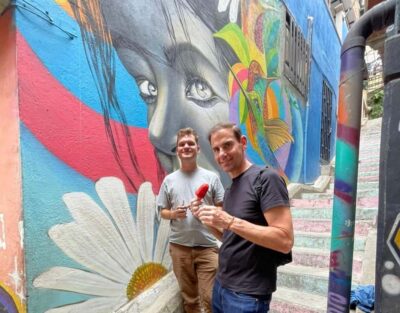
Medellín: Comuna 13 District Tour with Cable Car Ride
Read our review →
Medellin: Coffee Tour with Transport, Snacks and Tastings
Read our review →
From Medellín: Paragliding Tour with GoPro Photos & Videos
Read our review →
Medellín: Pablo Escobar Tour with beer included
Read our review →Browse the lists this tour appears in