
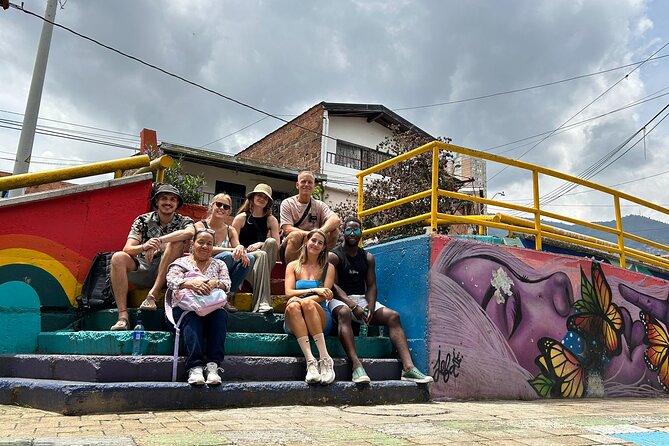
Reviewed · MEDELLÍN TOURS
Comuna 4 Walking Tour Medellin
Moravia was built on Medellín’s garbage, then reshaped by the people who lived there. This Comuna 4 walking tour takes you past the polished version of Medellín’s transformation and into the harder story of relocation, poverty, public services, and community action.
I like the small group of no more than eight, which gives the local ambassador room to speak rather than turning the walk into a moving lecture hall. I also like the mix of serious history and ordinary life: football graffiti, tiny empanadas, a neighborhood field, and the Moravia Cultural Center.
The main consideration is that this is not a glossy sightseeing stroll. Some subjects are painful, and the walk focuses on social problems as much as progress. If you want only colorful streets and easy photo stops, Comuna 4 may feel demanding.
Key points of the Moravia walk
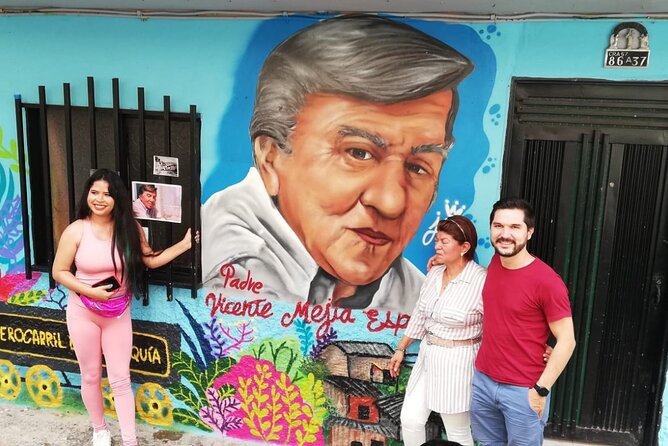
- Moravia’s garbage mound: Learn how an illegal settlement grew beside a landfill and why its past still shapes the neighborhood.
- Firsthand local voices: Guides such as Toto and Gladys connect public policy to lived experience.
- The other side of Medellín’s transformation: Discuss relocation plans, resistance, health care, education, and social class.
- Everyday culture: See football murals, visit a neighborhood field, and taste a small street empanada.
- Community-built spaces: The Moravia Cultural Center shows what residents can create together.
- Practical format: The tour lasts about three and a half hours, costs $35 per person, and begins and ends near Estación Metro Caribe.
Why Comuna 4 tells a different Medellín story
Comuna 13 is the Medellín neighborhood most often placed on a visitor’s schedule. It has public escalators, striking murals, music, and a clear story of change. Comuna 4 offers a less polished and more complicated view.
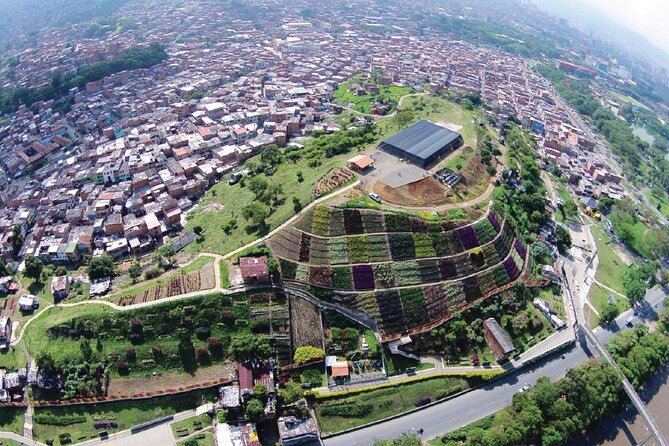
The tour centers on Moravia, a neighborhood that began in the 1960s as an illegal settlement. Families arrived with little formal support and built lives in difficult conditions. The old garbage site is not just a dramatic backdrop. It explains why housing, health, relocation, and environmental concerns remain tied together here.
I value this framing because it keeps Medellín’s progress from becoming a simple before-and-after story. The city has changed, but not every family has benefited in the same way. You hear about government plans, local resistance, and the practical question of what happens when a family is moved away from work, schools, relatives, and familiar streets.
That balance is the tour’s purpose. You are not asked to view Moravia as a problem to be photographed. You are asked to see it as a community with pressure, pride, disagreements, and determined local leadership.
More Walking Tours in Medellin
- Medellin Historic Walking Tour
★ 4.9 · 86 reviews - 2-Hours Street Art Walking Tour in Medellin Comuna 13
★ 5.0 · 54 reviews - Walking tour downtown Medellín
★ 5.0 · 39 reviews
Starting at Estación Metro Caribe
The meeting point is at Estación Metro Caribe, at Avenida Regional and Calle 78 in the Castilla area. The guide and community ambassador meet you there, then begin with the origins of Barrio Moravia and one version of Medellín’s transformation.
The opening discussion lasts about 30 minutes. That may sound long before the walking begins, but it gives the rest of the route a useful frame. Without this background, the mound, streets, public buildings, and sports spaces could seem disconnected. With it, each stop becomes part of a larger question: how does a city rebuild a neighborhood without erasing the people who made it home?
The exact meeting details matter. The activity does not include hotel pickup or drop-off, and it ends back at the meeting point. Since the tour is near public transportation, arriving by metro is the practical choice. Allow enough time to find the station meeting area without rushing.
Morro de Moravia and the story of resistance
At Morro de Moravia, you visit La Resistencia de Moravia and spend about 45 minutes learning about the community’s response to relocation plans. This is the emotional center of the walk.
The important point is not simply that families once lived beside a garbage mound. It is that many families built homes, relationships, work routines, and community institutions there. Relocation may sound sensible on paper, yet moving people can break the networks that help them survive. The tour gives space to that tension.
A local voice makes a major difference here. Gladys, one of Moravia’s early residents, has shared her own experience on the walk. Her presence turns an abstract account of urban policy into a personal story about endurance and change. The guides Toto and Gladys have been praised for combining warmth with difficult facts, and that partnership is central to the experience.
You should come ready to listen. This section may challenge easy ideas about progress. It also helps explain why the neighborhood’s resistance is not simply opposition to change. For many residents, it is a demand to be included in decisions about their own future.
Health care, street vendors, and daily survival
The stop at Centro de Salud Moravia El Bosque provides a quieter place to sit and talk for around 30 minutes. Here, the conversation shifts from housing to Colombia’s health care and welfare system.
The guide explains why street vending is so common and why a welfare system can exist while large numbers of people still lack access to it. This is valuable context because a visitor may otherwise see vendors only as part of the street scene. The discussion connects informal work to the gaps between official services and everyday needs.
I like this part because it slows the pace. A three-and-a-half-hour walk can become a blur of buildings and commentary, but sitting down gives you time to absorb the social issues. It also makes clear that poverty is not just a matter of personal choice. Access to health care, stable work, education, and housing all affect one another.
The subject is serious, and the tour does not pretend to solve it in a few minutes. Instead, you leave with a better way to interpret what you see in Moravia and elsewhere in Colombia.
Same city, a completely different kind of day:
- Medellin: Comuna 13 Graffiti Tour, Cable Car & Street Food
★ 4.8 · 9,046 reviews - Medellín: The Real Pablo Escobar Tour
★ 4.8 · 3,205 reviews - Medellín: Comuna 13 True Story and Street Food Tour
★ 4.9 · 1,779 reviews - Medellín: Comuna 13 District Tour with Cable Car Ride
★ 4.8 · 1,467 reviews
Football graffiti and the meaning of the game
At Cigarrería La Plaquita, the tour pauses for about 10 minutes to look at graffiti dedicated to Medellín’s major football clubs. This is a short stop, but it adds much-needed local color after the heavier discussion of social policy.
Football in Colombia is more than a match on a weekend. Club loyalties can express neighborhood identity, family ties, local pride, and long-running rivalries. The murals give the guide a way to explain those cultural meanings through something visible and familiar.
This is also a good reminder that Moravia is not defined only by hardship. People argue about football, decorate their streets, meet friends, and build ordinary routines. A useful neighborhood tour needs these details. Otherwise, the place becomes a case study instead of a home.
Education and Colombia’s strata system
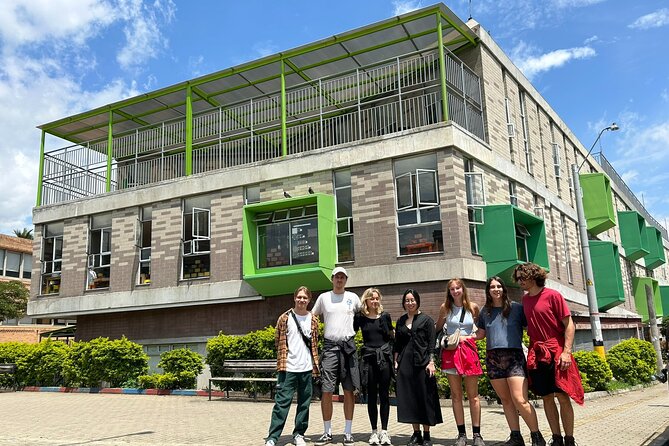
The route then pauses in the shade near Fundación Oasis Urbano to discuss education and Colombia’s strata system. The supplied schedule does not assign a precise duration to this stop, but it is part of the main conversation through the neighborhood.
The strata system classifies properties for purposes linked to public services and social policy. It can be confusing if you first encounter it through a rental listing or a utility bill, so hearing it explained in the setting of Moravia makes the idea easier to connect to real life.
Education receives similar treatment. Rather than presenting schools as isolated buildings, the guide links education to income, opportunity, and where families live. This helps explain why neighborhood improvement involves more than new construction. A new facility matters, but so do access, affordability, and the ability of families to remain connected to their community.
The shady seating area is a practical touch. You are on foot for much of the experience, and a place to stop, listen, and ask questions keeps the afternoon from becoming physically tiring.
A tiny empanada with a local purpose
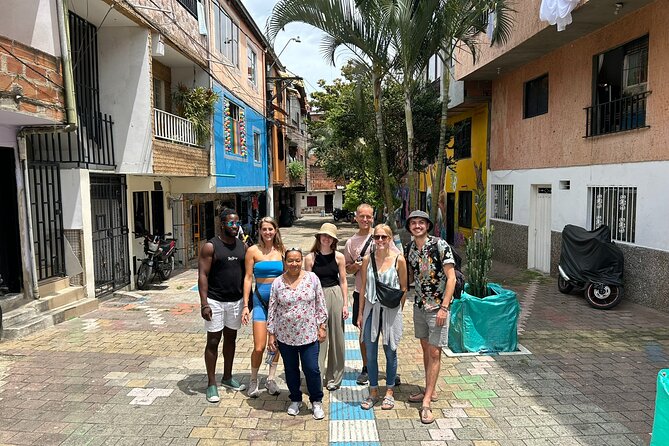
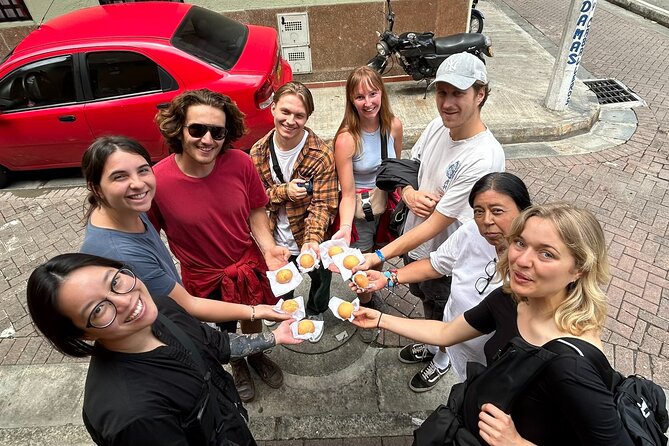
Near E.I. Fe y Alegría, Luis Amigó, you stop for one of the city’s smallest street empanadas. The snack is included, and the pause lasts roughly 10 minutes.
Do not expect a full meal. Think of it as a taste of everyday Colombian street food and a chance to enjoy something simple during a serious walking tour. These short food stops often help a group relax and make the neighborhood feel less like a string of formal educational stations.
The snack also fits the tone of the tour. You are not being taken to a restaurant designed for an international audience. You are eating a modest local item while moving through an active neighborhood. If you have dietary restrictions, ask the operator before booking, since the available information does not specify ingredients or alternatives.
The Moravian football field and a local story
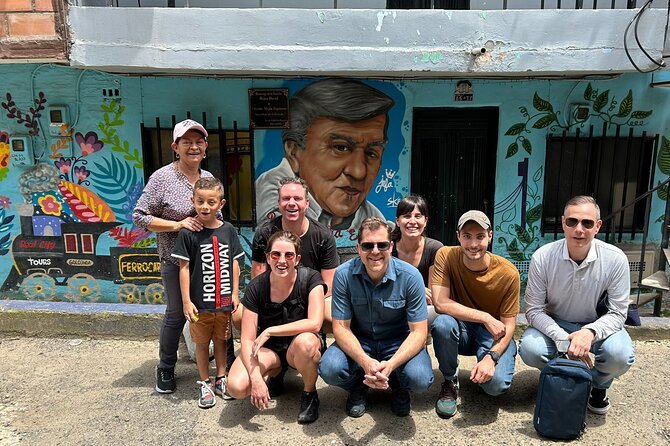
At the synthetic football pitch, you spend about 10 minutes meeting or hearing from a local ambassador and learning about her resilience, resistance, and hope. The field is a useful stop because it shows community life in action.
Sports spaces give young people somewhere to gather, but the larger point is ownership. A neighborhood is not only its housing and public services. It also needs places where people meet, play, organize, and feel that the area belongs to them.
This is another moment when the local ambassador matters. A professional guide can explain dates and policies, but a resident can show what those policies mean in daily life. The combination of Toto’s narration and a community member’s experience has made the tour especially personal for many participants.
Moravia Cultural Center and community work
The final major stop is the Moravia Cultural Center, where you spend around 30 minutes learning how the community helped build this infrastructure. This is one of the clearest examples of local organization on the route.
The center represents a different kind of transformation. It is not simply a government project arriving from outside. The story focuses on residents helping create a place for culture and shared activity. That matters because it shifts the focus from what Moravia lacks to what its people have already organized.
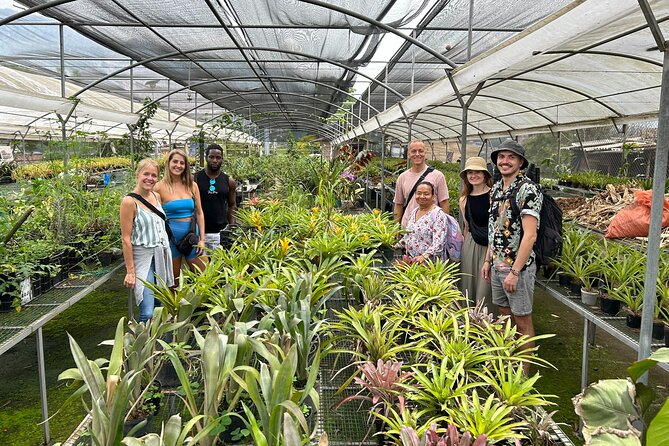
You may also hear about improvements such as a garden run by women and Casa de Todos. These examples show practical, community-led responses to local needs. They do not erase problems such as overcrowding, but they show how residents create hope without waiting for every condition to be perfect.
The tour ends back at the original meeting point. That makes it easier to continue by metro or head to your next Medellín activity.
What the $35 price delivers
At $35 per person, this is not the cheapest way to spend three and a half hours in Medellín. The value comes from access, interpretation, and the local partnership rather than from entry tickets. All listed stops are free, so you are paying for the bilingual professional guide, the community leader, the organization of the route, and the included snack.
For a small group capped at eight, the price is reasonable if you want social context rather than a quick neighborhood walk. You get time to ask questions, hear personal accounts, sit for discussion, and visit places that would mean little without explanation.
The tour is also likely to appeal to people comparing it with Comuna 13. Comuna 4 does not offer the same concentration of public art or dramatic infrastructure. Instead, it gives you a closer look at housing pressure, informal work, public services, education, and community resistance.
I would not choose this tour for a quick photo opportunity. I would choose it if you want your money to support a structured encounter with local voices and if you are willing to think about uncomfortable subjects.
Who should book this walking tour
This experience suits you if you enjoy walking tours that explain how a city works. It is a good fit for visitors interested in urban change, social policy, Colombian history, football culture, and community organizing.
It also works well for couples and small groups who prefer conversation to crowd control. The maximum group size of eight is a real advantage. You can hear the guide more easily and have a better chance to ask about details that matter to you.
Families may participate because most people can take part, but the content is more suited to older children and adults who can engage with discussions about poverty, relocation, and inequality. Service animals are allowed.
You should think twice if you want a relaxed sightseeing loop with little walking or if you dislike emotionally serious subject matter. The route includes time on foot and asks for attention. This is not a tour that tries to make every moment light.
Practical tips before you go
Wear comfortable shoes and plan for a three-and-a-half-hour activity. The route includes several walking sections, though it also includes places to sit in the shade.
Use public transportation to reach the meeting point if that works with your plans. Hotel pickup and drop-off are not included, and the activity returns to its starting point.
Book ahead if your schedule is tight. The tour is booked an average of 19 days in advance, which suggests that popular dates can fill before your arrival. Confirmation is provided at booking.
The cancellation terms are straightforward: you can receive a full refund if you cancel at least 24 hours before the local start time. Cancellations or changes made inside that window are not accepted for a refund.
Should you book Comuna 4?
Book this tour if you want to understand Medellín beyond its success story. You will hear about Moravia’s origins, the difficult choices around relocation, Colombia’s welfare system, education, social class, football, and the community spaces residents have built.
The strongest reason to go is the human element. Toto provides a clear route through complex subjects, while local voices such as Gladys connect those subjects to real lives. The experience has been especially praised for its passion, warmth, and firsthand storytelling.
Skip it if your priority is colorful art, scenic viewpoints, or a light introduction to Medellín. Choose Comuna 13 for that kind of visit. Choose Comuna 4 when you want the city’s transformation explained from the street level, including the parts that are harder to package neatly.
FAQ
Where does the Comuna 4 Walking Tour begin?
The tour begins near Estación Metro Caribe at Avenida Regional and Calle 78 in Medellín’s Castilla area.
Where does the tour end?
The activity ends back at the meeting point.
How long does the tour last?
The walking tour lasts approximately 3 hours and 30 minutes.
How much does the tour cost?
The listed price is $35 per person.
How large is the group?
The tour has a maximum of eight participants.
Who leads the tour?
A professional bilingual guide leads the experience with a local community leader or ambassador. Guides named in the experience include Toto and local resident Gladys.
Is food included?
Yes. A street empanada snack is included.
Is hotel pickup included?
No. Hotel pickup and drop-off are not included.
Can I cancel for a full refund?
Yes. You can cancel at least 24 hours before the local start time for a full refund. Cancellations or changes made less than 24 hours before the start are not refunded.
Just added around Medellin
- Comuna 13: Recorrido de Arte Urbano, Cultura y Resiliencia★ 5.0 · 3 reviews
- Tour to Río Claro and La Caverna del Cóndor★ 5.0 · 3 reviews
- Medellin: Tour to The Cathedral – History of Pablo Escobar and his Impact★ 5.0 · 3 reviews
- Medellín: Coffee Tour Experience at a Coffee Farm★ 4.8 · 3 reviews
- Medellin: waterfalls and naturals poolls tour★ 3.7 · 3 reviews
- Medellín: Private City Tour and Comuna 13 Tour★ 3.8 · 3 reviews
- Tour Medellín: Pablo Escobar and Commune 13★ 5.0 · 3 reviews
- Colombia: Official Pablo Escobar Meet the Family Museum Tour★ 5.0 · 3 reviews
Medellín Tours, compared.
Medellin: Comuna 13 Graffiti Tour, Cable Car & Street Food
Read our review →
Medellín: Comuna 13 True Story and Street Food Tour
Read our review →
Medellín: Comuna 13 District Tour with Cable Car Ride
Read our review →
Medellin: Coffee Tour with Transport, Snacks and Tastings
Read our review →
From Medellín: Paragliding Tour with GoPro Photos & Videos
Read our review →
Medellín: Pablo Escobar Tour with beer included
Read our review →Browse the lists this tour appears in