
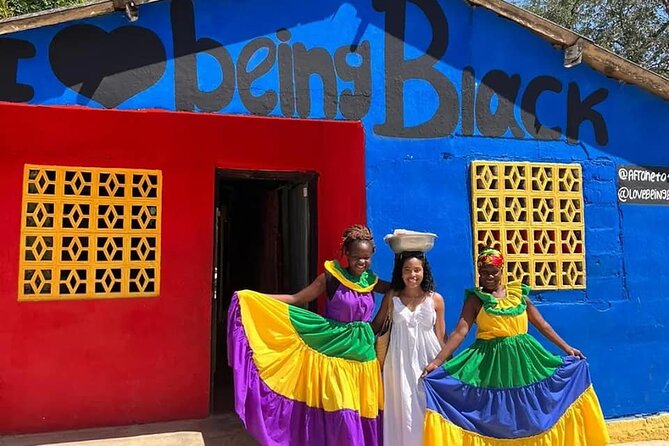
Reviewed · CARTAGENA TOURS
Visit Palenque with natives : history, culture and ancestral legacy
San Basilio de Palenque is not a museum piece. It is a living community with its own language, music, food, medicine, and memory of resistance. This private day trip from Cartagena puts you in the middle of that story, guided by people who call Palenque home.
I especially like the native-led storytelling and the way the visit asks you to take part, not just watch. You may play traditional instruments, learn a few Palenque words, try basic boxing moves, and meet people connected to the community’s music, medicine, and daily life. The main drawback is the heat: you will walk a lot, and most stops have no air-conditioning.
Key points to know before you book
- Palenque’s freedom story: Learn about Benkos Bioho, the maroon leader linked to the community’s founding and resistance to colonial rule.
- Hands-on cultural stops: Music, boxing, medicinal plants, murals, language, religion, and food all form part of the visit.
- Native guides: Guides including Neudis, Romeo, Royman, Leo, and Victor have led different departures, with translators such as Gabriel and Liliana available on some tours.
- A private format: Only your group participates, which gives you more room to ask questions and interact with local hosts.
- A filling local lunch: The meal may include fish in coconut sauce, fried fish, chicken, steak, pork, or a vegetarian choice.
- Prepare for serious heat: Wear sneakers, carry sun protection, and use the bottled water supplied during the tour.
Why Palenque is worth a day from Cartagena
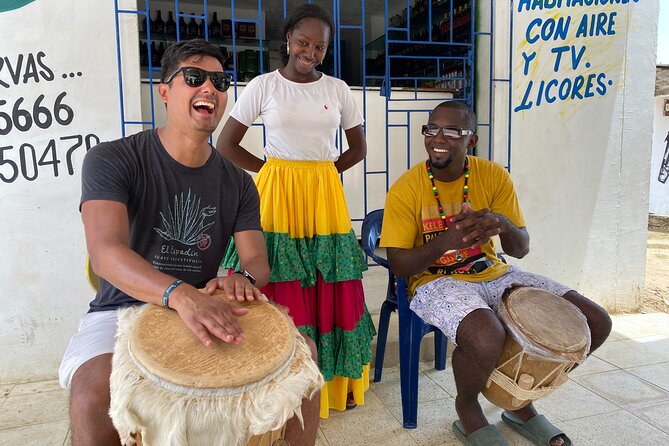
Cartagena tells much of Colombia’s colonial story through forts, churches, and grand plazas. San Basilio de Palenque tells a different story, one shaped by escape, self-rule, African memory, and the long work of preserving a community’s identity.
The town is widely described as the first free African town in the Americas. Its story centers on Benkos Bioho, an enslaved man who arrived in Cartagena near the end of the 16th century and organized resistance communities called palenques. The tour presents him not only as a historical figure, but as a symbol of freedom for Palenqueros.
That context matters. You are not simply looking at old buildings or listening to a guide recite dates. You are learning how resistance shaped language, customs, religion, music, and local pride. The most rewarding parts come when those subjects connect to real people and places in town.
The price is $102 per person. That is not a bargain-basement Cartagena outing, but it covers an air-conditioned vehicle, bottled water, lunch, a private group, and a full half-day with several local hosts. I see the value most clearly in the native-led format. A cheaper sightseeing trip might show you Palenque, but this one is built around personal explanation and participation.
A few more Cartagena day trips to weigh up
- Cartagena: Historic Center and Getsemaní Shared Walking Tour
★ 4.9 · 2,716 reviews - Mangroves, cultural fishing, black heritage town and lunch
★ 4.5 · 29 reviews - Cartagena Instagrammable History
★ 4.5 · 29 reviews
Arriving at the Tourist Parador
The first stop is the Tourist Parador, where the group receives an introduction to San Basilio de Palenque. This gives you a useful orientation before the walking portion begins.
Expect a general explanation of the community and what you will see during the day. It is a simple start, but an important one. Without it, later stops such as the medicinal patio or religiousness discussion could feel disconnected.
The opening also gives you a chance to meet your guide and, when provided, your translator. Guides named Neudis, Romeo, Royman, Leo, and Victor have led different departures. Gabriel and Liliana have also worked as translators on some visits. Since the exact team can vary, book this for the native perspective rather than for one specific guide unless the operator confirms a name.
Benkos Bioho and the road to freedom
The monument to Benkos Bioho is one of the most important stops. Here you learn about the leader associated with the founding of Palenque and the organization of resistance against colonial authorities.
The explanation includes several versions of his identity and reputation. For Palenqueros, he is a founding hero and guide to liberty. In legend, he is known as the king of the arquebuco. Colonial records used the name Domingo Bioho. These different names show how historical memory changes depending on who is telling the story.
This is a short stop, listed at about 30 minutes, but it gives the rest of the tour a clear purpose. Palenque’s music, language, homes, and food are not isolated curiosities. They are connected to a community that protected its independence and preserved its identity over generations.
Inside the Simankongo House Museum
The Simankongo House Museum represents a traditional home and offers a look at ancestral objects and household life. This is one of the more useful stops for understanding everyday Palenque.
Do not expect a large formal museum. The appeal lies in the explanation of how a traditional house functioned and what its objects reveal about the people who used them. The stop helps turn broad talk about heritage into something you can see at close range.
I like this part because it slows the day down. After hearing about rebellion and political resistance, you get a look at ordinary life: the setting where families lived, worked, and passed on customs. The stop lasts about 30 minutes.
Same city, a completely different kind of day:
- Cartagena: Rosario Islands Catamaran with Lunch and Snorkel
★ 4.5 · 2,479 reviews - Full-Day Rosario Islands Including Barú, Bocachica & Playa Blanca
★ 4.0 · 1,729 reviews - Cartagena de Indias: 2-Hour Sunset Cruise
★ 4.7 · 1,105 reviews - 2-hour tour in Cartagena Sunset View in party boat
★ 4.6 · 899 reviews
Ancestral medicine in the medicinal patio
At the medicinal patio, traditional doctors explain the role of ancestral medicine and identify plants used to treat ailments. This is a good place to ask questions, especially if you are interested in the link between local ecology and family knowledge.
The point is not to treat this as a substitute for modern medical care. Instead, listen to it as a record of community practice and oral teaching. The stop shows how knowledge can be passed through people, plants, and routine rather than through a formal institution.
This part can be especially meaningful because it gives you direct contact with a local practitioner. It also adds variety to the day. You are not hearing only about political history or performance. You are learning about care, belief, and the practical skills that helped a community look after itself.
Making music with Kombilesa Mi
Kombilesa Mi is described as a cultural and musical movement from Palenque. Here, you have the chance to interpret traditional music and instruments with members of the group.
This is one of the most interactive stops. You might be invited to keep a rhythm, handle an instrument, or join in a simple musical activity. The point is participation, not polished stage entertainment.
Music is a key part of Palenque’s public identity, so this stop works best when you approach it with curiosity and respect. You do not need musical training. You only need to be willing to listen, follow instructions, and make a little noise.
One important distinction: a traditional Batata music and dance presentation is not included in the tour price. The Kombilesa Mi stop is included, but the separate Batata presentation is listed as an extra.
Murals that explain identity
The cultural route of murals takes you through Palenque’s streets, where you learn the meaning behind identity murals and have time to take photographs.
This is an easy part of the day to underestimate. The paintings are not just colorful backdrops. They provide another way to discuss community figures, African heritage, local symbols, and the people who shape Palenque’s sense of self.
You will want photographs here, but try to hear the explanation first. The meaning attached to a mural is often more useful than the image alone. The 30-minute route also offers a change from indoor or small-group stops, though the open streets add to your exposure to the sun.
Religion, imposed and preserved
The religiousness stop explores the imposition of Catholicism and the form of religiosity that Palenque has maintained. This subject adds needed depth because it shows how outside institutions and local belief can exist in tension.
The conversation is not limited to a simple Catholic versus African tradition explanation. Instead, the guide discusses how religion was imposed and how Palenque’s own practices continued. Listen for the difference between official religion and lived belief.
At about 30 minutes, this is another compact stop. It may be more discussion-based than visual, so it rewards anyone who wants to understand how cultural identity survives pressure to conform.
Boxing and the Kid Pambelé monument
The Kid Pambelé monument honors Antonio Cervantes Reyes, the Colombian boxing champion known as Kid Pambelé. The stop explains his importance in Colombian boxing and his contribution to the development of Palenque.
You finish with a small boxing class. This is a playful way to connect a national sports figure with local pride. You will not be training for a professional bout, but the activity helps break up the more serious historical sections.
The stop also gives you a look at how an individual achievement can reflect back on a whole community. Kid Pambelé is not presented only as an athlete. He is part of Palenque’s public story and its hopes for progress.
Wear comfortable shoes for this and the walking route. The day includes enough movement that sandals or stiff footwear will make the heat feel worse.
Lunch from the fire pit to the bijao
The tour ends with lunch, described as fish in coconut sauce, from the stove to the bijao. Depending on your choice, the meal can also include fried fish, fried chicken, steak, stewed pork, or a vegetarian dish.
This is more than a final plate of food. It gives you a direct taste of Palenque’s home cooking after you have spent the day learning where local customs come from. Fish in coconut sauce is the signature choice listed, but you can select another protein or a vegetarian option.
Several details make lunch useful for planning. It is included in the $102 price, and bottled water is also supplied. The meal lasts about an hour, so you are not being rushed through it. If you have dietary needs, make your choice clear when booking or before the meal, since the listed options are specific.
Food was a repeated highlight for me in assessing the tour’s value. A meal prepared in the community gives the day a satisfying finish and supports local participation more directly than a standard restaurant stop.
Heat, walking, transport, and pace
The trip lasts about six hours and 30 minutes. An air-conditioned vehicle handles the transport from Cartagena and between parts of the visit, but you should not expect air-conditioning inside the community buildings.
The walking sections are manageable for most people, and the activity information says most people can participate. Still, the weather is a real factor. The town can be extremely hot, and you may spend long stretches outdoors. Bring a hat, sunscreen, an umbrella, a small fan, or a water spritzer if those help you stay comfortable.
Wear sneakers or other walking shoes. Carry extra water even though bottled water is included. One group needed additional help when someone felt unwell, and the guides obtained a sports drink for that person, but it is better to prepare before you arrive.
The private format is useful here. Only your group takes part, so you can ask for a slower pace, request clarification, or tell the guide if someone needs a break. That does not remove the heat, but it makes the day more flexible than a large bus tour.
Language and the role of translation
Palenque has its own language, known as Palenquero, and learning a few words is one of the appealing parts of the visit. Your guide can explain how language connects to African roots and local identity.
Some departures include an English translator. Gabriel has been praised for clear interpretation, and Liliana has also served in that role. The listing does not promise a specific translator for every departure, so confirm language arrangements if you do not speak Spanish.
A translator can make a major difference during the personal sections, especially at the medicinal patio, traditional house, and religiousness stop. Ask questions through the translation rather than relying only on the guide’s general talk. The more specific your questions, the more you will gain from the native-led format.
Who will get the most from this tour
I would choose this trip if you want a cultural day outside Cartagena and prefer conversation and participation over a quick photo stop. It suits solo visitors, couples, families, and private groups who want a fuller look at Afro-Colombian identity.
It is particularly fitting if you care about:
- Local history told by people from the community
- African heritage in the Americas
- Music, language, and food
- Hands-on activities
- Community-based tourism
- A private setting with time for questions
It is less suitable if you want a cool, quiet sightseeing day or a formal museum tour. The schedule is active, the heat is strong, and some stops depend on listening and interaction. You should also know that the separate Batata music and dance presentation is not included.
Booking value and cancellation details
At $102 per person, the tour is best judged as a private cultural visit rather than a simple transfer to Palenque. You receive transport in an air-conditioned vehicle, lunch, bottled water, local interpretation, and access to several community-based stops.
The value is strongest for small groups that would otherwise need to arrange transport, meals, and local contacts separately. If you are traveling alone, the price is higher in personal terms, but the private format and wide range of stops may still justify it if Palenque is a priority.
You can cancel up to 24 hours before the start for a full refund. Changes made within 24 hours are not accepted, and late cancellations are not refunded. The activity needs good weather and a minimum number of participants, so a weather or minimum-group cancellation may lead to another date, another activity, or a full refund.
Should you book the Palenque native experience?
Book it if you want to understand San Basilio de Palenque through its people, not just pass through for photographs. The strongest parts are the native guides, the personal stories, the music session, the medicinal patio, the boxing activity, and the lunch served at the end.
Prepare for heat, walking, and some uneven comfort. Bring water, sun protection, and sturdy shoes. If you want a polished stage show, add the Batata presentation if available. If you want a meaningful half-day that connects freedom, African heritage, language, food, and daily life, this is one of the more worthwhile cultural trips you can make from Cartagena.
FAQ
Where does the tour take place?
The tour takes place in San Basilio de Palenque, reached from Cartagena, Colombia.
How long does the experience last?
The tour lasts approximately six hours and 30 minutes.
How much does the tour cost?
The listed price is $102 per person.
Is the tour private?
Yes. Only your group participates in this private tour or activity.
What transportation is included?
Transportation is provided in an air-conditioned vehicle.
Is lunch included?
Yes. Lunch is included and may feature fish in coconut sauce, fried fish, fried chicken, steak, stewed pork, or a vegetarian option.
Is bottled water included?
Yes. Bottled water is included.
What places and activities are included?
The tour includes the Tourist Parador, Benkos Bioho monument, Simankongo House Museum, medicinal patio, Kombilesa Mi music stop, cultural mural route, religiousness discussion, Kid Pambelé monument and boxing class, and lunch.
Is the Batata music and dance presentation included?
No. The traditional Batata music and dance presentation is not included.
Can I cancel for a full refund?
Yes. You can cancel at least 24 hours before the local start time for a full refund. Poor weather or failure to reach the minimum number of participants may also result in another date or a full refund.
Just added around Cartagena
- Cartagena: Ecoplan on Barú, Aviary and Oceanarium in one day★ 3.3 · 3 reviews
- CARTAGENA, EXCLUSIVE launch for Rosario and Baru Islands★ 5.0 · 3 reviews
- Cartagena: Day Tour to Tierra Bomba Island★ 3.2 · 3 reviews
- photo session through the streets of cartagena★ 5.0 · 3 reviews
- Cartagena Coffee Masterclass: Artisanal Roasting and Brewing★ 5.0 · 3 reviews
- FULL DAY BARRANQUILLA AND SANTA MARTA 1 DAY from Cartagena★ 4.0 · 3 reviews
- Cartagena: Cholon Island Boat PARTY with DJ and Lunch★ 3.7 · 3 reviews
- Murcia Full Day Private Tour from Cartegena★ 5.0 · 3 reviews
Cartagena Tours, compared.
Cartagena: Historic Center and Getsemaní Shared Walking Tour
Read our review →
Cartagena: Rosario Islands Catamaran with Lunch and Snorkel
Read our review →
Full-Day Rosario Islands Including Barú, Bocachica & Playa Blanca
Read our review →
Cartagena: Guided Street Food Tour with Tastings
Read our review →
Cartagena: Panoramic City Tour, Monuments, Walls, Castle
Read our review →
Bora Bora Cartagena Beach Club Full Day Experience
Read our review →Browse the lists this tour appears in