
Reviewed · CARTAGENA TOURS
Shore Excursion: 4-Hour Cartagena Walking Tour
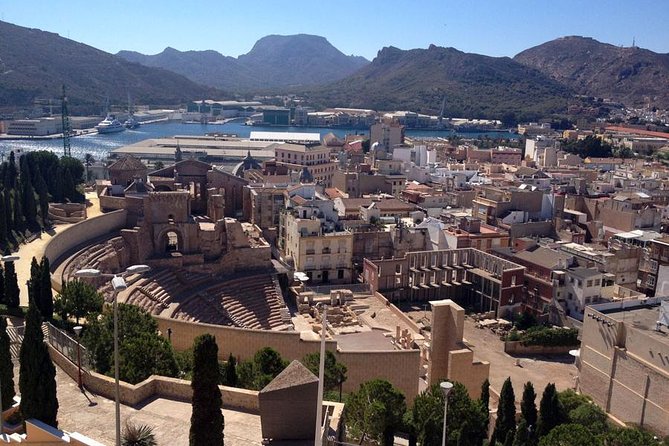
Cartagena packs Punic ruins, Roman remains, 18th-century military works, and grand Modernist buildings into a remarkably walkable center. I like that this private four-hour tour links those layers with a guide rather than leaving you to piece the city together from scattered displays. I also like the panoramic elevator, which gives you a quick visual map of Cartagena before you continue on foot.
The main drawback is cost: $384.94 per group, with admission fees extra. That is a fair deal for a larger family or group of friends, but expensive for one or two people. Summer heat can also make the walking portions tiring, especially if your cruise day has already been long.
Key points at a glance
- Punic Wall: See one of Spain’s few surviving Punic defensive structures, dating from the 3rd century BC.
- Roman home life: Casa de la Fortuna offers a look at ordinary domestic life in 1st-century Cartagena.
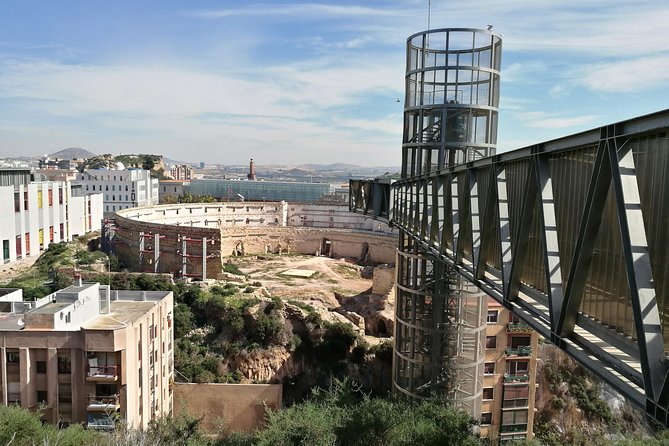
- Panoramic elevator: Ride a glass cabin for views of the Roman amphitheater, bullring, and 18th-century military buildings.
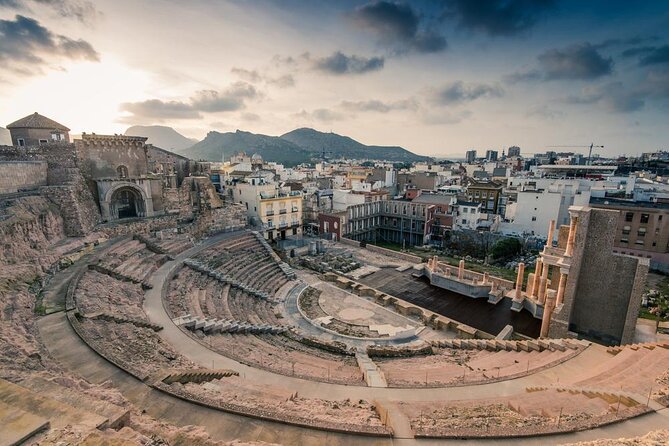
- Roman Theater Museum: Understand the scale of Carthago Nova’s theater, which held about 7,000 spectators.
- Private guiding: Your group has the guide to itself, with past guides including Dani, Jordi, Ula, and Alisa.
- Cruise-friendly setup: Port pickup and drop-off are included, and the tour ends where it begins.
Why Cartagena works so well on foot
Cartagena, known in antiquity as Carthago Nova, rewards visitors who enjoy seeing different centuries close together. A Punic defensive wall may be only a short walk from a Roman house, while a Modernist facade or 18th-century military structure adds another chapter to the city’s story.
That mix is the real strength of this outing. You are not visiting one isolated ruin and then moving on. You are building a picture of how Cartagena changed from a powerful Mediterranean settlement into a Roman city and later a Spanish port with grand civic architecture.
The four-hour length gives you enough time for the major archaeological stops without turning the day into a rushed checklist. You should still expect a fair amount of walking and standing. The elevator breaks up the route, but this is not a seated sightseeing excursion.
The private format matters most when your group has different interests or needs. A guide can spend more time on Roman engineering if that fascinates you, or keep the explanations shorter for children. One guide, Ula, was specifically praised for making the subject interesting for two children, while Dani has been noted for connecting surviving buildings with the city’s past in a clear way.
More Walking Tours in Cartagena
- Cartagena: Historic Center and Getsemaní Shared Walking Tour
★ 4.9 · 2,716 reviews - Cartagena: Walled City and Getsemani Shared Walking Tour
★ 4.5 · 352 reviews - 3 Tapas Cartagena walking tour
★ 4.5 · 105 reviews
Starting at the port and meeting your guide
The tour begins at Mare Nostrum, at the marina on Paseo Alfonso XII. Port pickup and drop-off are included, which removes one of the main worries on a cruise stop: finding your way from the ship into the center and back again.
Your confirmation arrives within 48 hours of booking, subject to availability. Since the tour is often reserved well ahead of the visit, booking early makes sense if your port schedule is fixed, particularly for a private group of up to 15 people.
The tour is offered in English and uses a mobile ticket. It ends back at the meeting point, so you do not need to arrange a separate return transfer. Cartagena has public transportation nearby, but the included port service is the more useful feature for cruise passengers.
Your guide may be Dani, Jordi, Ula, Alisa, or another member of the Quality Guided Tours team. The strongest part of the guiding is the historical explanation. Dani, in particular, has been praised for giving a detailed account of Cartagena while showing the remaining architecture, and for explaining the excavation of the old Roman amphitheater.
The Punic Wall and Cartagena before Rome
The Punic Wall is a strong opening stop because it reaches back before Roman Cartagena. It is an archaeological site from the 3rd century BC and one of the few Punic defensive constructions still surviving in Spain.
The word Punic refers to the civilization connected with Carthage in North Africa. Cartagena’s position near the Mediterranean made it a useful harbor and a valuable military base, so this wall was not an ornamental city feature. It was built for defense, and its remains give you a sense of the strategic importance of the settlement.
You have about 45 minutes here. That is enough time for a guide to explain what you are seeing and place the site in the larger story of Carthago Nova. Without that context, a surviving wall can look like a pile of old masonry. With a guide, its location and purpose become much easier to grasp.
Admission is not included. The stated price for the Punic Wall is €16 per person. Because entrance fees for the stops are paid separately, remember to budget beyond the advertised group price.
This stop will suit you if you enjoy ancient military history and archaeology. If you prefer grand interiors or intact monuments, it may feel less immediately dramatic than the Roman theater. Its value comes from the age of the remains and the fact that so few Punic defenses have survived in Spain.
Casa de la Fortuna and Roman daily life
Casa de la Fortuna shifts the focus from armies and walls to the home. This Roman house transports you into the domestic setting of 1st-century Cartagena, when the city was part of the Roman world.
That change of scale is useful. Large ruins tell you about power, but a house helps you think about how people lived. The stop can show the domestic side of Roman Cartagena, giving your guide a chance to explain the city beyond emperors, soldiers, and public buildings.
You have around 30 minutes here. That is a compact visit, but it fits the walking tour well. The guide can point out the details that matter rather than leaving you to study the remains without a clear sense of purpose.
Admission is not included. The tour information lists entrance fees for the Roman house among the additional costs, but gives no separate price for this stop. Plan to pay the site charges yourself unless your booking confirmation states otherwise.
I would especially recommend this part for families and for anyone who finds public ruins hard to imagine. The house creates a more personal link with Roman Cartagena. It also balances the monumental scale of the theater later in the tour.
A few more Cartagena day trips to weigh up
- Shore Excursion PRIVATE City tour
★ 5.0 · 121 reviews - Cartagena and Murcia – full day shore excursion for cruise guests
★ 4.5 · 79 reviews - Shore excursion Cartagena city tour
★ 4.5 · 64 reviews - Cartagena City Tour: 4-Hour Cruise Excursion
★ 4.5 · 31 reviews
The panoramic elevator and the city from above
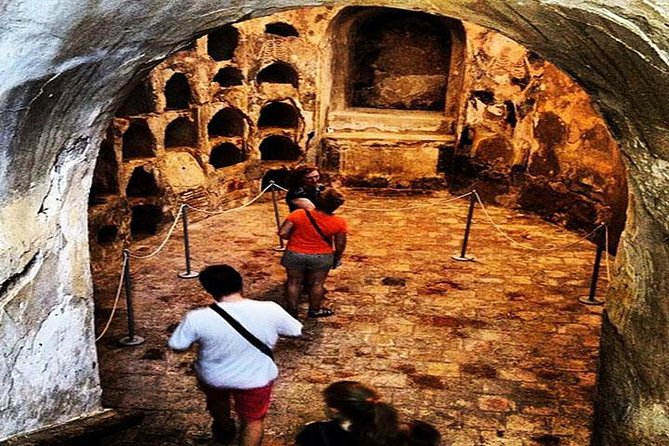
The Panoramic Elevator is the tour’s best change of pace. Its glass cabin carries you upward for views across some of Cartagena’s most important sights.
From above, you can see remains of the Roman amphitheater with the later bullring built over it. You can also spot military constructions from the 18th century. This view helps you understand how newer buildings did not simply replace the old city. In Cartagena, different periods often sit directly on top of or beside one another.
The ride and viewing time last about 30 minutes. It is not just a transport link. Used well, it gives your guide a chance to point out places you have already seen and places you will visit next.
The elevator should be a welcome pause after the first walking stops, but it does not remove every physical demand. You still need to walk between sites and spend time on your feet. The experience is described as requiring a moderate level of physical fitness, so it may not suit anyone who struggles with sustained walking or standing.
Admission is extra, and the elevator is included among the attractions with separate entrance fees. Exact pricing for this ticket is not provided.
The views are particularly useful early in a Cartagena visit because they show the city as a whole. You get the harbor setting, the archaeological remains, the bullring, and the old military works in one glance. It is a quick lesson in geography and urban history.
The Roman Theater Museum and Carthago Nova’s grand scale
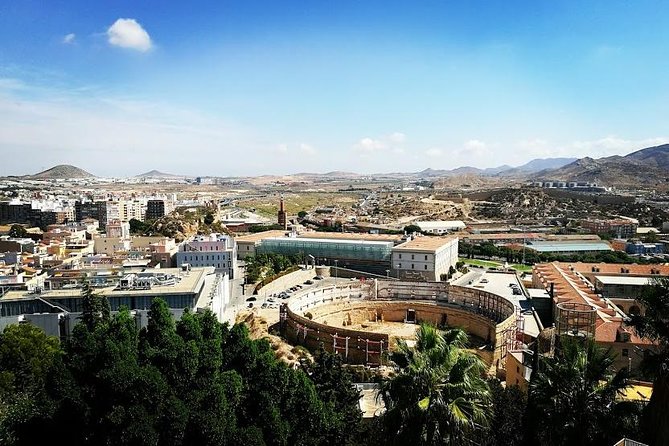
The Roman Theater Museum is the tour’s headline attraction. Built between 5 and 1 BC, the theater could hold about 7,000 spectators and remained in use until the 3rd century.
That capacity tells you something important. Carthago Nova was not a minor outpost with a few scattered Roman buildings. It was a substantial city with the money, population, and public life needed to support a major theater.
You have approximately 45 minutes here. That gives you time to see the museum and theater remains while your guide explains how the site fits into Roman Cartagena. The museum setting also helps organize the archaeology, particularly if you have already viewed the amphitheater and bullring from the elevator.
One of the most useful aspects of a private guide is the explanation of excavation. The theater was not simply sitting in plain view for centuries. Modern Cartagena grew around and over earlier remains, and understanding that process makes the archaeological site more meaningful.
Admission is not included. The Roman Theater is one of the attractions for which you should expect a separate ticket charge. No price is supplied for this entrance, so check the current amount when you book or before the visit.
This stop is likely to be the highlight if you want the clearest sense of Roman public architecture. It is also the place where a well-prepared guide can make the largest difference. Dani has been praised for relating the remaining architecture to the city’s past and for helping visitors understand the excavation.
Modernist streets, Cervantes House, and La Concepción
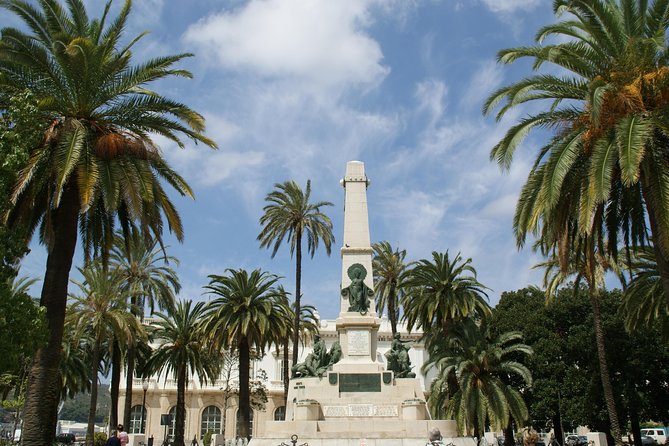
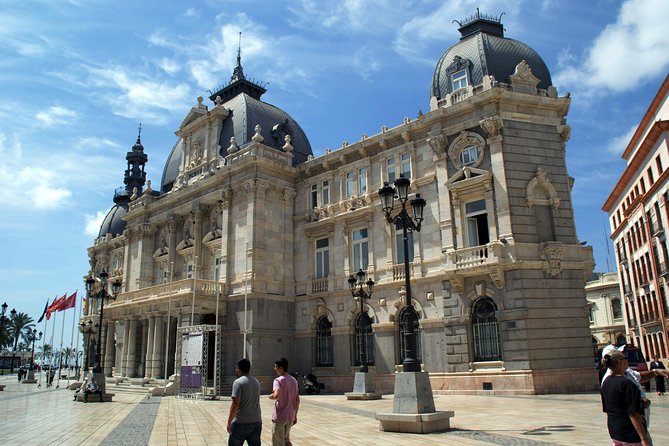
The tour also introduces Cartagena’s Modernist streets and calls attention to landmarks such as Cervantes House, La Concepción, and the Town Hall. These sights broaden the outing beyond ancient history.
Cartagena’s later architecture matters because the city did not stop developing after Roman rule. Grand civic and residential buildings show a different side of its fortunes and give you a break from archaeological displays. The contrast between a Roman ruin and a Modernist facade is part of what makes the city easy to remember.
The supplied timings focus on the Punic Wall, Casa de la Fortuna, the elevator, and the Roman Theater Museum. The Modernist sights are presented as part of the guided city walk rather than as separate timed admissions. That means the exact amount of time at each facade may depend on your guide, walking speed, and the interests of your group.
If you want an outing devoted only to Modernist architecture, this may not be specialized enough. Its main theme is Cartagena across several historical periods, with the Roman and Punic remains receiving the most structured attention.
What the private format adds
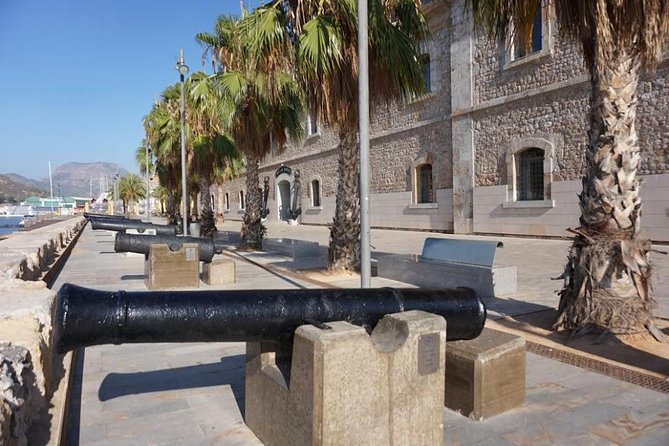
A private tour for up to 15 people is not the same as joining a large coach group. You have the guide’s attention, and your group can ask questions without waiting for a crowd to catch up.
That arrangement is valuable for families. A guide can adjust the explanation for children, pause when needed, and avoid forcing everyone to follow a fixed group rhythm. It also helped one multigenerational party manage a wide range of ages and accessibility needs.
Still, the tour should not be described as fully accessible without further details. The information says participants need moderate physical fitness, and the route includes walking, museum visits, and sightseeing from the elevator. If anyone in your group has limited mobility, discuss the exact route and site access before booking.
The group limit of 15 is generous for a private walk. It works well for a family reunion, a group of friends, or several couples traveling together. For only one or two people, the total cost is much harder to justify.
Is $384.94 a good value?
The $384.94 price covers the private tour for up to 15 people, not each individual. That works out to about $25.66 per person if you fill every place, before entrance fees. For a family or full group, that is a much stronger value than the headline price first suggests.
For two people, the same price is roughly $192.47 each before admissions. At that size, you should value the private format, port pickup, and focused historical guiding very highly.
The entrance fees add to the final cost. The Punic Wall is listed at €16 per person, and admission is also separate for Casa de la Fortuna, the panoramic elevator, and the Roman Theater. Since no prices are supplied for the other three, ask for the current total when arranging the tour.
I see the best value here in the combination of transport, a private guide, and four hours of connected sightseeing. You are paying for interpretation as much as access. That matters in Cartagena, where the remains can be impressive but are not always self-explanatory.
Heat, pace, and practical planning
The walking route can be uncomfortable in hot weather. One four-hour visit took place at the end of a long cruise vacation, and the heat was the only clear complaint. That is worth taking seriously, especially in summer.
Wear practical shoes and bring water. These are straightforward suggestions rather than special equipment requirements, but they can make the difference between enjoying the archaeology and counting the minutes until shade.
The tour lasts about four hours, so leave enough time around it in your cruise schedule. Port pickup and drop-off help, but you should still allow a buffer before your ship’s departure. The exact pickup time is not provided here, so confirm it with the operator after booking.
Free cancellation is available if you cancel at least 24 hours before the local start time. Changes or cancellations inside that window are not accepted for a refund.
Who should book this Cartagena walk?
I would choose this tour if you want a strong historical introduction to Cartagena and prefer a guide who can connect separate sites into one story. It is especially suitable for groups of several people, families with children, and cruise passengers who want port transportation handled.
It also suits you if the Roman theater, Punic defenses, and archaeological excavation are more appealing than shopping or a relaxed cafe day. The option to finish with local coffee, orange liquor, shopping, or tapas is not part of the stated itinerary, but Alisa did recommend those kinds of local stops during one private visit. Treat that as a possible conversation with your guide, not a guaranteed inclusion.
I would hesitate if you dislike walking, need a fully step-free route, or are traveling as a couple on a tight budget. You should also think twice if you want a tour centered only on Modernist architecture, since the main schedule gives the greatest weight to Punic and Roman Cartagena.
Should you book the 4-hour Cartagena tour?
Book it if you want to understand why Cartagena contains so many different historical layers and you are traveling with enough people to share the private cost. The Punic Wall, Casa de la Fortuna, panoramic elevator, and Roman Theater Museum make a well-shaped half-day route, while guides such as Dani, Jordi, Ula, and Alisa add the personal explanation that ruins often need.
Skip it if your priority is a cheap self-guided stroll or a slow day with minimal walking. For the right group, though, this is a practical way to see Cartagena’s major ancient sights without losing the city’s later architecture or the convenience of port pickup.
FAQ
How long does the Cartagena walking tour last?
The tour lasts approximately four hours.
What sights are included in the route?
The route includes the Punic Wall, Casa de la Fortuna, the Panoramic Elevator, and the Museum of the Roman Theater of Cartagena. It also includes a guided look at Modernist streets and sights such as Cervantes House, La Concepción, and the Town Hall.
Are entrance fees included?
No. Entrance fees for the Punic Wall, Roman house, panoramic elevator, and Roman Theater are not included. The Punic Wall admission is listed as €16 per person.
Is this a private tour?
Yes. Only your group participates, with a maximum group size of 15 people.
Is port transportation included?
Yes. Port pickup and drop-off are included. The meeting point is Mare Nostrum, at the marina on Paseo Alfonso XII in Cartagena.
What language is the tour offered in?
The tour is offered in English.
What fitness level is required?
A moderate level of physical fitness is recommended. The experience includes walking and sightseeing at several historical sites, and the tour information does not describe it as fully accessible.
Can I cancel for a full refund?
Yes, if you cancel at least 24 hours before the experience start time. Cancellations or changes made less than 24 hours before the local start time are not eligible for a refund.
Just added around Cartagena
- Cartagena: Ecoplan on Barú, Aviary and Oceanarium in one day★ 3.3 · 3 reviews
- CARTAGENA, EXCLUSIVE launch for Rosario and Baru Islands★ 5.0 · 3 reviews
- Cartagena: Day Tour to Tierra Bomba Island★ 3.2 · 3 reviews
- photo session through the streets of cartagena★ 5.0 · 3 reviews
- Cartagena Coffee Masterclass: Artisanal Roasting and Brewing★ 5.0 · 3 reviews
- FULL DAY BARRANQUILLA AND SANTA MARTA 1 DAY from Cartagena★ 4.0 · 3 reviews
- Cartagena: Cholon Island Boat PARTY with DJ and Lunch★ 3.7 · 3 reviews
- Cartagena: Basic Diving for beginners in Rosario Islands★ 3.4 · 3 reviews
Cartagena Tours, compared.
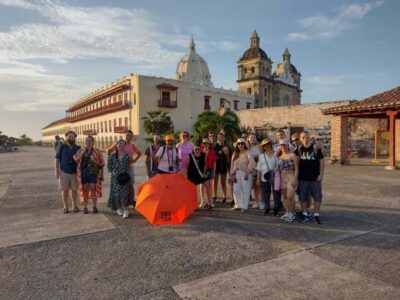
Cartagena: Historic Center and Getsemaní Shared Walking Tour
Read our review →
Cartagena: Rosario Islands Catamaran with Lunch and Snorkel
Read our review →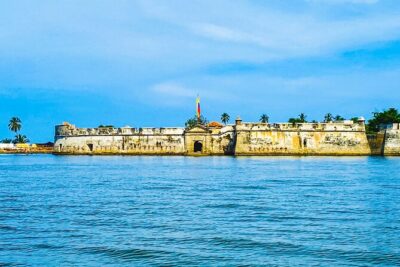
Full-Day Rosario Islands Including Barú, Bocachica & Playa Blanca
Read our review →

Cartagena: Guided Street Food Tour with Tastings
Read our review →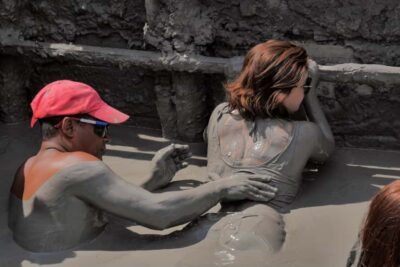

Cartagena: Panoramic City Tour, Monuments, Walls, Castle
Read our review →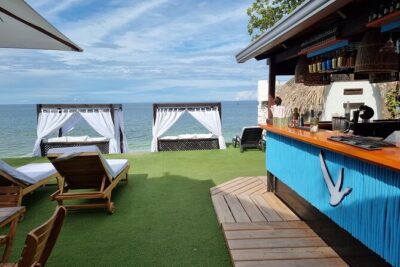
Bora Bora Cartagena Beach Club Full Day Experience
Read our review →Browse the lists this tour appears in