
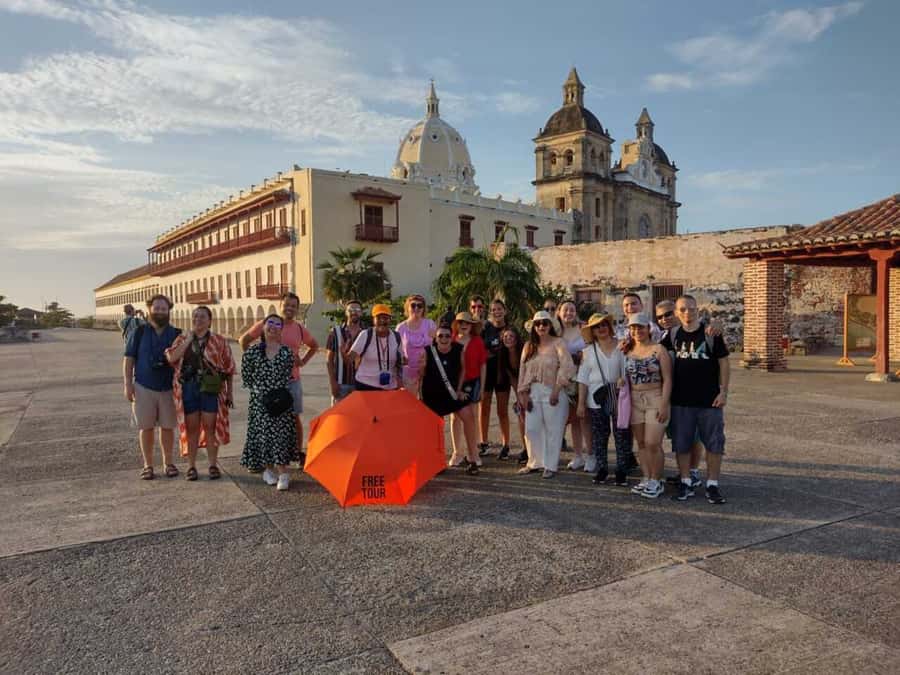
Reviewed · CARTAGENA TOURS
Cartagena: Historic Center and Getsemaní Shared Walking Tour
Cartagena’s past is not locked inside a museum. It runs through the city gates, church squares, old slave markets, painted walls, street music, and the people who still make these neighborhoods their own. This $12 walking tour gives you a useful first look at both the polished Walled City and the more expressive streets of Getsemaní.
I like the route for two clear reasons. It connects conquest, slavery, independence, and modern Caribbean culture instead of treating Cartagena as a pretty colonial backdrop. I also like the human touch: guides such as Dani, Legacy, Robert, and Álvaro David add dancing, food tips, local customs, and personal pride to the facts. The main drawback is the heat. Two and a half hours on foot can feel long, especially in the afternoon, so bring water and expect to pause in the shade.
Key points to know before you go
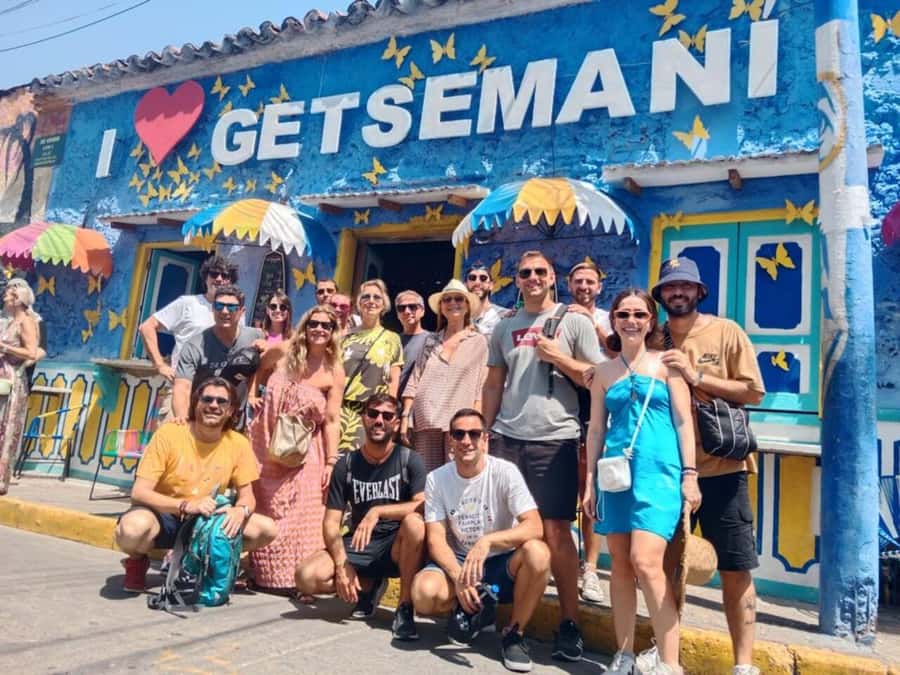
- The route links two sides of Cartagena: You see the Walled City’s plazas, churches, bastions, and museums, then continue into Getsemaní’s street art, umbrellas, music, and local character.
- The history includes difficult subjects: Expect clear discussion of colonization, enslavement, Indigenous communities, the transatlantic slave trade, and the struggle for independence.
- Music and movement are part of the experience: Guides may teach salsa or other traditional dances, and the final stretch reaches streets filled with salsa and African champeta.
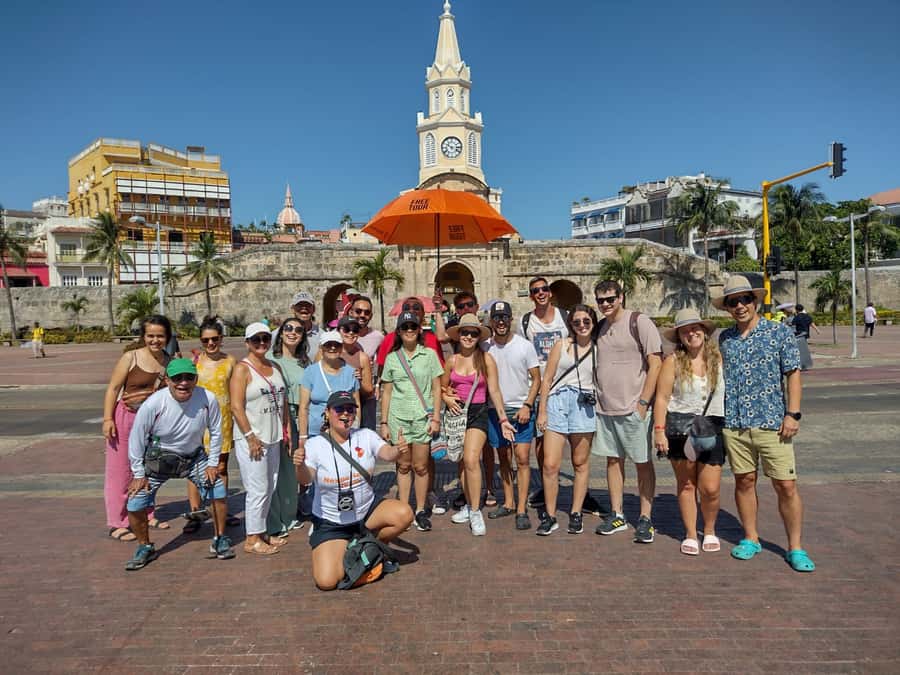
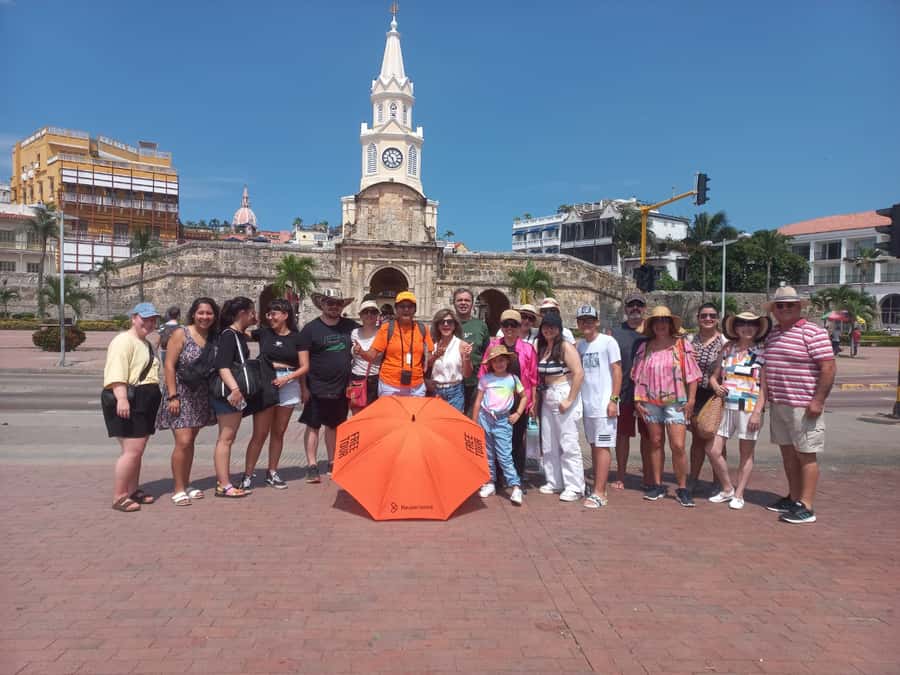
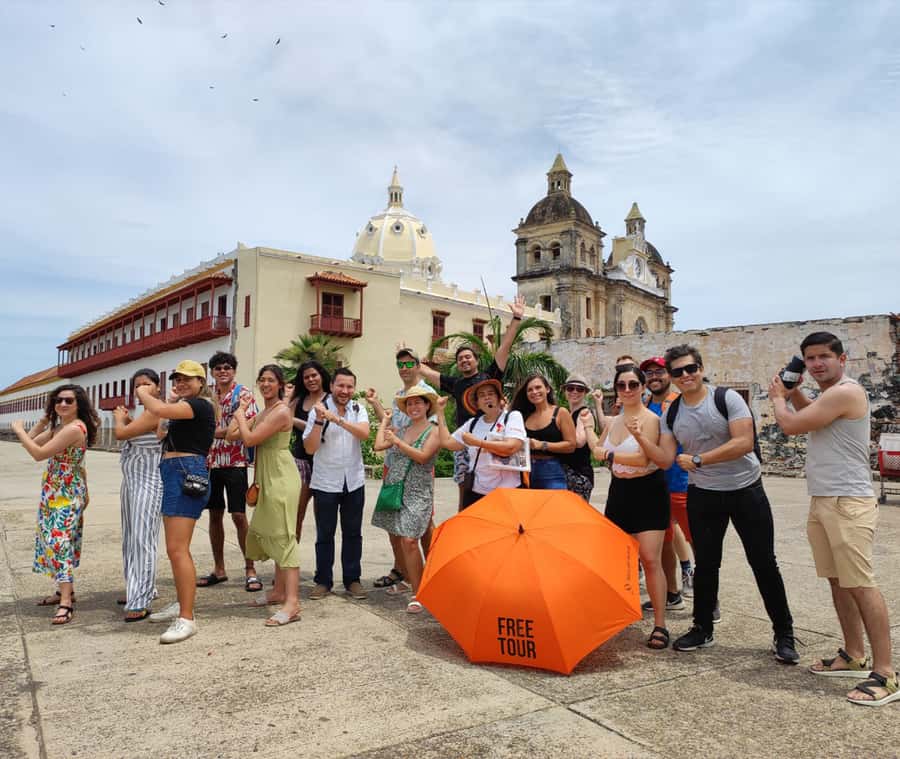
- The meeting point is easy to spot: Find Plaza Cervantes, also called Camellón de los Mártires, in front of the Clock Tower, then look for the orange umbrella.
- You get useful advice along the way: Guides have offered restaurant suggestions, food prices, places to visit, and tips for avoiding overpriced purchases.
- The tour suits a first day in Cartagena: It helps you recognize the main areas and decide where to return for a longer visit.
Why this Cartagena walking tour is worth your time
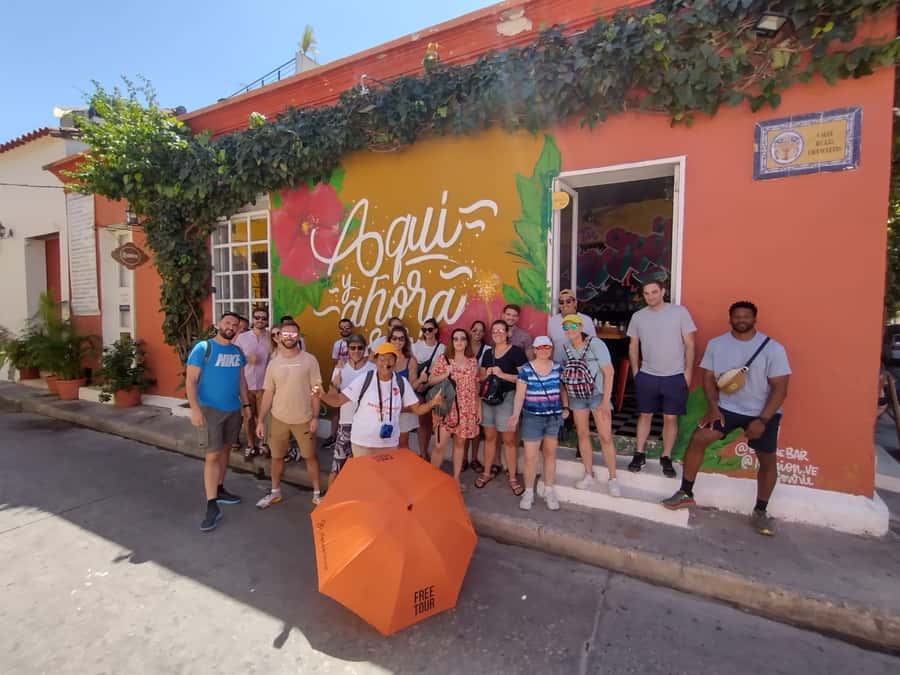
A first walk through Cartagena can feel confusing. The streets are compact, but every block seems to contain a church, monument, balcony, market reference, or political story. This tour gives those details an order.
You spend about two hours in the Historic Center and another hour in Getsemaní, for a total of 150 minutes. That is enough time to cover the main sights without turning the day into a full historical lecture. The guide speaks English or Spanish, and the experience is wheelchair accessible.
The strongest part is the range of subjects. You hear about the Indigenous people who lived here before and during the Spanish arrival. You follow the route of enslaved people and goods through old streets and squares. You also hear how African and Caribbean traditions continue through food, braids, music, dance, and neighborhood life.
That balance matters. Cartagena is beautiful, but its beauty can hide the violence that helped build its wealth. A useful tour should explain both the grand stone defenses and the human cost behind them. This one makes that connection central.
More Walking Tours in Cartagena
- Cartagena: Walled City and Getsemani Shared Walking Tour
★ 4.5 · 352 reviews - 3 Tapas Cartagena walking tour
★ 4.5 · 105 reviews - Walking Tour of Cartagena Including a Colombian Cup of Coffee
★ 5.0 · 30 reviews
Meeting Pedro de Heredia at Plaza Cervantes
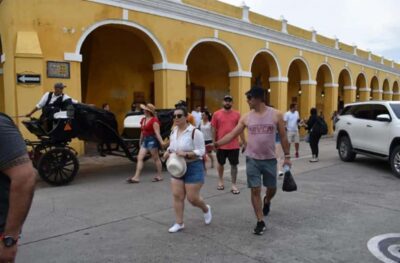
The walk begins at Plaza Cervantes, also known as Camellón de los Mártires, directly in front of the Clock Tower. Look for the orange umbrella. It is a simple meeting point, but the location immediately places you beside one of Cartagena’s most important entrances.
The opening discussion introduces the Indigenous communities present before and during the arrival of the Spanish. Pedro de Heredia, the city’s Spanish founder, becomes part of the story here. This gives you a starting point for understanding why Cartagena developed as a major port and why its defenses became so important.
Do not expect a quiet, academic introduction. The guides tend to speak with energy and pride, and several have a gift for making dates and names easier to remember. Legacy has been especially praised for mixing humor with facts, while Dani and Daniela are known for lively interaction and a strong sense of local identity.
This is also a good place to ask practical questions. The guide may give you an early sense of what to see later, where to eat, and how local prices work. I would listen carefully here, since advice received at the start can shape the rest of your stay.
Passing through the Clock Tower and the old slave route
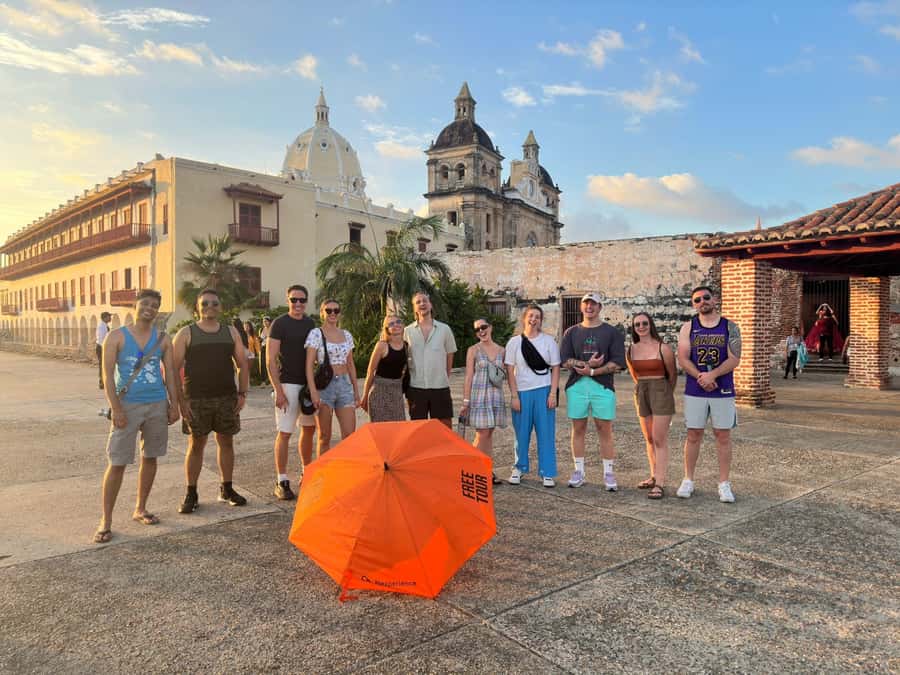
From the plaza, you move toward the Clock Tower, described as the Golden Key of Cartagena. You enter the Plaza del Ecuador, once associated with the Plaza del Esclavo, and then continue along Porto Carrero and Candilejo streets.
This section has real value because it makes the history physical. You are not only hearing that Cartagena played a role in the slave trade. You are walking through the area where people and merchandise were moved and sold.
The subject is painful, and the route does not treat it as a colorful footnote. You learn about enslavement and the African heritage that remains central to Cartagena. One especially meaningful theme is the importance of African braids as a symbol of freedom and identity for women whose ancestors endured slavery. That detail links a historical struggle to something you can still see in Caribbean life today.
The streets themselves are narrow and busy with ordinary city activity. You may need to stay close to the group, especially when stopping near doorways or corners. Comfortable shoes matter more here than stylish ones.
Portal de los Dulces and Plaza de la Aduana
The Portal de los Dulces introduces another side of the city’s past. The area is tied to female activity during the period of slavery, and descendants continue related traditions today. Sweets may be part of the visual scene, but the point is larger than a snack stop. The place shows how food, commerce, and family work can carry history across generations.
The walk continues to Plaza de la Aduana, an important center for the sale and movement of goods, including enslaved people. You see major buildings such as the Municipal Hall and get a clearer idea of how the colonial economy operated.
I appreciate this part because it avoids separating local culture from economics. The colorful sweets, old buildings, and public squares are not unrelated sights. They are pieces of the same story about trade, labor, power, and survival.
The guide may also explain current street prices and suggest what to buy or skip. Álvaro David has been particularly useful with advice about restaurants, food, and typical vendor costs. You should still make your own choices, but a local price reference can help you spot an inflated offer.
A few more Cartagena day trips to weigh up
- Visit Palenque with natives : history, culture and ancestral legacy
★ 5.0 · 53 reviews - Mangroves, cultural fishing, black heritage town and lunch
★ 4.5 · 29 reviews - Cartagena Instagrammable History
★ 4.5 · 29 reviews - Private Historical Roman Walking Tour of Cartagena
★ 5.0 · 14 reviews
Art, gold, emeralds, and San Pedro Claver
The route then brings art and religion into the picture. The Museum of Modern Art presents Caribbean and Latin American work from the 1950s onward. The Gold Museum displays Indigenous pieces from the Colombian Caribbean, while the Emerald Museum focuses on Colombian emeralds, stones famous for their color and quality.
These locations are part of the outdoor walking route, not a substitute for a full museum visit. The guide points them out and explains why they matter. If you want to study the collections closely, plan a separate return visit and allow more time.
The Gold Museum is especially helpful for correcting a common mistake. Cartagena is often described only through Spanish buildings and pirate stories, but Indigenous cultures shaped the region long before colonial rule. Gold objects offer a direct reminder that the Caribbean coast had its own societies, skills, and beliefs.
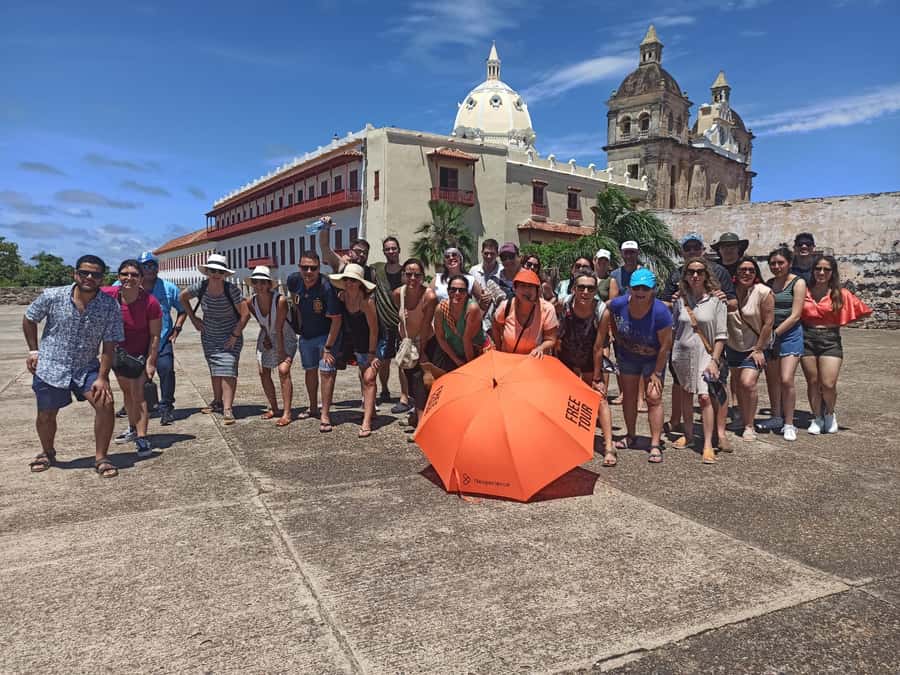
At the Church and Museum-Monastery of San Pedro Claver, the tour turns to religion and human rights. San Pedro Claver is remembered as the Slave of the Slaves for his work with enslaved people arriving in Cartagena. The church and monastery also serve as the headquarters of human rights work.
This stop gives the tour moral weight. You are asked to consider how religious institutions participated in colonial society, while also learning about individuals who challenged cruelty within that system. The building’s architecture is impressive, but the story is more important than the photo.
Bastions, pirates, and the military walls
At the San Ignacio Bastion, you learn how Cartagena defended the Bay of Souls from pirate attacks. This is where the city’s walls begin to make practical sense.
The bastions were not simply decorative stone structures. They formed part of Spanish military planning, designed to control approaches and protect the port. The guide explains pirate and corsair attacks, defensive strategies, and the role of the fortifications in Cartagena’s survival.
This is one of the tour’s most popular subjects, and it is easy to see why. Pirate tales are entertaining, but the better lesson is how military power shaped the city. The walls protected wealth moving through the port, including wealth created by forced labor.
You may see only one bastion on this route, so do not book the walk expecting a full fortress tour. It gives you the historical framework. For a closer look at Cartagena’s military system, you would need a separate visit to the larger fortifications.
Plaza Bolívar and a pause among the trees
The group continues to Plaza Bolívar, named for Simón Bolívar, an important figure in South American independence. The square provides a natural pause and a chance to connect colonial Cartagena with the independence movement.
The next major green space is Centennial Park, one of Cartagena’s important urban lungs. It occupies the site of a former railway station and preserves part of the city’s tropical dry forest.
This is one of the tour’s more pleasant surprises. The park gives you shade and a break from the stone streets. You might see sloths, squirrels, and iguanas in the trees and gardens, as well as other urban wildlife. Do not treat sightings as guaranteed, but guides have included these animals in the experience.
The park also helps explain the city’s environmental needs. Cartagena is hot, built-up, and heavily visited. Places with trees offer more than decoration. They provide relief for people and habitat for animals.
Several guides make an effort to keep groups in shaded areas whenever possible. Robert has been praised for doing this, and it can make a real difference. Still, shade is not constant. Bring sunscreen, water, light clothing, and protection suited to the day’s weather.
Getsemaní, umbrellas, graffiti, and local identity
The shift into Getsemaní changes the tone. The Walled City presents grand plazas, churches, old government buildings, and defensive walls. Getsemaní brings a more informal mix of street art, colored facades, umbrella displays, neighborhood corners, and public life.
The umbrella corridor is one of the most recognizable photo spots. Graffiti adds another layer, with walls used for art, local messages, and visual identity. The architecture is less formal than the colonial center, which is exactly why the neighborhood feels different.
The guide explains how Getsemaní developed and how its social order changed. That phrase matters. You are not simply looking at painted streets. You are hearing about a neighborhood shaped by working people, African heritage, music, and changing urban life.
This is where personal guiding style has the greatest effect. Dani and Daniela often bring dancing into the walk, while Legacy uses humor and audience participation to keep the group involved. One guide may be more theatrical, another more measured. The core route remains similar, but the experience can vary with the person holding the umbrella.
The tour may include short dance moments. Salsa and champeta become teaching tools, not just background entertainment. Salsa connects with Cartagena’s social life, while champeta points toward African and Caribbean influence. A few steps can communicate something that a paragraph of explanation cannot.
If you are shy, do not worry. The dancing is presented as a light group activity, not a performance test. If you love music, this may become your favorite part.
Finishing on Callejón Ancho and Calle San Juan
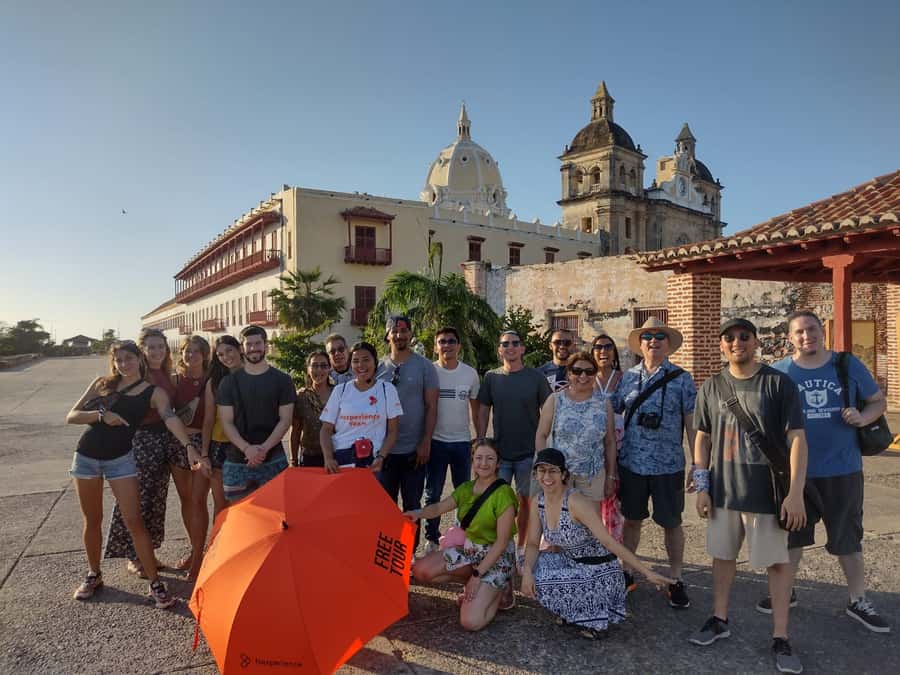
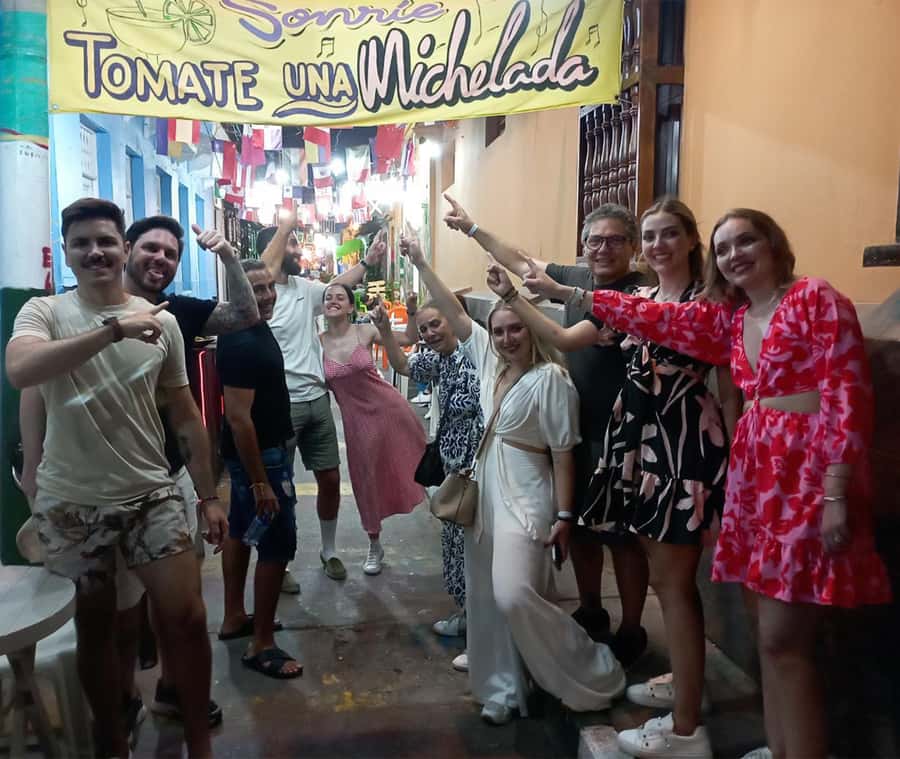
The final stretch follows Callejón Ancho and ends near Calle San Juan. The closing setting is tied to salsa and African champeta, so the tour finishes with sound and movement rather than another formal monument.
That ending works well. Cartagena’s story is not complete when you understand its walls or churches. The city is also heard in its music, seen in its dances, and carried through the cultural practices of its African and Caribbean communities.
By this point, you should have a better sense of where to return. You may want to revisit Getsemaní after dark, explore a museum at a slower pace, or find a restaurant recommended by your guide. The walk is designed as an introduction, and its best use is to help you plan the rest of your time.
What the $12 price really gives you
At $12 per person, this is a strong value for a 150-minute guided walk. The price covers the professional guide, the Historic Center, Getsemaní, and the tip. The arrangement is described as a free walking tour with the tip already paid, so you should not expect an additional required payment at the end.
Food, drinks, and hotel transportation are not included. You meet at Plaza Cervantes and make your own way there and back. That keeps the price low, but it also means you need to plan around the heat and your location in Cartagena.
The value comes from the route and the interpretation. Walking the streets alone is free, but you will not automatically understand why the Clock Tower matters, how the old commercial squares connect to slavery, or why Getsemaní’s music and murals carry social meaning.
For a first day, the price is especially attractive. You get orientation, history, cultural context, and practical suggestions in one outing. If you already know Cartagena well or want a highly specialized architecture tour, the broad focus may feel basic.
Heat, pace, language, and accessibility
The tour takes place outdoors for most of its length. Wear comfortable shoes and clothes suited to warm weather. Sunscreen is essential, and water is a smart addition even if the start time is later in the day.
The pace is generally manageable, but the route is long enough to tire young children or anyone uncomfortable walking in heat. A two-year-old has been accommodated successfully, with the guide checking on the child during the walk, but every family should consider its own needs.
English and Spanish tours are available. English delivery is generally clear, though one guide received a practical suggestion to slow down when speaking quickly. If a historical point is unclear, ask the guide to repeat it. The tour encourages questions, and several guides are happy to explain beyond the planned material.
Wheelchair access is listed as available. Since this is a street-based walk through historic areas, you should still confirm the current route and surface conditions when booking if you have specific mobility needs.
The tour can operate in rain. A wet afternoon will make the walk less comfortable, even though the guide can still do a good job. Weather-appropriate clothing is part of the preparation.
Who should book this walk
I would choose this tour if you are visiting Cartagena for the first time and want a broad introduction before exploring on your own. It suits people who like history but do not want two hours of dates delivered without local color.
It is also a good fit for anyone interested in the connections between Spanish colonial power, African heritage, Indigenous culture, independence, music, and present-day city life. The tour treats those subjects as connected rather than separate chapters.
Families can join, especially if children enjoy animals, movement, and short interactive moments. Music lovers will appreciate the salsa and champeta focus. Food-minded visitors can benefit from restaurant and price suggestions.
I would think twice if you dislike group walks, hot weather, or dancing activities. The tour is shared, so the guide must balance different interests and walking speeds. It is also not a substitute for a full visit inside every museum or for an extended fortification tour.
Should you book the Cartagena Historic Center and Getsemaní walk?
Yes, for most first-time visitors. The combination of the Walled City and Getsemaní gives you more than a collection of attractive streets. You learn how Cartagena was built, who paid the human cost, how independence changed the city, and how African and Caribbean culture continues to shape it.
Book it early in your stay so the restaurant tips, neighborhood orientation, and practical advice can help with later plans. Choose light clothing, comfortable shoes, sunscreen, and plenty of water. If you want the most engaging experience, arrive ready to ask questions and join in when the music starts.
FAQ
How long does the Cartagena walking tour last?
The experience lasts 150 minutes. The Historic Center portion takes about two hours, followed by about one hour in Getsemaní.
Where does the tour start?
It starts at Plaza Cervantes, also called Camellón de los Mártires, in front of the Clock Tower. Look for the orange umbrella.
Which areas does the tour visit?
The route covers Cartagena’s Historic Center, also called the Walled City, and the Getsemaní neighborhood.
What languages are available?
The live tour guide is available in English or Spanish.
Is the tour wheelchair accessible?
The activity is listed as wheelchair accessible.
Are food and drinks included?
No. Food and drinks are not included in the tour price.
Is hotel pickup included?
No. Hotel pickup and drop-off are not included. You are responsible for reaching the meeting point and leaving the tour from its endpoint.
What should I bring?
Bring comfortable shoes, sunscreen, comfortable clothing, and clothing suitable for the weather. Water is also a practical choice for the warm walking conditions.
Just added around Cartagena
- Cartagena: Ecoplan on Barú, Aviary and Oceanarium in one day★ 3.3 · 3 reviews
- CARTAGENA, EXCLUSIVE launch for Rosario and Baru Islands★ 5.0 · 3 reviews
- Cartagena: Day Tour to Tierra Bomba Island★ 3.2 · 3 reviews
- photo session through the streets of cartagena★ 5.0 · 3 reviews
- Cartagena Coffee Masterclass: Artisanal Roasting and Brewing★ 5.0 · 3 reviews
- FULL DAY BARRANQUILLA AND SANTA MARTA 1 DAY from Cartagena★ 4.0 · 3 reviews
- Cartagena: Cholon Island Boat PARTY with DJ and Lunch★ 3.7 · 3 reviews
- Cartagena: Basic Diving for beginners in Rosario Islands★ 3.4 · 3 reviews
Cartagena Tours, compared.

Cartagena: Rosario Islands Catamaran with Lunch and Snorkel
Read our review →
Full-Day Rosario Islands Including Barú, Bocachica & Playa Blanca
Read our review →
Cartagena: Guided Street Food Tour with Tastings
Read our review →
Cartagena: Panoramic City Tour, Monuments, Walls, Castle
Read our review →
Bora Bora Cartagena Beach Club Full Day Experience
Read our review →
Cartagena: Guided Tour, with La Popa Convent, and San Felipe
Read our review →Browse the lists this tour appears in