
Reviewed · MEDELLÍN TOURS
Shared Tour Medellin’s Violence & Post-conflict after Pablo
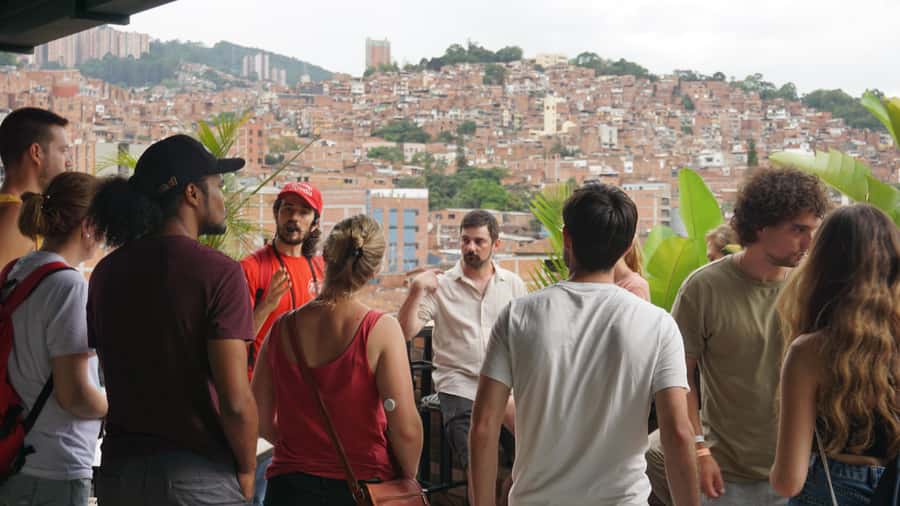
Medellín’s story after Pablo Escobar is far bigger than one drug lord. This walking tour follows how cartel violence, guerrillas, paramilitaries, and drug trafficking shaped ordinary life, then shows how communities and institutions pushed the city toward peace and public memory. The focus is Colombia’s conflict, not a Pablo Escobar greatest-hits show.
I like the route’s clear beginning and end, from Parque San Antonio and Botero’s birds to Museo Casa de la Memoria. I also like the guide-led discussion of Donbernabilidad, the period after the Medellín Cartel that helps explain why the past still matters. The main drawback is that this is a serious, emotionally heavy walk, and the roughly 5-kilometer route includes crowded areas, heat, rain, and no built-in hotel transport.
Key points to know before you go
- The tour starts with Medellín’s wider conflict: You examine the conditions that allowed the narcos war to grow, not just the life of Pablo Escobar.
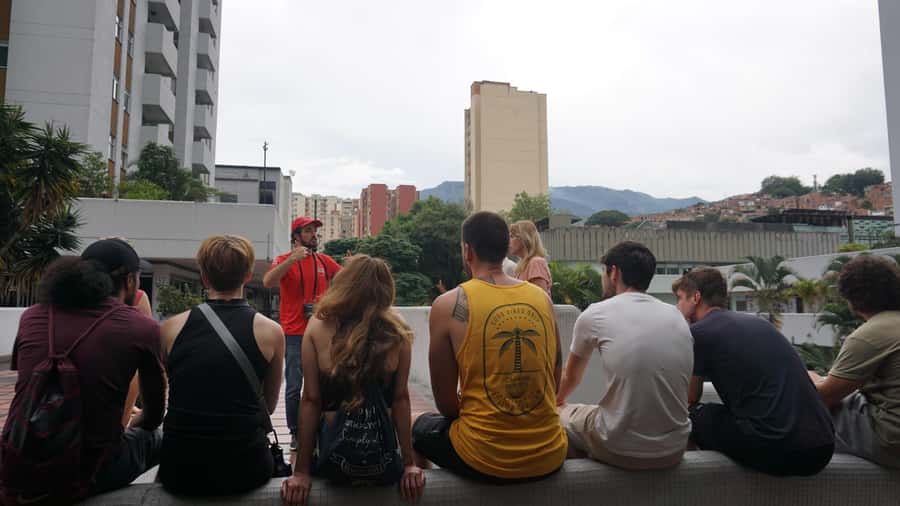
- The route crosses central Medellín: Walk from Parque San Antonio through downtown before finishing at Museo Casa de la Memoria.
- The focus is urban warfare: Guerrillas, paramilitaries, drug trafficking, social struggle, and peace efforts all form part of the discussion.
- The tour connects violence with daily life: You look at cultural, social, and economic effects, including the city’s efforts to replace bullets with words and ideas.
- The walk is led in English: Beyond Colombia guides including Miguel and Sebastian have received especially strong praise for clear, engaging explanations.
- You need stamina and an open mind: Expect about 5 kilometers of walking, difficult subjects, crowded streets, and stops to listen.
Why this is not a standard Medellín cartel tour
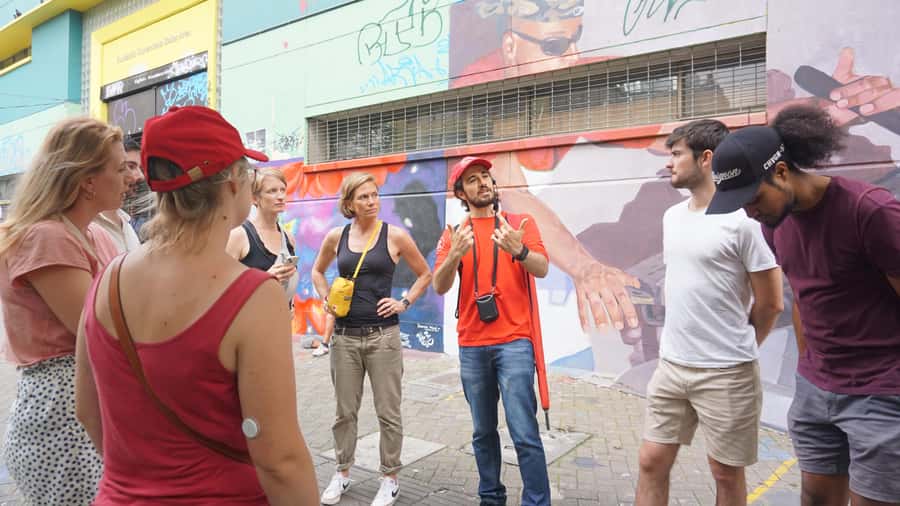
If your idea of Medellín history comes mainly from television crime dramas, this tour offers a needed correction. Pablo Escobar and the Medellín Cartel appear as part of the story, but they are not the whole story, and the tour is specifically presented as something other than a Pablo Escobar tour.
That distinction matters. The experience asks how violence took root, how it changed the city, and how people responded. You examine the conditions behind the narcos war, then connect that period with guerrilla activity, paramilitary power, drug trafficking, and the urban effects of Colombia’s wider conflict.
The time frame runs from 1982 to 2015. That gives the guide room to discuss the rise of cartel power, the years of severe violence, the period after the Medellín Cartel, and twenty-first-century peace agreements and reconciliation in an urban setting.
I like this wider frame because it keeps the story from becoming a collection of famous names. You hear about communities, institutions, social movements, and people who worked to survive and reshape the city. The result is less about crime spectacle and more about Medellín’s long, unfinished effort to create a better future.
A few more Medellin day trips to weigh up
- Medellin: Comuna 13 Graffiti Tour, Cable Car & Street Food
★ 4.8 · 9,046 reviews - Medellín: The Real Pablo Escobar Tour
★ 4.8 · 3,205 reviews - Medellín: Comuna 13 True Story and Street Food Tour
★ 4.9 · 1,779 reviews
Starting at Parque San Antonio and the Botero birds
The meeting point is Parque San Antonio, beside Fernando Botero’s well-known bird sculptures. Look for the red umbrellas used by Beyond Colombia. This is a practical place to begin because you meet in central Medellín, then move directly into the city streets rather than spending the first part of the tour on a bus.
Parque San Antonio also sets up one of the tour’s central ideas: public spaces can carry several layers of meaning at once. A park may be a meeting place, a landmark, and a place tied to painful memory. Your guide uses the surroundings to frame the history before the group walks onward.
Bring water and wear shoes you can use for a five-kilometer walk. You will stop often to listen, but this is not a short stroll between nearby sights. Sunblock is useful, and a rainproof coat or umbrella is sensible. Medellín’s weather can change, and the tour information specifically advises you to prepare for rain.
From cartel power to an urban war
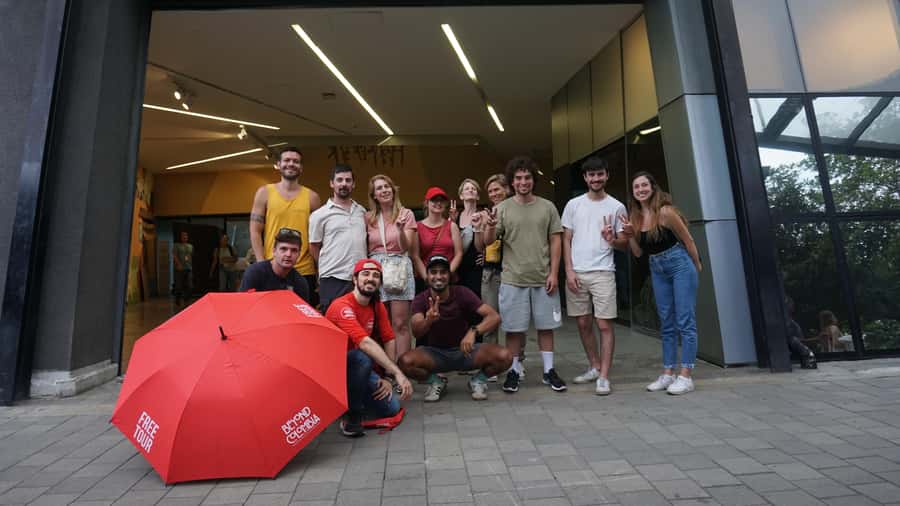
As you move through downtown, the guide explains how the narcos war emerged and what made Medellín a key urban center in the conflict. The subject is not treated as an isolated criminal chapter. You look at the cultural, social, and economic consequences, then connect them to the spread of other armed actors.
The phrase urbanization of war captures an important part of the route. Conflict was not confined to distant rural areas. Guerrillas, paramilitaries, and drug traffickers operated within or around cities, affecting neighborhoods, institutions, and the choices available to ordinary people.
This part may be the most useful for you if you know little about Colombian history. It supplies the background needed to understand why Medellín became both an epicenter of violence and a city marked by urban victimhood. It also helps separate different groups and motives instead of placing every armed actor under the simple label of cartel.
Do not expect a light or purely entertaining walk here. The themes include survival, social struggle, and the consequences of violence. An open mind helps, and the guides encourage you to ask questions. That invitation is important because the story has no single easy explanation.
The years after the Medellín Cartel and Donbernabilidad
A major strength of this tour is its attention to what happened after the Medellín Cartel. Many popular accounts end when the cartel era loses its grip, but the city’s problems did not simply disappear at that point.
The tour introduces Donbernabilidad, a term used to discuss the period after the cartel and the way power, violence, and unofficial control continued to shape Medellín. The subject helps you see how the past can remain present even after a notorious organization or leader is gone.
This is also where the experience becomes more useful than a crime-themed excursion. You are encouraged to think about systems and consequences, not just personalities. The guide discusses the motivations, practices, and changes involving the many people and institutions active during the years of war, peace, and resistance.
I would pay close attention here and ask questions. The supplied information promises accurate, objective background and a refusal to take sides, but a complicated political history still benefits from careful listening. If you want a simple hero-and-villain tale, this will feel demanding. If you want to understand why violence can change form rather than vanish, it is one of the tour’s most valuable sections.
Same city, a completely different kind of day:
- Medellín: Comuna 13 District Tour with Cable Car Ride
★ 4.8 · 1,467 reviews - Medellin: Coffee Tour with Transport, Snacks and Tastings
★ 4.7 · 1,357 reviews - From Medellín: Paragliding Tour with GoPro Photos & Videos
★ 4.9 · 1,210 reviews - Tour Guatapé
★ 5.0 · 865 reviews
Communities, heroes, and the move from bullets to ideas
The walk also gives attention to the people who pushed back. You hear about strategies, community efforts, and figures involved in Medellín’s struggle for peace. The emphasis is not only on official agreements. It includes the social work and resistance needed to make change possible on the ground.
The tour’s phrase bullets for words and ideas neatly describes this shift. You consider how dialogue, education, public action, and community organizing can challenge a culture shaped by armed conflict. The tour does not present this as a finished process. Medellín’s transformation is ongoing, and memories of violence remain active in public life.
This is the point where the experience offers hope without becoming sugary. The city’s progress is discussed alongside continuing conflict and unresolved memory. You get a picture of transformation as work, not a clean before-and-after story.
I appreciate that balance. A tour about Medellín’s past should not leave you thinking only about danger, but it should not pretend that a few new public projects erased decades of harm. The guide’s job is to hold both facts together, and the advertised approach aims to do just that.
Ending at Museo Casa de la Memoria
The route finishes at Museo Casa de la Memoria, a fitting place to end a walk about violence, resistance, and reconciliation. The museum gives the route a clear final idea: history is not only what happened, but also how a city chooses to remember it.
The tour includes sightseeing at important central locations framed by the history of conflict and reconciliation. It does not include entrance tickets, and the route is not supposed to take you to places with sudden extra charges. If access inside the museum is part of your personal plan, check what is open and what requires a ticket before you go. The supplied details identify the museum as the endpoint, but do not promise an included admission.
The ending also gives you a chance to continue learning. Beyond Colombia provides suggestions for books, films, or other material, along with ideas for Medellín’s cultural offerings connected to the places on the route. I like that this turns the walk into a starting point rather than a final answer.
Guide style and the value of the English explanations
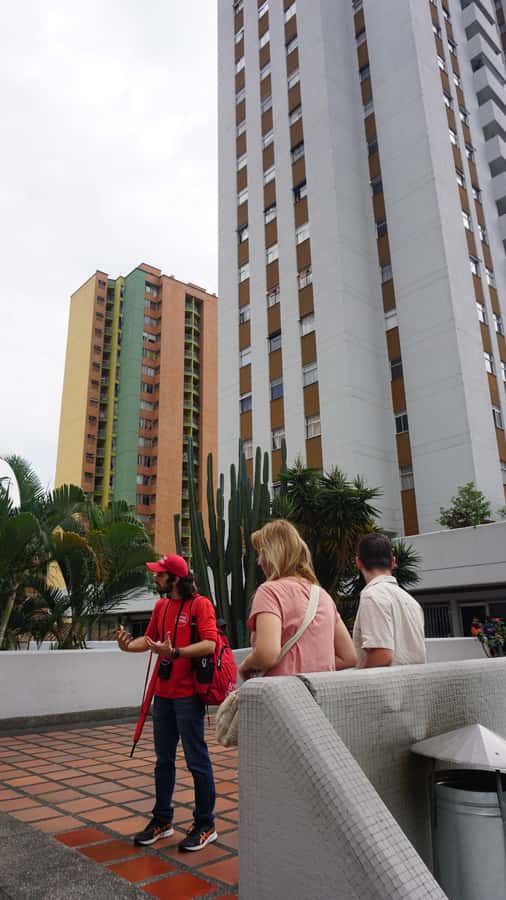
The tour is conducted in English by a live guide. Two guide names appear in the strongest feedback: Miguel is praised for being thorough and for explaining information that participants had not known before, while Sebastian is described as engaging, friendly, and entertaining in his explanations.
Those details matter on a difficult history tour. Clear facts are essential, but delivery matters too. A guide who can explain complex events without turning the walk into a lecture helps you stay with the story, especially when the timeline includes several armed groups and changing political conditions.
Beyond Colombia has operated since 2013 and offers original tours in Colombia. The company also lists international recognition and awards, but the practical question for you is simpler: you want a guide who can handle hard questions without reducing the subject to a slogan.
The tour promises objective information and no taking of sides. Still, history is never weightless. Listen for distinctions between fact, interpretation, and memory, and use the question time. You are specifically encouraged to ask about difficult topics, so this is a good setting for thoughtful questions rather than quick photo stops.
Walking conditions, safety, and comfort
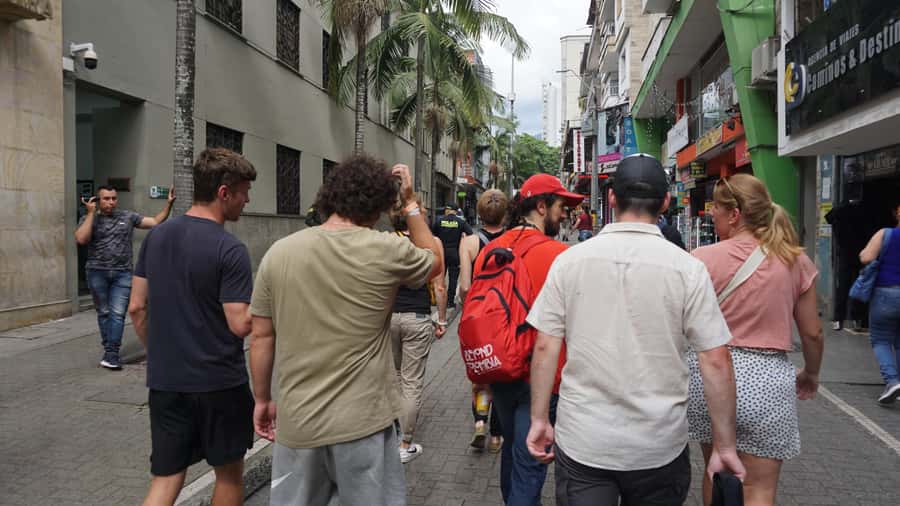
The route covers about 5 kilometers through central Medellín, with rest stops along the way. You do not need special equipment, but comfortable shoes are essential. Comfortable clothing, water, sun protection, and rain gear will make the day much easier.
Crowded areas are part of the route. Keep your belongings close, particularly in busy streets and public spaces. The tour advice uses a Colombian expression about not giving people an easy opportunity, and the practical meaning is simple: stay alert with your phone, wallet, and bag.
Mosquito repellent may help from March through June, especially during rainy periods. Alcohol and drugs are not allowed, and the experience does not accept party groups. Video and audio recording are also prohibited, so plan to listen and take written notes if you want to remember a detail.
The tour is not suitable for wheelchair users, children under 18, or people over 70. Those limits may rule it out for some families and older visitors. For everyone else, the main test is comfort with walking and with direct discussion of violence, loss, political conflict, and reconciliation.
What the $13 price gives you
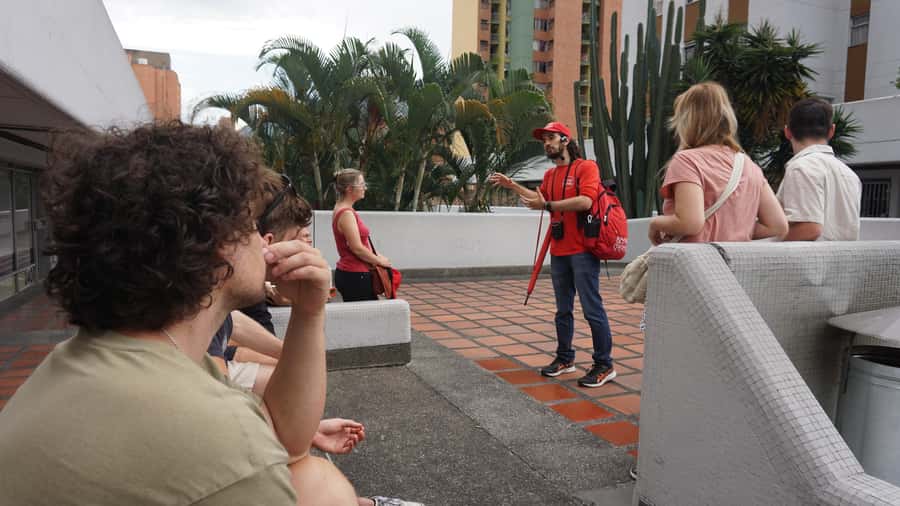
At $13 per person, this is a low-cost way to spend roughly two and a half hours, with the overall description allowing about three hours. You are paying for an English-speaking guide, a structured route through central Medellín, historical explanation, and suggestions for further cultural material.
The value comes from the context. You could walk through Parque San Antonio and downtown on your own, but the places would not automatically explain how cartel violence, urban conflict, community resistance, and public memory connect. A guide gives the streets a storyline and helps you ask better questions.
There are no added food, drink, or souvenir costs built into the tour. Transportation to and from your hotel is not included, and the group is shared rather than private. Those limits keep the price low, but they also mean you should arrange your own way to Parque San Antonio and accept that the pace and discussion are shared with other people.
The booking terms are flexible: you can reserve and pay later, and cancellation is free up to 24 hours in advance for a full refund. These details are useful if your Medellín schedule is still moving, though they do not change the core value of the experience.
Who will get the most from this walk
I would choose this tour if you want to understand Medellín beyond its nightlife, viewpoints, and famous crime stories. It suits you especially well if you care about modern Colombian history, peace-building, human rights, public memory, or the way cities respond to conflict.
It is also a good first step before visiting Museo Casa de la Memoria or other cultural sites connected to Medellín’s past. The guide gives you terms and time periods to watch for, so later visits can mean more.
I would skip it if you want a relaxed sightseeing walk with little serious discussion. The subject is hard, the route is long enough to require decent mobility, and the experience asks you to concentrate. It is not designed for children under 18 or party groups.
Should you book the Violence & Post-conflict tour?
Book it if your goal is to understand how Medellín moved from cartel-era violence toward dialogue, community action, and public remembrance. The strongest reasons are the wide historical frame, the focus on people and institutions rather than only Pablo Escobar, and the clear route from Parque San Antonio to Museo Casa de la Memoria.
Miguel’s thorough explanations and Sebastian’s engaging style suggest the guide can make difficult material approachable. Still, go prepared for a serious walk, crowded areas, changing weather, and subjects that do not end neatly. At $13, it offers strong value for an English-speaking introduction to Medellín’s conflict and ongoing peace efforts.
FAQ
How long does the tour last?
The activity is listed as 150 minutes, while the tour description says to expect approximately three hours. Plan enough time for the full walking route and listening stops.
How much does the tour cost?
The listed price is $13 per person.
Where does the tour meet?
Meet at Parque San Antonio beside Botero’s birds. Look for Beyond Colombia’s red umbrellas.
Where does the tour finish?
The walking route finishes at Museo Casa de la Memoria.
What language is the tour conducted in?
The tour is conducted in English with a live English-speaking guide.
Is this a Pablo Escobar tour?
No. Pablo Escobar and the Medellín Cartel form part of the history, but the tour focuses on the wider dynamics of violence, including guerrillas, paramilitaries, drug trafficking, communities, peace efforts, and post-conflict change.
How much walking is involved?
You will walk about 5 kilometers, with stops to rest and listen to the guide.
Can I cancel or pay later?
You can reserve and pay later. Free cancellation is available up to 24 hours in advance for a full refund.
Just added around Medellin
- Comuna 13: Recorrido de Arte Urbano, Cultura y Resiliencia★ 5.0 · 3 reviews
- Tour to Río Claro and La Caverna del Cóndor★ 5.0 · 3 reviews
- Medellin: Tour to The Cathedral – History of Pablo Escobar and his Impact★ 5.0 · 3 reviews
- Medellin: waterfalls and naturals poolls tour★ 3.7 · 3 reviews
- Medellín: Coffee Tour Experience at a Coffee Farm★ 4.8 · 3 reviews
- Tour Medellín: Pablo Escobar and Commune 13★ 5.0 · 3 reviews
- Medellín: Private City Tour and Comuna 13 Tour★ 3.8 · 3 reviews
- Colombia: Official Pablo Escobar Meet the Family Museum Tour★ 5.0 · 3 reviews
Medellín Tours, compared.

Medellin: Comuna 13 Graffiti Tour, Cable Car & Street Food
Read our review →
Medellín: Comuna 13 True Story and Street Food Tour
Read our review →
Medellín: Comuna 13 District Tour with Cable Car Ride
Read our review →
Medellin: Coffee Tour with Transport, Snacks and Tastings
Read our review →
From Medellín: Paragliding Tour with GoPro Photos & Videos
Read our review →
Medellín: Pablo Escobar Tour with beer included
Read our review →Browse the lists this tour appears in